Marada 8040 cockpit review: frame, seat, TV stand
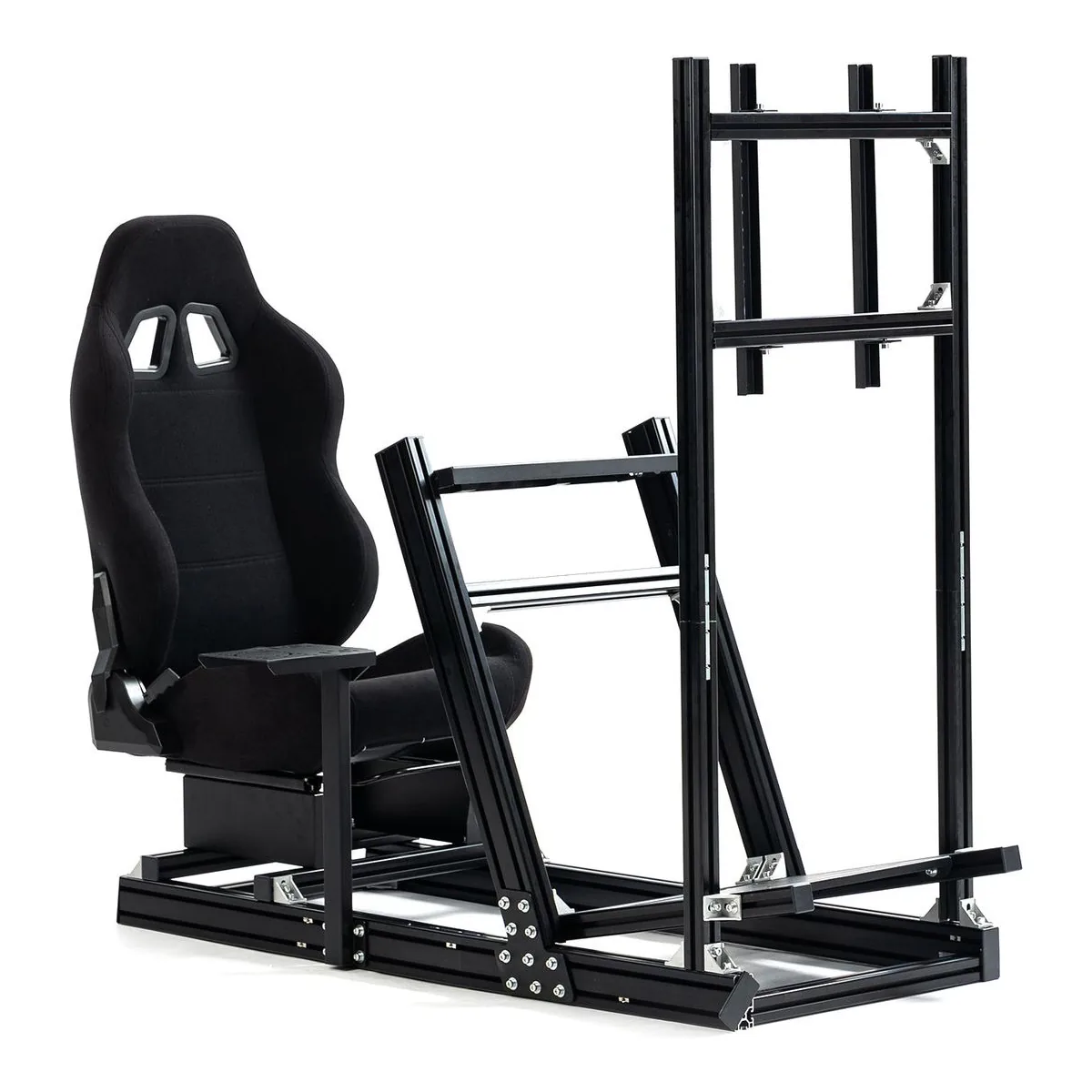
The Marada 8040 cockpit puts a seat, an aluminum frame and a single TV stand in one order. Owners of the same frame sold without the stand run 9 to 15 Nm wheelbases on it and report it holding, and the long-term reviewer fixed the seat with a lumbar cushion; the stand itself has no owner reports yet.
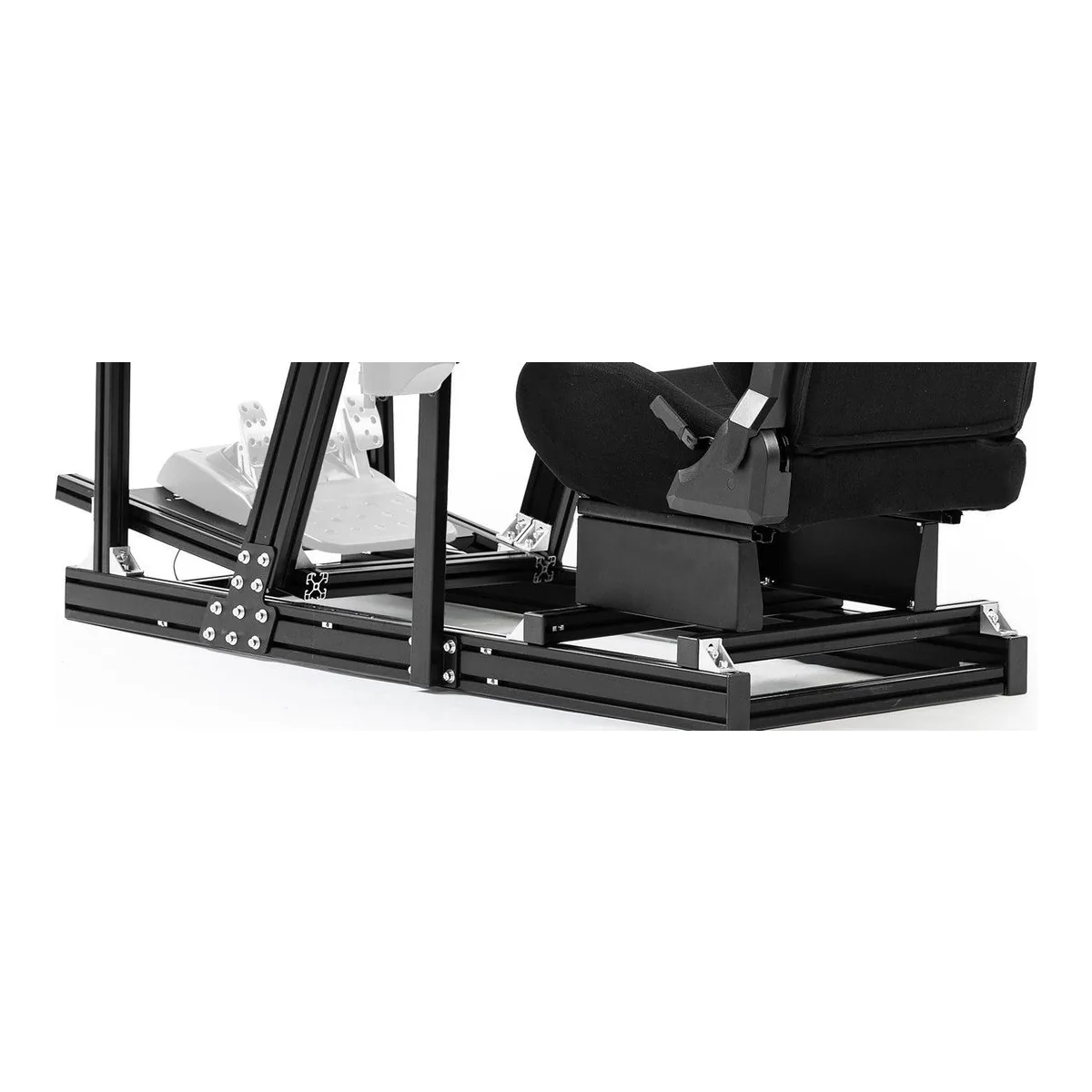
- Made of 40*80mm aluminum profile, connected with triangle corner brackets and a T-shape structure
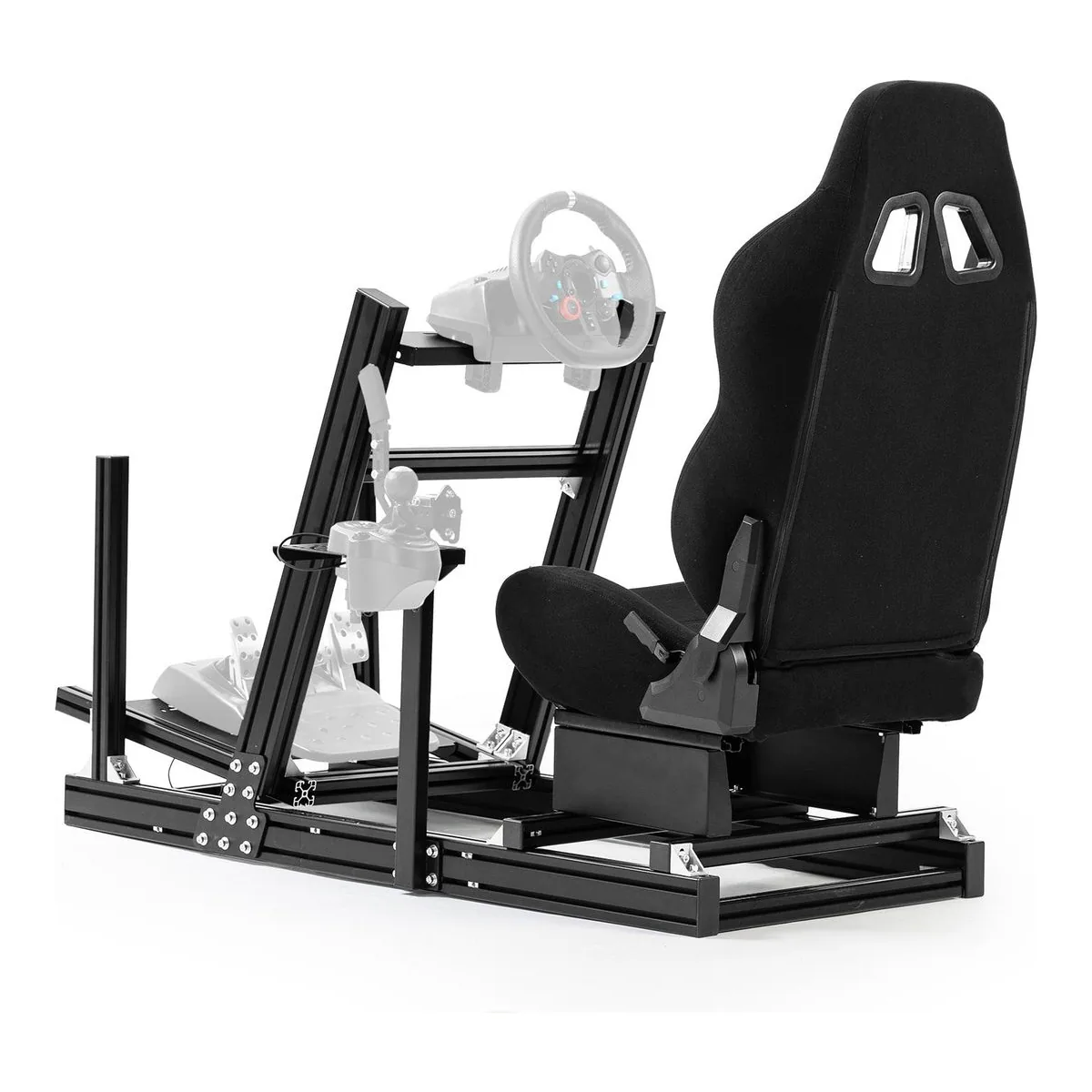
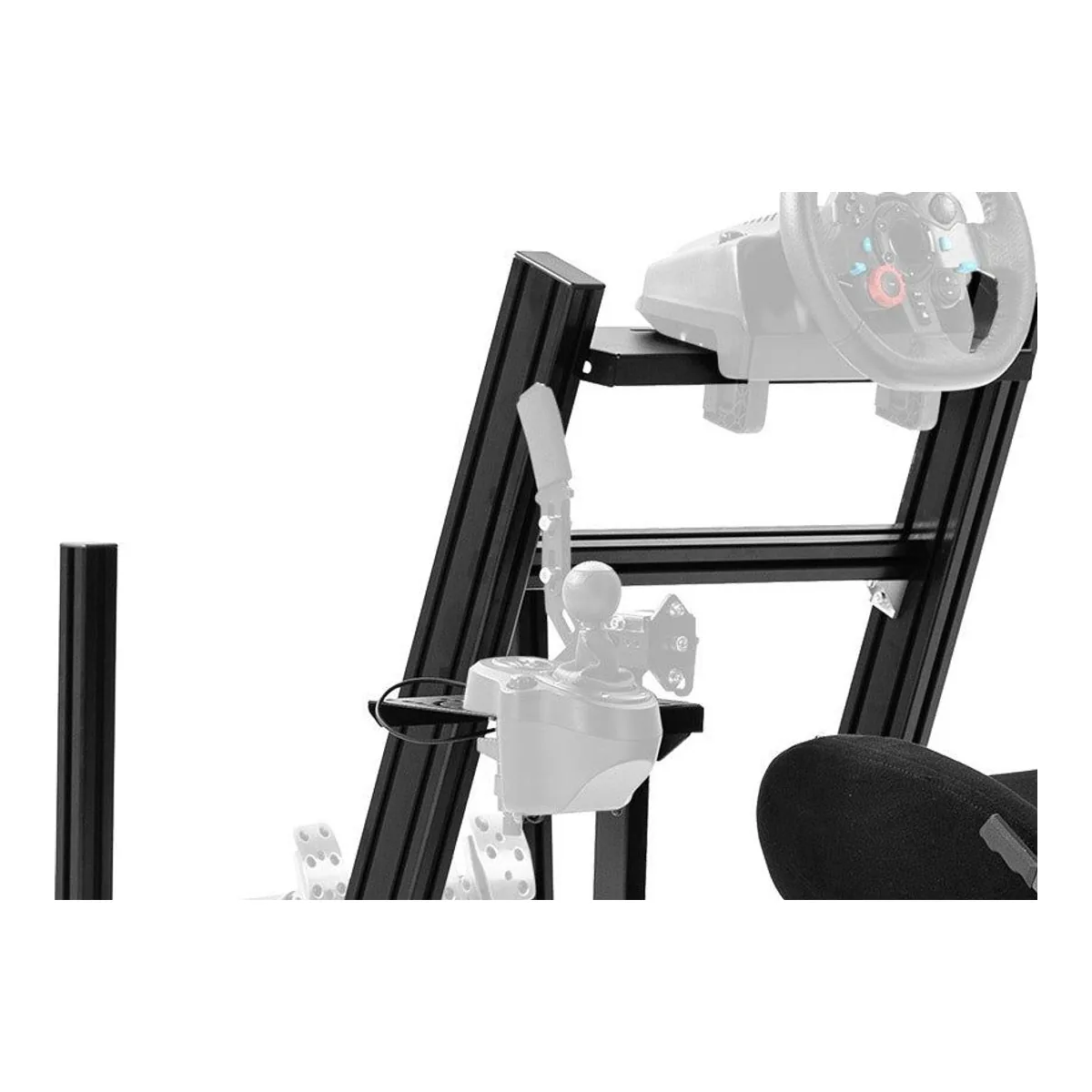
- Seat, wheel, pedals and monitor adjust front to back steplessly; wheel and pedal panels tilt and adjust in height
- Shifter mount swaps sides, seat back reclines 90 to 180 degrees
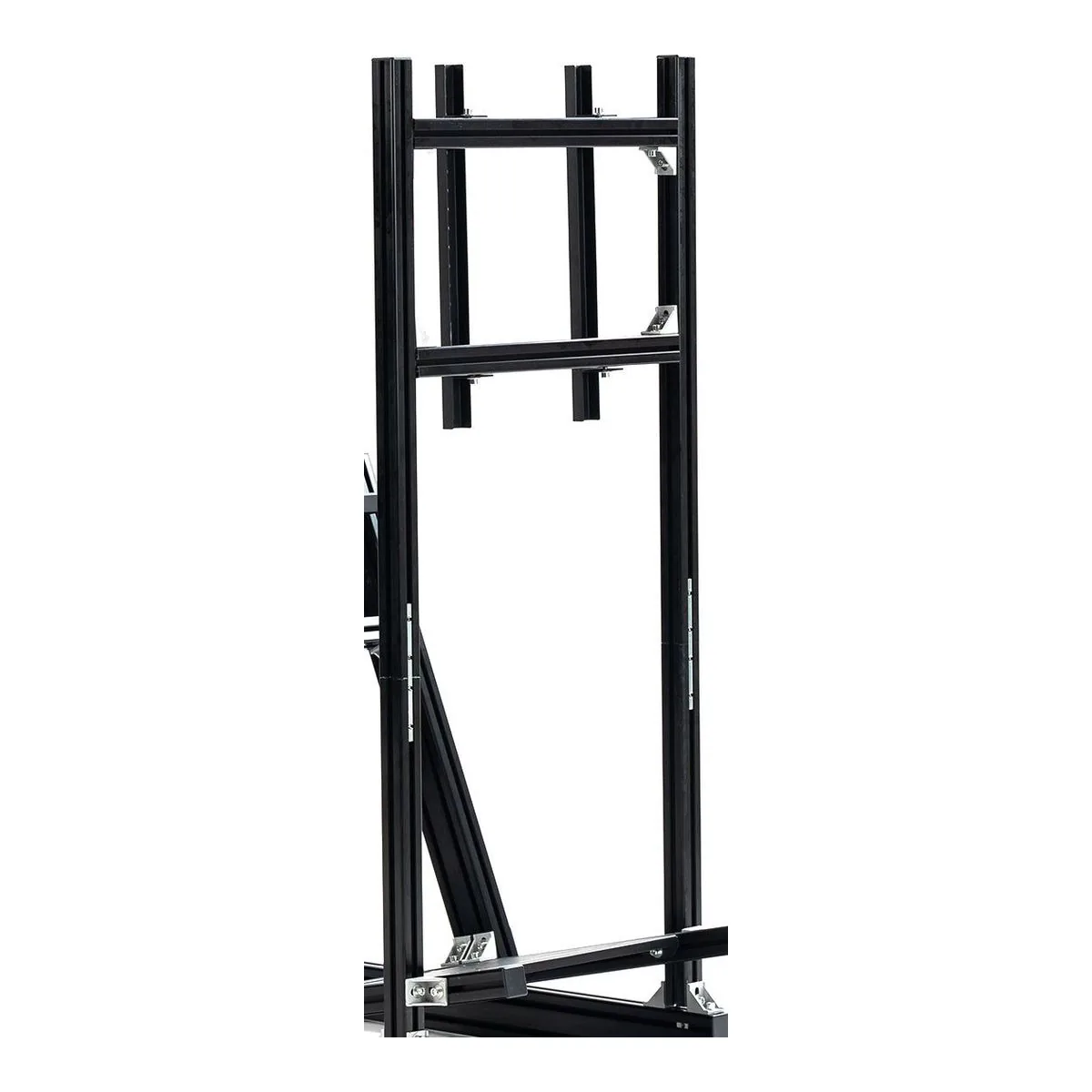
- Monitor bracket supports VESA patterns from 75x75 to 400x200
- Listed as compatible with Fanatec CSL DD and GT DD PRO, Thrustmaster T598, T818 and T300, Logitech G29, G920, G923 and PRO, and Moza R5, R9, R12 and R16
- Wheel, pedals, handbrake and display not included
- Warranty: 3 months, plus online technical support
We earn a commission on qualifying purchases through the links here, at no cost to you. It never decides what makes the list.
The frame of the Marada 8040 cockpit has held up for the owners who have run it, at 9 to 15 Nm. The seat backrest is the part a long-term reviewer calls weakest, and a lumbar cushion fixed it for him. The TV stand is the part nobody has reported on yet, which matters because it is what this listing adds.
Buy this Marada sim rig if you want the seat, the extrusion and a stand for one TV in a single order, and your wheelbase sits in the 9 to 15 Nm range owners have run on it. Skip it for triple monitors, where the Anman rig below is built for the job, and skip it if you are taller than the 1.9 m (6.3 ft) that Marada's own sizing chart tops out at. Other rigs sit on our sim cockpit shelf.
The long-term review and every owner report from his comment threads cover the frame sold without the TV stand. One more owner, whose exact Marada model is not confirmed, is flagged where he comes up (how we weigh owner reports).
Does 8040 aluminum profile hold a direct drive wheel?
Yes, at the 9 to 15 Nm owners have actually run, with one weak spot. The base is 40 by 80 mm aluminum extrusion joined with triangle corner brackets, twice as deep as the 40 by 40 mm base Trak Racer uses on its TR40S, though Trak Racer's spec table lists 80 by 40 mm uprights. Marada's listing names wheelbases instead of printing a torque rating, from a Logitech G29 up to the Moza R16.
Aaron Touchstone bought the no-stand Marada sim racing cockpit, put a Simagic Alpha EVO Pro on it at 12 Nm, and came back after two months and somewhere between 40 and 70 hours of racing without having re-tightened a bolt. On camera the rig moves a little when he forces it. He says he cannot feel it while driving, and at that torque that is the result you want. Under his videos, one owner reports "no flex on my wheel" at 9 Nm and another runs a 15 Nm Fanatec base with "No regrets making the purchase".
One report points at the uprights. An owner of a Marada profile rig, model not confirmed and posted under a video about a different Marada frame, runs an Asetek base at 12 Nm and found it "rock solid except the uprights for the wheel base". Four 90 degree brackets fixed it for him. If your base is that strong, watch the uprights first.
Simagic owners need one more part: Touchstone's base would not bolt to the deck until he bought Simagic's side mounting plates.
The pedal plate passed his leg press test with standard pedals. Nobody in the corpus has run a load cell brake on it, so treat high brake force as unproven.
The Marada 8040 seat is the first thing to upgrade
Marada sells it as an ergonomic black seat on a double track, with a back that reclines from 90 to 180 degrees. Touchstone calls it the weakest part of the whole rig, the backrest in particular, which was not as comfortable as he wanted until a lumbar cushion pulled off an office chair fixed it. Weak on support, then, and cheap to fix.
Which TV fits the Marada 8040 monitor stand?
One TV whose VESA pattern is no larger than 400 by 200, at a size you should confirm first. The listing says 24 to 70 inches. Marada's product page says 27 to 65. A graphic in Marada's own image set says 60 inches maximum. Three ceilings for one stand means plan on the lowest.
The VESA limit matters more than the diagonal: a TV with a larger pattern will not bolt straight on, whatever its size.
Reach, rake and the six hour build
The seat, wheel deck, pedal plate and TV stand all slide along the extrusion, the wheel and pedal plates tilt and rise, and Marada's graphics show the wheel deck tilting from minus 20 to 35 degrees. The fore and aft slides are stepless, and none of it is quick: every change means loosening T-nuts and sliding a bracket. Set it once.
Touchstone's build took about six hours. The beams arrived unlabeled, so he measured each one before using it, redid steps more than once, and found the kit a bolt short. Of the 72 comments under his two videos, three come from buyers whose boxes arrived separately or not at all, one of whom also could not get Marada to answer, and a fourth had not heard back from the seller about the build. Do not start until every box is in the room. Warranty runs three months plus online technical support, short for a rig you will keep for years.
How much floor does the Marada 8040 need?
Marada's sizing chart gives a base of 53.5 by 22.8 inches and 54.3 inches to the top of the TV stand. The listing's overall figure is 60 by 31.5 by 54.3 inches at 120.2 pounds, so measure the room against the larger pair. Marada describes no folding mechanism: this is a bolted frame that stays where you build it, unless you add caster wheels the way one owner did.
Anman vs Marada: which 8040 rig?
Take the Anman for three screens and the Marada for one big TV. Anman's rig is also 8040 aluminum profile, carries a triple bracket for 24 to 32 inch monitors, and its listing states support for up to 25 Nm of direct drive torque. That figure is Anman's claim about its own frame, untested, and no Marada owner in our count has gone past 15 Nm.
If your monitor already sits on a desk arm, Marada sells this frame without the stand, and that is the version every owner report above describes, the uprights one aside.
The question we would put to the next owner is the stand itself. It bolts to the same base as the wheel deck, so a heavy TV on tall uprights with a 12 Nm wheel shaking the frame is a combination no report in our count covers. If you build it that way, run force feedback at full strength and watch the screen before you tighten everything for good.
A closer look at the Marada 8040 Aluminum Cockpit
Made up your mind?