Beatbot Sora 30 vs Sora 10: Start at the Sun Shelf
Buy the Sora 30 if your pool has a tanning ledge, Baja shelf or a wide top step, because it works in water as shallow as 8 inches where the Sora 10 stops at 12. Four inches decides whether a shelf gets cleaned or skipped. Buy the Sora 10 for a pool that runs straight down from the waterline, because on suction, the same 150 micron filter and rated pool area the two are the same machine, and the bigger battery only buys half an hour of extra wall and waterline time. The cost is retrieval: the Sora 10 waits at the wall for 10 minutes and then sinks for the hook, where the Sora 30 floats.
What decides it: Four inches of shallow water, the roller brushes underneath, and how each one comes out of the pool, on two cleaners rated for identical suction and identical pool area.
We earn a commission on qualifying purchases through the links here, at no cost to you. It never decides what makes the list.
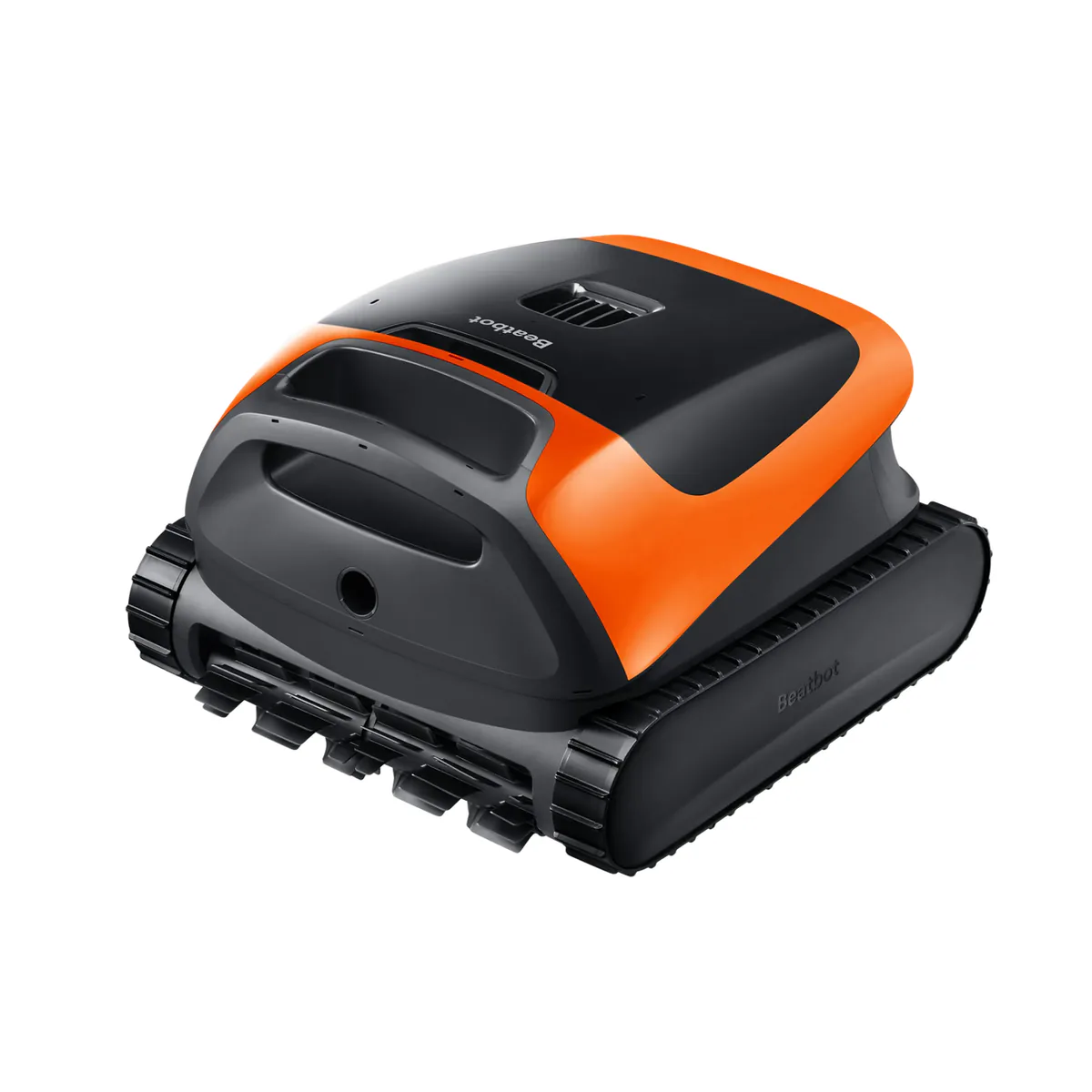
Beatbot Sora 30
Pick this if a pool with a tanning ledge, Baja shelf or wide top step, where the last four inches of shallow water are the part that actually gets dirty.
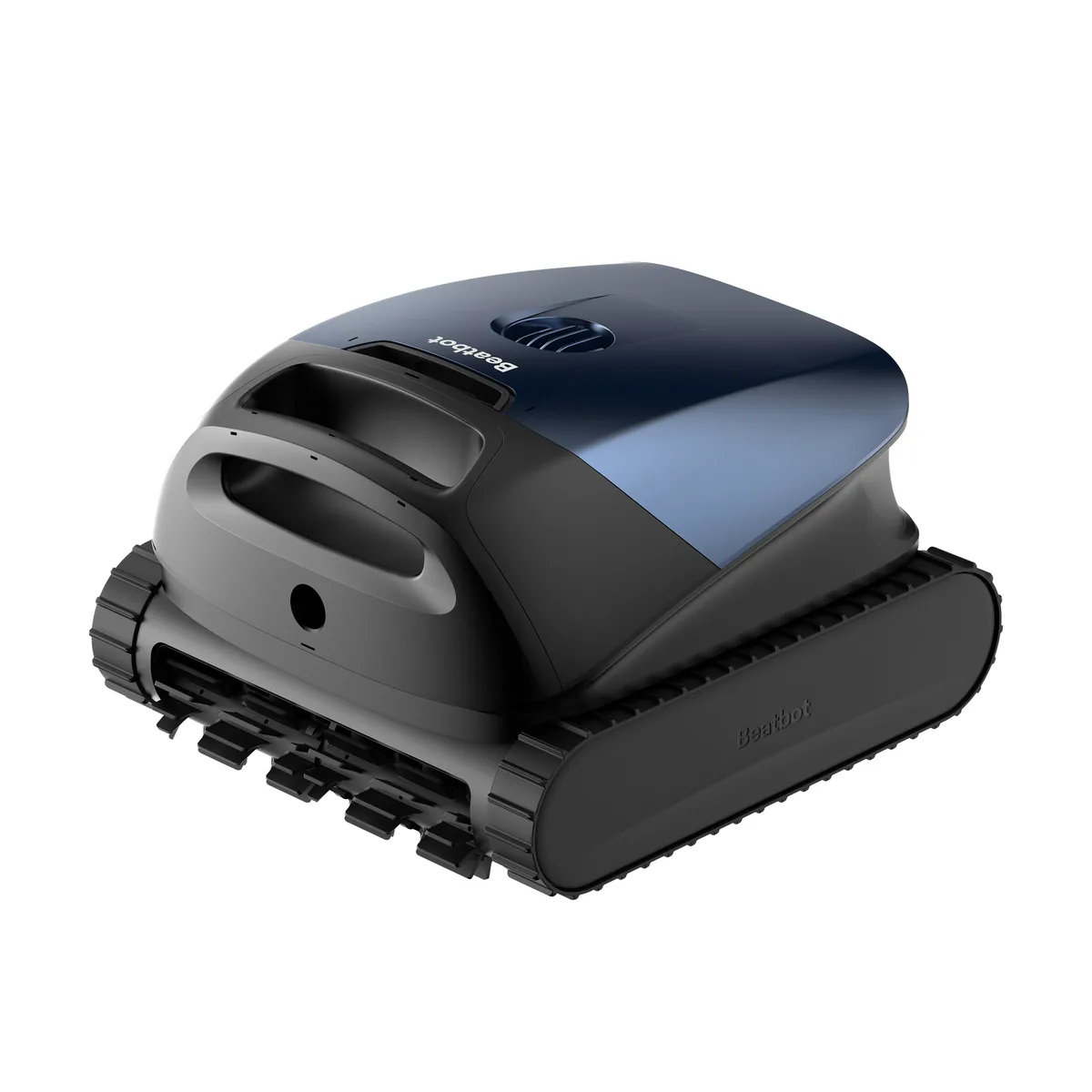
Beatbot Sora 10
Pick this if a pool whose walls drop away from the waterline, where nothing sits in less than a foot of water and the extra shelf reach has nothing to reach.
| Beatbot Sora 30 | Beatbot Sora 10 | |
|---|---|---|
| Cleans | Floor, walls, waterline and shallow platforms as shallow as 8 in, on a platform at least 3.3 by 3.3 ft (no water surface) | Floor, walls, waterline and shallow areas as shallow as 12 in per the spec table (FAQ and manual: 0.5 m working depth), on a platform at least 3.3 by 3.3 ft (no water surface) |
| Rated pool size | Up to 3,230 sq ft (300 m²) | Up to 3,229 sq ft (300 m²) |
| Cordless | Yes, battery powered, 10,000 mAh | Yes, battery powered, 7,800 mAh |
| Runtime | Up to 5 hr floor only, about 4.5 hr for floor, walls and waterline; about 4.5 hr to recharge on 65W | Up to 5 hr floor only, about 4 hr for floor, walls and waterline; 3.5 hr to recharge on 65W per the product page, 4.5 hr per the manual |
| Filtration | 5.2L basket, 150 micron included, 3 micron optional | 5L basket, 150 micron included; a 3 micron basket is listed, fit unconfirmed |
| Waterline and wall | Yes, climbs walls and waterline, four bottom roller brushes | Yes, climbs walls and waterline, two front roller brushes with differential speed |
| How it comes out | Smart water surface parking, one touch app retrieval while on the surface | Parks at the waterline for 10 minutes, then sinks; hook supplied |
Go and look at how much water sits over your sun shelf. That measurement settles Beatbot Sora 30 vs Sora 10 faster than any spec comparison will, because the Sora 30 works in water as shallow as 8 inches and the Sora 10 stops at 12. Take a second measurement while you are out there: Beatbot wants any platform either machine cleans to be at least 3.3 feet square, and that one applies to both, so a narrow top step is out of scope whichever you buy.
Beatbot Sora 30 vs Sora 10, and the four inches that decide it
A tanning ledge is shallow by definition, which drops it straight into the band where these two machines disagree.
Beatbot rates both for the floor, the walls and the waterline, and neither skims: both work below the surface for the whole cycle, and only the Sora 30 floats at the end; the Sora 10 holds at the waterline for 10 minutes. Collecting floating leaves is the main reason to step past the Sora 30 to the Sora 70, though not the only one, since that rung also carries a bigger basket, more modes and a third year of warranty. What the Sora 30 adds over the Sora 10 is depth, or rather the lack of it: 8 inches against 12.
Four inches sounds like nothing until you apply it to a specific shelf. A ledge under ten inches of water is inside the Sora 30's range and outside the Sora 10's, and the shelf is the part of a pool where algae and silt settle first, because it is warm, shallow and slow moving. If you have one, the smaller machine will clean everything except the surface that most needed it.
Four inches may understate it, and Beatbot's own pages are why nobody can say. Its own Sora 10 page gives the machine two shallow limits in two places: its spec table says it works in water as shallow as 12 inches, and the FAQ row headed working depth puts it at 0.5m to 3.5m, and half a meter is a good deal more than a foot. On the Sora 30 the equivalent rows reconcile, 8 inches against a stated 0.2m, so they read as one spec written two ways. Read the Sora 10's FAQ row the same way and the Sora 30's advantage is close to three times what the spec tables imply. Take the spec tables alone and the gap is four inches. Both readings point the same direction, so the question still has an answer.
What the bigger battery buys, which is half an hour
Beatbot gives the Sora 30 a 10,000 mAh pack and the Sora 10 a 7,800 mAh pack, about 28 percent more cell. It does not buy any more floor.
Rated coverage is 3,230 sq ft on a charge for the Sora 30 and 3,229 for the Sora 10. Both of those are the same 300 square meters, rounded in different directions on the way into feet, so Beatbot rates these two for an identical pool. Floor-only runtime matches too, at up to 5 hours each.
Those extra cells show up on the three zone cycle, not on the floor. Beatbot's pages carry a second runtime that no headline repeats: for a job covering the floor, the walls and the waterline, the Sora 30 lasts about 4.5 hours and the Sora 10 about 4. The five hour figure everyone quotes is the floor-only number on both. Adding walls and waterline costs the Sora 30 half an hour of it and the Sora 10 a full hour, and that gap is what the bigger pack is actually for. On a pool where you bought a robot for the waterline in the first place, thirty minutes is the difference between finishing the job and finishing most of it.
Basis: Beatbot's own product pages. Its separately published Sora comparison covers only the Sora 30 of this pair, and where the two disagree, which they do on that machine's rated area and basket size, the figures here follow the product page.
The brushes, which is the real hardware difference
Under the Sora 30 are four bottom roller brushes. Under the Sora 10 are two front rollers running at differential speed.
Beatbot describes the four roller layout as scrubbing the floor ahead of the suction, loosening debris before it gets picked up, and it credits the dual group arrangement with wider coverage and stronger traction for climbing. The Sora 10's two front rollers are pointed at the same wall and waterline job and described in the same terms. Neither document says what the difference measures out to. We are not going to invent a number for it. What is fair to say is that the brush count tracks the shallow water rating, and both point the same way: the Sora 30 is built for the places where a cleaner has to press itself against an awkward surface.
Sensor counts lean the same way, and on one of them Beatbot says why. Each machine's page gives its own figure, 13 including 2 ultrasonic on the Sora 30 against 11 including 1 on the Sora 10. Beatbot's own comparison explains what a lower ultrasonic sensor is for: it reads changes in height and slope as the cleaner moves, so the machine recognizes a platform, stays on it while cleaning, and turns before dropping back into the deep end. Here the shelf comes up again, described from a third direction. What no document says is what the rest of the count buys, so treat the totals as a footnote.
What you will actually be doing with it
Both machines put a 150 micron filter behind a basket you lift out by hand, 5.2L on the Sora 30 against 5L on the Sora 10, and Beatbot rates that smaller basket at up to 650 leaves. Neither product page frames emptying it as maintenance, and the Sora 10's user manual gives the steps for emptying and rinsing it without a schedule. What follows is what the specifications imply. A basket rated in leaves is a basket that fills in one run under a shedding tree. And a 150 micron mesh is what Beatbot itself calls a large debris filter, so anything finer than that goes back into the pool.
Beatbot sells an ultra-fine basket rated to 3 microns, and both product pages list one, though the Sora 30 basket's own page says it fits the Sora 30 only, and the Sora 10 page names no part number. The Hook Up found it appears to fit only the Sora 30, and one Sora 10 owner is sending theirs back for want of it, so on the Sora 10 confirm the fit with Beatbot first. Availability is its own question: the Sora 30 page says the basket is coming in a few months and separately that it was expected to start shipping in early June, and the basket's own page still lists it as sold out on pre-order. Both carry a two year warranty. They end a run differently. A Sora 10 parks against the wall for 10 minutes and then sinks, and the supplied hook fetches it from the bottom. A Sora 30 floats to the surface and can be called in from the app. Pick the shelf depth first, then buy the basket you are willing to empty. The rest of what is on this shelf is a different argument.