Powermatic Bandsaws Compared (PWBS-14CS, PM1500, PM1500T)
Most shops land on the PM1500: 14 inches of resaw and a 3 HP motor on its own 230 volt circuit, more than double the PWBS-14CS's resaw and current draw for double the horsepower. Step up to the PM1500T only if a low-friction, corrosion-resistant table and a seven-stop miter gauge are worth paying more for, since every capacity, motor and weight figure between the two is identical. Step down to the PWBS-14CS only if a 115 volt circuit or the smaller footprint matters more than resaw depth, and know that reaching 230 volt on it means rewiring the motor and swapping the plug, not flipping a switch.
We earn a commission on qualifying purchases through the links here, at no cost to you. It never decides what makes the list.
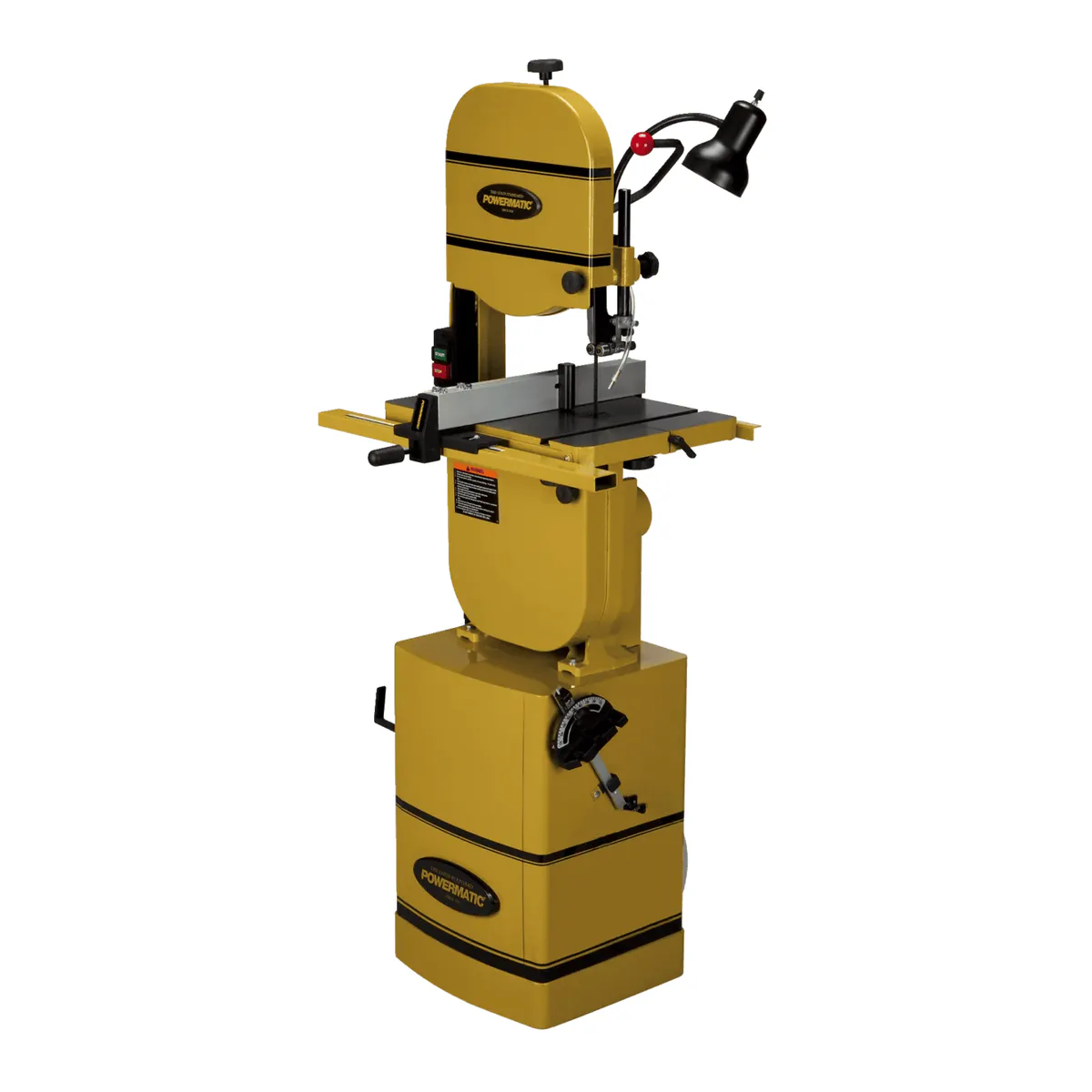
Powermatic PWBS-14CS
Stop here if a shop with only a 115 volt circuit, or one that does not need more than 6 inches of resaw. A 6 inch riser block is sold separately and brings that to 12 inches, still short of the two larger saws' 14.
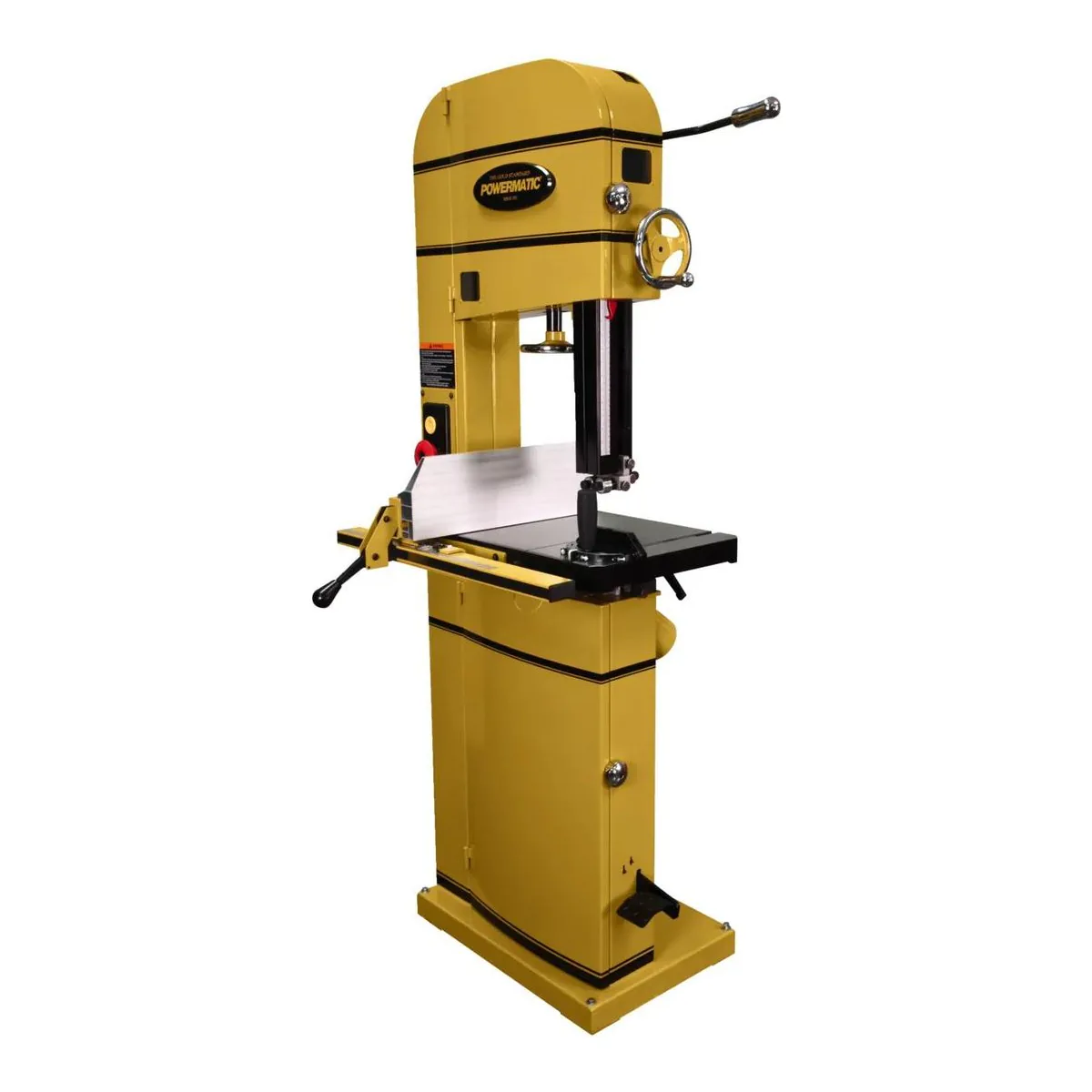
Powermatic PM1500
Stop here if a shop that already has a 230 volt circuit to spare and needs the extra resaw and throat over the PWBS-14CS, but does not need the PM1500T's coated table or extra miter stops.
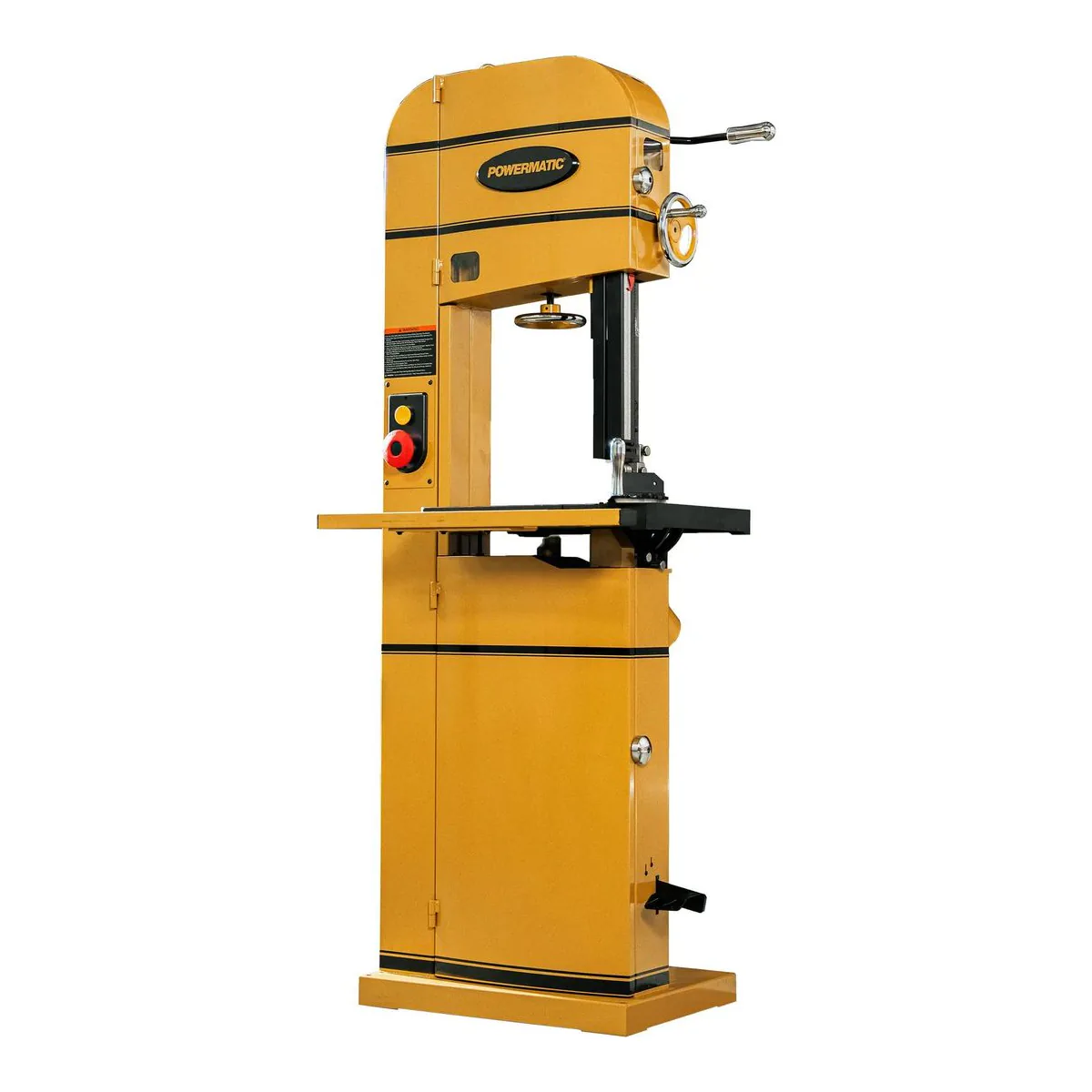
Powermatic PM1500T
Stop here if a shop buying new that wants the coated table and the finer miter gauge and does not mind paying for a change that adds no capacity.
| Resaw capacity | Throat depth | Motor | Recommended circuit | Dust port / CFM | Table | Miter gauge stops | Net weight | |
|---|---|---|---|---|---|---|---|---|
| Powermatic PWBS-14CS | 6 in (12 in with the optional riser block) | 13-1/2 in | 1.5 HP, 115/230V, 11/5.5 A | 30 A (115V) or 20 A (230V) | 4 in, 350 CFM | 15 x 15 in cast iron, plus a 15 x 5-1/2 in fixed extension | Not stated | 250 lb |
| Powermatic PM1500 | 14 in | 14-1/2 in | 3 HP, 230V, 12 A | 20 A | Two 4 in, 600 CFM | 21-1/2 x 16 in, ground cast iron | 45, 90 degrees | 394 lb |
| Powermatic PM1500T | 14 in | 14-1/2 in | 3 HP, 230V, 12 A | 20 A | Two 4 in, 600 CFM | 21-1/2 x 16 in, ArmorGlide coated cast iron | 0, 15, 22.5, 30, 45, 60, 67.5 degrees | 394 lb |
Buy the PM1500T over the PM1500 and you are not buying more saw. Every number that sets what a bandsaw can cut, resaw height, throat depth, horsepower, dust collection, weighs in identical on both machines, read off the same spec table in the same manual. What the ArmorGlide badge actually buys is a table surface and a miter gauge.
That is the twist in an otherwise ordinary ladder.
Three Powermatic bandsaws make up the family: the PWBS-14CS, the PM1500 and the PM1500T, and Powermatic sells all three side by side. None has been retired for the next. Read this before buying any of them off our bandsaw picks, because the step that looks biggest on the price tag is not the step that changes what the saw can do.
Which Powermatic bandsaws are actually different
The real capacity jump sits between the PWBS-14CS and the two PM1500 machines, not between the PM1500 and the PM1500T. Resaw height goes from 6 inches to 14 and the motor from 1.5 HP to 3, neither of which is close. Throat depth moves less, 13-1/2 inches to 14-1/2. The PWBS-14CS is also the only one of the three prewired for 115 volt, though converting it to 230 means reconnecting the motor's leads, whose diagrams Powermatic prints inside the motor's own junction box cover, and fitting a separate plug. There is no setting to choose. The PM1500 and PM1500T both ship wired and plugged for 230 volt only.
Dust collection scales with the saw: the PWBS-14CS asks for 350 CFM through one 4 inch port, and both PM1500 machines ask for 600 CFM through two. Undersize a collector for either PM1500 saw and the spec sheet explains the dust the cut leaves behind; the saw is fine. Where the ladder goes flat is the step from PM1500 to PM1500T: same resaw, same throat, same motor, same weight, same circuit. The only two things that move are under your workpiece and on your miter gauge.
What changes, rung by rung
PWBS-14CS: the 115 volt base
Six inches of resaw under a 13-1/2 inch throat, on a 1.5 HP motor drawing 11 amps at 115 volt or 5.5 at 230, at 250 lb assembled between the body and its closed stand. A 6 inch riser block is sold separately and brings resaw to 12 inches, still short of what the two larger saws manage without one. Powermatic's own manual is explicit that stepping this saw up to 230 volt means reconnecting four motor leads, whose diagrams the manual prints inside the motor junction box cover, and then replacing the factory 115 volt plug with a separate 230 volt one, which is not included.
PM1500: the 3 HP step up
Resaw jumps to 14 inches and throat to 14-1/2, a real gain over the PWBS-14CS. It costs something: the motor doubles to 3 HP but the current it draws at 230 volt more than doubles, 12 amps against the smaller saw's 5.5, on a 20 amp dedicated circuit Powermatic specifies for this saw the same way it specifies one for the PWBS-14CS at either of its voltages. Weight climbs to 394 lb, 144 lb over the PWBS-14CS's assembled total, and dust collection requirement climbs from 350 to 600 CFM. It is a plain ground cast iron table with two miter gauge stops, 45 and 90 degrees.
PM1500T: the same saw, a different table
Nothing about what this saw can cut is different from the PM1500. Same 14 inch resaw, same 14-1/2 inch throat, same 3 HP motor pulling the same 12 amps, same 394 lb. What changes is the table itself, an ArmorGlide coating Powermatic's own manual describes as low-friction and corrosion-resistant, in place of plain ground cast iron, and the miter gauge, which goes from two positive stops to seven: 0, 15, 22.5, 30, 45, 60 and 67.5 degrees. Neither one moves a single capacity number.
Who should stop where
Circuit access and 115 volt need settle the first step on this ladder. A shop wired only for 115 volt has one option among the three, and a shop that resaws anything wider than 6 inches regularly is going to be shopping for a riser block or a bigger saw either way. Once 230 volt is available, most buyers should stop at the PM1500: 14 inches of resaw, a dedicated 3 HP motor, and a plain cast iron table that cuts exactly as well as the coated one. Nothing about the PM1500T changes that calculation, since its capacity numbers are the PM1500's own. Before paying more for it, settle whether the table surface and the extra miter stops matter enough on their own.
Take the PM1500T step only for the table and the miter gauge themselves, never for more cutting capacity, because there is none to have. A shop that resaws figured lumber and fights rust on an uncoated table, or one that actually uses odd miter angles beyond 45 and 90, is buying something real. Everyone else is paying for a nicer surface on the same saw. How to size a bandsaw to your own shop comes before any model number.