Bandsaw size: the throat is not the cut
The 14 inch on a bandsaw is its throat, the width it can cut past the frame, and it tells you almost nothing about the height it can resaw or the motor behind the blade. A 14 inch Grizzly G0555LX resaws 6 inches on a 1 HP motor while a 14 inch Laguna 14BX resaws 13 inches, so size the saw by the resaw height and the horsepower the work needs, and ignore the number in the name.
The classic 14 inch cast iron saw is sold resawing 6 inches, and the 12 inches its chart implies is a riser block kit bought separately. Grizzly rates the T25555 kit to take the G0555LX from 6 inches to 12, and it also swaps the 93-1/2 inch blade for a 105 inch one. The riser lifts the guide and leaves the motor alone, so the same 1 HP is turning a longer blade through twice the wood.
What decides it, in order
Work down these. Each one narrows the answer, and the first is the one most buying guides skip.
Which number is the 14 inch?
Among the saw's measurements, the size name is the odd one out, since it does not describe the cut most people buy the saw to make. Getting this wrong is why two saws called 14 inch can be a different tool.
- The throat, which is width
- Woodcraft puts it plainly: throat capacity is the distance between the blade and the column, and it is the quick reference to the size designation. On the G0555LX that is 13-1/2 inches. It sets how wide a panel or curve you can swing past the frame, and nothing about height.
- The resaw, which is height
- This is the number that is not in the name and the one that varies most. Woodcraft measures it from the table to the highest elevation of the blade guide. On saws all called 14 inch it runs from 6 inches to 13, which is most of the decision.
- The wheel, which sets the blade
- The wheels carry the same 14 inch label and they matter, but not for height. POWERTEC notes that smaller wheels take only narrower blades, so wheel size limits the resaw blade you can run rather than the board you can stand up.
What are you actually cutting?
Throat serves one kind of work and resaw serves another. A saw sized for curves is the wrong saw for veneer, and the spec that decides it changes with the job.
- Curves and scrollwork
- Blade width decides this. Resaw does not come into it. POWERTEC puts 1/8 to 1/4 inch blades on tight and intricate curves, where a wide blade cannot come around. Any 14 inch saw has the throat for it, so the only question is the narrow blade. The G0555LX runs down to 1/8 inch on its stock guides, while the Laguna 14BX takes 1/4 inch and up on its ceramic guides and needs the optional Mini Guides for anything narrower.
- General furniture, light resaw
- 6 inches of resaw covers most furniture stock, and Woodcraft calls a 1-1/2 horsepower motor enough for thinner stock with minor resawing. A classic 14 inch saw does this and the throat is rarely the limit.
- Resawing boards into veneer
- This is where the name misleads most. You want the tallest resaw you can reach and the widest blade the saw takes, which POWERTEC puts at 3/4 inch and above for straight cuts. Woodcraft calls 1-1/2 horsepower underpowered for larger resawing and points at a 2-1/2 to 3 horsepower motor.
How tall is the stock you resaw?
Resaw height is a hard ceiling. The saw cannot cut a board taller than the gap under its guide, whatever the motor, so this is the number to match first.
- Under 6 inches
- A stock 14 inch saw does it. The Grizzly G0555LX resaws 6 inches out of the box on 1 HP, which covers most drawer sides and cabinet panels.
- 6 to 12 inches
- Either a riser block on a classic saw, which takes the G0555LX from 6 inches to 12, or a deluxe 14 inch saw that ships there. The Laguna 14BX resaws 13 inches with no riser at all.
- Over 12 inches
- Past what a 14 inch frame reaches. This is where the throat number stops being the useful one, and the move is up to a 17 or 18 inch saw chosen on resaw height rather than on the wheel.
Riser block, or a saw built tall?
The cheap way to more resaw and the built in way cost differently, and one of them adds a longer blade and a flexing column the spec sheet does not mention.
- A riser on a classic saw
- The Grizzly T25555 kit lifts the G0555LX from 6 inches to 12 and swaps the 93-1/2 inch blade for a 105 inch one. It raises the guide and leaves the motor as it was, so the same 1 HP now pulls a longer blade through twice the wood on a taller column that flexes more.
- A deluxe 14 inch, tall by design
- The Laguna 14BX resaws 13 inches with no riser, on a 1.75 HP motor at 110 volt or 2.5 HP at 220, with a frame built for the height. More money, no add on blade, and the resaw is engineered in. Nothing is stacked on.
- A 17 or 18 inch saw
- If you are buying the saw for resaw above all, a larger wheel buys blade tension and frame rigidity a 14 inch riser cannot. Decide it on resaw height and motor and treat the wheel number as the consequence.
What will the motor run on?
The horsepower that resaws hardwood is also the horsepower that needs a 220 volt circuit. You settle that with an electrician. No checkout option covers it.
- 1 HP on 110 volt
- The classic 14 inch saw, and enough for clean furniture cuts and light resaw. Woodcraft calls 1-1/2 horsepower the floor for anything past minor resawing, so 1 HP is the light duty end of the range.
- 1.75 HP on 110 volt
- The smaller Laguna 14BX, still on a standard outlet, and about the practical ceiling for what a 15 amp circuit delivers to a saw.
- 2.5 to 3 HP on 220 volt
- Where serious resawing lives, and where the plug changes. The 2.5 HP 14BX is 220 volt, and Woodcraft's 2-1/2 to 3 horsepower call for exotic hardwood and bowl blanks lands here. Budget the circuit as well as the saw.
Two saws are both called a 14 inch bandsaw. One resaws 6 inches of board on a 1 HP motor. The other resaws 13. The number they share, the 14 inch, says nothing about the cut most people buy the saw to make, so bandsaw size is a worse guide to what you are getting than almost any other spec on the machine. Throat, resaw and horsepower are three different numbers, and only one of them is in the name.
What bandsaw size actually measures
The 14 inch is the throat. Woodcraft states it directly: "Throat capacity is the distance between the blade and the column", and adds that this measurement is the quick reference to the size designation for a bandsaw. On a Grizzly G0555LX that distance is 13-1/2 inches, which is how wide a panel you can pass to the left of the blade before the frame stops you.
Resaw capacity is the other number, and the name leaves it out. Woodcraft measures it as the distance from the table to the highest elevation of the blade guide assembly, which is the tallest board you can stand on edge and cut. A G0555LX resaws 6 inches. The Laguna 14BX, also a 14 inch saw, resaws 13. Same name on the label, more than double the height. If you shopped these two on the 14 inch alone you would treat them as the same saw and they are not.
The riser block, and what it does not lift
The classic 14 inch cast iron saw is where the confusion pays rent. It is sold resawing 6 inches, and the 12 inches you see quoted comes from a riser block. On the G0555LX that is Grizzly's T25555 kit, which the spec rates to take the saw from 6 inches to 12. It is a real gain, bought separately, and the part nobody mentions is the blade: the kit also moves the saw from a 93-1/2 inch blade to a 105 inch one, because the frame is now taller.
What the riser does not touch is the motor. That same 1 HP is now pulling a longer blade through twice the height of wood, on a column that has grown taller and flexes more under tension. It works, and for the occasional tall cut on a saw you already own it is the cheap answer. For steady resawing it is a saw stretched to reach a job a taller frame was built for.
The motor is the other half of the number
Resaw height is a ceiling and horsepower is what gets you to it. Woodcraft draws the line where 1-1/2 horsepower runs out: it will handle thinner stock with minor resawing, but it is underpowered for larger resawing, where the guidance is a 2-1/2 to 3 horsepower motor for exotic hardwood and bowl blanks.
That recommendation quietly rewires your shop. The Laguna 14BX comes as a 1.75 HP motor on 110 volt or a 2.5 HP motor on 220, and the moment you want the bigger motor the plug changes. So what size bandsaw a resawyer needs comes down to two numbers and a circuit: the resaw height, the horsepower, and whether you have 220 volt where the saw will stand. None of that is the 14 inch.
The blade decides the curve, the frame decides the resaw
If curves are the work, throw the resaw question out. POWERTEC puts 1/8 to 1/4 inch blades on tight and intricate curves, where a wide blade simply cannot turn, and 3/4 inch and above on straight cuts and resawing. Wheel size sets what the saw will take: POWERTEC notes that smaller wheels accommodate only narrower blades. So a saw for curves is chosen on the narrow end it accepts and its throat, and any 14 inch saw has throat to spare.
For everything else the order is fixed. Start with the tallest board you will resaw, then the horsepower that pulls a wide blade through it, then the circuit that horsepower needs. The wheel diameter and the 14 inch label fall out of those choices. The same logic sizes the machine next to it: the way a dust collector is sized by its duct and not its motor, a bandsaw is sized by its resaw and its power, not its name.
The rest of the category board is measured the same way, and how the evidence here is graded sets what a number here has to clear before it is printed.
Questions people actually ask
- What does the size of a bandsaw mean?
- The throat capacity, which Woodcraft defines as the distance between the blade and the column and calls the quick reference to the size designation. A 14 inch bandsaw has about 13-1/2 inches between the blade and the frame, so the number sets how wide a cut you can make, not how tall. Resaw height, the vertical capacity most people actually shop for, is a separate number that ranges from 6 to 13 inches on saws all called 14 inch.
- What size bandsaw do I need for resawing?
- Match the resaw height to your stock and the motor to the wood. 6 inches of resaw on a 1 HP motor handles most furniture. For wide boards or veneer you want 12 to 13 inches of resaw and, per Woodcraft, a 1-1/2 horsepower motor at the floor and a 2-1/2 to 3 horsepower motor for exotic hardwood, which puts the saw on a 220 volt circuit. The 14 inch in the name does not tell you any of this.
- Is a bandsaw riser block worth it?
- For occasional taller cuts on a saw you already own, yes. The Grizzly T25555 kit takes a G0555LX from 6 inches to 12, and it ships with the longer 105 inch blade the taller frame needs. What it does not add is power or rigidity. The same 1 HP motor pulls a longer blade through twice the wood on a taller, more flexible column, so for steady resawing a saw built tall, like the Laguna 14BX with its 13 inch resaw, cuts better than a classic saw stretched to reach.
What that lands on
Machines that satisfy the chain above. The condition is on each one, because a machine that is right for one answer is wrong for another.
We earn a commission on qualifying purchases through the links here, at no cost to you. It never decides what makes the list.
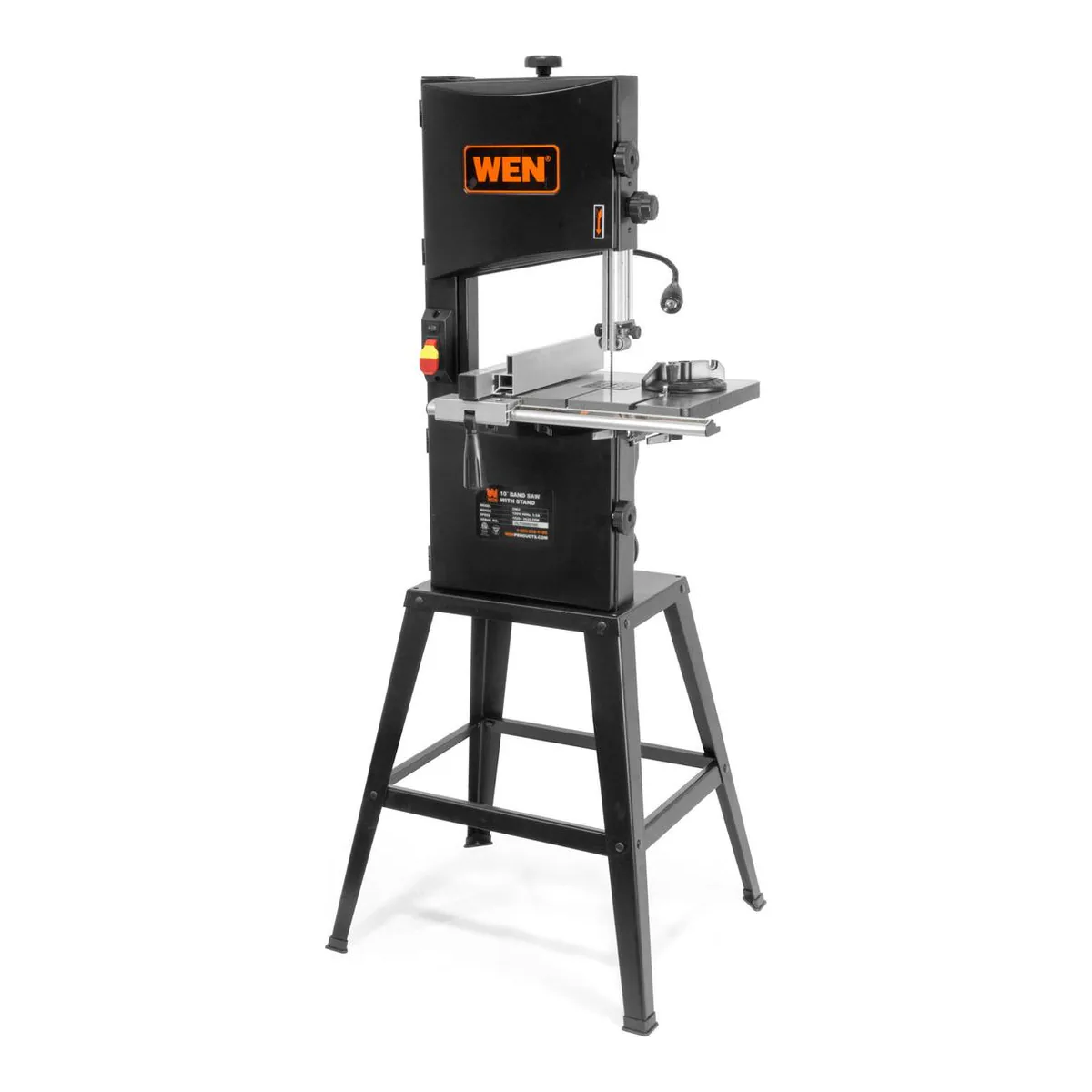
WEN BA3962
Right when the tallest board you resaw stays under 6 inches and the work is curves and light furniture. It runs on a standard 110 volt outlet and takes a 1/8 inch blade for tight scrollwork, so you get onto a real bandsaw without wiring a 220 volt circuit.
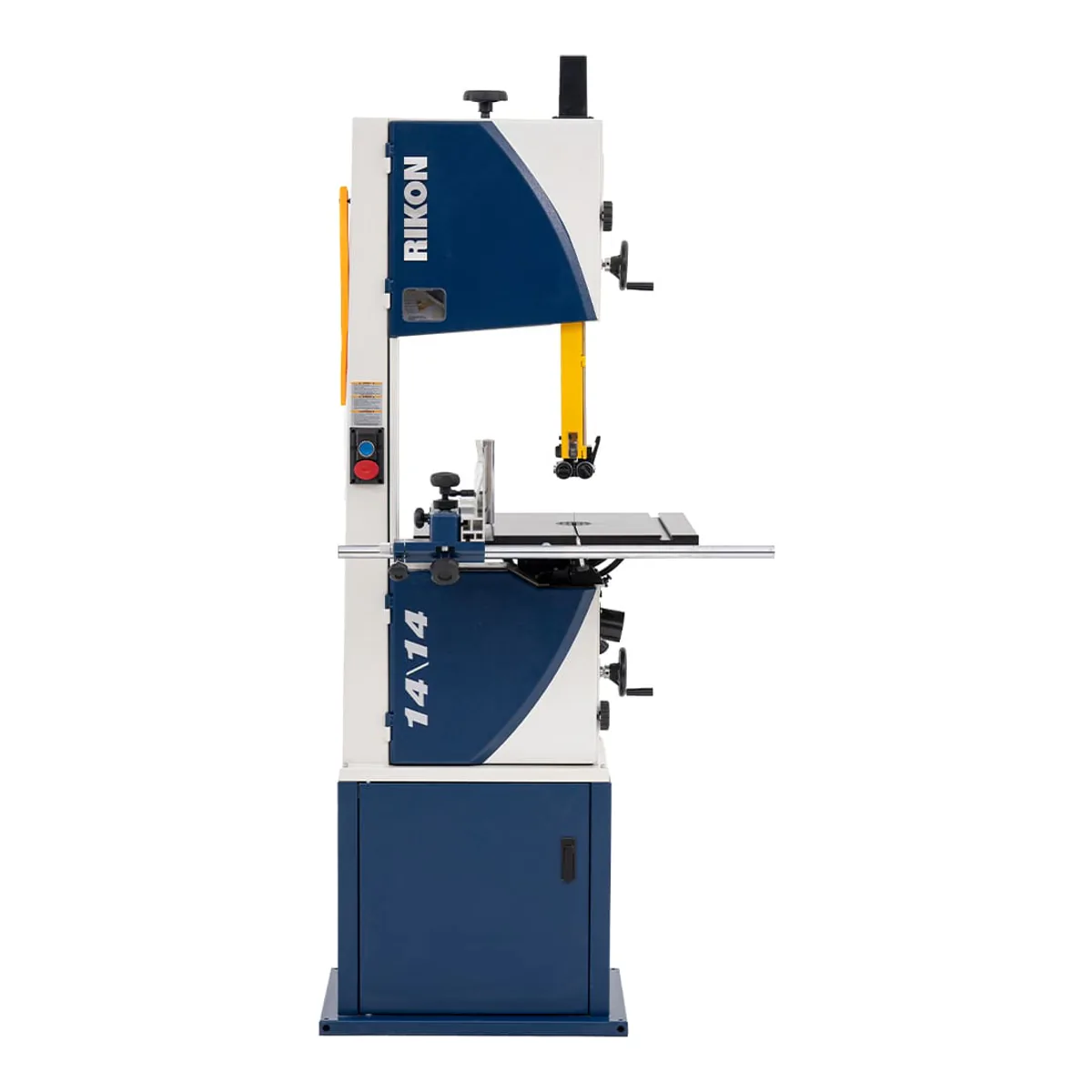
RIKON 14 Deluxe (10-1414)
Right when you want to resaw well past 6 inches with no riser block stacked on a classic frame, on either a 110 volt or a 220 volt circuit. A saw built tall from the start holds blade tension a stretched 14 inch frame cannot.
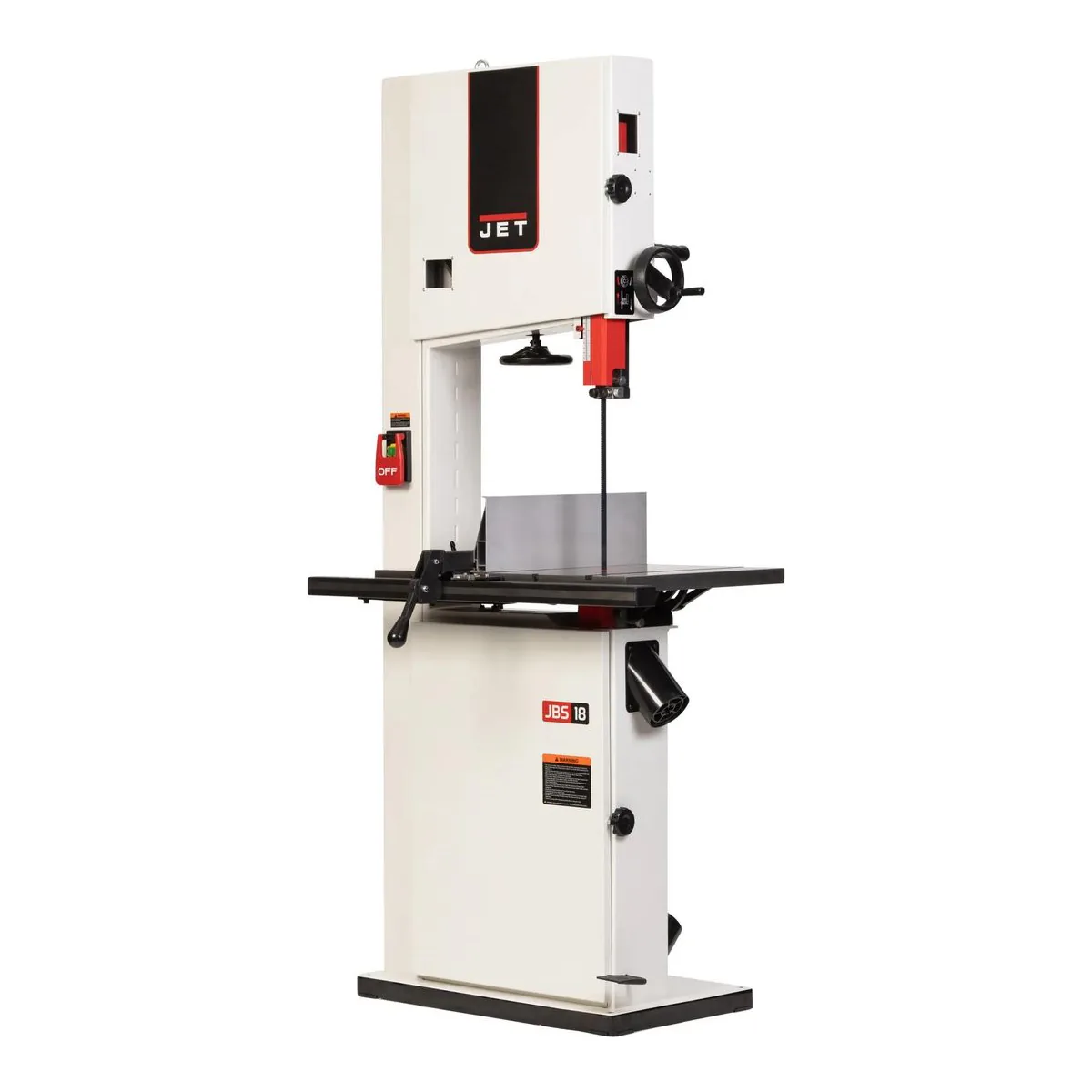
JET JWBS-18SFX-3
Right when you are buying the saw for resaw above all and the stock runs past 12 inches. This is the big motor machine on a 220 volt circuit, where serious resawing lives and the plug changes rather than the checkout option.