Pioneer DJ PLX-1000 review: against the MK7
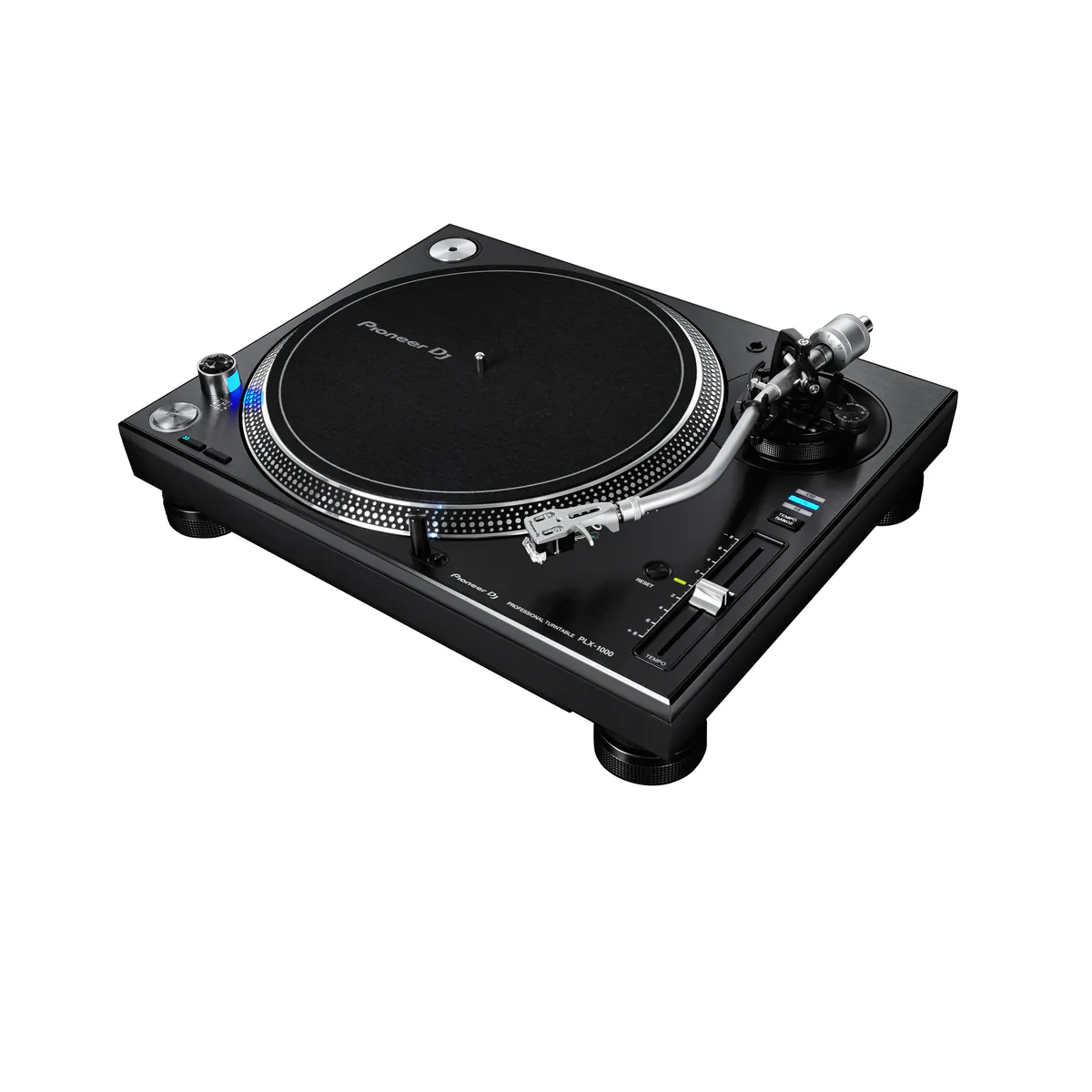
The Pioneer DJ PLX-1000 is the 1200 layout bought new, with more starting torque and a ±50 percent tempo range, but it ships with no cartridge and no phono preamp, and the Technics SL-1200MK7 beats it on reverse play, 78 rpm and stated wow and flutter.
- High-torque direct drive that reaches 33⅓ rpm in 0.3 seconds, with a starting torque of 4.5 kg·cm or more
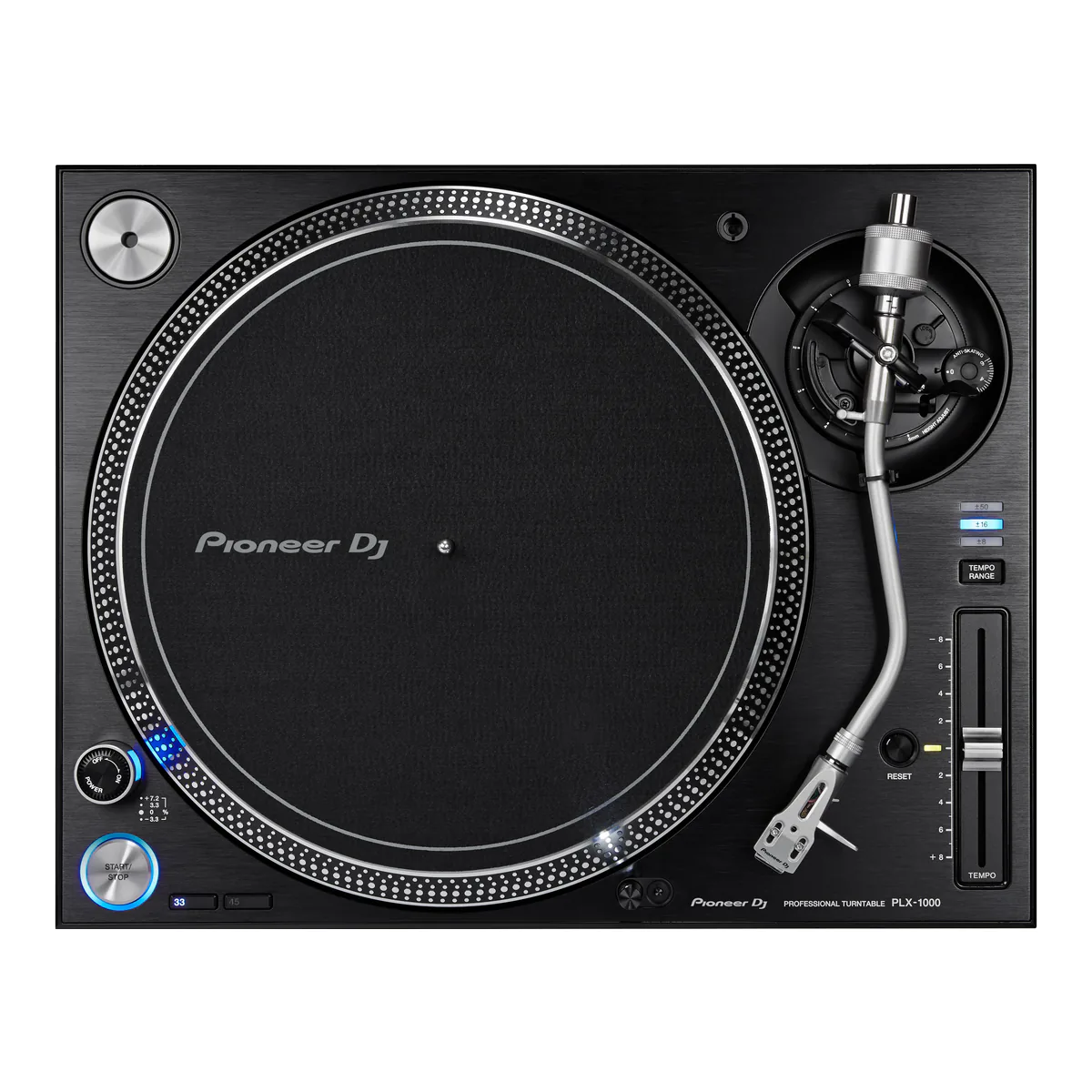
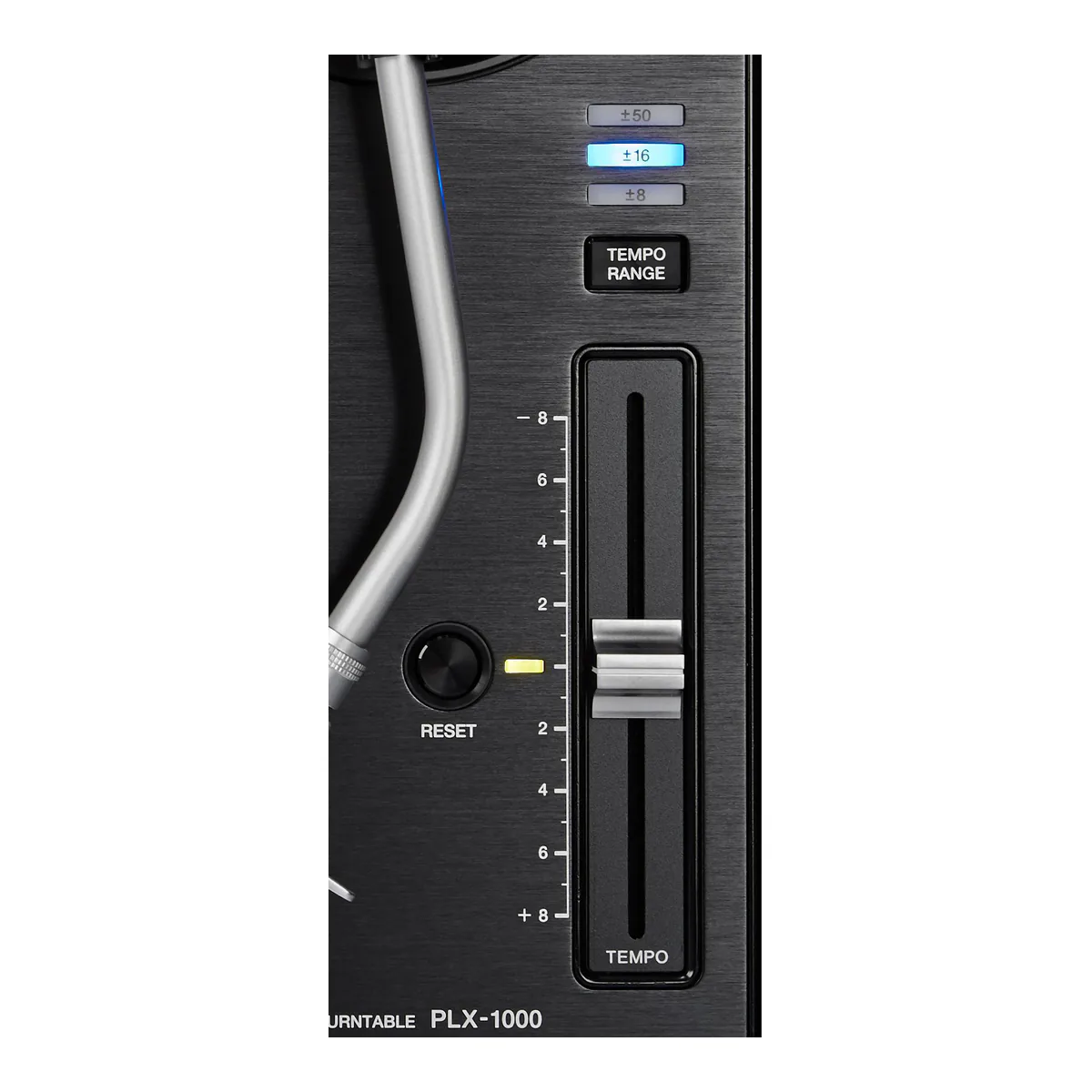
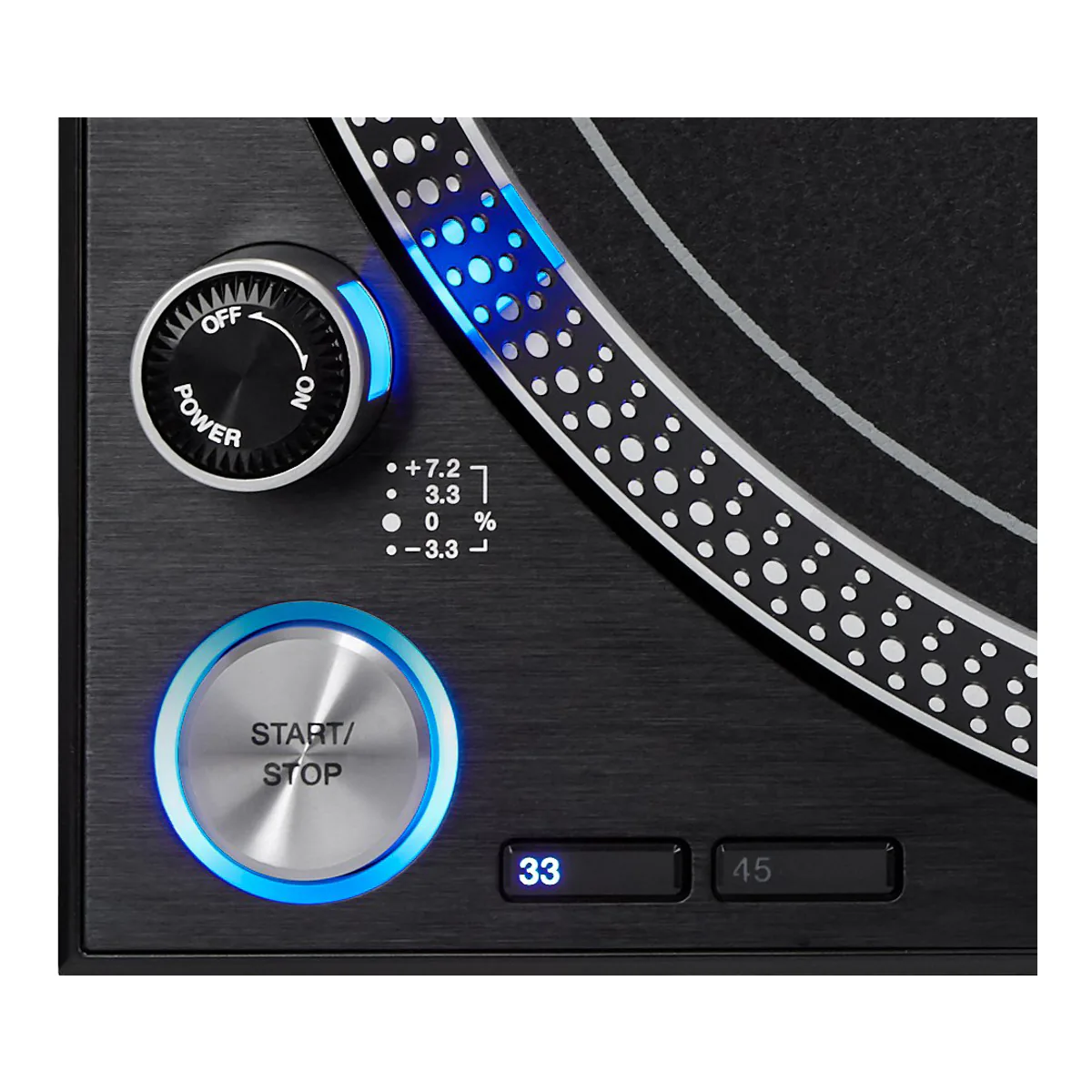
- Multi-tempo control at ±8%, ±16% and ±50%, with a reset button that returns to ±0%
- Heavy-mass die-cast zinc chassis, 8mm-thick resin lower section and 9mm-thick vibration-damping material at the base
- Rubber-insulated tone arm, and insulators using rubber and springs to absorb external vibration
- Detachable power and audio cables, with gold-plated RCA jacks
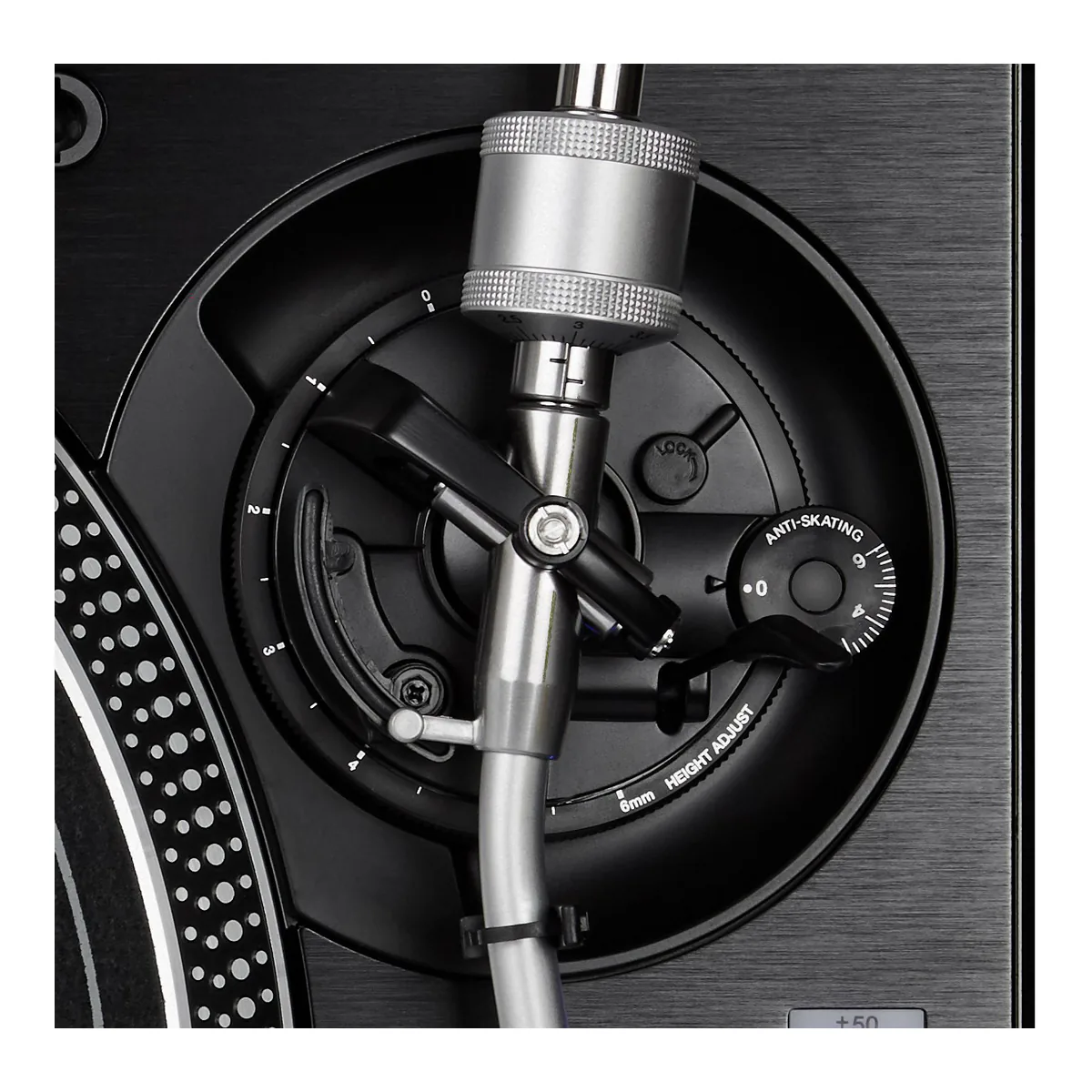
- Universal S-shape tone arm, 230 mm effective length, 6 mm arm height adjustment, stylus pressure 0 g to 4.0 g
- Wow and flutter 0.1% or less WRMS (JIS WTD), S/N ratio 70 dB (DIN-B)
- Cartridge not provided. PHONO output only, for a mixer or amplifier with a PHONO input
We earn a commission on qualifying purchases through the links here, at no cost to you. It never decides what makes the list.
Skip the Pioneer DJ PLX-1000 if you want reverse play, a 78 rpm button, or a turntable you can plug straight into powered speakers. It does none of those. What it does is the 1200 layout, bought new with a warranty, carrying more starting torque than the Technics it copies and a ±50 percent tempo range.
So the buyer is narrow. A DJ who wants a fresh pair for the booth, or a listener who wants a heavy direct drive turntable and will choose their own cartridge. The rival on that list is the Technics SL-1200MK7, and the other decks we cover sit in the turntables category. Sixteen owners among 163 people commenting on plx 1000 videos describe theirs, and we count them one by one.
Does the PLX-1000 have a preamp?
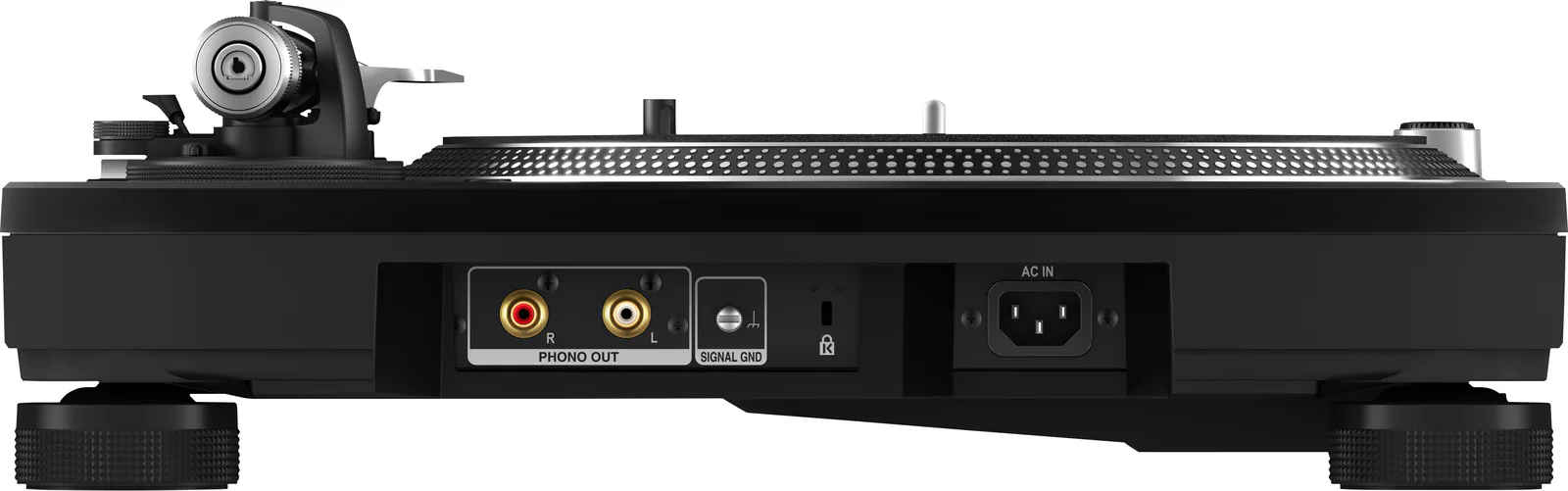
No. The rear panel carries a PHONO OUT pair, a SIGNAL GND post, an AC inlet and a security slot, with no line or USB output. Its signal leaves at phono level, so the deck needs a DJ mixer or an amplifier with a PHONO input, or a separate phono preamp in between. Pioneer's manual warns that an input with no PHONO terminal will not give sufficient volume or sound quality, and that skipping the ground wire brings a power hum.
Both cables detach, and DJ TechTools found the RCA sockets recessed deep enough that a battle-style setup shouldn't need right-angle plugs, though reaching them is fiddly if you change your setup often.
Best cartridge for the PLX-1000
None comes in the box. Pioneer ships a headshell, a shell weight, a sub weight and the balance weight. Those three weights set the window for cartridge mass, screws and nuts included: 2.5 g to 5.5 g with the shell weight, 5 g to 9 g on the balance weight alone, 8.5 g to 12 g with the sub weight.
Pioneer's 2014 launch sheet printed a different window, 3.5 g to 13 g for a single cartridge with no mention of the hardware. The DJWORX launch article still carries it, so a borderline cartridge can look like it fits when the current manual says it does not. Trust the manual. Its overhang template puts the stylus 54 mm from the headshell's mounting point.
Owners split by use. One DJ replaced a first set of needles they rated poorly with Shure M44G cartridges. A home listener running an Ortofon 2M Blue argues the empty headshell is the right call: "DJ cartridge is very different and for me this would just be a waste of money."
PLX-1000 vs Technics SL-1200MK7
Most of the comparisons people type into search name a Technics.
Pioneer built the stronger motor and the heavier deck: 4.5 kg·cm of starting torque and 0.3 seconds to 33⅓ rpm, against the MK7's stated 1.8 kg·cm and 0.7 seconds, on 14.6 kg against 9.6 kg. Technics answers with control. Torque and brake speed each adjust in four steps, it plays in reverse, it runs 78 rpm, and its stated wow and flutter is 0.025 percent WRMS where Pioneer states 0.1 percent or less. Basis: each maker's own documentation. For scratching on a fixed rig the torque and mass favor the Pioneer. For a deck you carry, or a set built on reverse and brake tricks, the Technics.
The PLX keeps one control the MK7 lacks: its tempo button steps through ±8, ±16 and ±50 percent, where the MK7 stops at ±16. DJ TechTools saw the Hanpin Super OEM lineage in the Pioneer's motor, where Technics designs its own coreless one. Their verdict on switching deserves quoting whole: "If you already have a pair of Technics (or Super OEMs) that you are happy with, then no, you shouldn't."
What PLX-1000 owners report
Durability, mostly. Five of the 16 run pairs, and one is past three years on a deck bought in 2022. Another wrote "The PLX 1000 is a great turntable, very solid, precise and pitch control is spot on."
Complaints are small and specific, one owner each:
- a slight rattle in one tonearm bearing of a pair, which they shrug off because tracking is unaffected.
- finish wearing off the edges of the top plate after about four years, where their 1210s look new after three decades, and a pitch lock that is the one control they rate below the Technics.
- a brand new deck that did nothing when first plugged in, with no follow up saying why.
That bearing has history. Stereophile's Herb Reichert had a colleague adjust the arm bearing on his review sample, readers objected, and his follow-up argued that mass-produced arms err toward loose because a tight bearing mistracks. Another owner found no play at all. Check yours on arrival, inside the one-year US warranty, and leave the adjustment screws alone unless you accept the warranty risk Reichert warns about.
It is heavy to carry to a gig. One owner weighed theirs at 15.5 kg with the dust cover and mat on. The manual gives 14.6 kg for the main unit, where the 2014 launch sheet said 13.1 kg, and this review follows the manual.
PLX-1000 for home use
Reichert judged it better than budget audiophile turntables, then went back to check himself and wrote "The PLX-1000 sounds even more solid, detailed, and natural than I said it was last March." Four of the 16 owners use it as a listening deck, one with an Ortofon Concorde Bronze into an Accuphase amplifier and one who arrived after two belt drives disappointed. The detachable headshell suits that buyer: keep a pre-aligned cartridge per headshell and a swap needs only a tracking force check, and maybe anti-skating. Records often share a rack with a digital source, and our network streamer picks cover that half.
PLX-500 or PLX-CRSS12 in its place
The PLX-500 shares the layout and adds what the PLX-1000 leaves out for a beginner: a phono and line output switch, a USB out, and a cartridge and stylus included in the box. For powered speakers, buy that one.
Pioneer's PLX-CRSS12, launched in August 2023, is a hybrid that drives DJ software from a clamp on the record with no tonearm involved. Its maker says the analog sound improves on the PLX-1000, yet its own sheet lists 0.15 percent wow and flutter and 65 dB signal to noise against the PLX-1000's 0.1 percent and 70 dB. Buy the CRSS12 for DVS. For records alone the older deck has the better published numbers, and Pioneer still sells it alongside.
A closer look at the Pioneer DJ PLX-1000
Made up your mind?