Powermatic DDS-225 review: what owners report
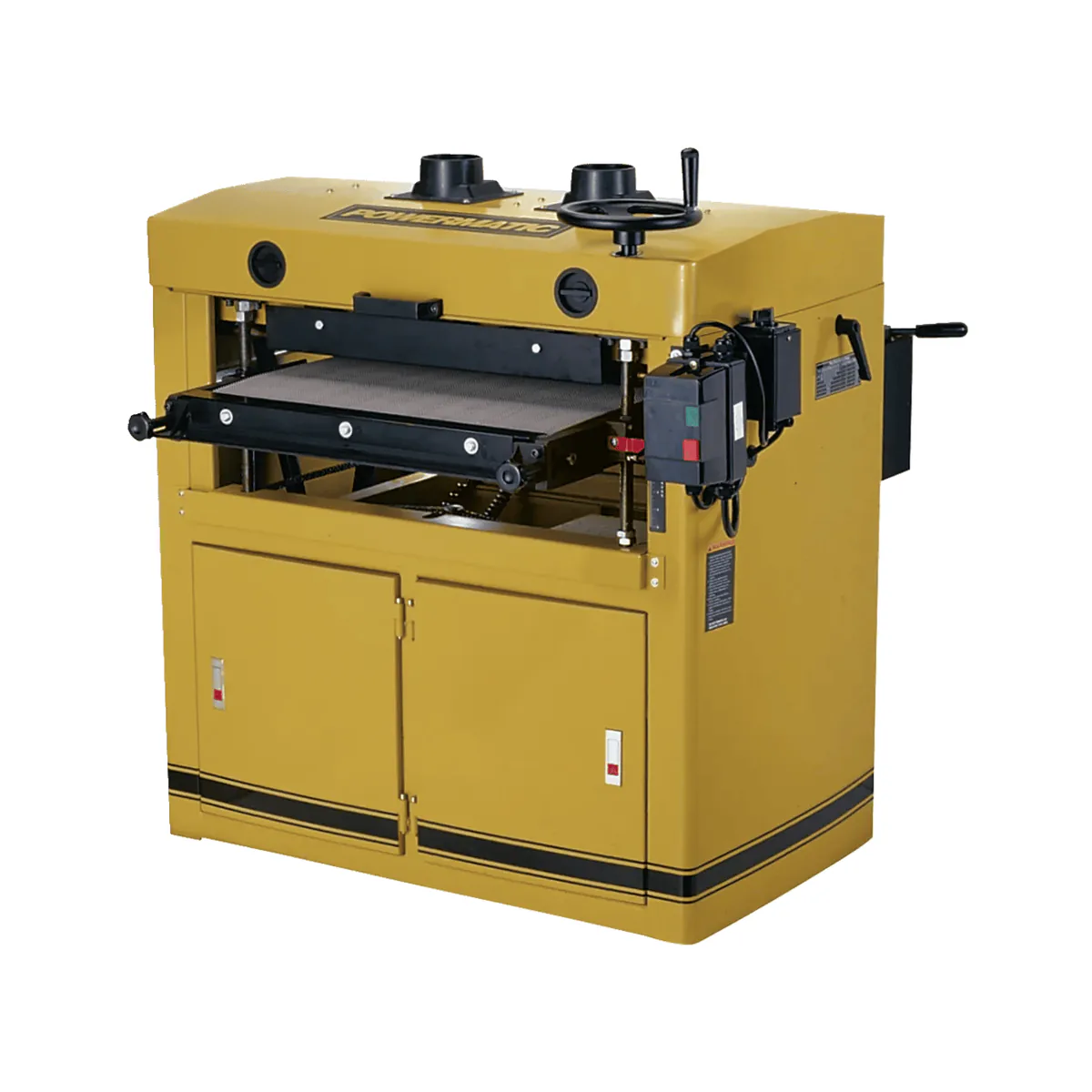
A closed 25 inch dual drum sander that runs a coarse grit and a finer one in the same pass, for a shop with 230 volt power, a collector that can pull 1200 CFM and a floor for 730 pounds. Forum owners report years of use without problems when it is fed light passes. Skip it if your panels run wider than 25 inches.
- 25 inch maximum board width from two 6 inch drums, front and rear
- Dual-drum design, a coarse grit and a finer grit in one pass
- 5 HP motor on 230 volt single phase
- Sands stock up to 5.25 inches thick
We earn a commission on qualifying purchases through the links here, at no cost to you. It never decides what makes the list.
Twelve hundred CFM. That is what Powermatic's manual asks your collector to pull through the two 4 inch ports on the Powermatic DDS-225, and it is the line to check before the sanding width, the motor or the paper. The JET JWDS-2550 asks for 550.
Owners put it more bluntly, and one who bought a used DDS-225 writes "Dust collection is critical with this unit. 3HP bare minimum, 5HP would be better", and recommends at least 6 inch pipe to the two ports. Another went through several 1-1/2 to 2 HP collectors and found none of them good enough until a central system went in.
So the buyer is a shop that already has the big collector and the 230 volt circuit, and sands enough panels and face frames to want two grits in one pass. This Powermatic dual drum sander is the two-drum pick on our drum sander shortlist. What follows rests on Powermatic's manual and product page, the live listing, and 11 people on Sawmill Creek, LumberJocks and Woodworking Talk who say they own one, in threads running back to 2008 (how we count owners).
DDS-225 drum sander width: 25 inches, once
Both drums are 25 inches long and 6 inches across, one behind the other over the conveyor, and the frame is closed at both ends. No open end means no second pass under the drum for a wider panel, so 25 inches is the ceiling. An open-end machine like the JET JWDS-2550 trades that rigidity for 50 inches in two passes and a seam to keep level.
One production shop owner came to it from an open-end 16/32. After five years of running everything through it, they called it "a dream compared to the open ended 16/32 I had before... no chatter."
For wider work the Powermatic DDS-237 is the same machine at 37 inches and 962 pounds, on a 7.5 HP single phase motor or a 10 HP three phase one, per the same manual.
Two grits, one pass: the rear drum dial
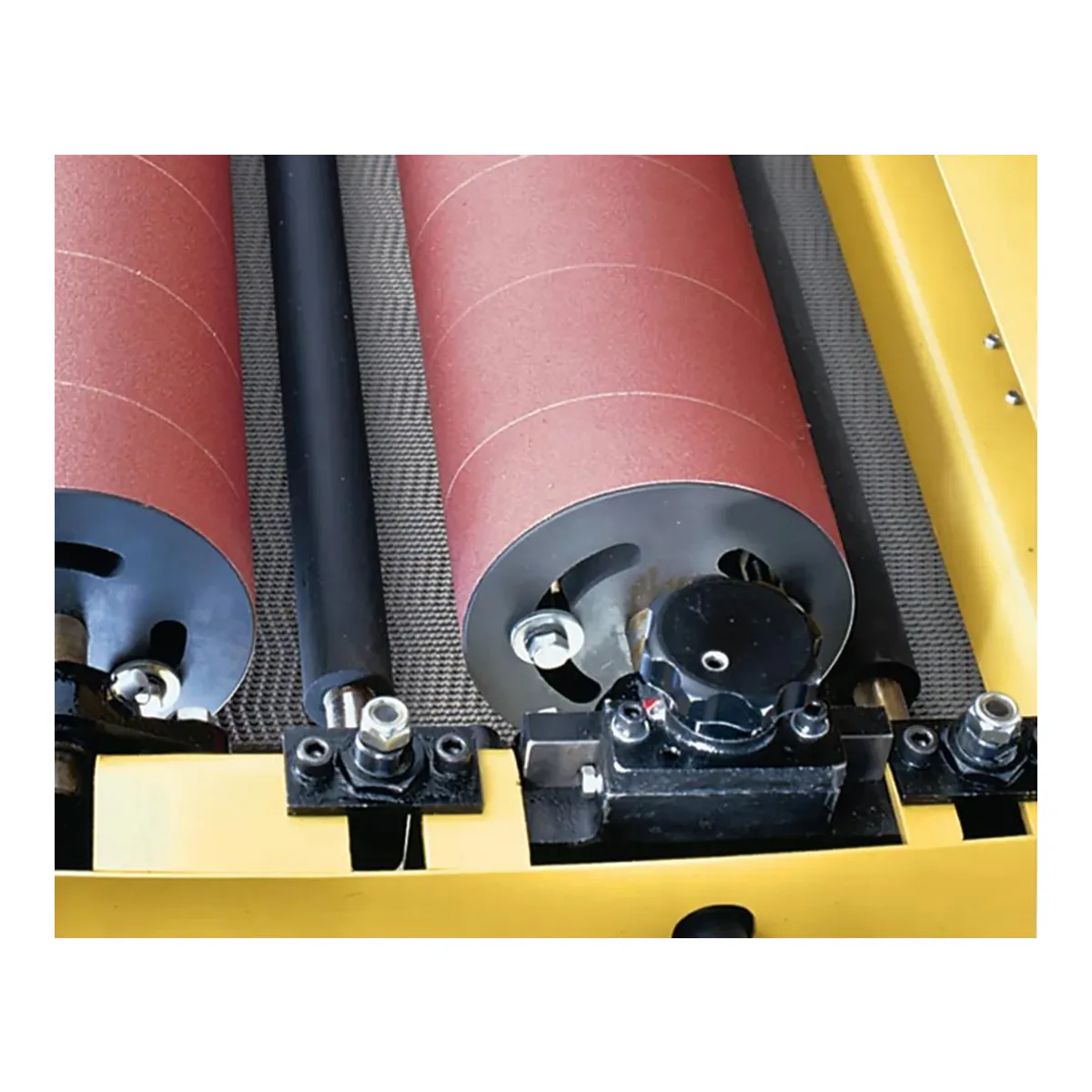
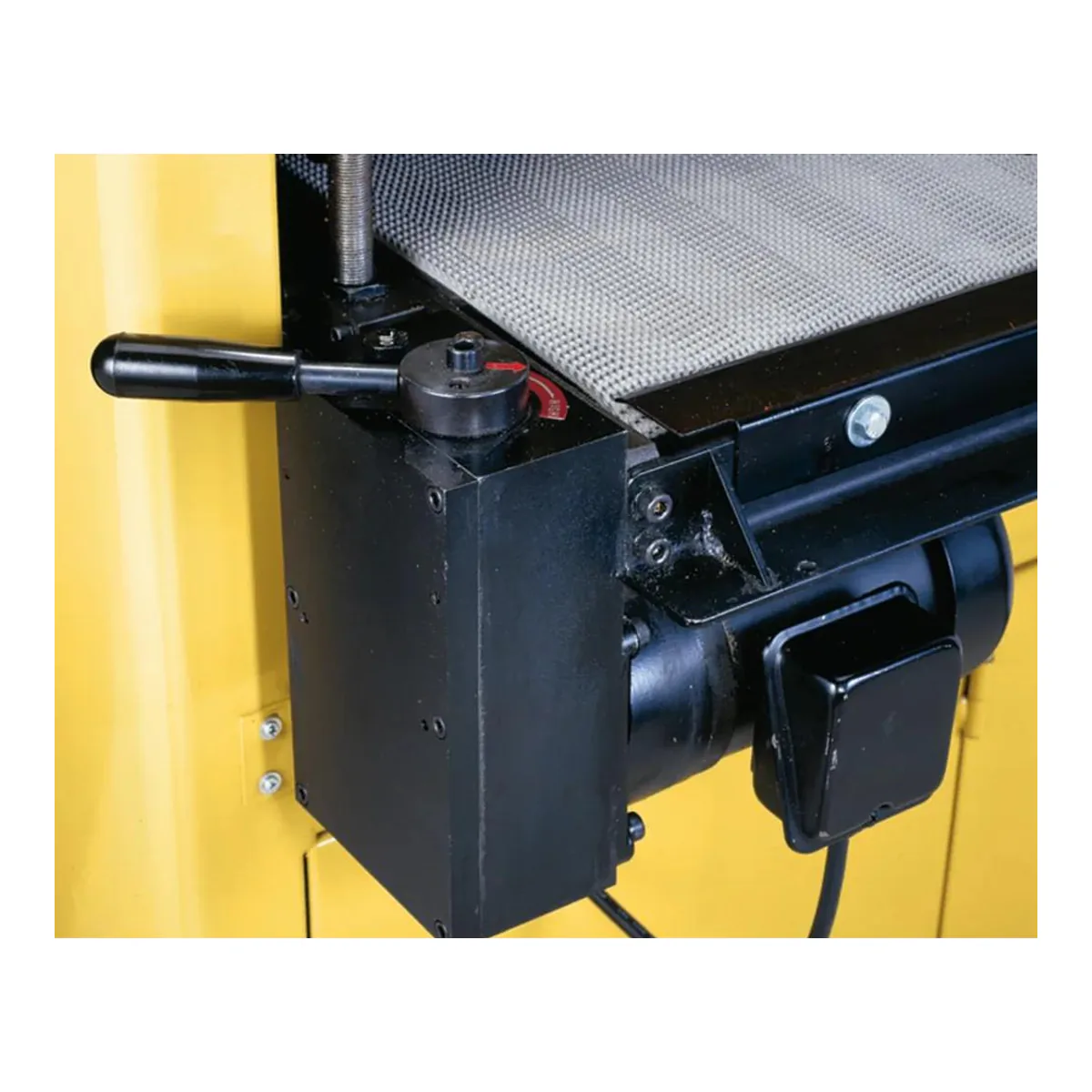
Out of the crate it carries 80 grit on the front drum and 100 on the rear, and the manual's rule is that the coarser grit always goes in front. Two grits need two drum heights, and the rear drum is the one that moves. A knob at each end sets it against a red indicator, and the manual insists both ends read the same.
Owners agree on what that setup costs: "The rear drum must be set very precicely but only took 15 minutes and I haven't touched the adjustments since new." A second owner, who bought theirs used, lists what has to line up before the rear drum adjustment works as designed: conveyor parallel to the drums, drums parallel to each other, the offset right. "The adjustments themselves aren't difficult, but getting them correct is critical."
Thickness and feed: a sander, not a planer
Stock from 1/32 to 5-1/4 inches thick and at least 9 inches long, on a conveyor with two speeds, 8 and 12 SFPM.
A reversing switch backs a jammed board out, and the manual forbids sanding in reverse because the drums only turn one way.
Depth of cut is the advice owners repeat: five of the 11 say to take light passes. Powermatic's rule of thumb for grits finer than 80 is to lower the drum until it touches the board but still turns by hand. One owner settled on "no more than about 1/64th (about 1/8th turn) at a time. Both paper life and sand quality suffer if you take more than this." Two machines in these threads ended up with people who took too much at once. One was sold on by an owner who could not get it to work right, and the other went to a buyer whose seller set them straight with a single sentence about sanding versus planing.
Feed a board at about 60 degrees to the drums to remove stock, which spreads the wear across the paper, then run the last pass or two with the grain. Snipe comes up once, from the production owner, and only on a cut that was too deep.
Motor and circuit: 5 HP on 230 volt
A 5 HP TEFC motor, single phase, 230 volts, drives the drums through a magnetic switch, with a separate 1/4 HP motor on the conveyor. Neither the manual nor Powermatic's product page prints the full load amps or a breaker size, and the manual's troubleshooting table sends you to the motor plate for the amps.
One owner planned a 40 amp circuit, then tried theirs on a 30 amp one and was surprised it "didn't make the noise expected". One trial is not a rating. Have your electrician size the circuit from the plate.
Dust port: two at 4 inches
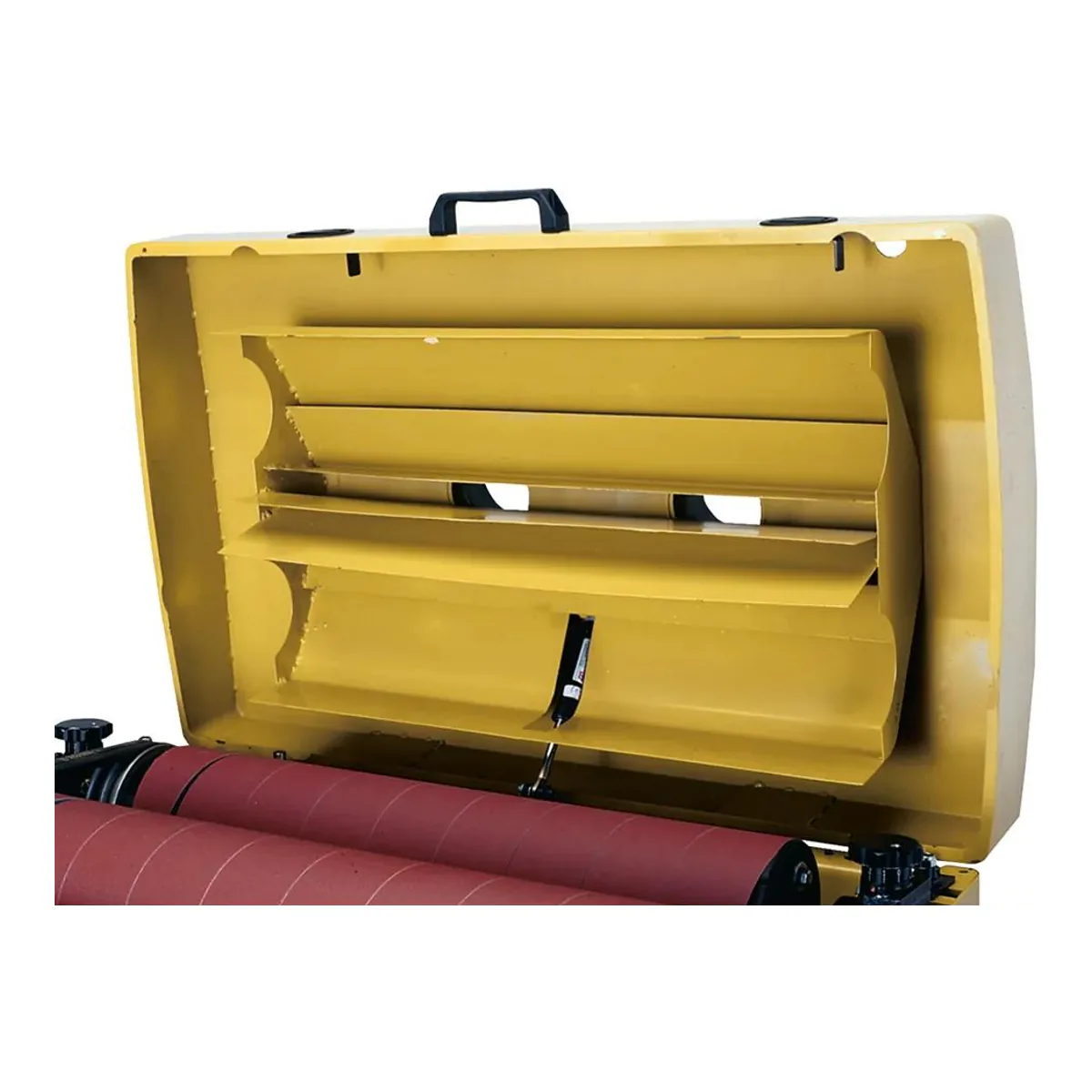
Both ports sit on top of a hood that lifts. Four owners raise dust collection, and none calls it optional. One whose shop is full puts it as "a very good dust collector is a must".
Another doubts the manual's number itself, because 1200 CFM is more than their 20 inch planer asks for. Nobody in these threads measured it, so plan to the manual.
730 pounds: plan where it lives
Net weight is 730 pounds and the overall size 43 by 44 by 43 inches. Its unpacking list starts with a forklift or a hoist with straps. Three owners mention the weight, and five talk about moving it or where it fits. One put theirs on a Grizzly mobile base and found it "down right difficult to roll"; another runs it on Powermatic's own base in a 12x16 shop.
Paper: 3 or 4 inch rolls
Seven owners talk about wrapping the drums. Six report no trouble with the wrap itself, though one of them dropped a cleat screw inside the machine. "The paper is not hard to replace. You do not need to remove the drums to replace paper," writes the owner of three years, and both widths work. With 525 square inches of paper on each drum, the production shop goes a long time between changes, and a hobby owner has changed paper twice in years of steady use.
If you buy used, read the one failure. That owner's paper "shifts under load", overlapping into a groove in the board or opening a gap, and the thread ends without a fix.
What owners compare it with
A SuperMax 25x2, a Woodmaster, and the Performax 16/32 that two of them traded up from. Nobody in these threads cross-shops the JET open-end. Five say they are happy with it, one calls it very accurate, and one notes it is made in Taiwan.
Keeping a DDS-225 running
Grease the four table leadscrews, put a dry lubricant on the pressure roller bushings, and keep the chain under the table clean and oiled. Used buyers get tripped up by the gearbox instead. Two could not find the EP2 oil the manual names, and Powermatic told one of them "80-90 weight gear oil."
Powermatic's warranty table splits the machine: five years on woodworking machinery, one on motors, and two for a machine used commercially.
A closer look at the Powermatic DDS-225
Made up your mind?