Best drum sander: four picks by width, circuit and drums
The best drum sander is set by single-pass width, thickness and the circuit behind it. Four picks, from a benchtop on a 15 amp circuit to a 5 HP dual drum.
We earn a commission on qualifying purchases through the links here, at no cost to you. It never decides what makes the list.
The picks
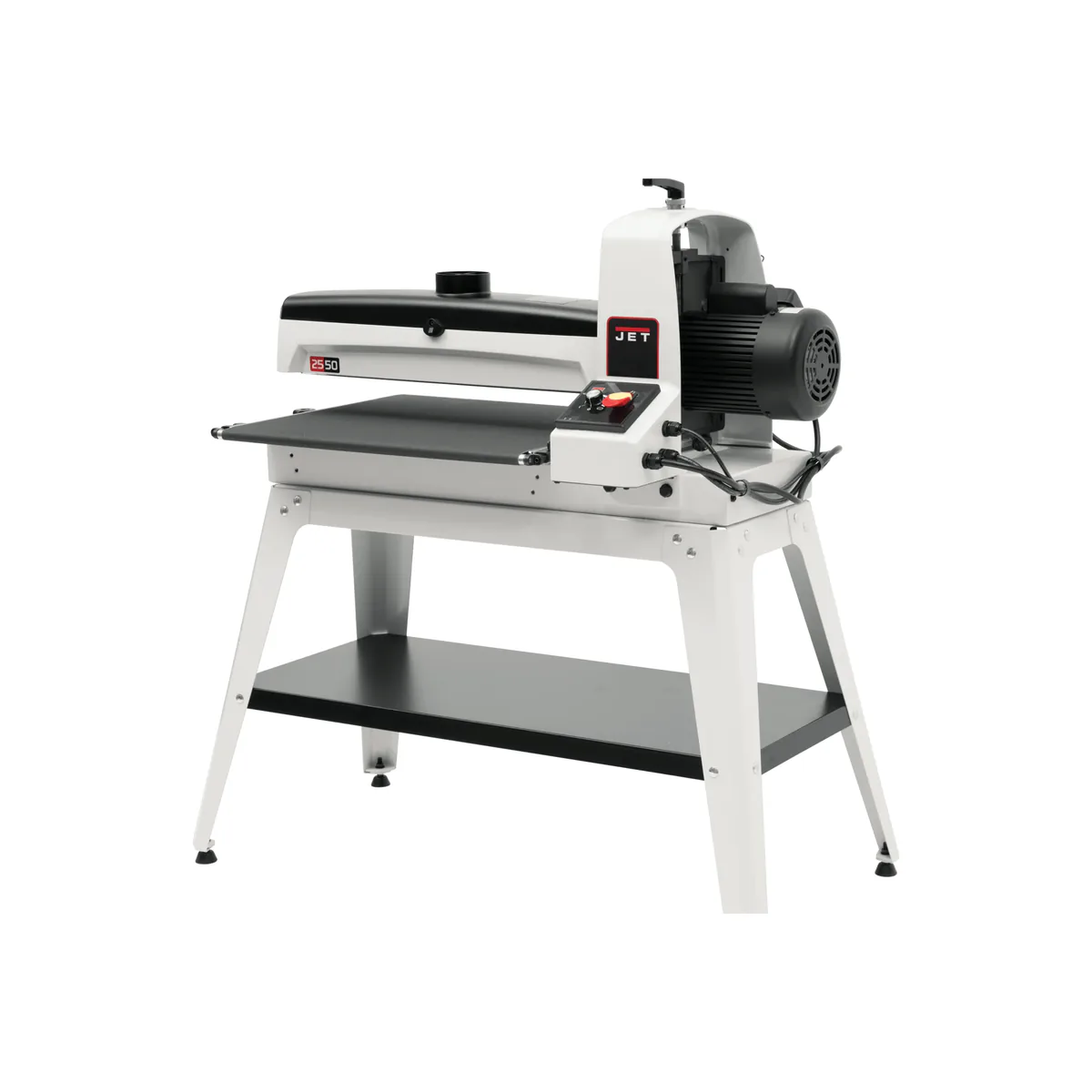
Best drum sander overall
JET JWDS-2550
A 25 inch open-end drum that finishes a 50 inch panel in two passes, 4 inches thick, on a 115 volt circuit.
- 25 inch single-pass drum, 50 inch maximum board width in two passes
- 1-3/4 HP motor on 115 volt single phase
- Open-end single-drum design on an open stand
Skip it if your panels run over 25 inches every week, since each one becomes two passes with a seam to keep level.
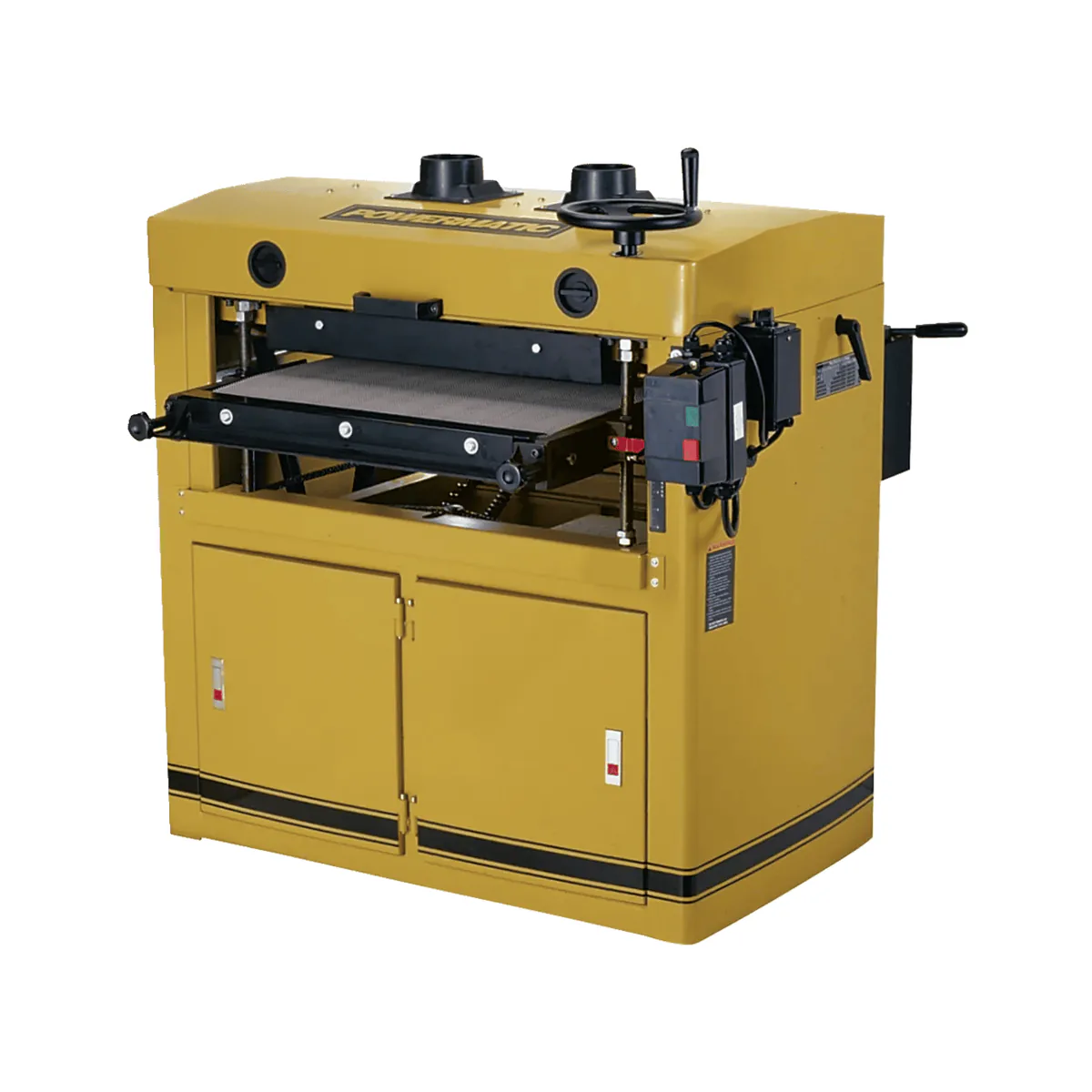
Best dual drum sander
Powermatic DDS-225
Two 6 inch drums, front and rear, so a coarse grit and a finer one work the same pass, at 5 HP on 230 volt.
- 25 inch maximum board width from two 6 inch drums, front and rear
- Dual-drum design, a coarse grit and a finer grit in one pass
- 5 HP motor on 230 volt single phase
Skip it if your widest panel is over 25 inches, or your collector cannot supply 1200 CFM at the machine.
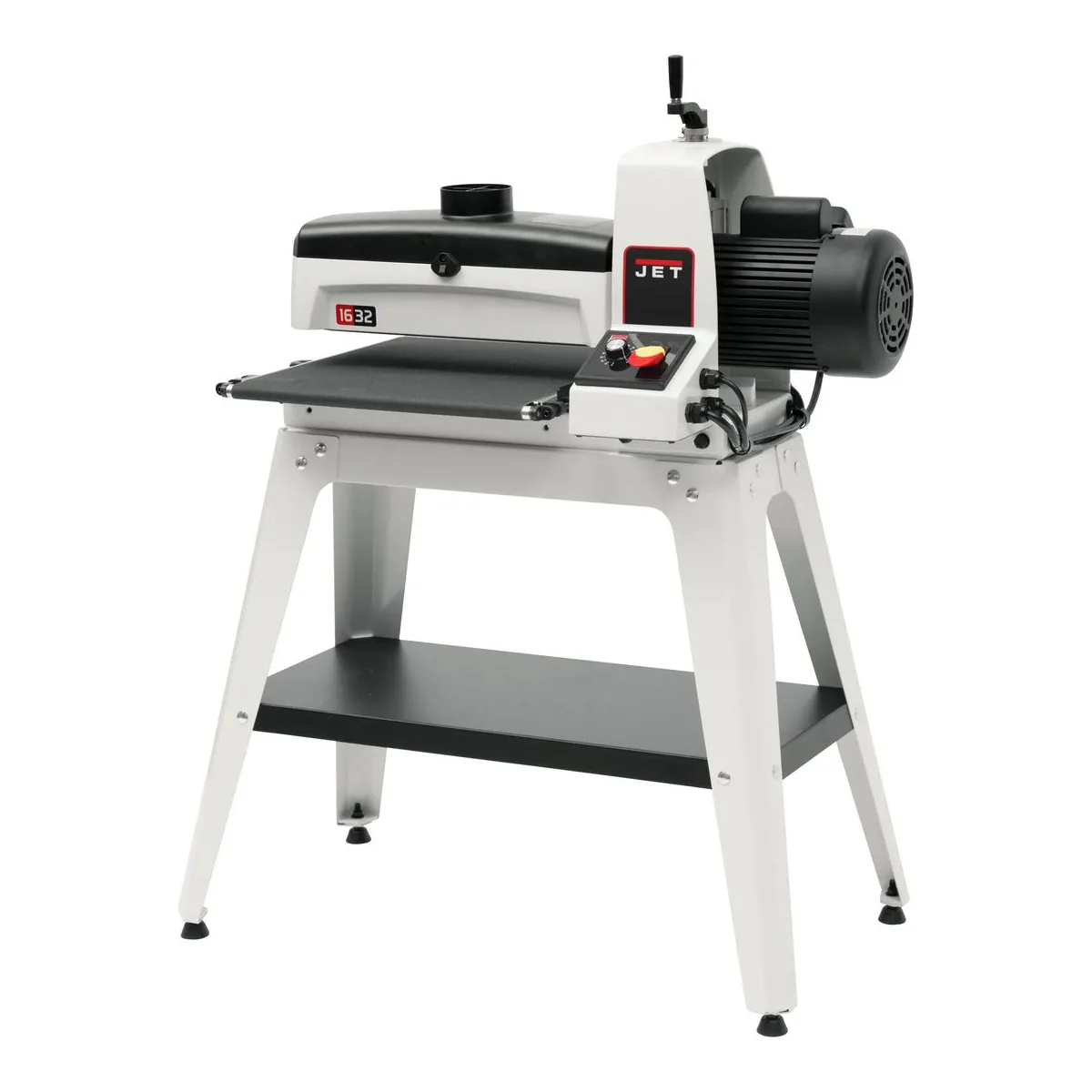
Best drum sander for a small shop
JET JWDS-1632
A 16 inch open-end drum with a 32 inch two-pass ceiling and a feed control that slows the conveyor before the motor bogs.
- 16 inch drum with a 32 inch double-pass ceiling
- Open-end single-drum design with SandSmart auto feed control
- Sands stock up to 3 inches thick
Skip it if you work stock thicker than 3 inches.
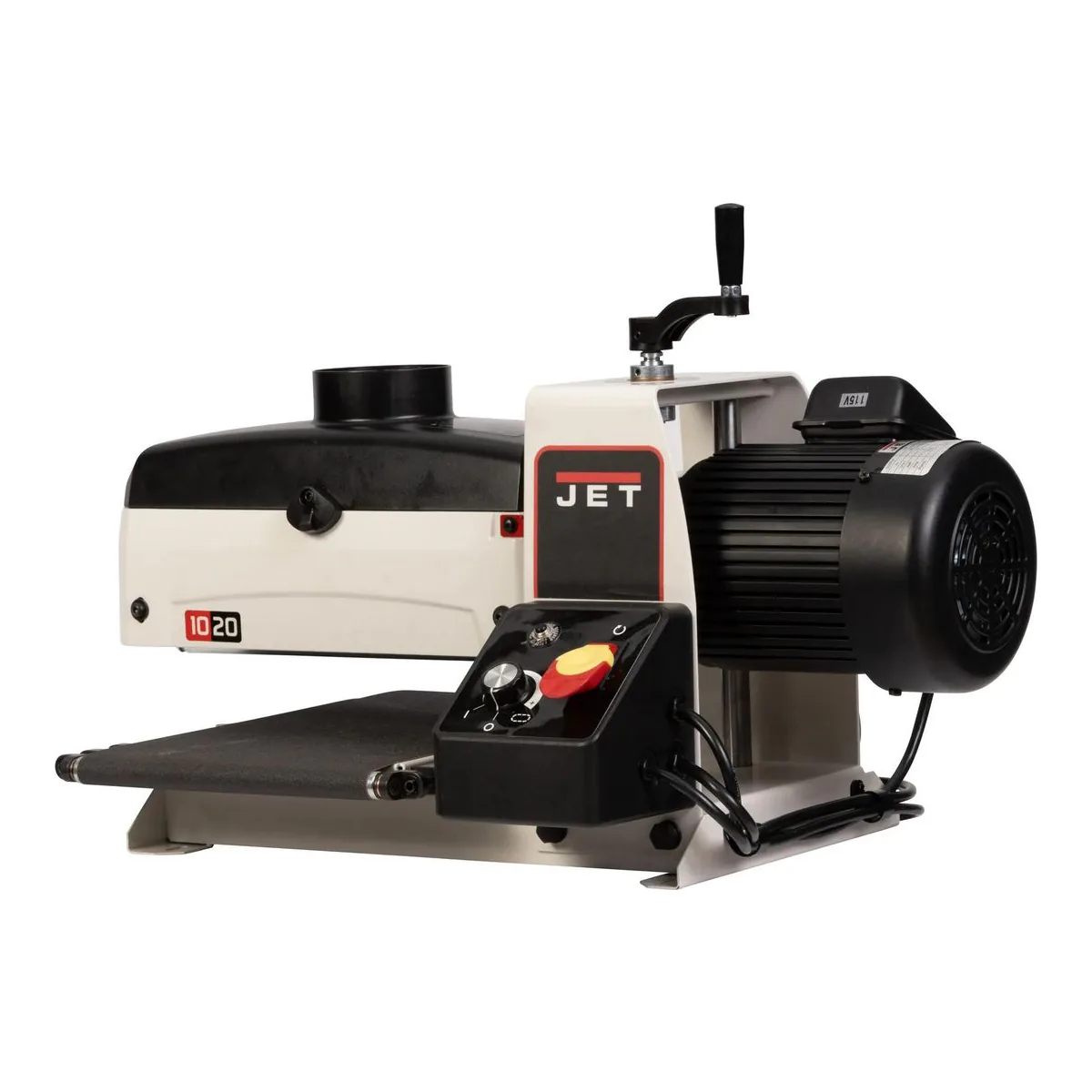
Best benchtop drum sander
JET JWDS-1020
A 10 inch benchtop drum at 73 lb, the one pick here that JET rates for a 15 amp circuit.
- 10 inch drum with a 20 inch two-pass ceiling
- 1 HP motor drawing 8 amps, on a dedicated 15 amp, 115 volt circuit
- Sands stock up to 3 inches thick
Skip it if you often sand doors or panels wider than 10 inches.
If you flatten a glue-up twice a year, a drum sander is the wrong purchase, and a card scraper and an afternoon do the job without the dust collection one of these needs behind it. The best drum sander is for the shop that sands panels, cutting boards and face frames every week, where getting each one flat by hand is the bottleneck.
These four split the shelf the way it actually divides: by how wide a board goes through in one pass, how thick it can be, whether it is an open end drum sander with one drum or a dual drum machine with two, and what circuit sits behind the motor.
What these picks rest on
Nearly every figure below comes out of the maker's own operating manual, with a few features off the maker's product page. Where the two disagree the manual wins, and on JET's site they disagree often: the JWDS-1020's own page lists it at both 1 HP and 1.5 HP. Two owner evidence packs were run here. On the JWDS-1020, ten of 313 YouTube commenters identify as owners of a Jet 1020 or 10-20, and that count shapes its section below. On the JWDS-2550, six people verifiably own one across the pack, the owner videos and one forum thread, and that count shapes its review. Neither ranks anything.
The four drum sanders on one axis
| Spec | JET JWDS-2550 | Powermatic DDS-225 | JET JWDS-1632 | JET JWDS-1020 |
|---|---|---|---|---|
| Sanding width, single pass | 25 in, 50 in in two passes | 25 in, one pass only | 16 in, 32 in in two passes | 10 in, 20 in in two passes |
| Thickness capacity | 4 in | 5-1/4 in | 3 in | 3 in |
| Motor (hp, volts, amps) | 1-3/4 HP, 115V, 15 A | 5 HP, 230V | 1-1/2 HP, 115V, 14 A | 1 HP, 115V, 8 A |
| Feed rate | 0 to 10 FPM, SandSmart | 8 and 12 SFPM | 0 to 10 FPM, SandSmart | 0 to 10 FPM |
| Drum diameter and speed | 5 in, 1725 RPM | Two 6 in, 1700 RPM | 5 in, 1725 RPM | 5 in, 1725 RPM |
| Dust port diameter | 4 in, 550 CFM | Two 4 in, 1200 CFM | 4 in, 400 CFM | 4 in, 400 to 550 CFM |
Basis: manufacturer documentation, the operating manual for each machine. Each CFM figure beside a port is the minimum extraction the manual asks for. It describes the collector you need, not anything the sander moves itself. The amps are listed full load current. Powermatic's manual gives the DDS-225 no amp figure at all.
Best drum sander overall: JET JWDS-2550
One 25 inch drum, open at the outboard end, so a board up to 50 inches wide goes through twice: sand one half, turn it end for end, sand the other. It takes stock 4 inches thick, runs a 1-3/4 HP motor on 115 volt, and carries SandSmart, which watches the load on the drum motor and slows the conveyor on its own, and stops it under extreme load, to keep the drum motor out of overload. For one machine that covers a cabinet door on a single pass and a tabletop on two, nothing else here is as wide on 115 volt.
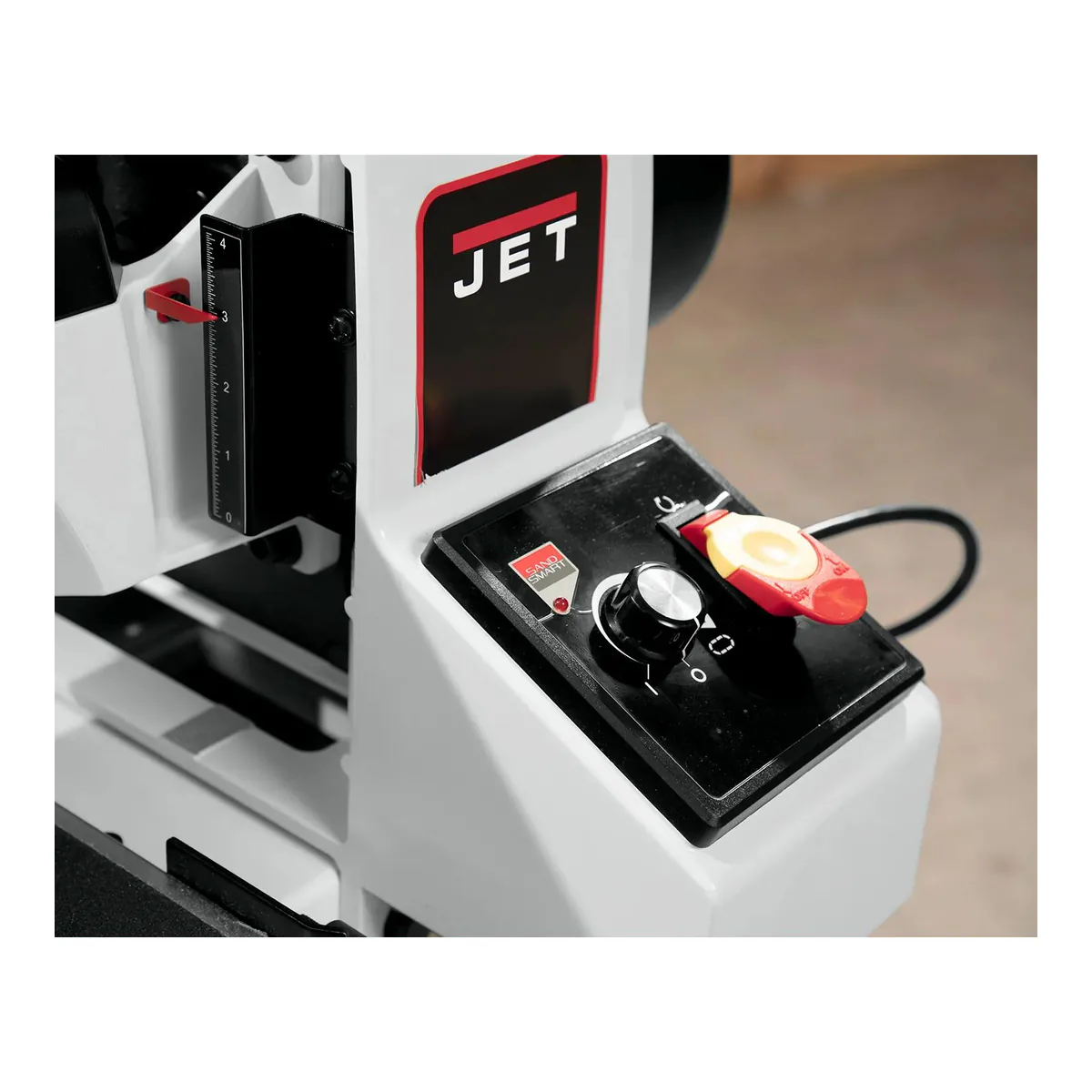
Read the circuit carefully. At full load the motor draws 15 amps and the cord ends in a 15 amp plug, yet the manual asks for a dedicated 20 amp circuit, so an ordinary shared 15 amp circuit is not what JET means even though the plug goes in. The second pass has its own setting too, and our JWDS-2550 review walks through the table offset that keeps a ridge out of a wide panel.
Skip it if your panels run over 25 inches every week, because every one of them is then a two pass job with a seam to keep level. Buy a machine that does the full width in one pass.
Best dual drum sander: Powermatic DDS-225
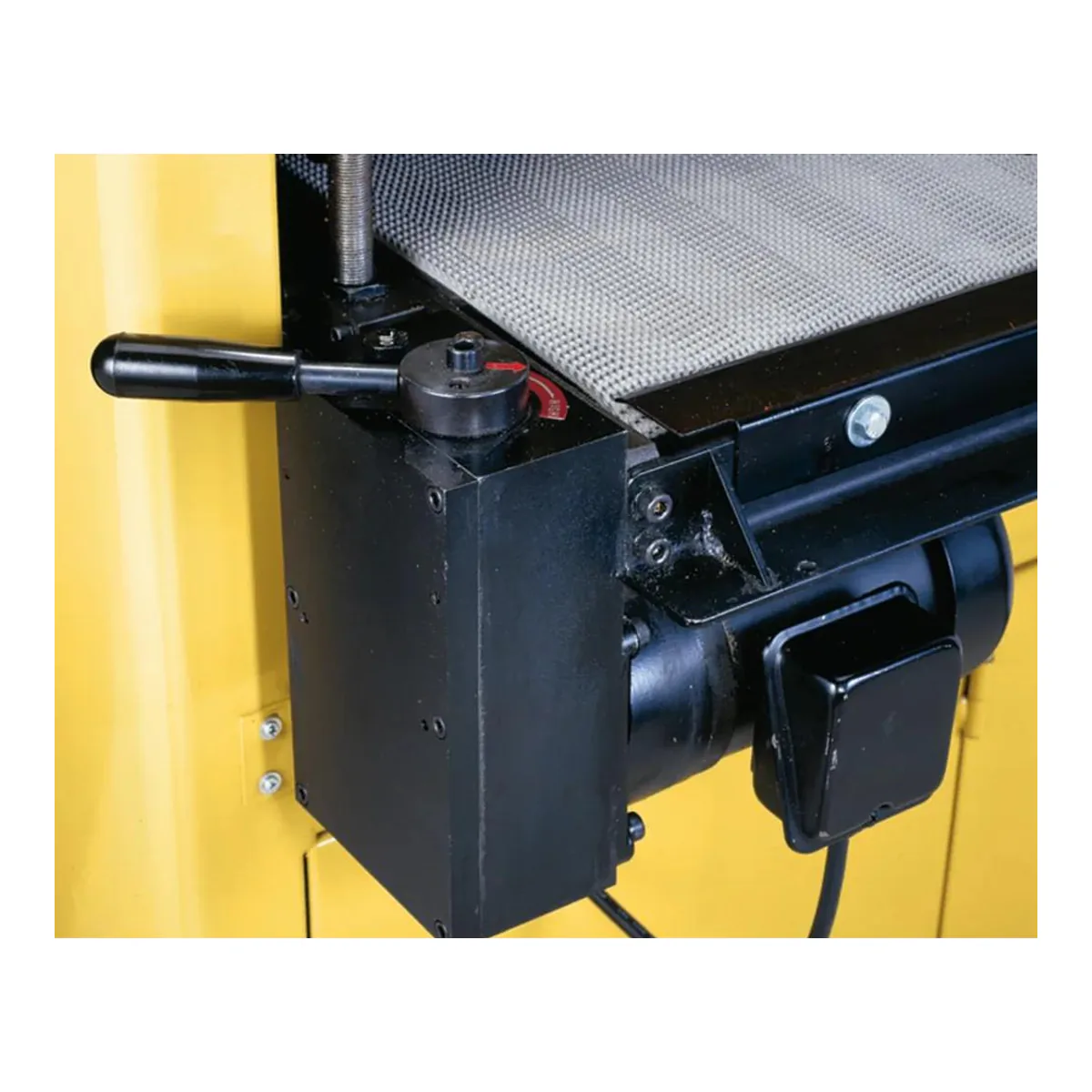
Two 6 inch drums sit one behind the other across the same 25 inch pass. It ships with 80 grit on the front drum and 100 on the rear. Powermatic's rule is that the coarser grit always goes in front, so once the rear drum is set to its own height for the finer grit, one pass puts both grits on the board. A single drum needs a paper change between them. Its rear drum adjusts independently of the front, the table rides on four jackscrews, and the conveyor sands at 8 or 12 surface feet per minute, reversing only to back a board out, since the drums turn one way. It takes stock 5-1/4 inches thick, the most of the four.
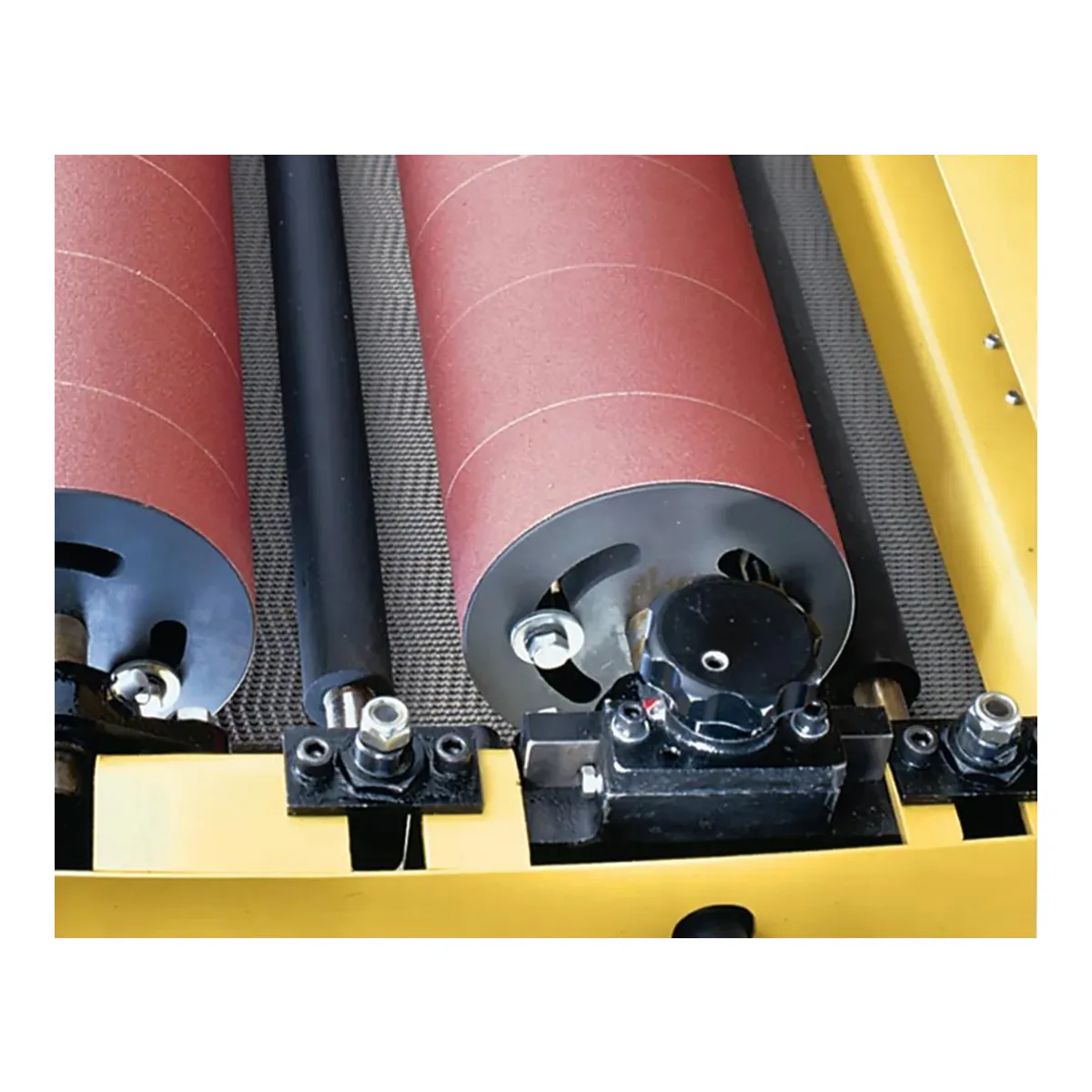
The manual spells out what that costs.
Its motor is 5 HP on 230 volt single phase through a magnetic reversing switch, the two 4 inch ports want 1200 CFM between them, and the machine weighs 730 lb net.
Skip it if your widest panel is over 25 inches, because the manual gives 25 inches as its maximum board width with no two-pass figure behind it, or if your collector cannot supply 1200 CFM at the machine.
Best drum sander for a small shop: JET JWDS-1632
The 16 inch sibling of the pick at the top, with the same open end, the same SandSmart feed control and a 32 inch ceiling in two passes. Its 1-1/2 HP motor draws 14 amps, and the manual puts it at 156 lb net and 20 by 49-15/16 by 39-5/8 inches assembled. The manual asks for 400 CFM at the port.
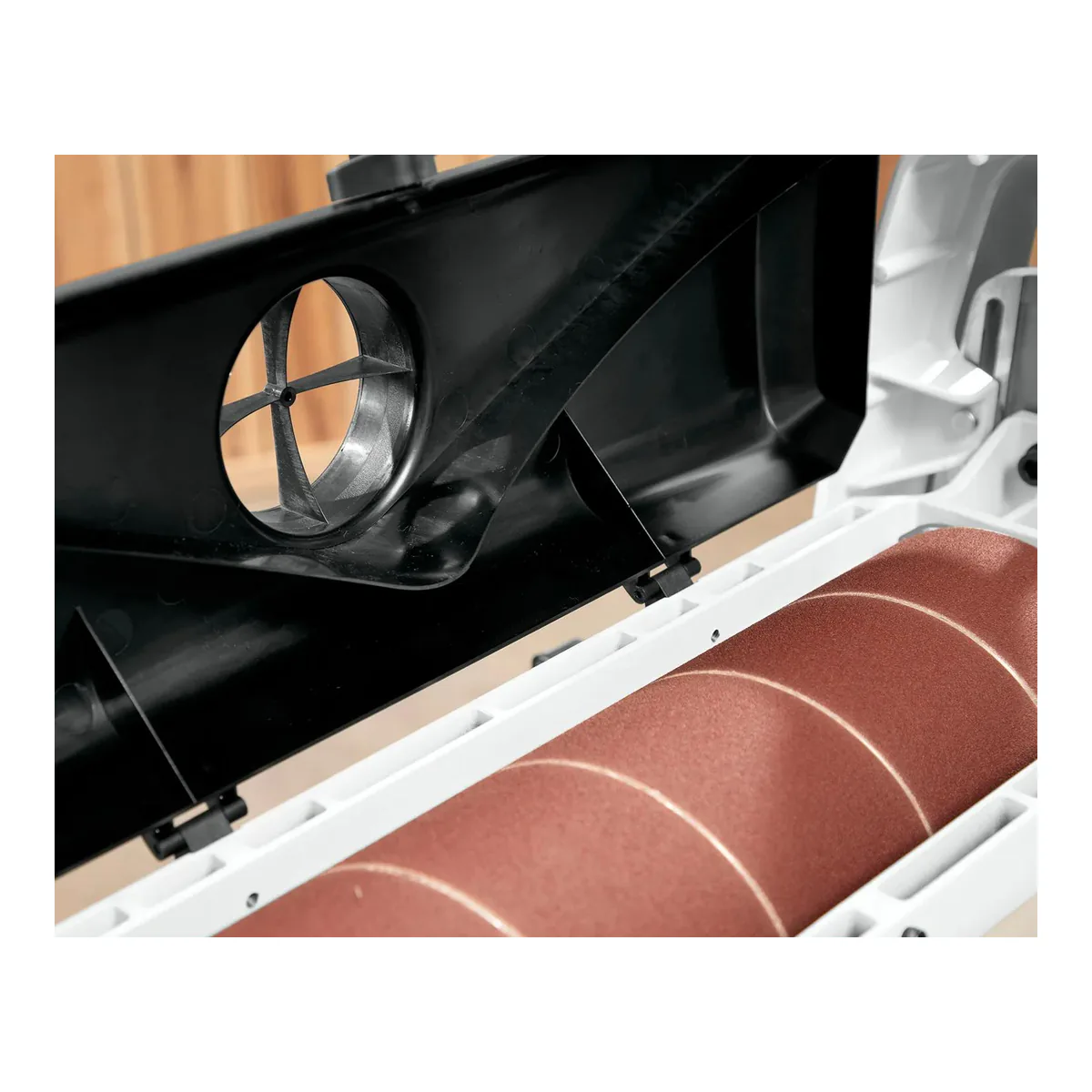
Its setup section is worth reading before a first wide board. JET's check is to run a scrap past the outboard end of the drum, turn it end for end without touching the height, and look for a ridge where the two passes overlap, then lower the outboard end of the table until the ridge is gone.
Skip it if you work thick stock, because 3 inches is the limit, where the 25 inch machine above takes 4.
Best benchtop drum sander: JET JWDS-1020
A 10 inch drum on a 73 lb machine that bolts to the bench, sanding 20 inches in two passes and stock up to 3 inches thick. Of the four, only its manual asks for a dedicated 15 amp circuit. The other two JETs ask for 20, and its 1 HP motor is listed at 8 amps, the lightest ask on the wall of anything here.
Do not size its dust collection by its footprint.
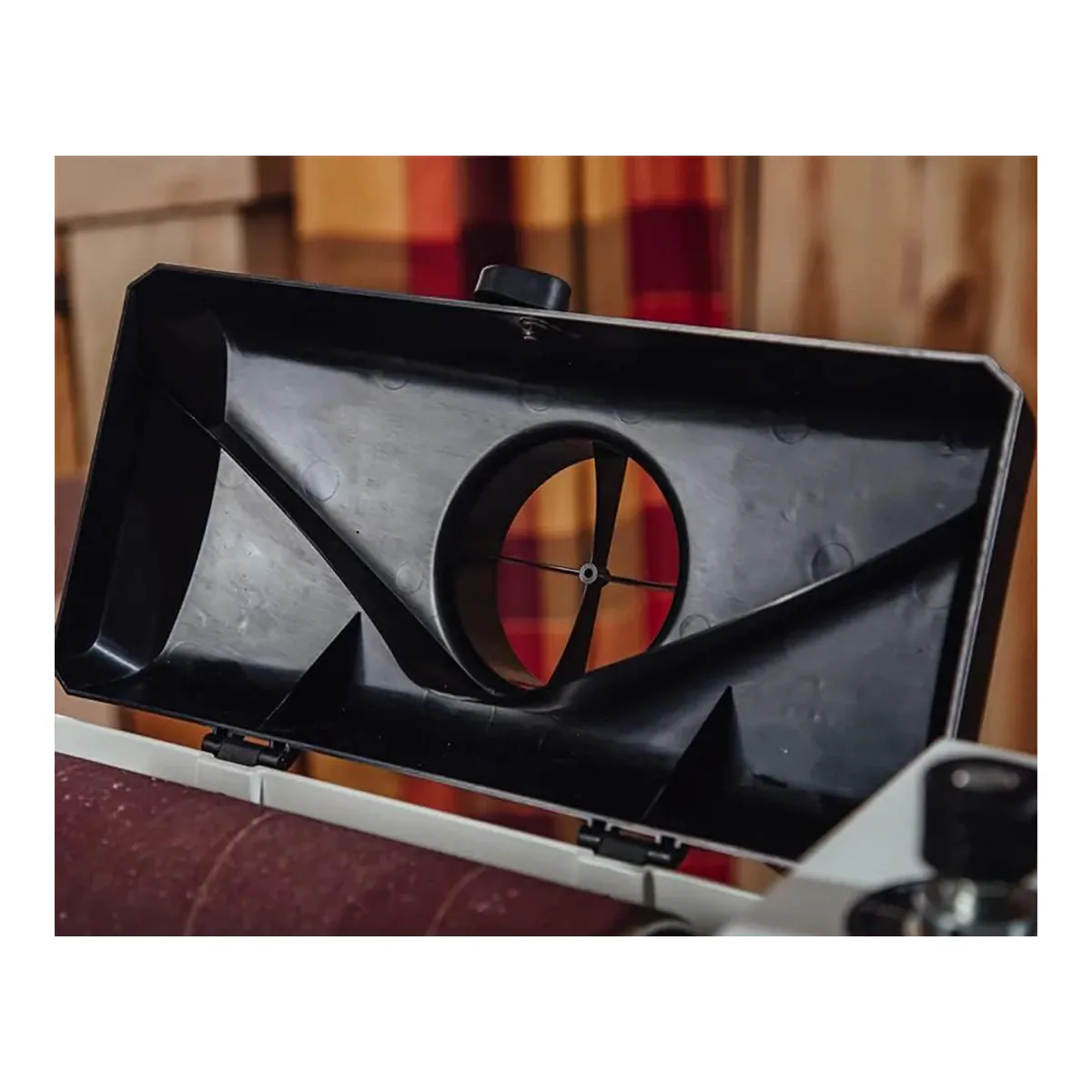
JET's manual gives two figures for the JWDS-1020's 4 inch port: 550 CFM in its specification table, the same as the 25 inch JWDS-2550, and a 400 CFM minimum in its dust collection section, the figure it asks of the 16 inch machine. It also allows a shop canister vacuum of 16 gallons or more for short sanding sessions, on a hose stepped down to 2-1/2 inches. For anything longer than that, build to the larger figure.
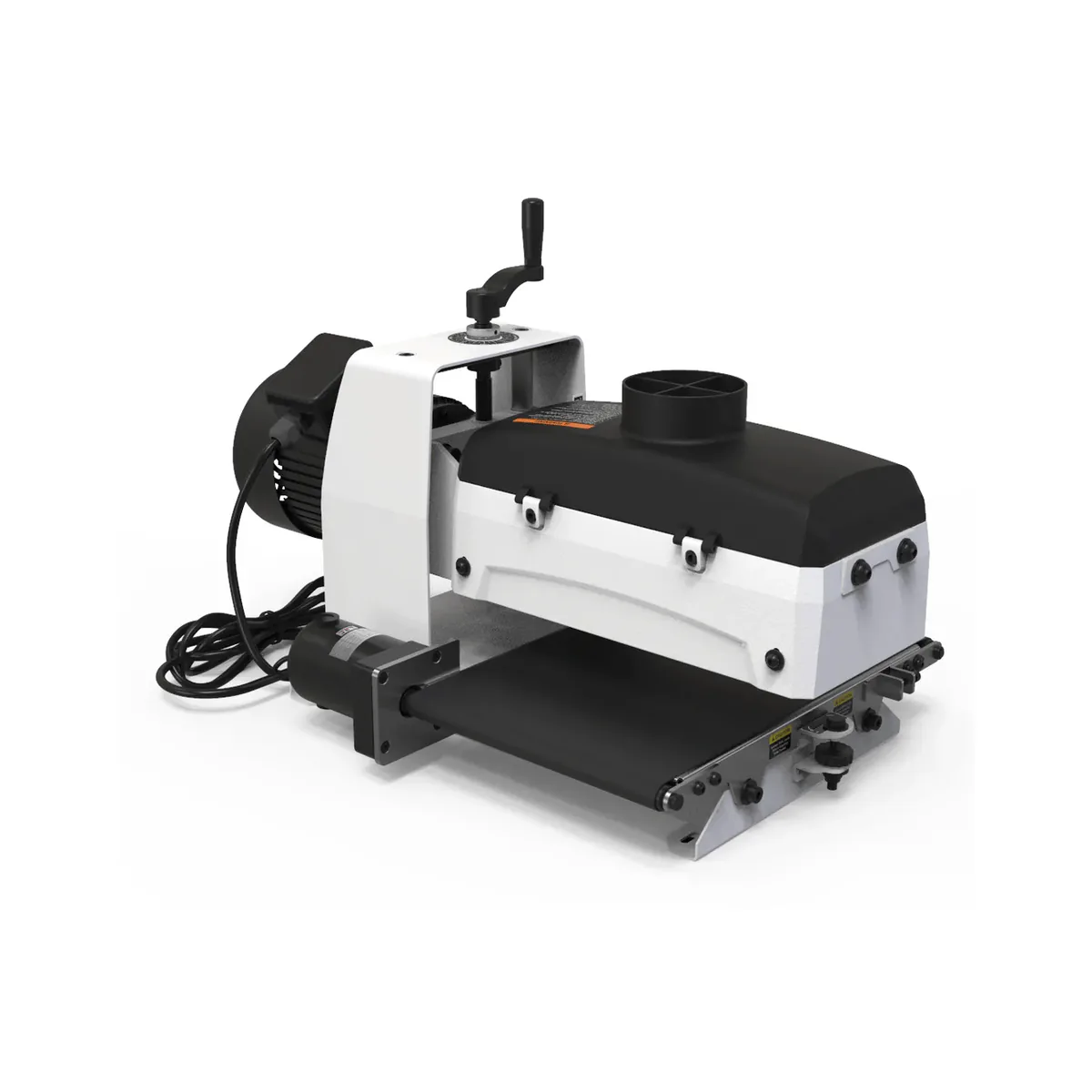
The chore its owners name is changing the paper. Three of the ten in the pack, independently, say changing the paper is the hard part, one of them that "replacing the paper on the 10/20 is dreadful" because the access comes from the infeed side, not the top. Two more report trouble on arrival, one damaged in shipping and one a defect that a replacement motor did not fix. Not every one of them says which generation of the 10-20 they own.
Skip it if you build cabinet doors or panels wider than 10 inches often, because every one becomes a two pass job on a drum that short, and the JWDS-1632 above takes six more inches in each pass.
What decides the best drum sander for your shop
Single-pass width first. The second number on an open-end sander is a two pass ceiling, and the sizing page for drum sanders walks through what that shift costs in alignment. Thickness second, since it does not track width: the 16 and 10 inch JETs both stop at 3 inches.
Then the wall and the collector, which is where buying a drum sander for woodworking actually goes wrong. Three of these four run on 115 volt, and only the benchtop one is rated for a 15 amp circuit. All four state a minimum extraction, from 400 CFM to 1200, so check the collector you already own against the figure in the table before the sander arrives. If it falls short, the dust collectors on the next shelf over are sized by the same airflow. A drum sander usually lands in a shop that already has a bandsaw resawing the boards it will flatten, and the two want their dust ports on the same run.