Powermatic PM1500 vs PM1500T: Is ArmorGlide Worth It
Buy the PM1500 if 14 inches of resaw on a dedicated 3 HP, 230 volt circuit is what you need, because nothing the PM1500T does moves that number. Step up to the PM1500T only if a low friction, corrosion resistant table and five extra miter gauge stops are worth paying for on their own, since that is the entire, honest difference between them.
What decides it: Whether ArmorGlide's coated table and the extra miter gauge stops are worth paying for when every capacity number is identical.
We earn a commission on qualifying purchases through the links here, at no cost to you. It never decides what makes the list.
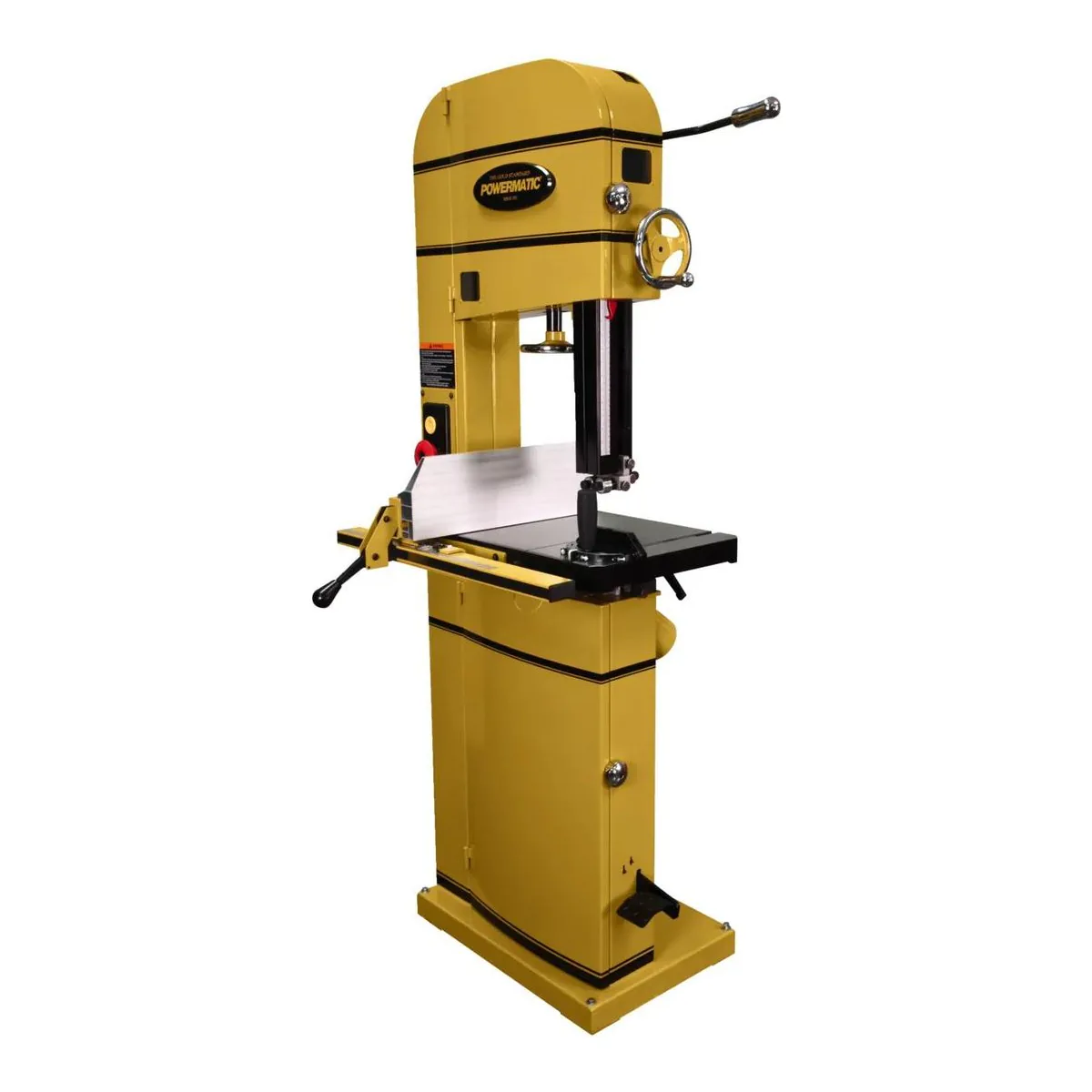
Powermatic PM1500
Pick this if a shop that wants the full 14 inch resaw and 3 HP motor and has no complaint about a plain cast iron table or a miter gauge with two stops.
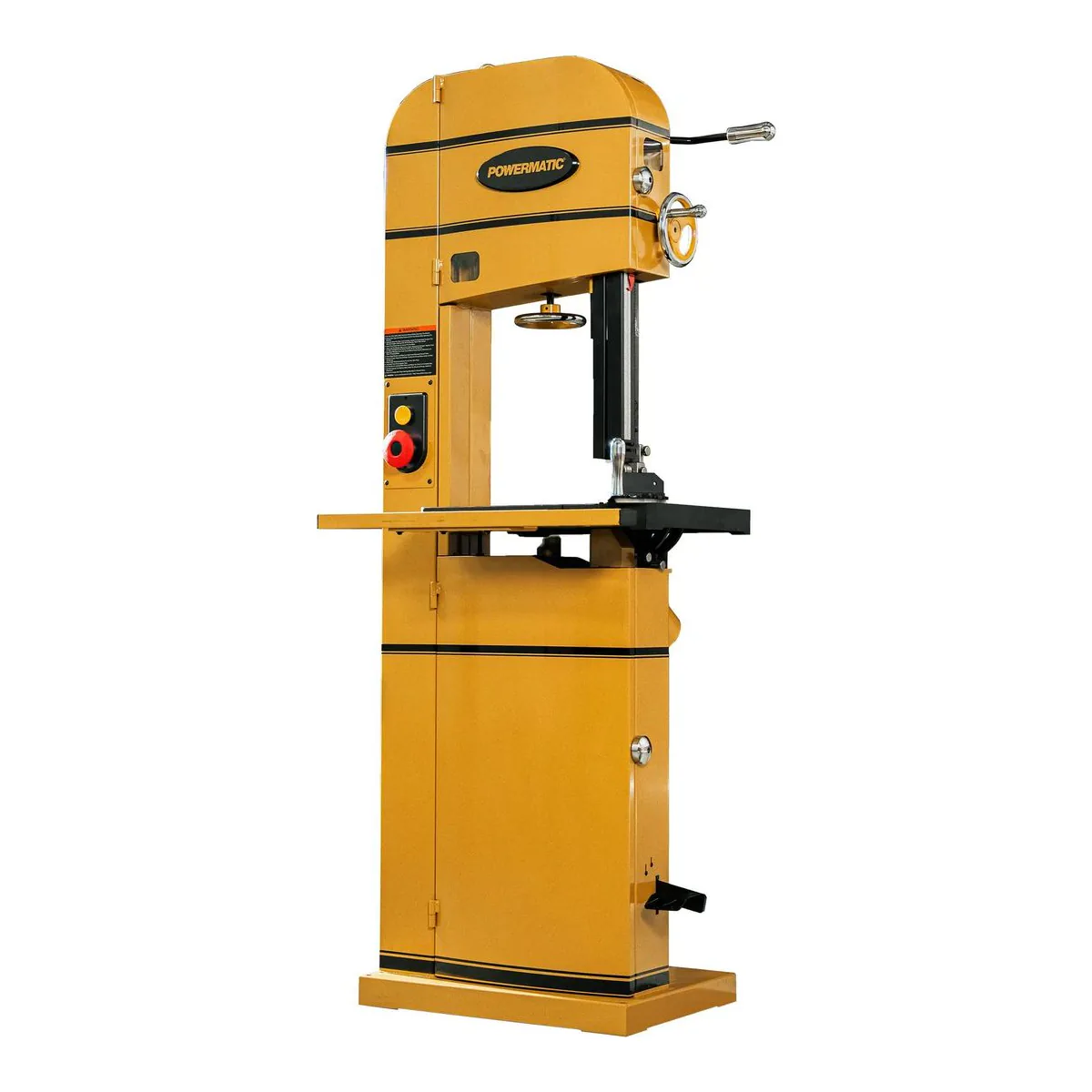
Powermatic PM1500T
Pick this if a shop that resaws figured stock often enough to fight rust on an uncoated table, or that actually uses miter angles other than 45 and 90 degrees.
| Powermatic PM1500 | Powermatic PM1500T | |
|---|---|---|
| Resaw capacity (basis stated) | 14 in | 14 in |
| Throat depth | 14-1/2 in | 14-1/2 in |
| Motor (hp, volts, amps) | 3 HP, 230V | 3 HP, 230V |
| Blade length and width range | 153 in, 1/8 to 1 in | 153 in, 1/8 to 1 in |
| Table size and tilt | 21-1/2 x 16 in | 21-1/2 x 16 in, ArmorGlide coated |
| Dust port diameter | Two 4 in | Two 4 in |
| Weight | 394 lb | 394 lb |
Line up a Powermatic PM1500's spec table against a PM1500T's and the two columns match down to the amp draw. Powermatic covers both saws in one owner's manual, because underneath the two model numbers sits one bandsaw, plus a table surface and a miter gauge that only one of them gets.
Powermatic PM1500 vs PM1500T: what never changes
Resaw height is 14 inches under a 14-1/2 inch throat on both saws. Each carries the same 3 HP motor, single phase, 230 volt only, drawing 12 amps on a 20 amp dedicated circuit. Blade capacity matches too: 1/8 to 1 inch wide, 153 inches long, running over 15 inch cast iron wheels wrapped in polyurethane tires at 3100 surface feet per minute. Table tilt is 45 degrees right and 10 degrees left on either saw, the trunnion under it is cast iron on both, and dust collection asks for the same two 4 inch ports at 600 CFM. Sound sits at 72 dB either way, and both weigh 394 lb assembled. Nothing here moves when the letter gets added to the model number. A PM1500T cannot resaw deeper, pull less current or run cooler than a PM1500, because it is not a different saw underneath.
Basis: Powermatic's owner's manual, shared across both models.
Footprint matches too. Powermatic lists the same 30-1/4 by 34-3/8 by 80-1/4 inch assembled dimensions and the same 17-3/4 by 25-1/4 inch stand footprint for either saw, so a shop that has already measured a corner for one has measured it for both. Buy either saw off this shelf expecting a different amp draw, a different resaw or a different amount of floor space, and the manual has nothing to back that expectation up.
Basis: Powermatic's owner's manual, shared across both models.
The table surface that actually separates them
A plain ground cast iron table sits under the blade on the PM1500. Swap in a PM1500T and that table carries what Powermatic's manual calls an industrial grade low friction, corrosion resistant coating, sold under the name ArmorGlide on the listing itself. Powermatic's manual never puts a number on how long the coating holds up. It does say something adjacent and real: the PM1500's own maintenance section tells owners to keep that bare table clean and rust free, removing rust with household ammonia, detergent and steel wool, then applying paste wax. No equivalent instruction appears anywhere in the PM1500T's half of the same manual, which is the closest thing to evidence either saw's paperwork offers on what the coating is actually for.
Basis: Powermatic's owner's manual for both models.
A miter gauge that trades one stop for six
Set a workpiece against the PM1500's miter gauge and it locks at two angles, 45 and 90 degrees. Nothing between them holds. Reach for the PM1500T's gauge instead and the count jumps to seven: 0, 15, 22.5, 30, 45, 60 and 67.5 degrees. Six new positions come in and one drops out, the 90 degree stop, which the PM1500T's gauge does not carry on its own scale. Picture frame miters, hexagonal stock, anything off the square-and-45 pair gets a positive stop to index against on the coated saw and nothing to index against on the plain one. For anyone who actually cuts those angles the difference is real and usable. Nowhere else on either machine does a number change at all.
The manual also ties that coating to a specific part. The PM1500T's own miter gauge carries a non marring bottom surface built to protect ArmorGlide, and Powermatic is explicit that only the miter gauge shipped with the saw should touch that table, since a different one risks scratching the same coating it exists to protect. Treat it as a real compatibility limit, more than a footnote: whatever gauge came with a PM1500 years ago is not the one to reach for on a PM1500T.
Basis: Powermatic's owner's manual for both models.
Which one to buy
Start from what you cut, not from the badge on the door. Fourteen inches of resaw on a dedicated circuit is the reason most shops look at either saw, and a plain PM1500 delivers every bit of that number for less than the coated version. Paying more only makes sense for a buyer who already knows they want one of two specific things: a table finish because bare cast iron has rusted on them before, or a miter gauge with real angle stops because their work uses more than square and 45 degrees. Buying the PM1500T for anything past those two reasons is paying for a badge that cuts no differently than the saw below it.
Neither of these two is where the real capacity jump on this shelf sits. Powermatic's full three saw bandsaw ladder shows that the smaller saw one rung below both of these gives up real resaw depth and horsepower, which is a trade the PM1500T never actually makes against the plain PM1500. For how this pair stacks up against Jet, RIKON and WEN at the same resaw class, the full bandsaw shortlist covers the wider shelf.