RIKON 10-310 vs 10-1414: Is the Benchtop Bandsaw Enough
Buy the RIKON 10-310 if nothing you cut resaws taller than about 4-5/8 inches and a saw that lives on its own stand in a corner is the whole plan. A 1/3 HP motor and an 11-3/4 inch table are built for exactly that and nothing past it. Step up to the 10-1414 once a project actually needs more resaw height, a wider blade or the mass to stop a saw from walking across the floor mid-cut, because none of those three things scale up from the smaller machine.
What decides it: Whether the 10-310's small motor and stand-mounted footprint leave enough saw for real resawing, or the 10-1414's cast iron weight and full 14 inch capacity are worth stepping up for.
We earn a commission on qualifying purchases through the links here, at no cost to you. It never decides what makes the list.
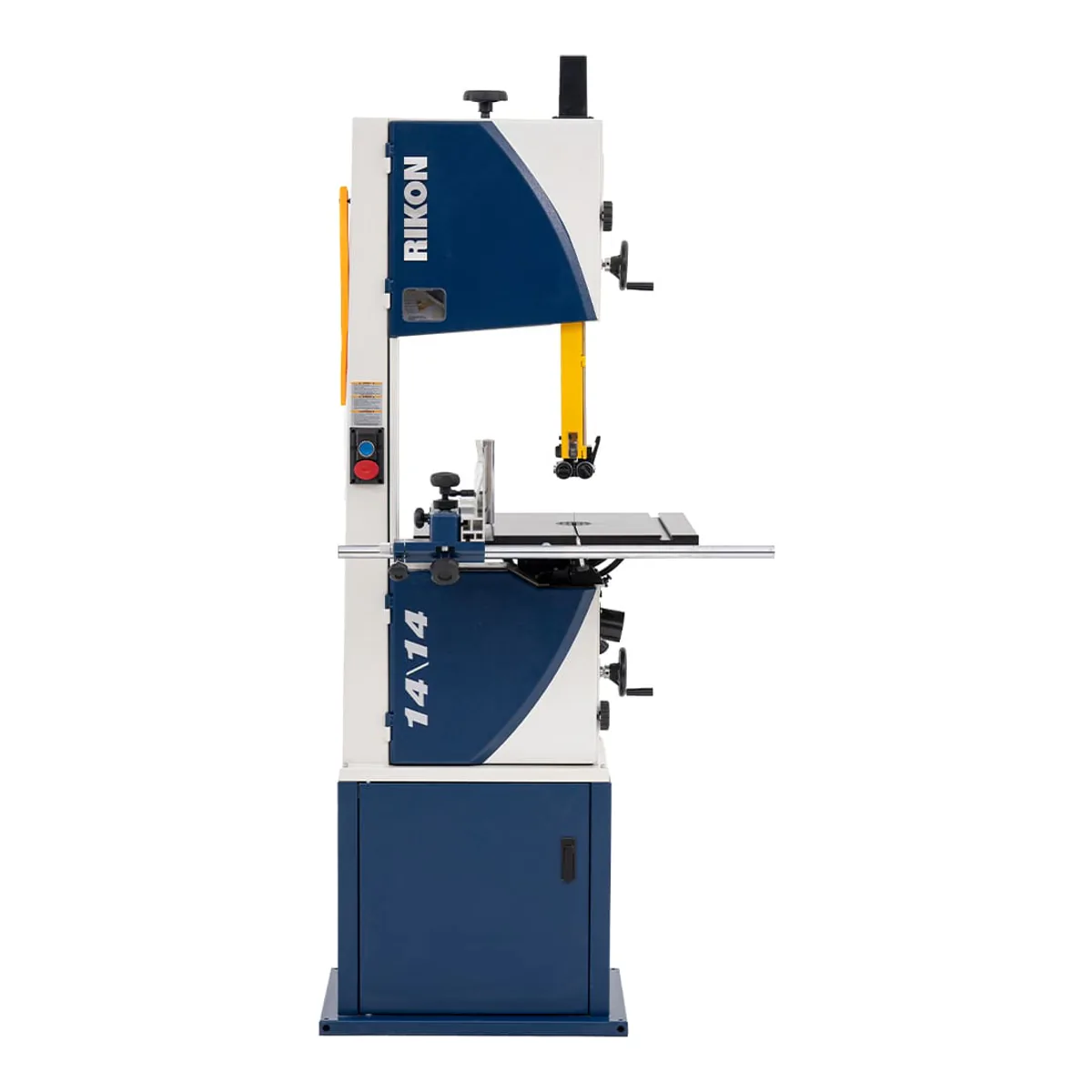
RIKON 14 Deluxe (10-1414)
Pick this if a shop that resaws stock past a few inches, cuts wider curves, or wants enough machine weight that the saw stays put on its own.
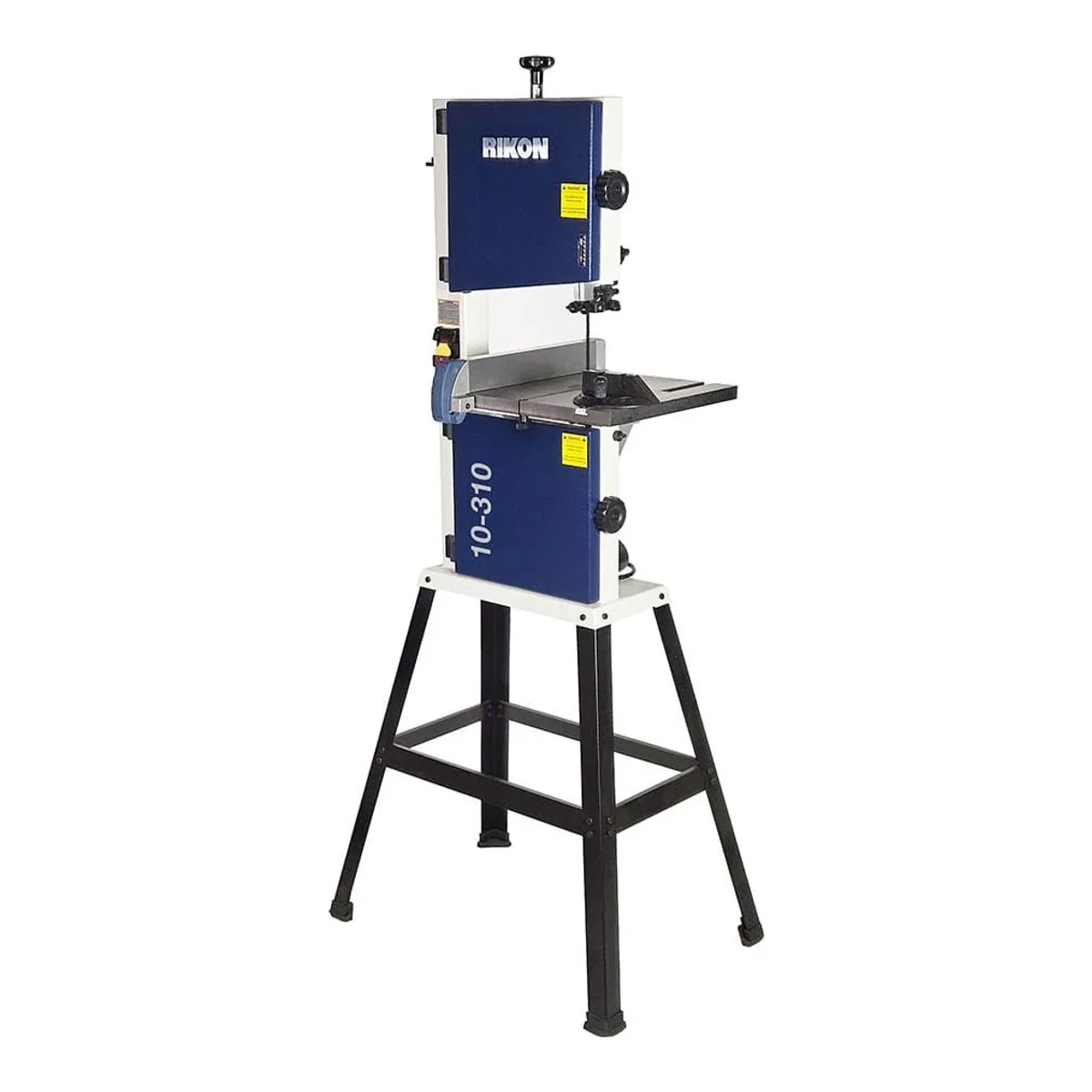
RIKON 10-310
Pick this if a hobbyist with a corner of floor space and no project on the bench yet that needs more than about 4 inches of resaw height.
| RIKON 14 Deluxe (10-1414) | RIKON 10-310 | |
|---|---|---|
| Resaw capacity (basis stated) | 14 in | 4-5/8 in |
| Throat depth | 13-5/8 in | 9-5/8 in |
| Motor (hp, volts, amps) | 1-3/4 HP, 115/230V | 1/3 HP, 115V |
| Blade length and width range | 111 in, 3/16 to 3/4 in | 70-1/2 in, 1/8 to 1/2 in |
| Table size and tilt | 21-1/2 x 15-3/4 in | 11-3/4 x 11-3/4 in |
| Dust port diameter | 2-1/2 in and 4 in | 2-1/2 in |
| Weight | 303.6 lb | 61.75 lb |
RIKON sells both of these as bandsaws, and the resemblance mostly ends at the badge. The 10-310 tops out at a 4-5/8 inch resaw on its own four-leg steel stand. The 10-1414 clears more than three times that height, on a cast iron cabinet weighing nearly five times as much. Almost everything on the spec sheet moved when RIKON built the bigger saw.
RIKON 10-310 vs 10-1414: the numbers that actually separate them
Resaw height is the biggest gap on either sheet: 4-5/8 inches on the 10-310 against 14 inches on the 10-1414, more than three times over, a jump the smaller saw's frame has no way to close. Throat depth grows too, from 9-5/8 inches to 13-5/8 inches, and blade capacity moves with it. The 10-310 takes a 70-1/2 inch blade from 1/8 to 1/2 inch wide, while the 10-1414 runs a 111 inch blade up to 3/4 inch wide for the wider, straighter resaw cuts that call for more blade tension than a thin blade can hold. The motor gap is wider still, 1/3 HP on a single 115 volt circuit against a 1-3/4 HP dual voltage motor that draws 14 amps at 115V or 7 at 230V. That extra power is also why the 10-1414 ships with two blade speeds, 1,476 and 3,280 feet per minute, where the 10-310 runs one fixed speed at 2,625 feet per minute with nothing to switch. Weight is the widest gap of all: 61.75 pounds as RIKON lists it, against 303.6 pounds of cast iron, nearly five times over, which is the difference between a saw you can walk to a corner by hand and one that needs a hand truck. RIKON's sheet does not say whether that 61.75 pounds includes the stand.
Basis: RIKON's own published spec sheets for both models.
What matches, and the one thing that does not
Two features carry over onto the smaller saw with nothing removed. Both saws use the same tool-less, spring-loaded blade guides, and both carry a quick-release blade tension lever where older benchtop saws shipped a plain hand wheel. The table trunnion is cast aluminum on the 10-310 and cast iron on the 10-1414, tilting to nearly the same range: 45 degrees right on both, with 5 degrees of left tilt on the 10-310 against 7 on the bigger saw. A buyer picking the 10-310 is not trading down on ease of blade changes or tensioning. Those two jobs work the same way on either machine.
Warranty is where they part ways. RIKON backs the 10-310 for five years, but the 10-1414 is covered for the life of the saw. The bigger machine wins that gap for the buyer, and it runs opposite to every capacity number above.
Basis: RIKON's own published spec sheets for both models.
Why the stand is not an accessory on the small one
An enclosed steel cabinet base carries the 10-1414, and RIKON counts it as part of the saw, so there is no separate base to buy. A four-leg open steel stand ships in the same box as the 10-310, along with the cast iron table, rip fence and miter gauge, so what arrives is a complete, ready-to-cut saw with no stand left to order. Dust collection scales down the same way the rest of the saw does: one 2-1/2 inch port on the 10-310 against two ports, a 2-1/2 inch and a 4 inch, on the 10-1414. A 14 inch resaw pass throws more chips than a 4-5/8 inch one does, and the extra port tracks that difference. Its absence on the smaller saw is no cut corner.
Basis: RIKON's own published spec sheets for both models.
Which one to buy
Measure the tallest board you actually plan to resaw before either spec sheet. Under about 4 inches, the 10-310 is a complete, inexpensive saw, not a compromise on the way to a real one, and its lighter motor and narrower blade are matched to that kind of cut. Past that height, the 10-310 has no more resaw to give no matter how carefully it is fed, and a 1/3 HP motor bogging down in stock it was never built for is a worse outcome than spending more up front. Stepping up to the 10-1414 makes sense once a project needs the extra throat depth, the wider blade, or simply the mass to stay planted through a long resaw pass without walking. Our full review of the 10-1414 goes deeper on the cabinet base and the blade guide setup for anyone leaning that way.
Both machines sit at the small end of what RIKON sells as a bandsaw. The wider bandsaw shortlist covers what a 15 or 18 inch saw adds past either of these, and the bandsaw sizing guide walks through resaw height, throat depth and shop footprint as a chain rather than a single spec, for a reader still deciding which class of saw the job actually calls for.