Sony a6700 vs a6400: What Four Years Actually Changed
Buy the a6700 if you shoot handheld video, or shoot stills with primes that have no stabilizer of their own, because its 5-axis in-body stabilization is the one difference here that no lens and no firmware can give the a6400. Buy the a6400 if you shoot stills on a stabilized zoom, because the burst rate and the native ISO range are identical, the autofocus difference is smaller than the four year gap suggests, and this listing includes the OSS kit lens the a6700 body does not.
What decides it: In-body stabilization, which the a6700 has and the a6400 does not, against a list of specs that did not move at all between them.
We earn a commission on qualifying purchases through the links here, at no cost to you. It never decides what makes the list.
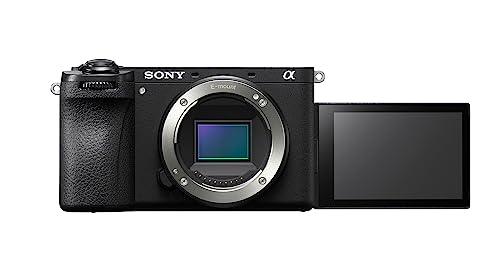
Sony Alpha 6700
Pick this if handheld video, gimbal-free run and gun, and anyone shooting unstabilized primes, where five axes in the body are why you would buy it.
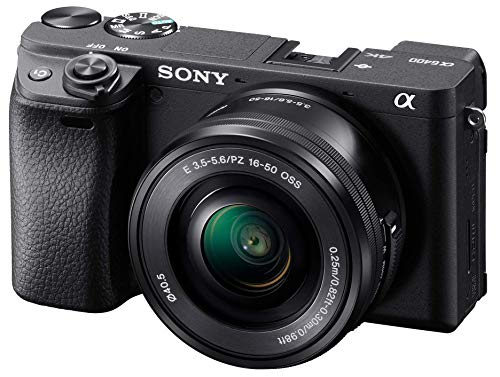
Sony Alpha 6400
Pick this if stills on a stabilized zoom, on a tripod, or with flash, where the body in front of you does the same 11 fps over the same native ISO range as its replacement, and came with a flash.
| Sony Alpha 6700 | Sony Alpha 6400 | |
|---|---|---|
| In-body stabilization | 5-axis sensor-shift, rated up to 5.5 stops to CIPA, pitch and yaw only | None in body (B&H spec table, "Image Stabilization | No"); lens-based OSS only |
| Autofocus points and coverage | 759 phase-detection points, about 93% frame coverage (495 for video), with AI subject recognition | 425 phase-detection points plus contrast AF, about 84% coverage for the combined system, 0.02 s acquisition |
| Sensor | 26.0MP back-illuminated Exmor R APS-C CMOS | 24.2MP Exmor APS-C CMOS |
| Processor | BIONZ XR plus a dedicated AI processing unit | BIONZ X |
| Video ceiling | UHD 4K to 60p oversampled from 6K; 120p available with an approx. 38% crop, 10-bit 4:2:2 | Internal UHD 4K up to 30p, 8-bit 4:2:0 XAVC S at 100 Mbps |
| Continuous shooting | Up to 11 fps with AF and AE | Up to 11 fps with AF and AE, 8 fps silent |
| Battery and rated shots | NP-FZ100, about 570 shots on the LCD or 550 on the viewfinder | NP-FW50, about 410 shots on the LCD or 360 on the viewfinder |
The surprising part of Sony a6700 vs a6400 is not the gap. It is how much of the spec sheet refused to move across four years and two processor generations.
Both cameras shoot up to 11 frames a second with autofocus and exposure tracking. Both run a native ISO 100 to 32,000, extending to 102,400 for stills, with the a6700 reaching one stop lower at the bottom. Both oversample their 4K using full pixel readout rather than binning it. The burst rate did not move and the native ceiling did not move. Some of what the newer body gained never reaches a spec headline at all: a deeper buffer behind that same 11 fps, an electronic shutter running to 1/8000 where both bodies stop at 1/4000 mechanically, and a UHS-II card slot against UHS-I. Everything else follows below.
Sony a6700 vs a6400, and the one thing a lens cannot fix
In-body stabilization. The a6700 has five axes of it, rated by Sony up to 5.5 stops to the CIPA standard, for pitch and yaw only, with a 50mm F1.2 fitted. The a6400 has none.
Both halves of that are printed facts. Neither is read off a silence: B&H's specification table prints Sensor-Shift, 5-Axis for the a6700 and a flat No for the a6400, and Sony's own a6700 page answers the stabilization question directly while its a6400 page never raises it.
Everything else here can be argued about. Stabilization cannot, because no firmware delivers it and no better lens fully replaces it. A stabilized lens steadies what the lens sees. Sensor-shift steadies the sensor, and Sony's own claim for it is that it works across a wide range of E-mount lenses, including non-stabilized primes, which is the half of the catalog a stabilized zoom cannot help you with.
If you shoot stills at a shutter speed that freezes your own hands, none of this matters. If you shoot handheld video, it settles the comparison.
What Sony did change, and where it put the effort
Past stabilization, three things moved, and the video ceiling moved furthest.
Internal video on the a6400 tops out at UHD 4K 30p, 8-bit 4:2:0, XAVC S at 100 Mbps. Against that, the a6700 shoots 4K 60p oversampled from a 6K readout in 10-bit 4:2:2, which is the mode to compare and a far heavier color pipeline than the older body can write.
Its 120p headline comes with two conditions Sony prints and nobody quotes. The frame is cropped by approximately 38 percent, so the lens you framed with is not the lens you are shooting with, and Active Mode stabilization is unavailable at 120 fps or higher. Sit with that second condition, because stabilization is why the a6700 gets the recommendation at all, and the headline video mode switches part of it off.
Autofocus moved too, though less than four years implies. Sony covers about 84 percent of the a6400's frame with a 425 point phase-detection system combined with contrast AF, and quotes 93 percent for the a6700 on 759 phase-detection points alone, so the two percentages are not quite measuring the same thing. Sony also gives the a6700 a dedicated AI processing unit driving Real-time Recognition, and birds are the subject class the older body's listing never claims. More points over more of the frame, and a subject recognizer Sony sells on knowing what a bird is. Sony's own headline figure for the a6400, a stated 0.02 second acquisition measured against APS-C rivals as of January 2019 with an 18-135mm fitted, is still quick enough that nobody misses focus because of the year the body was made.
Battery is the quiet third. Sony moved from the NP-FW50, rated about 410 shots on the LCD, to the NP-FZ100, which Sony rates at about 570 on the LCD, though B&H's table for the same body prints 550. On a shooting day that is the difference between carrying a spare and not thinking about it.
Basis: Sony's own product pages for both cameras, with B&H's specification tables for the figures Sony's marketing pages do not print, which is where the stabilization rows come from.
The sensor, where the number is smaller than it looks
26.0MP against 24.2MP is not a reason to buy anything.
What sits behind those numbers is the real change: the a6700's sensor is back-illuminated Exmor R where the a6400's is a conventional Exmor, and it feeds a BIONZ XR processor against the older BIONZ X. Sony's own claim for the back-illuminated structure is that it gives the camera higher resolution without sacrificing sensitivity, and the identical native ISO ceilings are at least consistent with that, though a published ceiling is a decision rather than a measurement and nothing cached here tests it.
Read the two megapixel counts as a tie, because as a print or a crop that is what they are.
What you are actually adding to the cart, which is not the same on both
Before anybody compares them: the two links here do not buy you the same kind of box.
One listing is the camera body alone. The other is ILCE-6400L, which ships with a 16-50mm power zoom, and you can read OSS on the barrel of the lens in the picture above. That OSS matters more here than it usually would: on a camera with no in-body stabilization, the kit lens is where all of the stabilization lives. So the a6400 arrives stabilized across the focal lengths that lens covers, and unstabilized the moment you take it off.
One thing the newer body does not have at all, and the omission is not subtle: a built-in flash, guide number 19.7 feet at ISO 100, sits on the a6400, and the same B&H table that settled the stabilization question prints a flat no in the a6700's flash row. If you shoot events, fill light outdoors, or simply want something in the hot shoe's place at a family dinner, the four year old camera came with a flash and the new one expects you to buy one.
Two buyers should stop reading and buy neither. Anyone shopping on the viewfinder is looking at the same 2.36 million dot OLED panel at the same 1.07x magnification on both, unchanged across four years, and only the a6700's listing names a 120 fps finder mode. And anyone weighing this against a full-frame body for low light is weighing the wrong axis, because both of these are APS-C and neither of them pretends otherwise. The rest of this shelf is where that argument belongs.