Garmin ECHOMAP Ultra 2 126sv: the head unit, no transducer
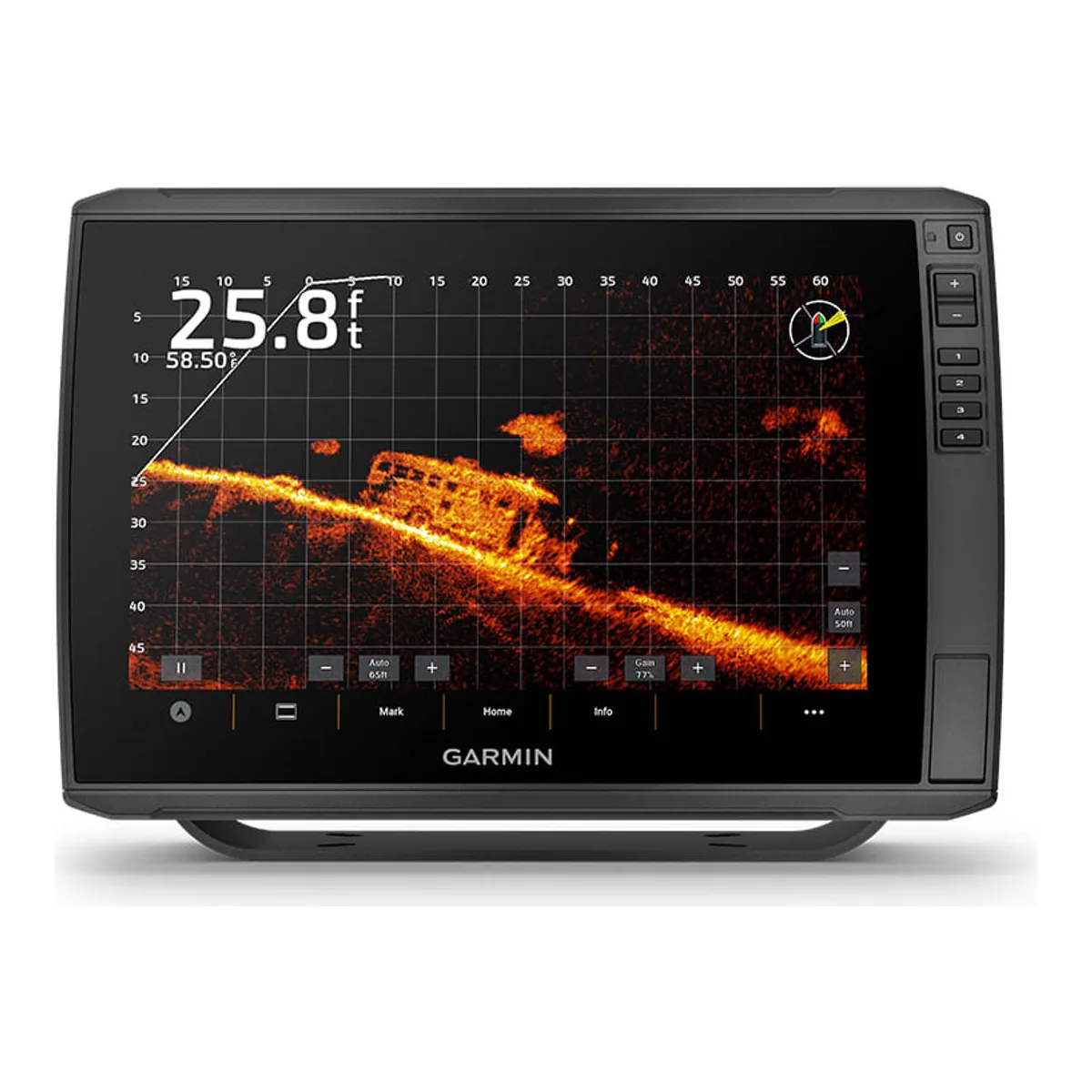
A first-rate 12-inch sonar and mapping display for an angler already committed to Garmin, but the 126sv is the screen alone, so it only earns its place once a GT56UHD-TM transducer or a LiveScope setup is on the same order.
- Sold as part number 010-02882-00, the 126sv without transducer: the 12-inch head unit, with no transducer in the box
- 12-inch sunlight-readable WXGA touchscreen, 1280 x 800 pixels, with keyed assist
- Traditional CHIRP sonar at 50, 77, 83 and 200 kHz, and Garmin ClearVü and SideVü CHIRP to 1200 kHz, dependent on the transducer
- Sonar transmit power 600 W RMS, and sonar depth 701 m (2,300 ft) at 77 kHz, dependent on the transducer and water conditions
- Multi-band GPS with 10 Hz updates
- Preloaded Garmin Navionics+ US and Coastal Canada mapping with a one-year subscription for daily updates, plus built-in Quickdraw Contours with 1-foot contours
- Wireless networking shares sonar, waypoints and routes with another ECHOMAP Ultra 2 or ECHOMAP UHD2, though LiveScope cannot be shared wirelessly
- Supports Garmin LiveScope live-scanning sonar and wireless Garmin Force trolling-motor integration
- Two microSD card slots, up to 1 TB each, and an IPX7 water rating on a 9 to 18 Vdc input
- The 12-inch model weighs 2.46 kg (5 lb 7 oz) and draws up to 36 W, and ships with a quick-release bail mount
We earn a commission on qualifying purchases through the links here, at no cost to you. It never decides what makes the list.
This listing sells a screen and nothing to see with. The Garmin ECHOMAP Ultra 2 126sv, sold under ASIN B0CV8652C3, is part 010-02882-00: the 12-inch head unit on its own, with no transducer in the box. None of this counts against the unit. Whether this is the right way to buy one turns on that fact alone, because a chartplotter with no transducer shows a blank screen until you add the part that actually reads the water.
Everything else about the 126sv is very good, and none of it matters if you get that part wrong.
Read the listing title as the whole spec: a Garmin 126sv chartplotter, 12 inches, Black. What Garmin bundles elsewhere, and what a lot of buyers assume is included, is the GT56UHD-TM transducer that gives you traditional CHIRP plus ClearVü and SideVü scanning. Here it is a separate line on the order. So is a LiveScope setup, if forward-facing sonar is what you came for. The rest of the fish finder shelf has the same trap on other brands, so check before any of them goes in the cart.
Where the Garmin ECHOMAP Ultra 2 sits in the range
Three sizes share one platform. The 106sv is the 10-inch model (010-02880-00), this 126sv is the 12-inch (010-02882-00), and the 166sv is the 16-inch (010-03386-01). Sonar hardware and software are the same across all three, so the choice is screen area, weight and mounting. Capability does not change. The independent roundup at FishFinderLab notes that only the 166sv outputs a picture to an external display, and only the 166sv has a full 1920 x 1080 panel. The smaller two have neither. Above the Ultra 2 is the GPSMAP line, which adds offshore marine processing and radar the Ultra 2 does not carry. The echomap ultra 2 vs uhd2 question runs the other way: the UHD2 sits below with a smaller screen, and by FishFinderLab's reading the Ultra 2 is the step up in display, LiveScope and networking, short of the GPSMAP tier.
The screen is what you are paying for
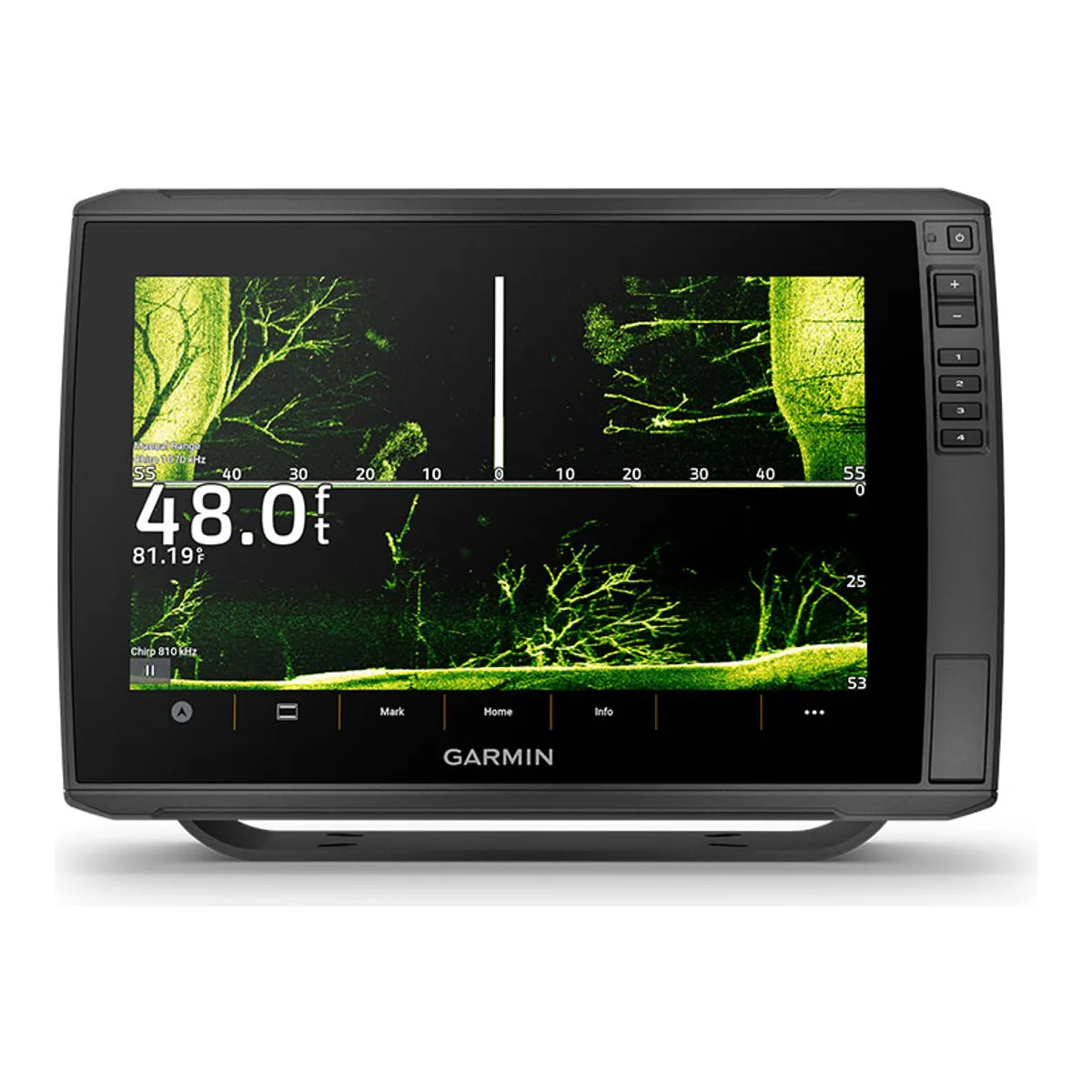
At 12 inches and 1280 x 800, the panel is why you choose the Ultra 2 over a smaller unit. It is a WXGA touchscreen. Keyed assist adds physical buttons down the right edge, for the moments a wet or gloved hand will not drive a touch target. FishFinderLab's owner notes report it stays readable in direct sun without a shade across the 12 and 16-inch models, a failure a lot of cheaper displays hit by midday. The split-screen behavior it describes, SideVü on one side and LiveScope on the other with no visible lag in current software, is the case for the bigger glass: on a 10-inch screen a split leaves each half too small to read at speed.
What the sonar does, once you have a transducer
On paper the Ultra 2 runs traditional CHIRP at 50, 77, 83 and 200 kHz, and Garmin ClearVü and SideVü CHIRP up to 1200 kHz, at 600 W RMS, and reads to 701 m (2,300 ft) at 77 kHz. Every one of those figures depends on the transducer you pair it with. The head unit sets the ceiling and the probe sets how close you get to it, the other half of the missing-transducer point. Basis for those numbers is Garmin's own specification sheet. Where the independent review and owner reports agree is on side imaging. SideVü is good. A lot of serious bass anglers still prefer Humminbird's MEGA Side Imaging for the last bit of structure detail at the same speed. On the 12-inch screen that gap narrows, because more pixels is more of the image you can actually read.
The mapping is better than the tier name suggests
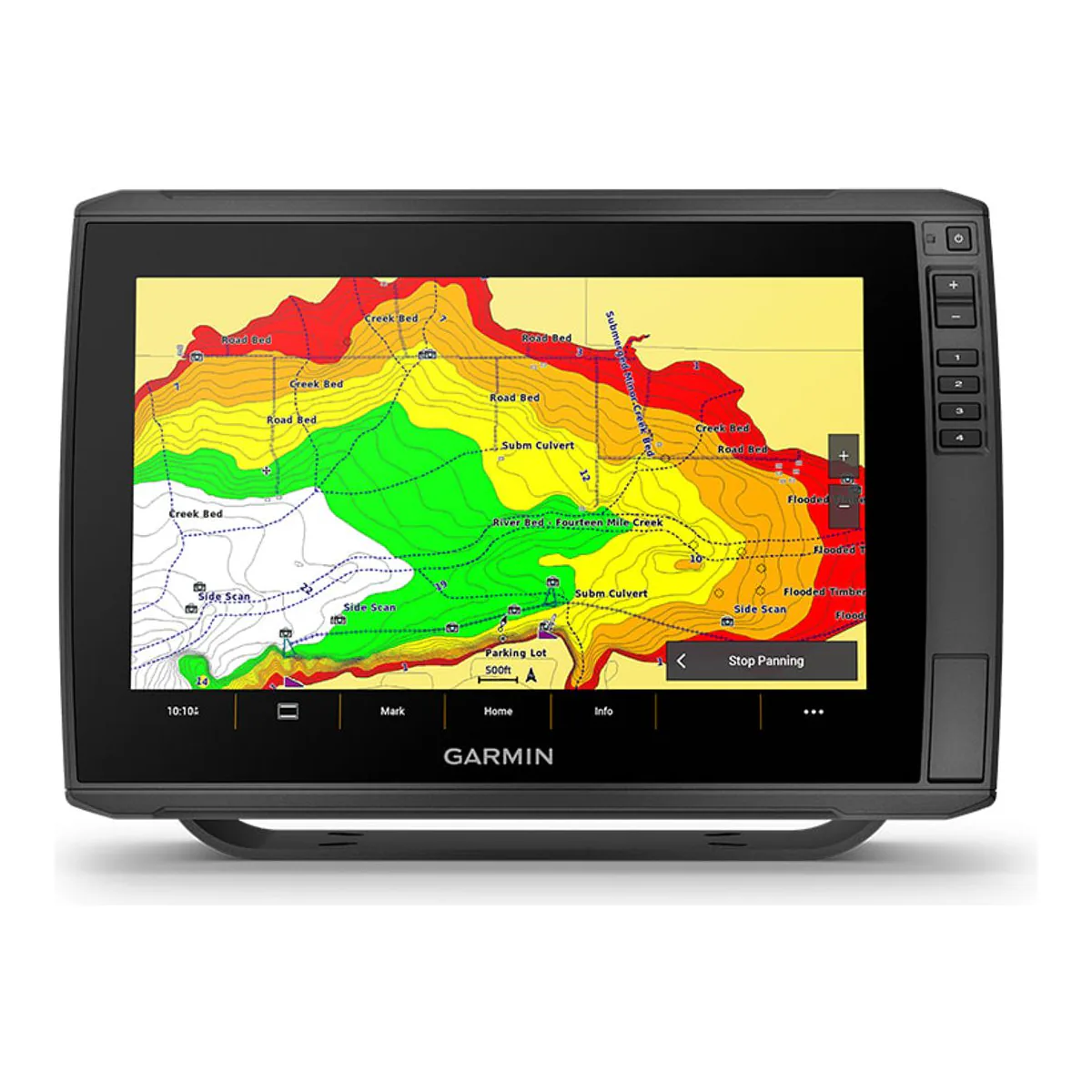
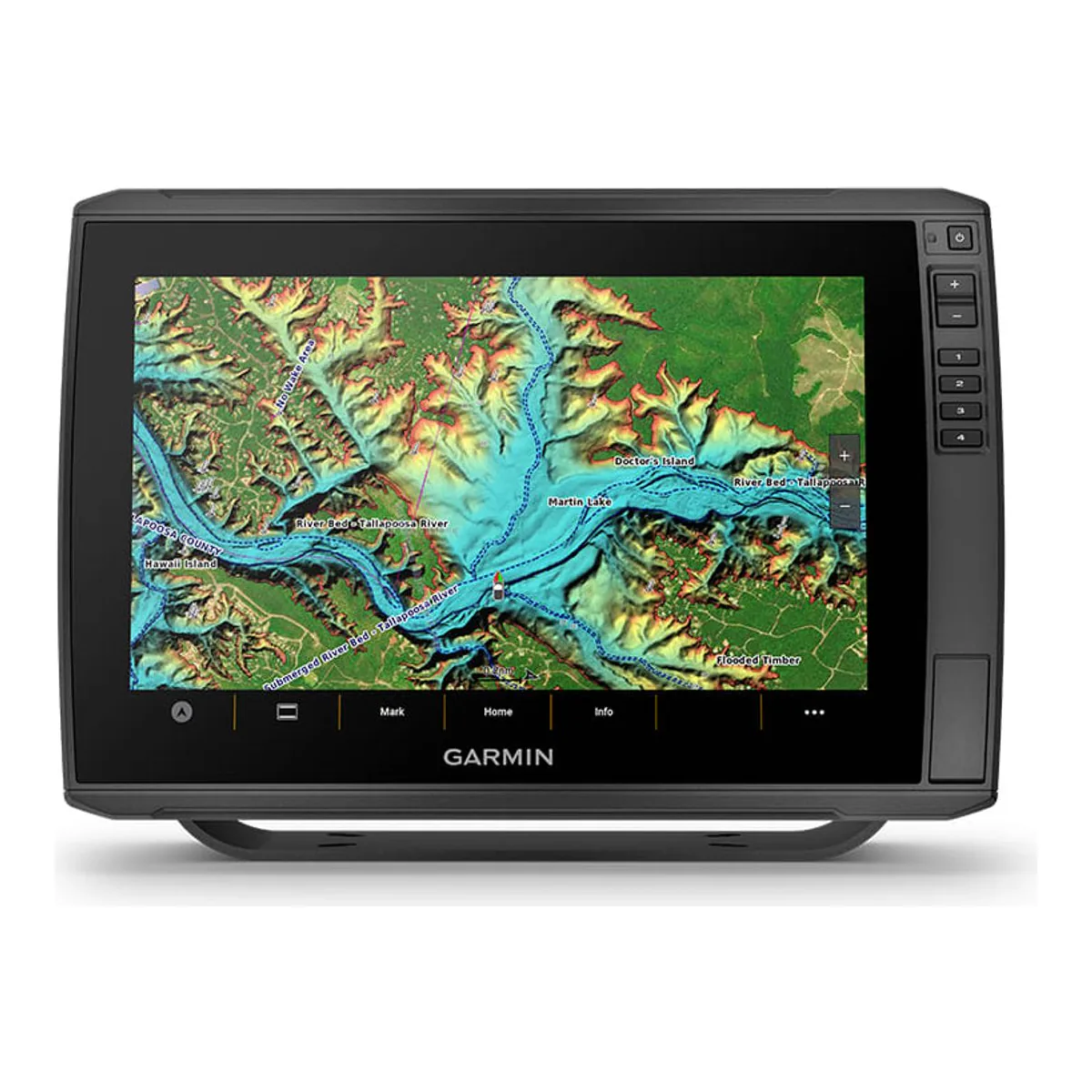
Navionics+ US and Coastal Canada charts are preloaded, with a one-year subscription for daily updates, and Quickdraw Contours is built in so you can record 1-foot contours on water nobody has mapped. The relief shading in Garmin's own screenshots, the kind that makes a lake bed look three-dimensional, is the paid Navionics Vision+ upgrade, not the included tier, so do not buy the unit expecting that view for free. For inland and nearshore fishing the included Navionics+ is enough. The ECHOMAP Ultra 2 126sv is an inland and coastal tool, and offshore is not its job.
Networking, LiveScope and the trolling motor
Wireless networking is the quiet upgrade over the older Ultra. Two Ultra 2 or ECHOMAP UHD2 units share sonar, waypoints and routes over Wi-Fi, which keeps a second screen at the bow off a cable run, with one exception written into Garmin's own footnote: LiveScope itself cannot be shared wirelessly between them. There is more to it. The Ultra 2 supports LiveScope live-scanning sonar and pairs wirelessly with a Garmin Force trolling motor, so from the screen you can set routes and tracks for the motor to follow and check its battery. That whole picture is why a Garmin-committed angler buys this and a first-time buyer usually should not.
Who should skip the 126sv
Skip the echomap ultra 2 without transducer buy if you want one box that works the day it arrives, because this is not it: a GT56UHD-TM or a LiveScope has to be on the same order, and on a first fish finder that total is a lot to assemble blind. Skip it for a small single-screen console, where the 106sv does the same job in less space and weight. Skip it if raw side-imaging detail is all you care about, where Humminbird's MEGA is still the sharper picture. And skip it if you need an external display or offshore radar, which means the 166sv for its video output or the GPSMAP line. One caution that is not about the unit itself: this listing is often filled by third-party marketplace sellers and not by Garmin, so confirm the seller and the warranty before you commit, the same as with any high-value electronics.
If you are that Garmin angler, shop for the transducer first. Decide between a GT56UHD-TM for CHIRP and scanning or a LiveScope rig for forward-facing sonar, and let that choice, not the screen, set the budget. The 126sv is the display it all hangs on, and a very good one, and it holds the 12 inch slot on our fish finder picks.
A closer look at the Garmin ECHOMAP Ultra 2 126sv
Questions people actually ask
- Does the Garmin ECHOMAP Ultra 2 126sv come with a transducer?
- No. The 126sv sold as part 010-02882-00 is the chartplotter head unit only. You add a GT56UHD-TM for CHIRP, ClearVü and SideVü, or a LiveScope setup for forward-facing sonar, as a separate purchase.
- Can the ECHOMAP Ultra 2 126sv run LiveScope?
- Yes. It supports Garmin LiveScope live-scanning sonar, sold separately. One limit: LiveScope cannot be shared wirelessly to a second networked unit, even though sonar, waypoints and routes can.
- What is the difference between the ECHOMAP Ultra 2 and the UHD2?
- The Ultra 2 is the step up in screen size, LiveScope integration and wireless networking. The UHD2 sits below it with a smaller display. Above both is the GPSMAP line, which adds offshore marine processing and radar the Ultra 2 does not carry.
Made up your mind?