Humminbird XPLORE 12 review: the box, the network
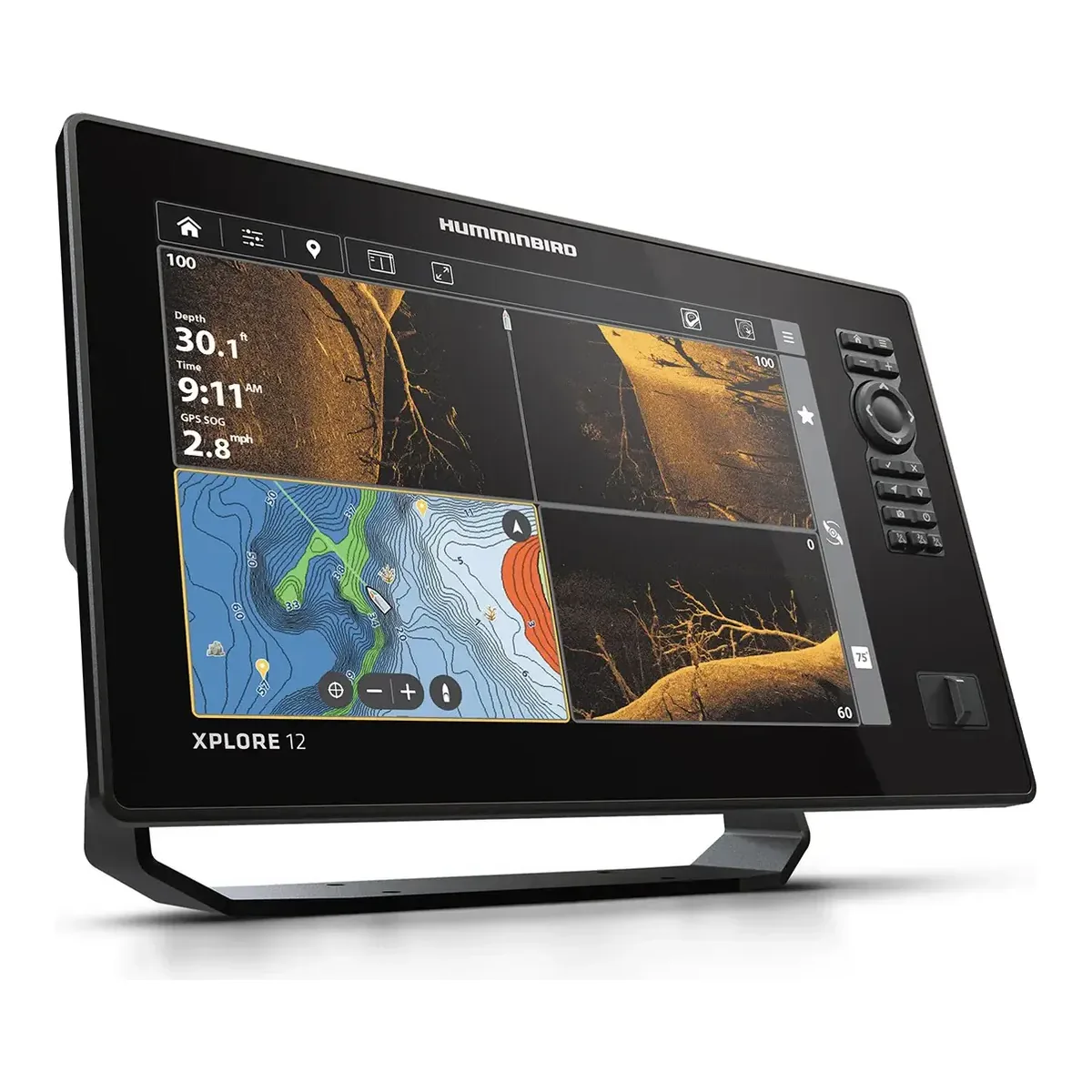
The 12 inch fish finder to buy if you want the screen, the side imaging transducer and both chart sets in one box, and a boat built around Humminbird's newer units. Skip it if a Helix has to stay on the same network, because the two cannot share one.
- Product code 412020-1, with the XM 14 HW CMSI T transom-mount transducer in the box
- 12.1-inch 1280 x 800 color touchscreen with keypad control
- MEGA Side Imaging+ out to 200 feet either side, MEGA Down Imaging+ and Dual Spectrum CHIRP
- Sonar depth 1,200 ft on the standard transducer
- Internal GPS, Humminbird Basemap, and a LakeMaster and CoastMaster map card in the box
- Wi-Fi, Bluetooth, Ethernet and NMEA 2000, compatible with MEGA Live 2 sold separately
- Three-year warranty with registration, 6 lb 4.96 oz
We earn a commission on qualifying purchases through the links here, at no cost to you. It never decides what makes the list.
The frequency rows in Humminbird's own spec table for the Humminbird XPLORE 12 describe a transducer that is not in the box. The XPLORE 12 CMSI+ kit, 412020-1, ships the compact XM 14 HW CMSI T, and it does not transmit the 800 kHz imaging the head unit lists. The full size XM 14 HW MSI T, sold separately, does. Start there, with a unit that is otherwise the most complete single box on the shelf: a 12.1 inch screen, side and down imaging, and a map card carrying both LakeMaster and CoastMaster.
The XPLORE 12 holds the overall slot on our fish finder picks. The evidence here is Humminbird's operations manual, installation guides and network chart, Field & Stream's hands-on with the smaller XPLORE 9, and 15 people on YouTube and two walleye forums who say they own an XPLORE, five of them the 12.
The transducer in the box, and the best one for the XPLORE 12
The compact XM 14 HW CMSI T screws to the transom through three drilled holes, pivots up to 90 degrees in its bracket, and comes on a 20 foot cable you can extend to 50. Humminbird advises against running over 65 mph with it in the water, and it carries its own one year warranty against the head unit's three with registration. Its MEGA Side Imaging+ reaches 400 feet side to side, 200 each way, and MEGA Down Imaging+ reaches 200 feet.
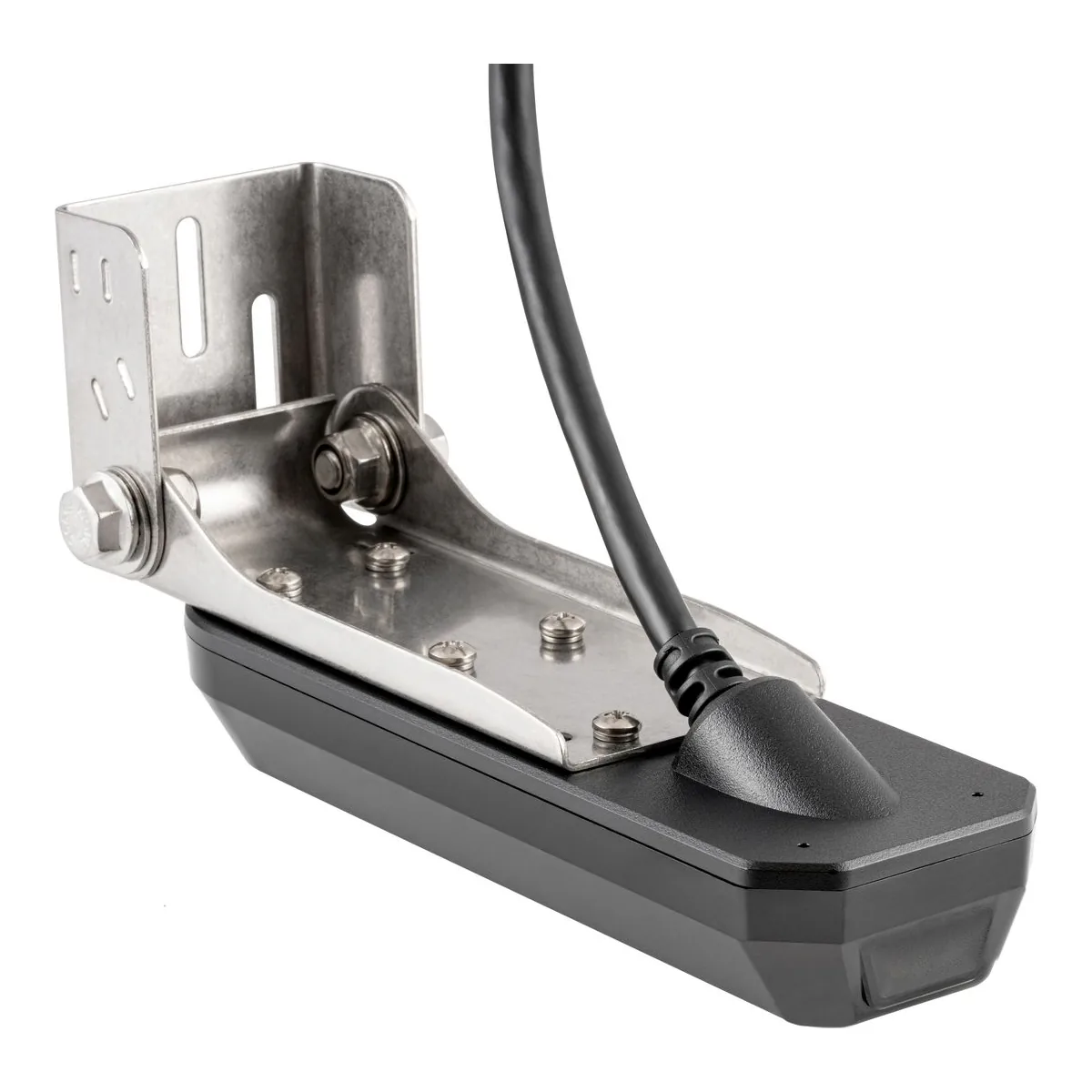
For most boats it is the right transducer, because the kit was priced around it. The full size XM 14 HW MSI T is the upgrade for 800 kHz imaging, and MEGA Live 2 forward facing sonar is a separate purchase again, sold on its own or in an XPLORE bundle.
Humminbird's documents disagree in places: the product page and the manual give different transmit power, beam angles and MEGA Side Imaging+ frequency for this transducer, and its own transducer page doubles the down imaging depth. The manual's figures are the ones used here, and no wattage is quoted.
XPLORE 12 screen: touch plus keys
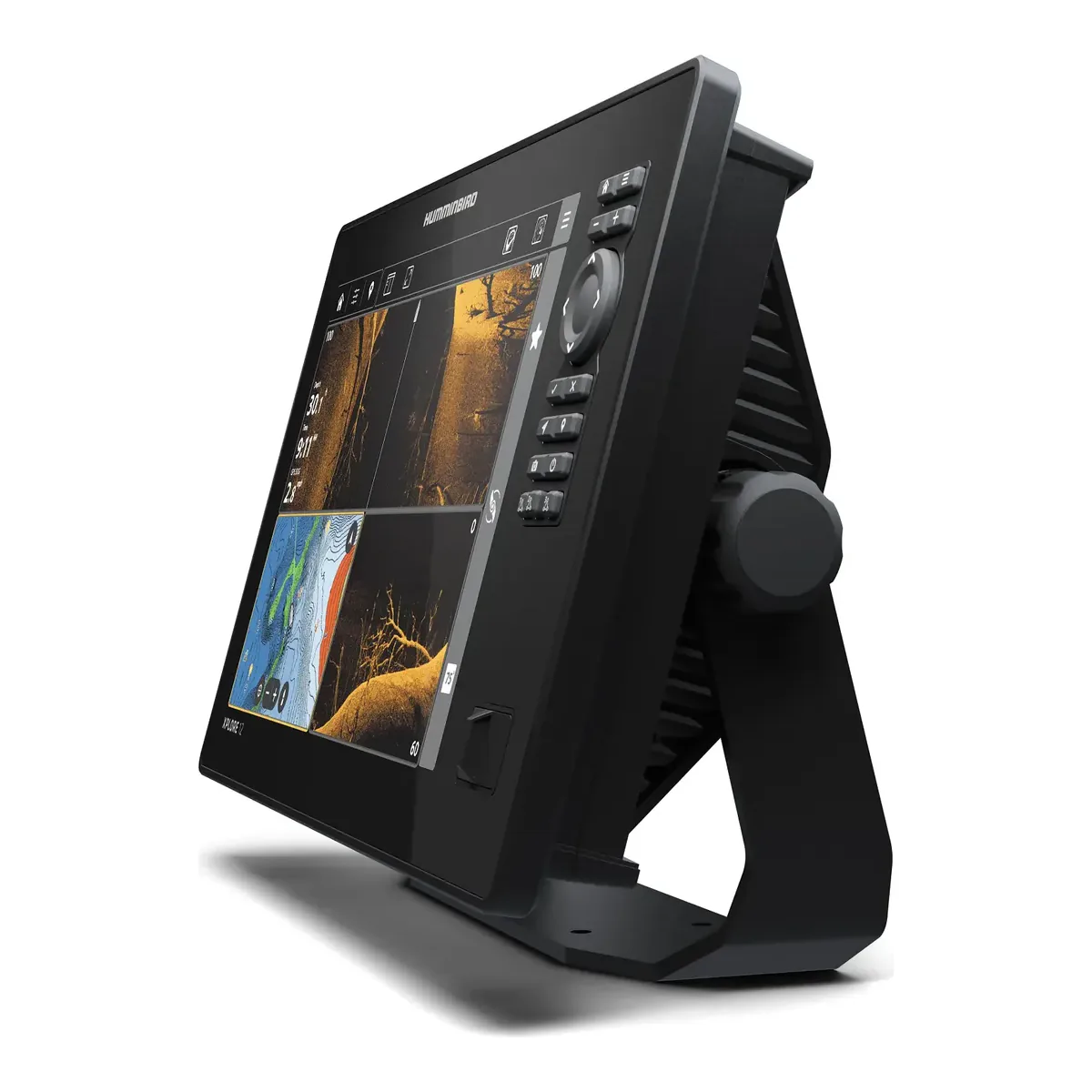
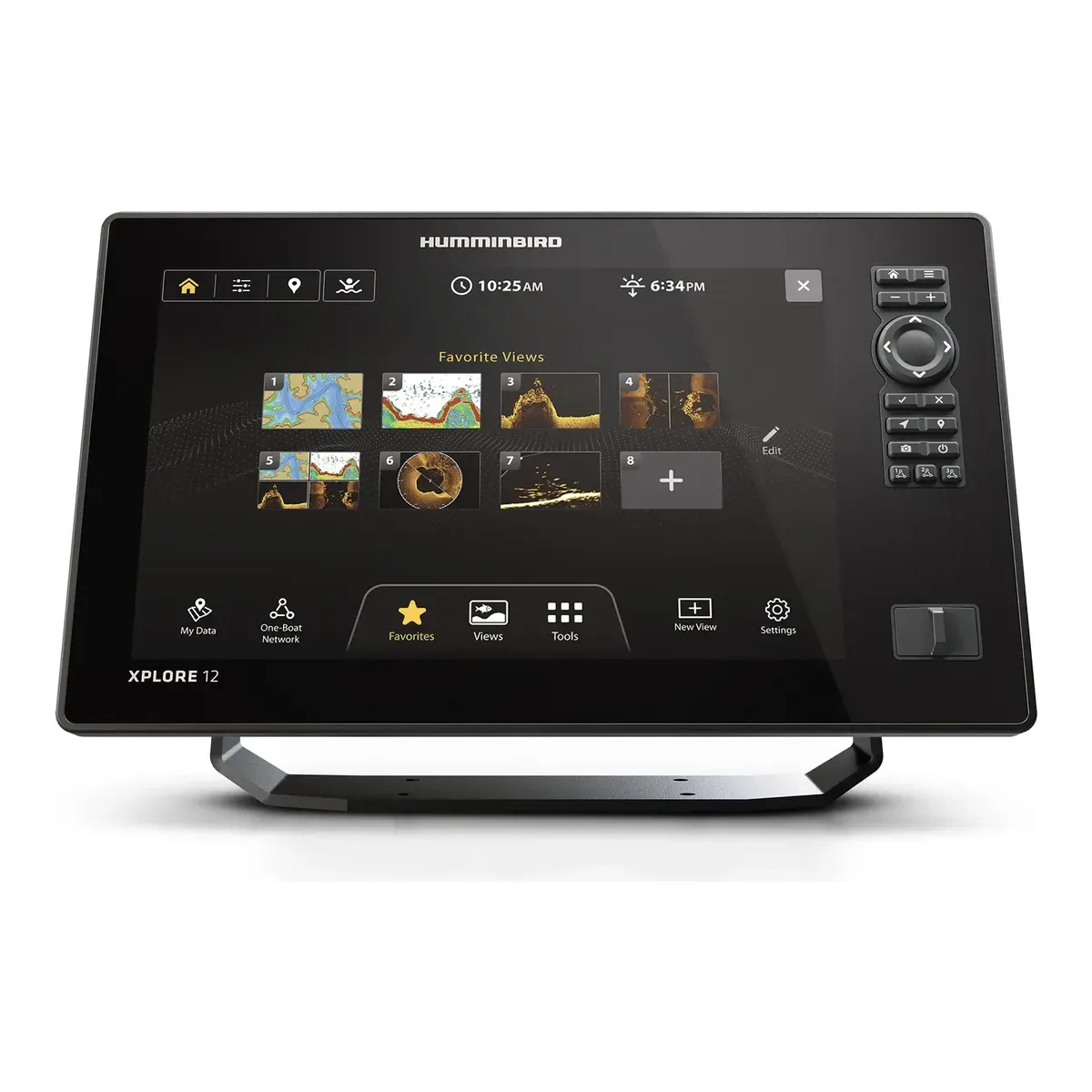
A 12.1 inch color panel at 1280 x 800, driven by touch or by the keypad down the right edge, which is what Humminbird calls Cross Touch. The keys matter on a wet, moving boat. Field & Stream found the processor "responded instantly" between screens on the 9 and saw less glare than it was used to, though its claim that the XPLORE networks with a Helix is contradicted by Humminbird's own chart below. It is IPX7 and dust tight.
Charts: LakeMaster and CoastMaster on one card
One LakeMaster and CoastMaster card comes in the box, on top of the built-in Humminbird Basemap, and you switch between the two in the menu. AutoChart Live draws your own contours as you drive: Field & Stream had a detailed map of its area in 1 foot intervals after about 10 minutes.
Mounting the XPLORE 12: gimbal or in-dash
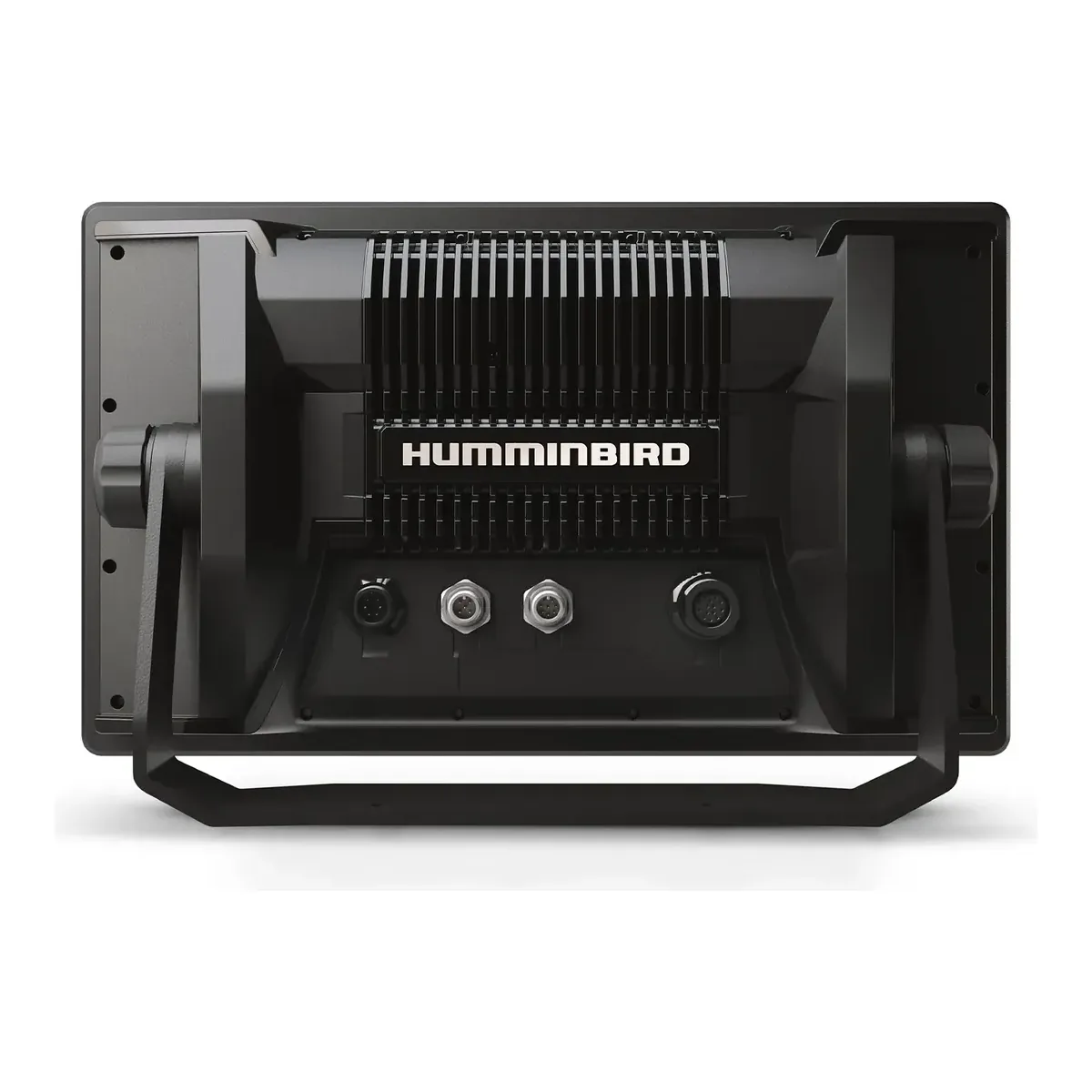
It ships on a gimbal bracket, with a mount size of 14.145 in wide and 8.911 in tall. Mount it in the dash instead and Humminbird requires an external GPS antenna. It wants a 12 V supply through a 5 amp slow-blow fuse, at the fuse panel or the battery, and it does not support an autopilot.
What XPLORE owners report
Imaging gets the praise. "SI imaging is crystal clear," writes a walleye forum owner, and an XPLORE 10 owner who upgraded from a Helix says the images "could not have been any clearer". One angler running three XPLORE 12s found it "very easy to use" and moved 20 years of waypoints over from Lowrance without trouble.
The complaints are about living with it. Three owners describe a learning curve, one of them an XPLORE 9 owner who finds "all of it" overwhelming. An XPLORE 9 owner on a walleye forum had the transducer fail, and Humminbird service sent a new one. Two XPLORE 10 owners report Minn Kota integration trouble, one whose Follow the Contour stopped offering its two colors after two weeks. One XPLORE 12 owner running MEGA Live 2 lost the forward facing picture repeatedly; Humminbird returned the unit finding no fault, and an authorized repair center then reproduced it. One setup guide advises updating from a blank SD card with the chart card removed, and newer software updates over Wi-Fi.
XPLORE 12 vs Helix 12, and the network question
This is the compatibility answer most buyers need. Humminbird's own help pages say APEX, XPLORE and SOLIX G3 units on current software "will not share" with a Helix "and cannot be present on the same network". Four commenters say the same, three of them Helix owners. MEGA Live 2 does not work with a Helix either. So a boat with a Helix at the console gets an XPLORE on the bow only as a separate island, and a Helix owner adding forward facing sonar is buying a new head unit.
If that rules it out, the Garmin ECHOMAP Ultra 2 126sv review covers the same 12 inch, 1280 x 800 class from Garmin, sold without a transducer, supporting LiveScope sold separately, which it cannot share wirelessly to a second unit. The XPLORE 9 and 10 are the same system on smaller screens; the 9 drops to 1280 x 720.
A closer look at the Humminbird XPLORE 12 CMSI+
Made up your mind?