Lowrance Elite FS 9 review: the day-one sonar catch
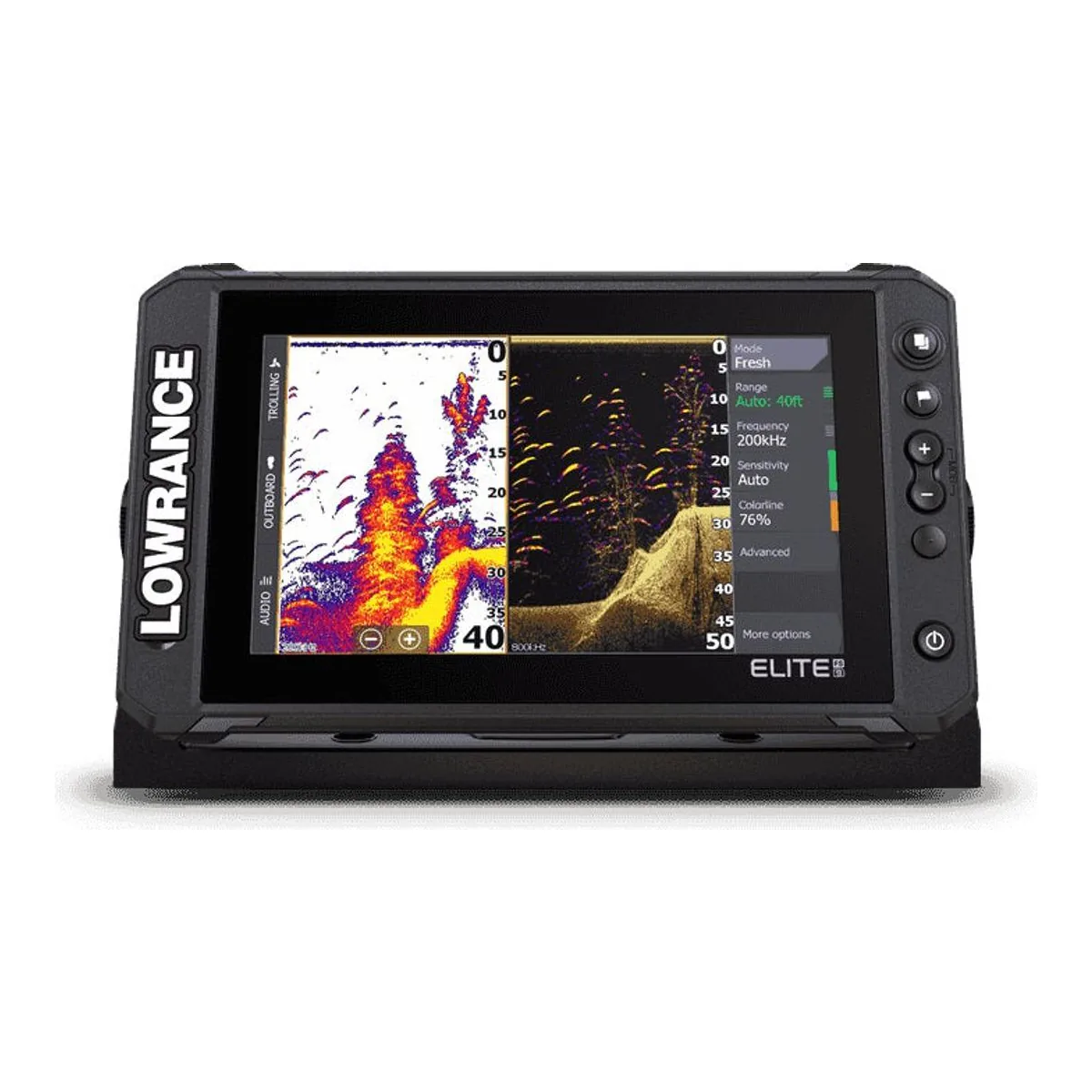
A capable mid-range fish finder with a full imaging and live-sonar toolset on a 9 inch screen, once you set the transducer type by hand on first use. Skip it if you want it to work the minute it is screwed down, since the most reported fault is a blank 2D sonar until you do.
- Included Active Imaging 3-in-1 transom transducer: CHIRP sonar at 83/200 kHz, plus SideScan and DownScan imaging at 455/800 kHz, with FishReveal
- 9 inch multi-touch display at 800 x 480 resolution
- Preloaded C-MAP inland mapping for the US and Canada, with support for C-MAP and Navionics cards
- ActiveTarget 2 and ActiveTarget 2 XL live sonar ready, over Ethernet and sold separately
- Networking over Wi-Fi 802.11b/g/n, NMEA 2000 and Ethernet, with Bluetooth
- Internal 10 Hz GPS, 3,000 waypoints and 100 routes
- Active Imaging HD available through the separate S3100 module, not included
- Maximum depth 1000 ft, DownScan to 300 ft
We earn a commission on qualifying purchases through the links here, at no cost to you. It never decides what makes the list.
Screw the Elite FS 9 to the transom, wire it up, and the 2D sonar may not work. Three owners describe it coming up blank, frozen or white on first power up, and a fourth got a new unit Navico replaced as faulty, which is the first fact to know about this chartplotter. The fix is almost always a menu rather than a return, but you have to know that going in.
So the Lowrance Elite FS 9 comes down to a strong mid-range system with a day-one catch. It packs the full Lowrance toolset onto a 9 inch touchscreen: CHIRP sonar, side and down imaging, live-sonar support and preloaded charts. What it asks in return is a little patience the first time you turn it on. The read here comes from Lowrance's published specifications, two independent fish-finder reviews, and 20 Elite FS owners counted one at a time across the video threads, 11 of them running the 9. It slots in beside the Garmin and Humminbird fish finder picks.
The Lowrance Elite FS 9 sonar that may go blank on day one
This is the fault to lead with. Four of the 20 owners hit a sonar fault on a new unit, three of them describing a 2D screen that comes up blank, frozen or white, one putting it bluntly: "Down image and sidescan works but no sonar." FishFinderLab, which reviews these units, names the same thing as the most reported issue on the Elite FS 9. The cause is the head unit not auto-detecting the transducer, and the fix is to open Settings, then Sonar, then Installation, select the Active Imaging 3-in-1 transducer by hand, and hard reset. Once it takes, owners stop mentioning it, so plan to set the transducer type by hand the first time instead of trusting the unit to detect it.
What comes in the box, and what does not
The Lowrance Elite FS 9 transducer is the good news. The unit ships with the Active Imaging 3-in-1 transom transducer, which runs CHIRP sonar at 83/200 kHz and SideScan plus DownScan imaging at 455/800 kHz, with FishReveal laying the sonar returns over the imaging so fish arches stand out against structure. That covers most freshwater fishing from one transducer in the box.
Two things cost extra, and the listing does not shout about either. ActiveTarget 2 and the larger 2 XL live sonar are supported but sold separately, connected over Ethernet. Active Imaging HD, the higher-resolution imaging, needs the separate S3100 module that is not included. Buy the FS 9 for what it ships with, and treat live sonar as a later upgrade you add separately.
The screen, and what owners say about it
The screen is where the price shows. It is a 9 inch multi-touch display at 800 x 480, which FishFinderLab flags as the unit's genuine limit, and one owner who runs two of them was candid about the gap between the promo shots and real life: his units do not show "the razor sharp clarity and smoothness" of the advertising. The culprit is the 800 x 480 panel, and the unit itself is fine. Sunlight is the better story, though: another owner running two FS 9 units on an open boat reports he has "never had any issues with sun, sun glare or viewing angles". That matters, because screen glare is the first worry on a center console.
Charts, networking and live sonar
Lowrance has shuffled the chart branding, so the box may say C-MAP DISCOVER OnBoard or C-MAP Contour+ depending on when it shipped. Both are preloaded C-MAP inland mapping for the US and Canada, and the unit also reads C-MAP and Navionics cards, so the name on the sticker is not a reason to pick one listing over another. One owner notes the contour lines switch off every time the unit powers down and have to be re-enabled, a small daily annoyance, not a defect.
Connectivity is complete for the class: Wi-Fi, NMEA 2000, Ethernet and Bluetooth, with an internal 10 Hz GPS, 3,000 waypoints and 100 routes. If you do add ActiveTarget later, one owner flags a mounting quirk to plan around: with the live-sonar transducer on its own pole, turning the display on its mount can shift the direction ActiveTarget shows it is looking, though the transducer itself has not moved.
Skip the Elite FS 9 if you want a plotter that works the minute it is screwed down, because the most reported fault is a blank 2D sonar until you set the transducer type by hand. For anyone willing to spend ten minutes in the menus, it is a lot of fish finder, and the imaging and live-sonar support hold up. The Garmin ECHOMAP Ultra 2 takes a different route on charts and networking, and the rest of the fish finder shelf sorts by screen size and how much sonar you want in the box.
Made up your mind?