JET JCDC-3 review: the 3 HP cyclone that needs 230V
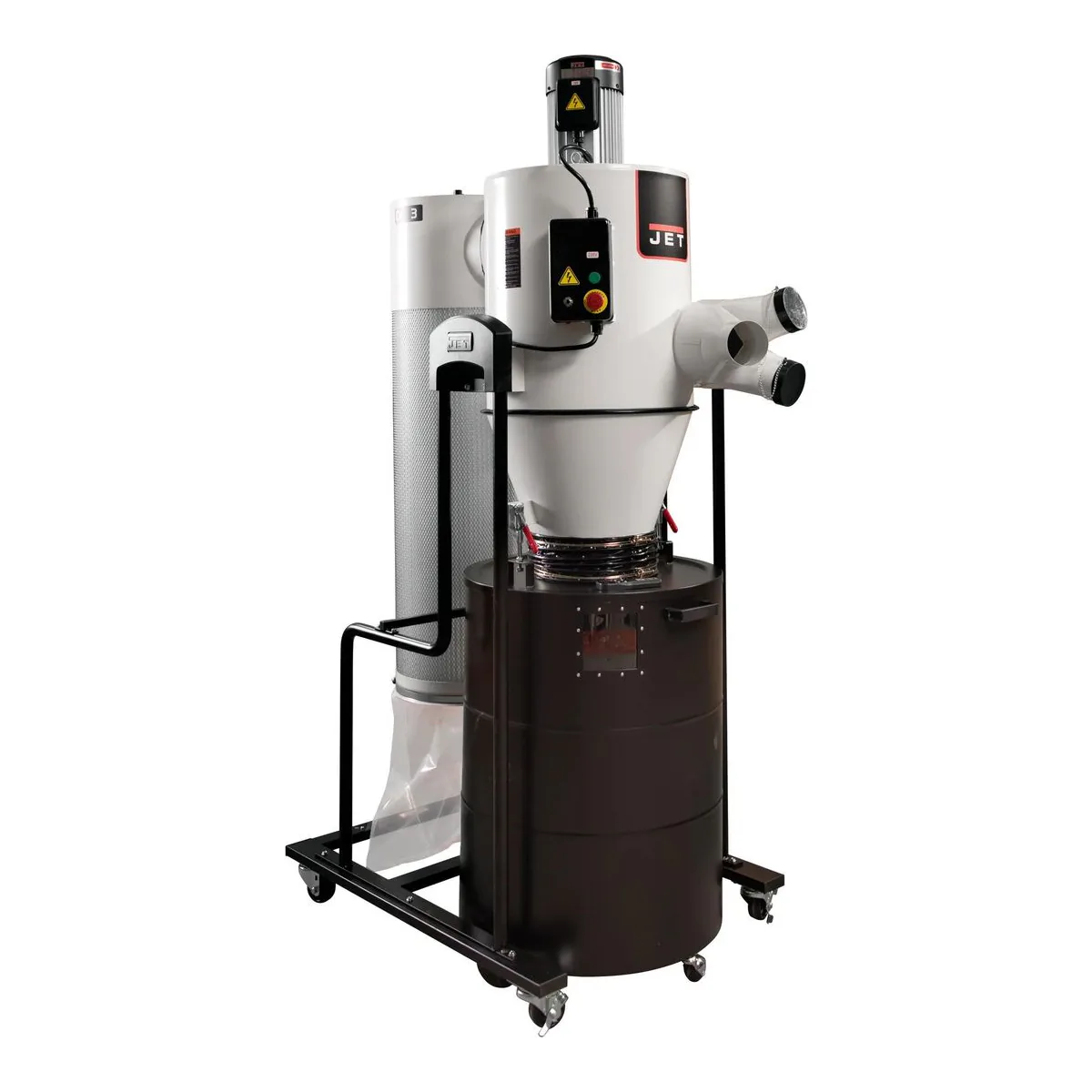
The JET JCDC-3 is the cyclone to buy when a shop vac and a single stage collector have stopped keeping up, a 3 HP production machine with 1 micron filtration, held back only by a 230 volt requirement and an 88 inch frame a one car shop has to plan around.
- 1240 CFM of filtered air, and 1963 CFM maximum
- 3 HP motor on 230 volt single phase power
- 1 micron filtration rated MERV 13
- 8 inch inlet, or three 4 inch hoses
- 15 inch steel impeller, 9 inch maximum static pressure, 76 dB
We earn a commission on qualifying purchases through the links here, at no cost to you. It never decides what makes the list.
The JET JCDC-3 stands 88 inches tall, and that height settles more than any number on the spec sheet does. It is too much cyclone for the corner of a one car garage, and knowing that before the pallet ships saves a wasted delivery. This is a production dust collector, built to run daily, and everything good about it follows from that.
As a 3 HP cyclone dust collector the JCDC-3 sits at the top of our dust collector shortlist. What follows is built from JET's own documentation and the live listing, so it leads with what the machine is rated to do and marks where the rating stops meaning much.
The JET JCDC-3 airflow, rated and real
JET rates the JCDC-3 at 1240 CFM of filtered air, with a maximum of 1963 CFM before the filter is in the path. Both are real numbers, and neither is what you get at the tool. Rated airflow on any cyclone is taken with nothing bolted to the inlet, so the figure is a ceiling by design, and the maximum static pressure JET lists, 9 inches, is the pressure budget the whole duct run has to fit inside. Twenty feet of flex hose and two elbows can spend half of it. Read 1240 CFM as a ceiling, and the way to reach near it is to size the collector by the duct, not the motor.
Basis: manufacturer documentation for the CFM and static pressure figures. Rating airflow with no ductwork attached is the norm across the category. JET is no outlier here, and the duct run is where the gap opens.
Filtration
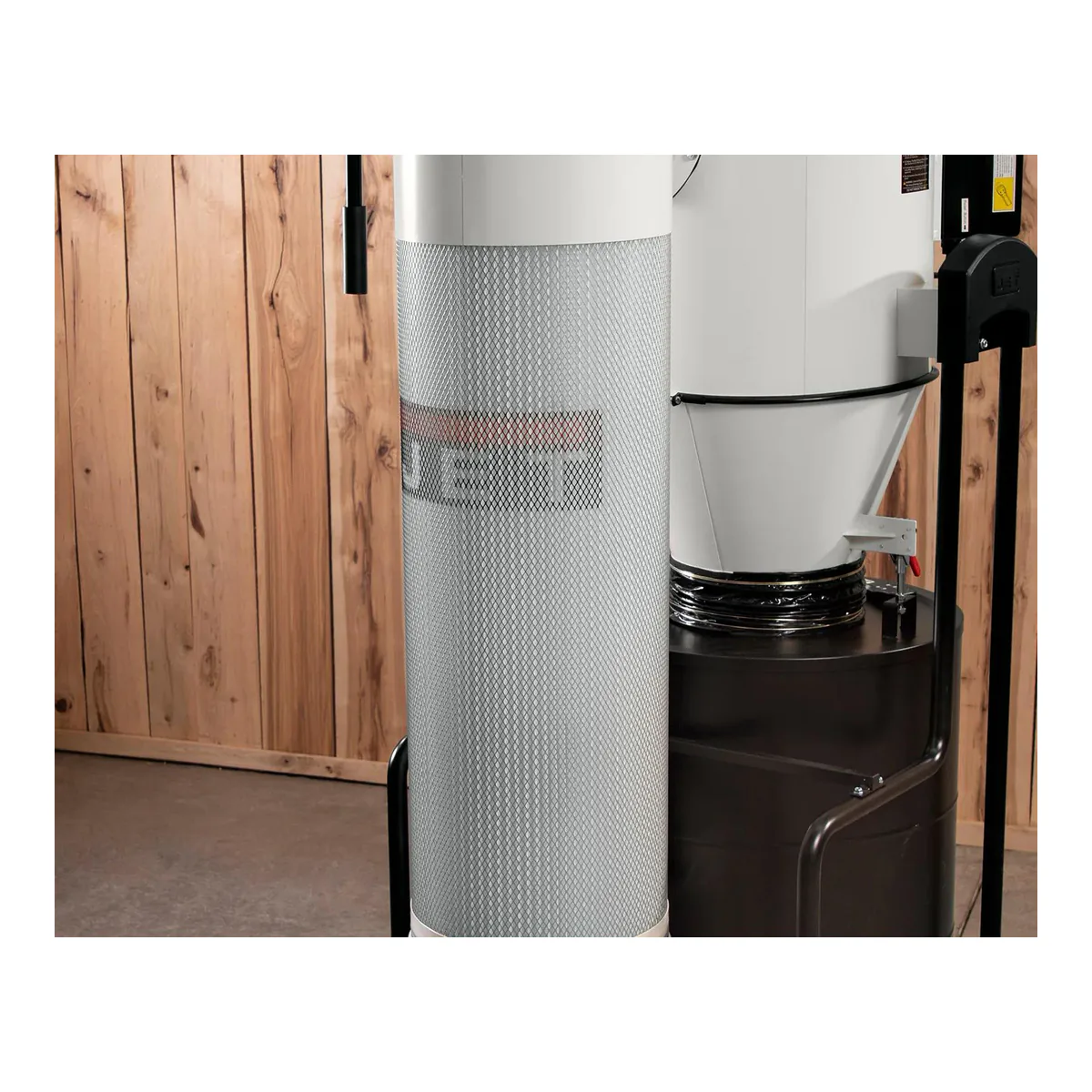
The filter is a cartridge over spunbond polyester, rated to 1 micron at MERV 13. A filter that fine catches the particles small enough to stay airborne and reach your lungs. Those particles are why you run a cyclone indoors instead of a bag collector that passes the fine stuff back into the room. The cartridge is the part that clogs and the part you clean, and a cyclone earns its keep by dropping most of the load into the drum before the air ever reaches it.
Basis: manufacturer documentation.
The inlet and the ports
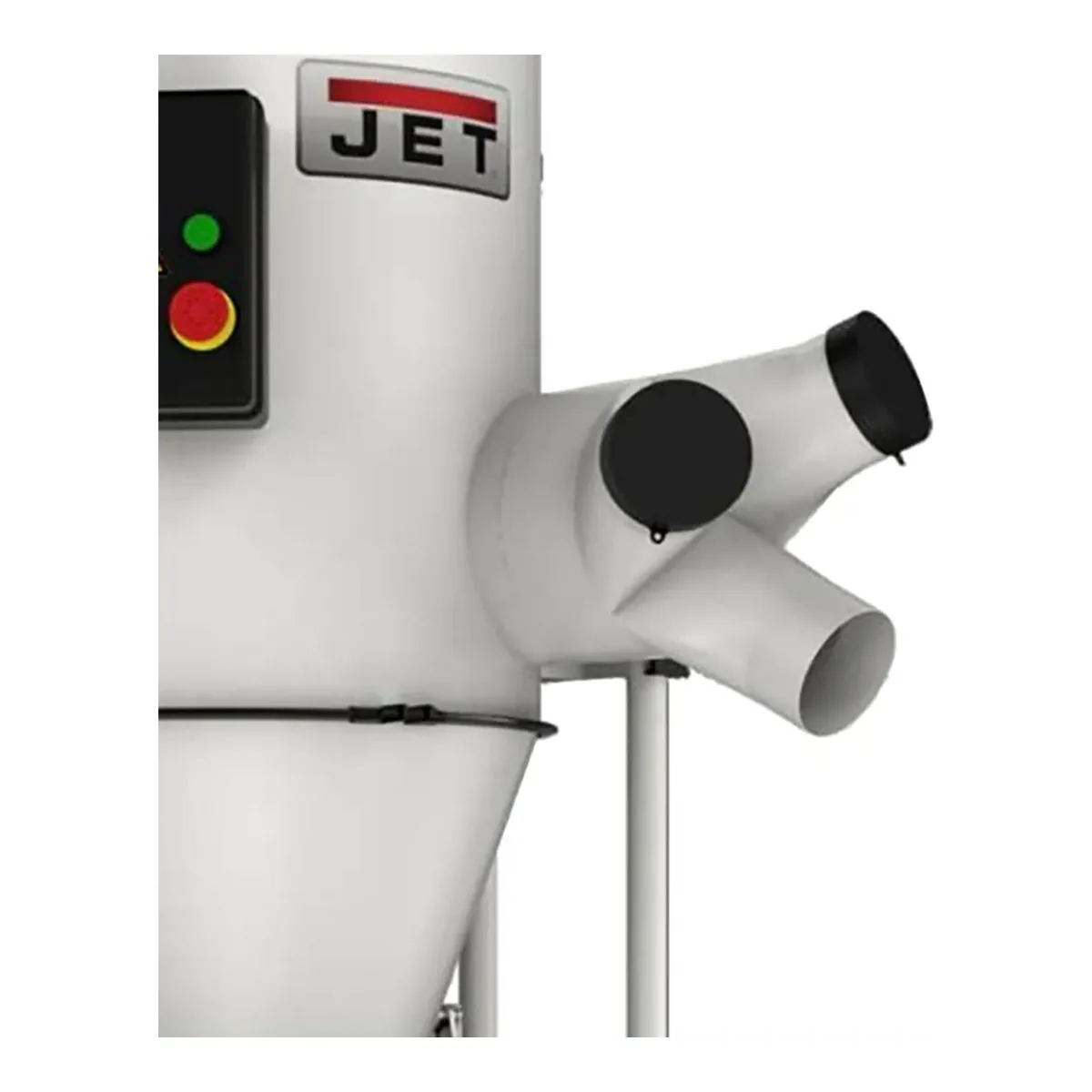
You get one 8 inch inlet, or a manifold that splits it into three 4 inch hoses. That choice is the machine's flexibility and its trap. One 8 inch trunk line feeds a properly ducted shop and keeps the static pressure low. Three 4 inch hoses let you reach three machines, but 4 inch duct chokes the airflow long before the cyclone does, so the split is for reach. Running three tools at once is not what it is for. Whatever you connect, match the port to the hose rather than the label on it, because a fitting that does not truly seat leaks the pressure you just paid three horsepower for.
Basis: manufacturer documentation.
The motor and the circuit
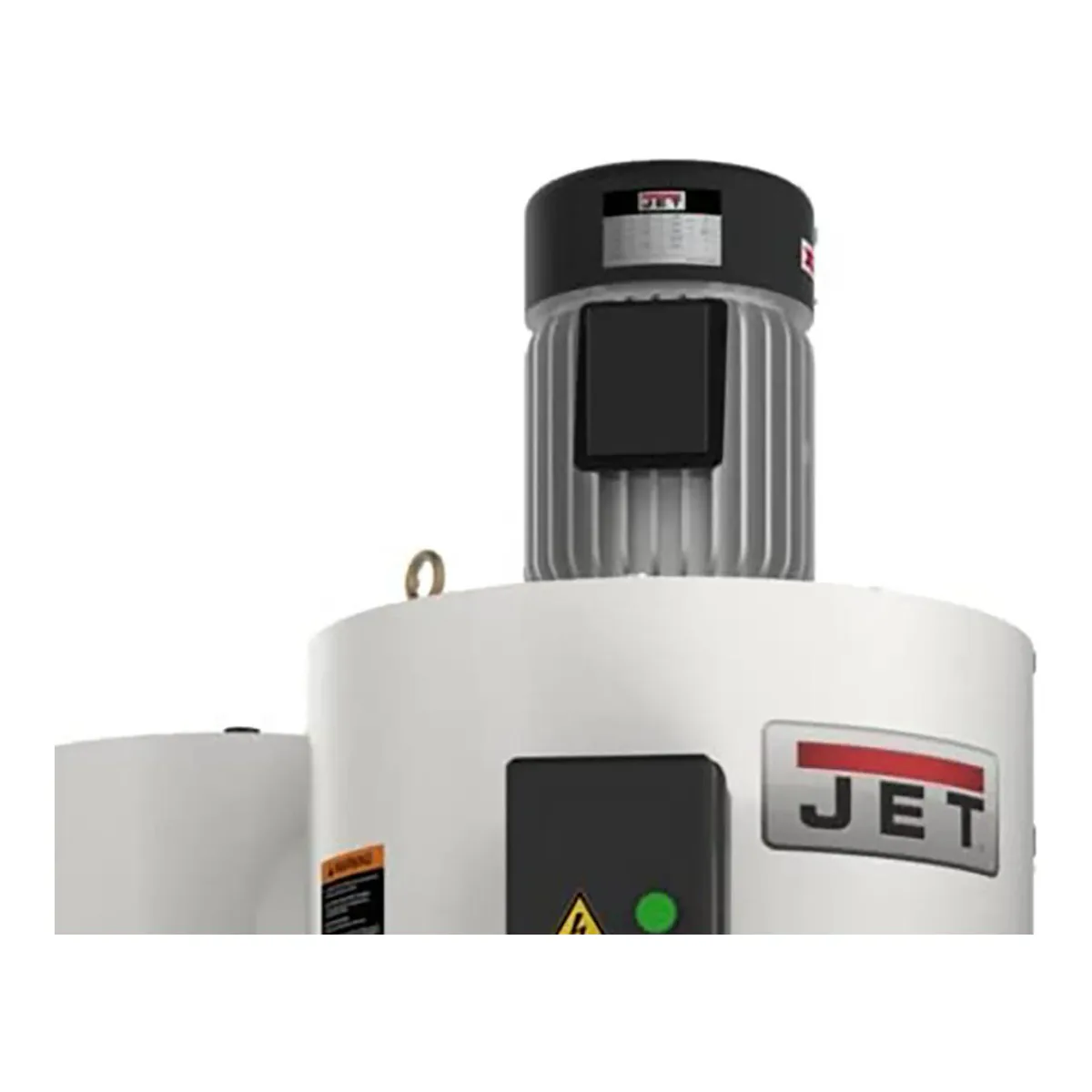
The motor is 3 HP turning a 15 inch steel impeller, wired for 230 volt single phase. That voltage is the gate. The JCDC-3 does not convert down to a standard household circuit the way a contractor saw does, so it assumes you already have 230 volt service in the shop. If you do not, the machine does not run, and adding a circuit is an electrician's morning. Plan it before the purchase. Once the crate is on the floor it is too late.
Basis: manufacturer documentation.
Collection and footprint
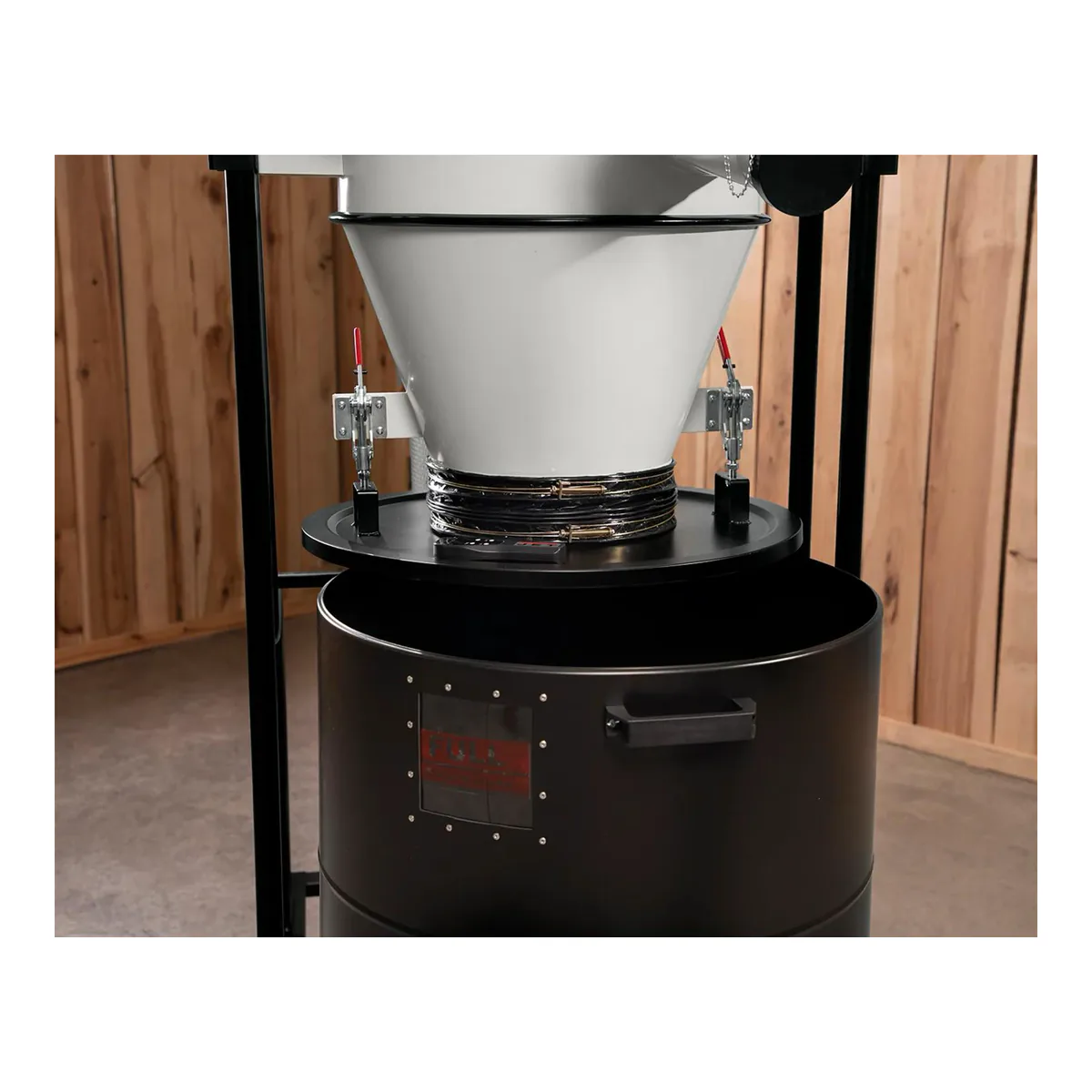
Collection is a drum under the cyclone, and JET does not publish its volume, so treat capacity as unstated. Do not assume it is generous. What JET does state is the size of the thing, the real spec for most buyers: 88 inches tall on a base 57 inches along its long side. It wants real floor space and close to eight feet of clear height, and under a low ceiling or a garage door track it will not stand up at all. Measure the vertical space before anything else, because everything about siting this machine starts there.
Basis: manufacturer documentation.
Noise
JET lists the JCDC-3 at 76 dB, without saying at what distance. A decibel figure with no distance attached cannot be compared across brands, and it reads quieter on paper than at your ear with the cyclone running a few feet away. Take 76 dB as a sign you will want ear protection near it. Do not rank it by that number.
Basis: manufacturer documentation, distance not stated.
What we would buy instead
If your shop runs one machine at a time and you are collecting for a single saw or planer, 3 HP and an 8 inch trunk are more collector than the job needs, and a smaller cyclone will keep up for less floor and less circuit. If you fought the 230 volt question and lost, that settles it on its own. Buy the JCDC-3 when you have the height, the service and more than one machine throwing chips, because that is the shop it was drawn for. Anything less and you are paying for airflow the ductwork will never let you use.
A closer look at the JET JCDC-3
Made up your mind?