Best dust collector: five cyclones by airflow and circuit
The best dust collector is the one whose airflow survives your ductwork and whose motor fits your circuit. Five cyclones ranked, 3 HP to 110 volt.
We earn a commission on qualifying purchases through the links here, at no cost to you. It never decides what makes the list.
The picks
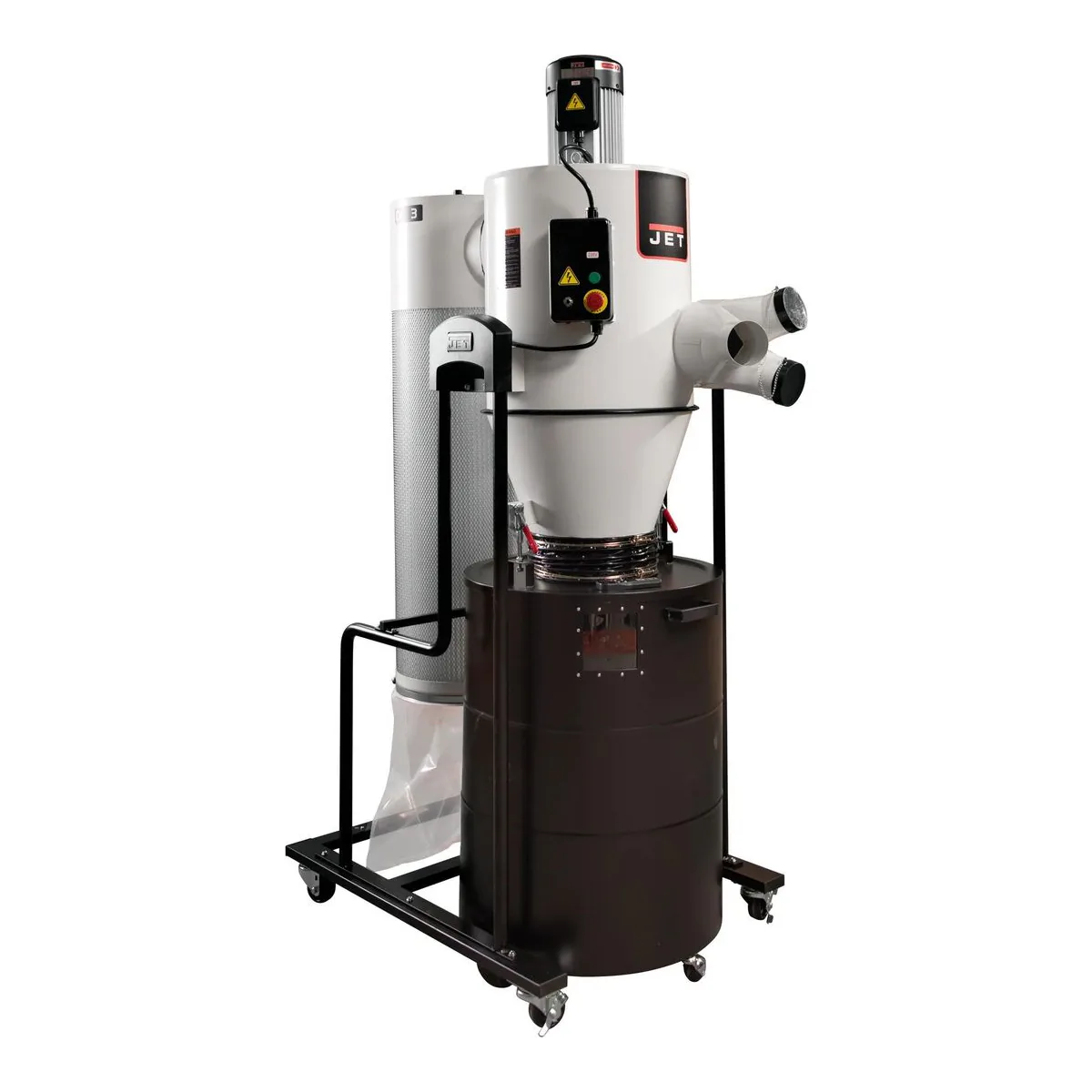
Best dust collector overall
JET JCDC-3
A 3 HP cyclone rated at 1240 CFM of filtered air, with an eight inch inlet, sized for ducting a whole shop and not one tool.
- 1240 CFM of filtered air, and 1963 CFM maximum
- 3 HP motor on 230 volt single phase power
- 1 micron filtration rated MERV 13
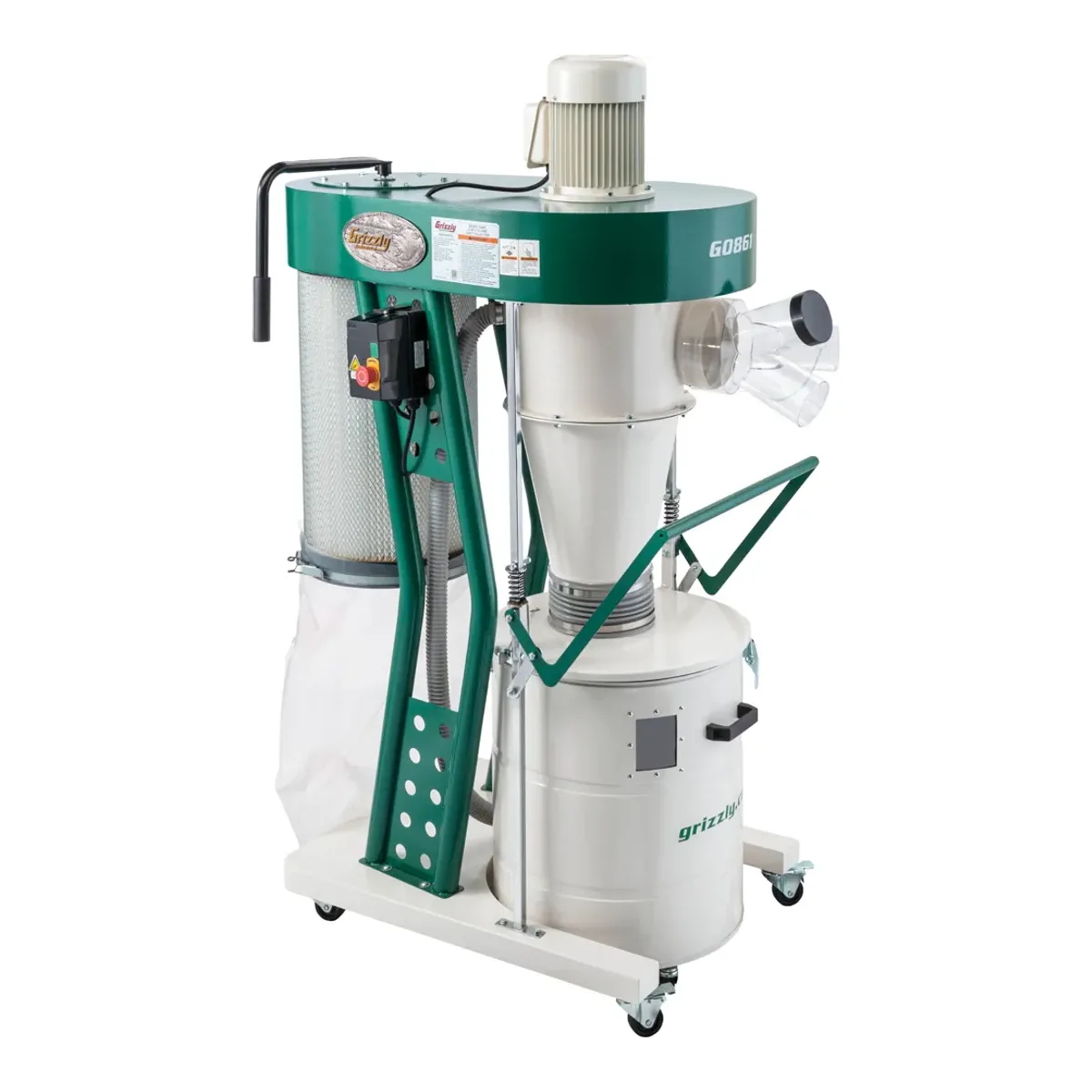
Best dust collector for woodworking
Grizzly G0861
A portable 2 HP cyclone with a seven inch intake that splits three ways, a drum on a quick release handle, and the size for a one operator shop.
- 1023 CFM at 1.2 inch static pressure, 10.9 inch maximum
- 2 HP motor on 220 volt single phase power
- 1 micron filtration over 28.1 square feet of filter area
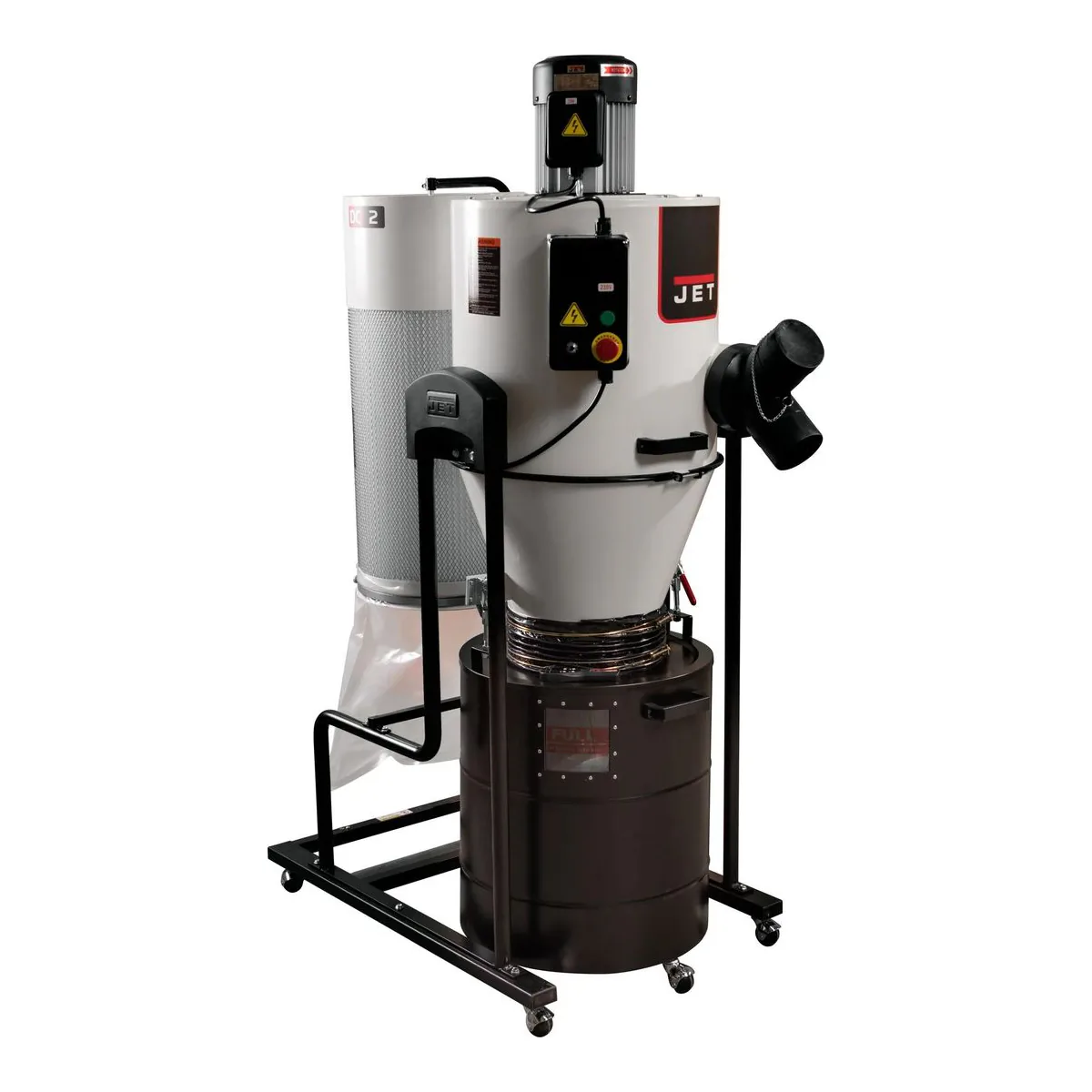
Best dust collector for a CNC router
JET JCDC-2
A 2 HP cyclone with a MERV 13 filter, the right shape for a machine that makes fine dust for hours off a single six inch drop.
- 938 CFM of filtered air, and 1538 CFM maximum
- 2 HP motor on 230 volt single phase power
- 1 micron filtration rated MERV 13
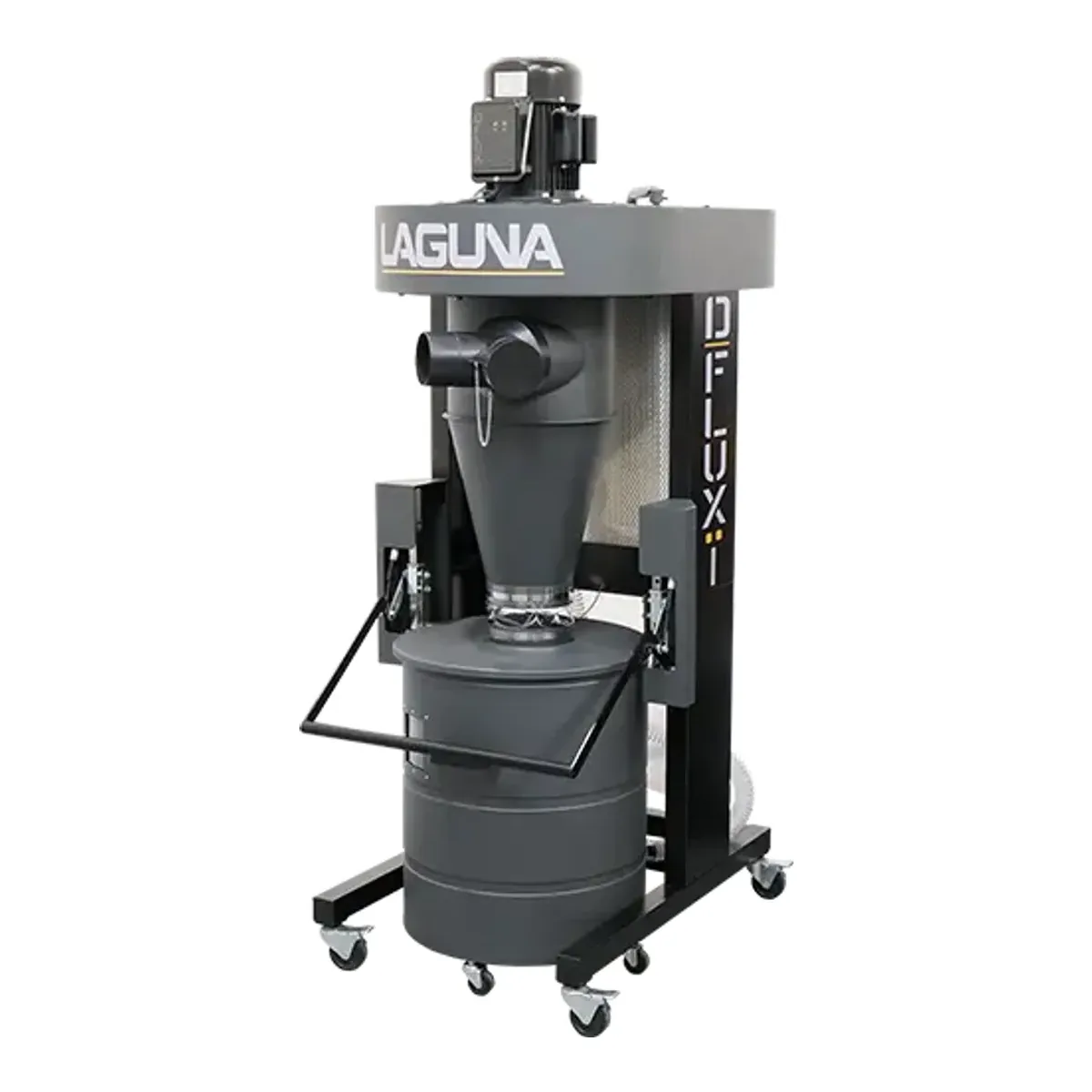
Best dust collector for a small shop
Laguna D|Flux 1
A 1.5 HP two-stage cyclone that runs on a standard 110 volt outlet, so no 230 volt circuit has to be run before it collects.
- 868 CFM maximum airflow from a two stage cyclone
- 1.5 HP motor on 110 volt power, runs on a standard outlet
- 1 micron filtration over a 14.5 by 24 inch canister
Best budget dust collector
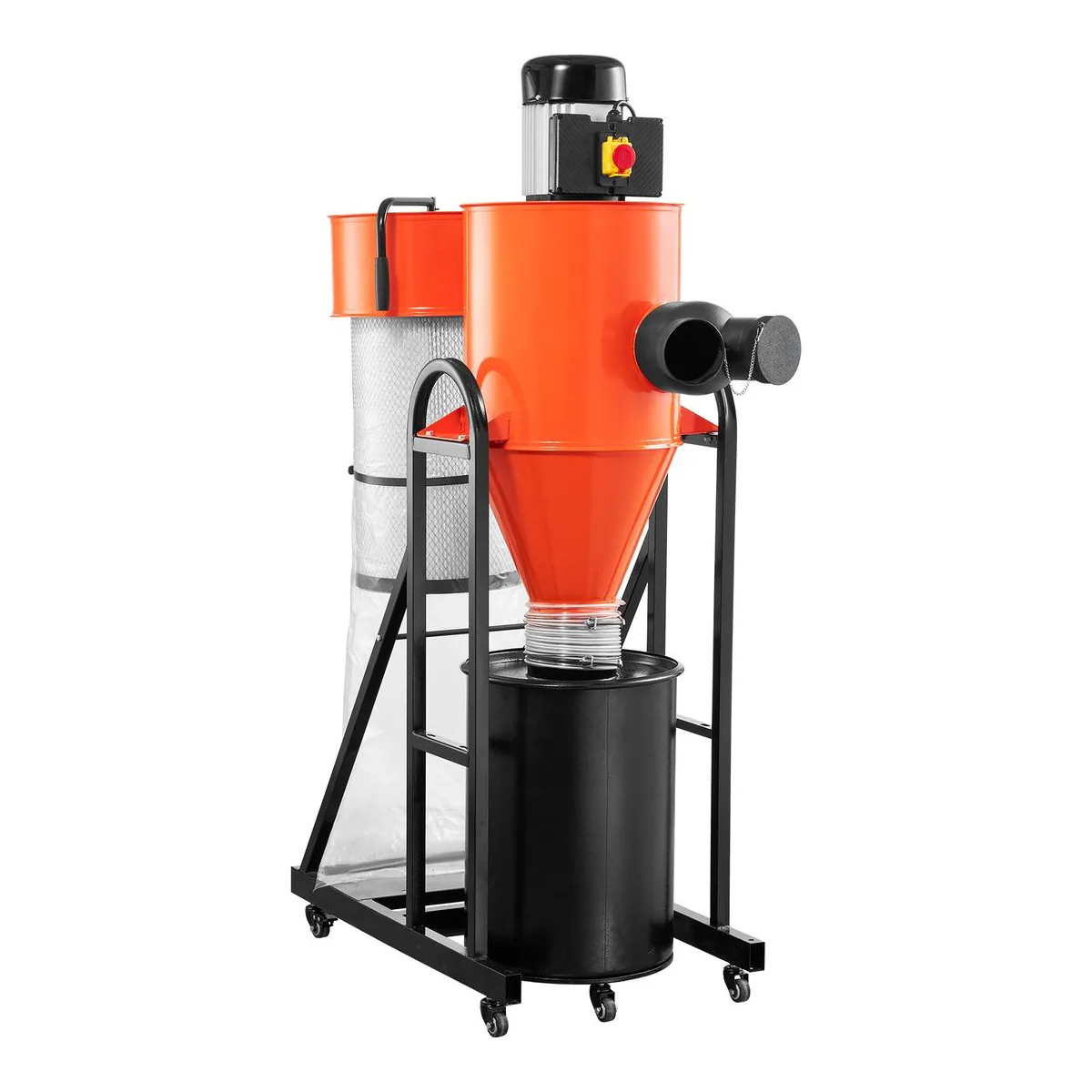
VEVOR 763 CFM Cyclone
A genuine cyclone on a 120 volt outlet at the value end, for a shop that wants separation without a 230 volt circuit.
- 763 CFM airflow from a cyclone separator
- 1.5 HP induction motor on 120 volt power
- 1 micron filtration
Every dust collector here is sold on one number, and no two makers measure it the same way. Some quote airflow through the filter, some at a set back pressure, some label a maximum and state no conditions at all, and Bill Pentz's ducting work puts a real system at roughly half the pressure the blower could make anyway. So the best dust collector for a shop has airflow that survives your ductwork and a motor that matches the circuit you already have. The biggest advertised number tells you neither.
These five are cyclone dust collector machines, ranked that way. Three are heavy 2 and 3 HP units that want their own 220 or 230 volt circuit, for a garage or basement shop with real duct runs. Two run on a standard 110 volt outlet, and that alone is what lets a small shop own one at all.
Pick by the tool you run most and the power you can give it. Do that and the dust collector CFM war stops mattering.
How these picks were chosen
Every spec here comes off the maker's own sheet, and the order follows airflow and the circuit the motor needs. Price settled nothing. No pick leans on owner reports either. The one evidence pack run on this shelf came back mostly shop-built cyclone threads and ducting arguments. The comments in it that do sit under a review of one of these machines are about the JCDC-2, and the pack was run for the JCDC-3.
The whole shelf on one axis
| Spec | JET JCDC-3 | Grizzly G0861 | JET JCDC-2 | Laguna D|Flux 1 | VEVOR 763 CFM Cyclone |
|---|---|---|---|---|---|
| Airflow (CFM at stated static pressure) | 1240 CFM filtered | 1023 CFM at 1.2 in SP | 938 CFM filtered | 868 CFM max | 763 CFM |
| Filtration (microns, MERV if stated) | 1 micron, MERV 13 | 1 micron | 1 micron, MERV 13 | 1 micron | 1 micron |
| Motor (hp, volts, amps) | 3 HP, 230V, 13 A | 2 HP, 220V, 9 A | 2 HP, 230V, 9 A | 1.5 HP, 110V | 1.5 HP, 120V |
| Inlet size and port count | 8 in, or 3 x 4 in | 7 in, 3-way splitter | 6 in, or 2 x 4 in | 6 in, 2 x 4 in | Not stated |
| Collection capacity | Not stated | 20 gal | Not stated | 20 gal | 12.5 gal |
Basis: manufacturer documentation. The airflow figures are not measured the same way, and that is the trap on this shelf. JET states airflow through the filter, Grizzly states it at 1.2 inches of static pressure, Laguna labels its figure a maximum and states no conditions, and VEVOR states a bare figure with no test basis at all. A maximum and a through-the-filter figure are different machines wearing the same units, so read the column as a ranking of class. It is no like-for-like race.
Best dust collector overall: JET JCDC-3
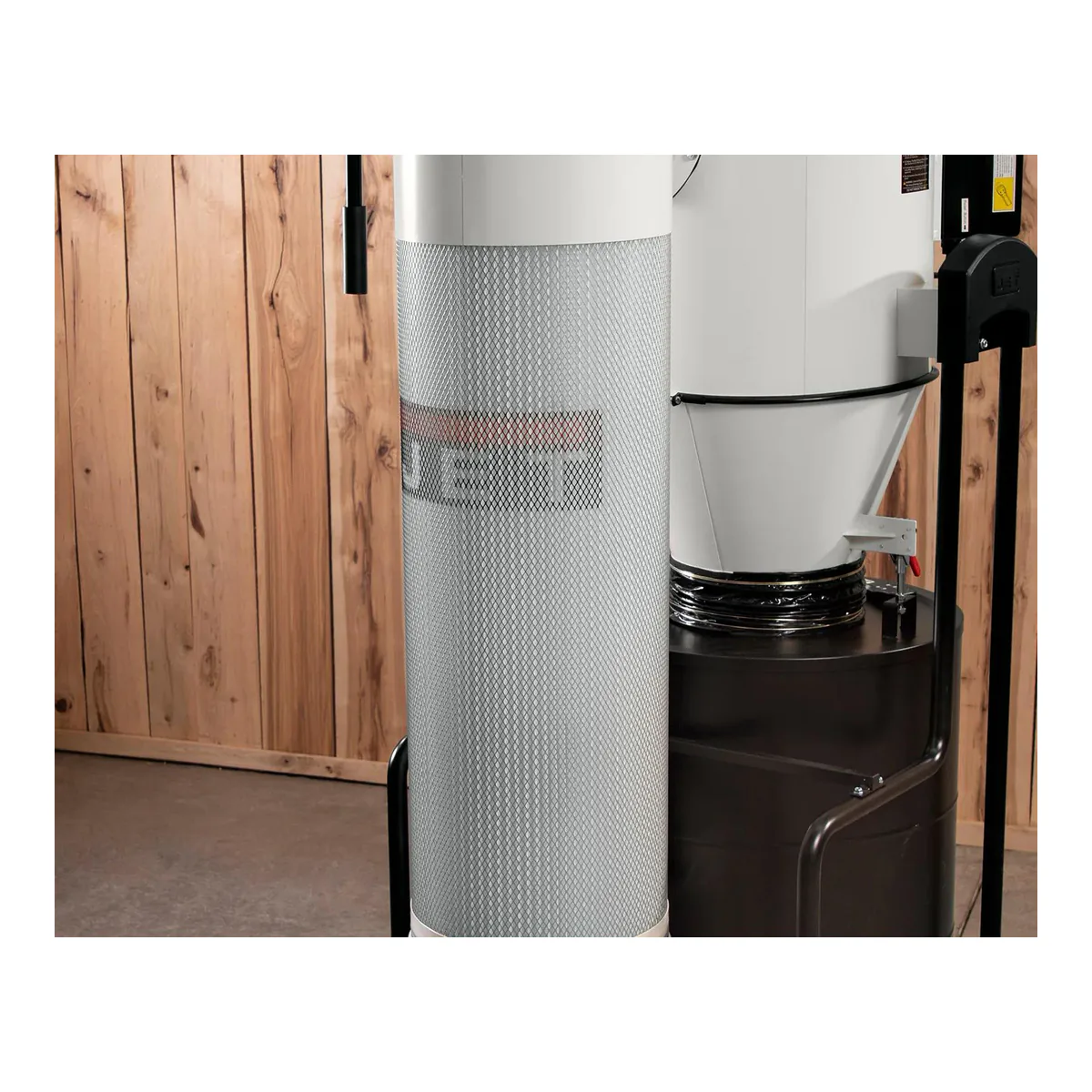
Buy this one if you are ducting a whole shop. Its 15 inch steel impeller moves 1240 CFM of filtered air on a 3 HP motor, and the inlet takes either one eight inch hose or three four inch ones. Read that split as reach rather than capacity: four inch duct chokes the airflow long before the cyclone does, so the ports you are not cutting on stay capped. Filtration is 1 micron at MERV 13, so the air going back into the room is not carrying the fine dust that matters.
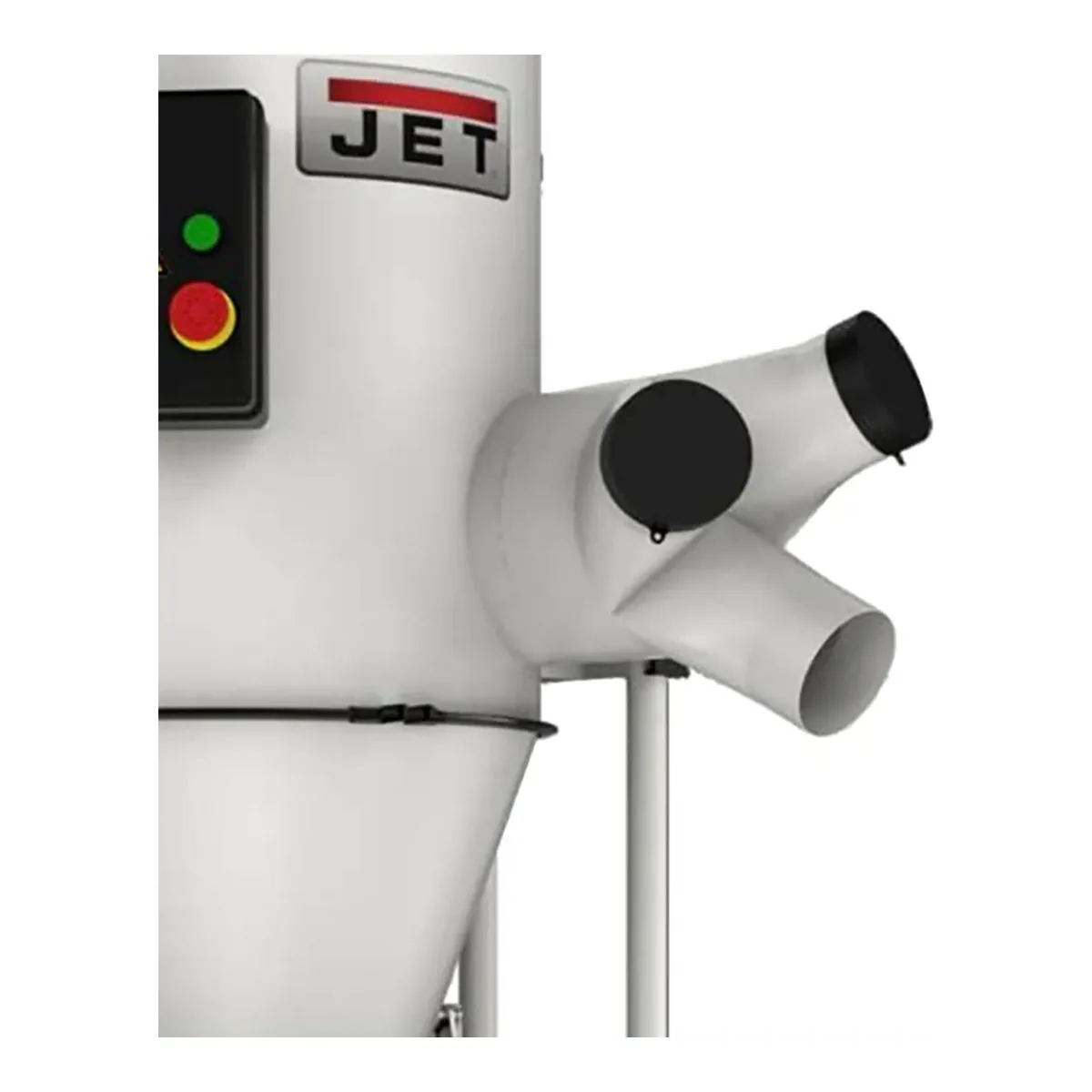
Skip it if you do not have a 230 volt circuit where it will stand. It does not run on a wall outlet, and wiring one is a job you cannot add at checkout.
Best dust collector for woodworking: Grizzly G0861
This is the workhorse of the shelf.
A portable 2 HP cyclone, it moves 1023 CFM at 1.2 inches of static pressure. On machines built after 2021 the seven inch intake carries Grizzly's own adapter for three four inch lines, so a table saw, a jointer and a sander can stay hooked up at once. Hooked up is not running together, and the blast gates you add to the run handle that, but it saves dragging one hose between three machines. The 20 gallon drum drops out on a quick release handle. Skip it if you need filtration below 1 micron, because that finer cartridge is the optional HEPA upgrade and not what ships.
Best dust collector for a CNC router: JET JCDC-2
A CNC runs for hours and makes fine dust the whole time, so the cyclone plus the MERV 13 filter is the right shape: heavy particles drop into the drum and the fine fraction is what that cartridge is there to hold. It moves 938 CFM of filtered air on a 2 HP motor through a six inch inlet, enough for a single machine on a short run. It is not a whole-shop machine. Skip it if you plan to feed several tools at once, because one six inch or two four inch drops is where it tops out, and the JCDC-3 above is the machine for a branching network.
Best dust collector for a small shop: Laguna D|Flux 1
The pick when the wall gives you a standard outlet and nothing more. It is a 1.5 HP two-stage cyclone on 110 volt power, so no 230 volt circuit has to be run for it, and it still separates chips in a cyclone ahead of the filter, where a single-stage machine dumps everything into one bag. Airflow is a maximum 868 CFM, real enough for one tool at a time on a short four inch run. Laguna's own series comparison gives no amp draw, so if that outlet already carries the tool you are cutting on, check it before the collector lands. Skip it if you are ducting several big machines on a long run, because a standard circuit and a collector this size cannot keep a long six inch main clear.
Best budget dust collector: VEVOR 763 CFM Cyclone
Value end of the shelf, and still a real cyclone. You are not buying a bag on a fan. You get a 1.5 HP motor on a 120 volt outlet, 763 CFM of airflow, 1 micron filtration and a 12.5 gallon drum, for a shop that wants cyclone separation without a 230 volt bill. Skip it if you want performance you can hold the maker to. VEVOR states one airflow number and nothing of the test behind it. Grizzly publishes the static pressure its figure was taken at, and JET at least labels its number as filtered air.
What the best dust collector actually needs
Two things settle it, and the advertised CFM is neither.
The first is airflow at the tool: the box number minus everything the ductwork takes back, so a short fat run beats a long thin one every time and the sizing page turns that into a target for your own shop. The second is the motor and the outlet behind it: a 110 volt machine runs anywhere, a 230 volt machine needs a dedicated circuit, and that one fact rules out half this list for most garages before airflow is even discussed.
Fitment is the quiet third. A collector is only as good as the adapter between its inlet and your tool's port, and a four inch tool choked down to a two and a half inch fitting loses more than any airflow rating will warn you about.
If you own one benchtop tool and a shop vac, none of these is your next purchase. A cyclone separator lid on a bucket ahead of the vac you already have catches the chips and saves the filter for a fraction of the effort. Step up to a real collector the day a second stationary machine arrives, like the bandsaw it will sit beside. Across the whole shelf, buy the airflow you can duct and power today. The number that looks biggest in a spec sheet can wait.
Questions people actually ask
- How much CFM does a dust collector need for a small shop?
- The air engineering findings Bill Pentz collected put chip collection at about 350 CFM at the tool, and the fine dust you cannot see at near three times that. The catch is that makers measure the headline number in different ways and never with your ductwork on it, so a machine rated well above those targets is what actually delivers them in a real shop. Size by the tool you run most and its port diameter, not by the advertised rating.
- Is a cyclone dust collector worth it over a single-stage bag?
- For anything you run often, yes. A cyclone drops the heavy chips into a drum before they reach the filter, which is the separation Grizzly describes its own machine around and which JET sells as a multi-stage design that extends primary filter life: the drum takes the chips, and the cartridge is left mostly with the fine fraction. Separation is not total, so the filter still loads, only far more slowly. The trade is height, cost and noise. For one occasional benchtop tool a separator lid on a bucket ahead of a shop vac does the same job for far less.
- Can a dust collector run on a normal household outlet?
- Some can. The Laguna D|Flux 1 and the VEVOR here run on a standard 110 to 120 volt outlet, which is why a small shop can own one at all. The 2 and 3 HP JET and Grizzly cyclones need a dedicated 220 or 230 volt circuit, and wiring one is a job rather than a checkout option, so confirm the power at the wall before you buy up.