Monport GA60 review: which laser source ships
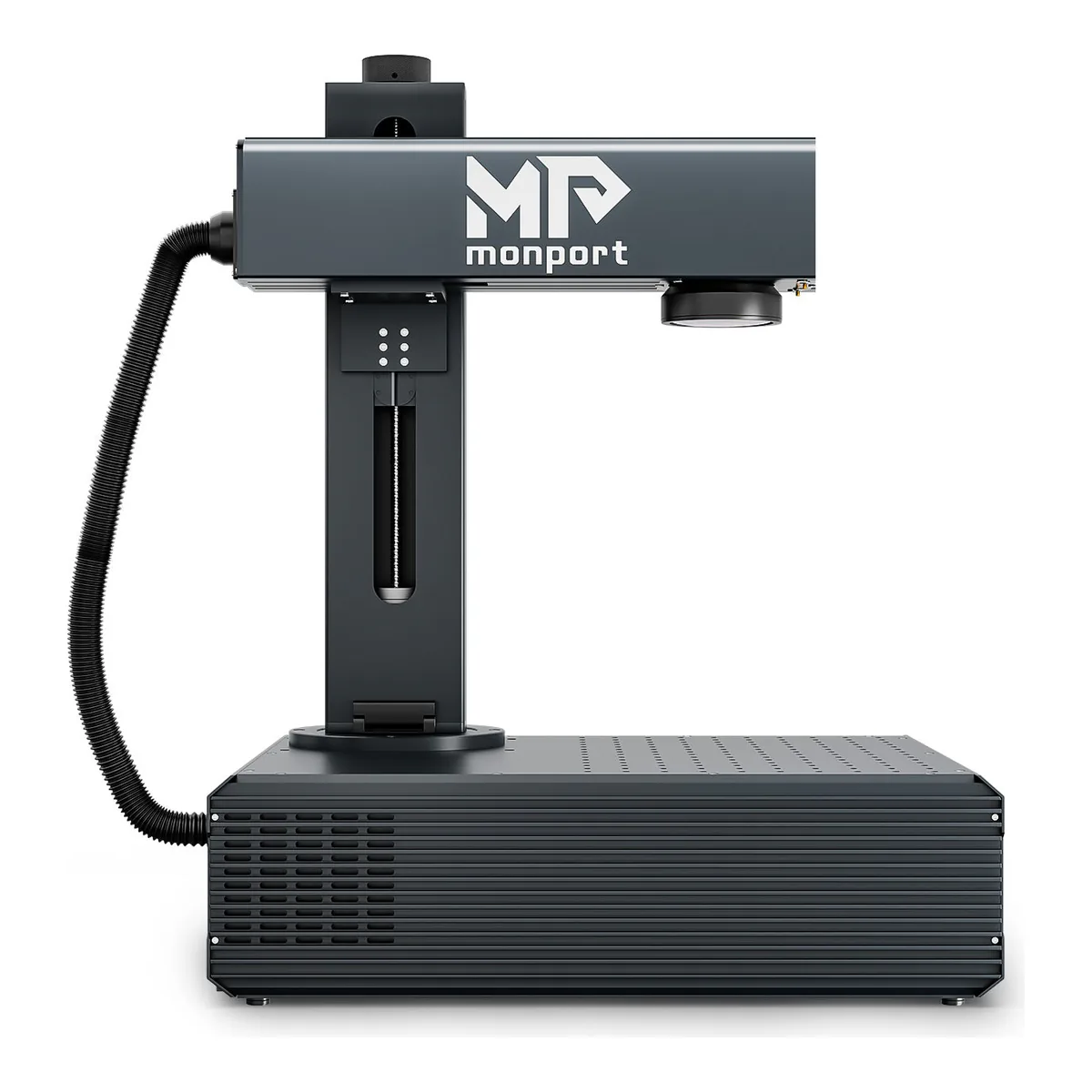
A rigid, autofocusing 60W MOPA fiber laser with one 175 mm lens, sold on this listing with LightBurn and a rotary. Ask Monport which laser source and controller ship before you order, and budget for the enclosure and extraction it does not include.
- Engraving area 6.9 x 6.9 in. (175 x 175 mm)
- MOPA fiber laser at 1064nm, pulse width 2 to 500 ns
- One click autofocus, with three red lights for manual focus
- The mast rotates up to 90 degrees for large and tall objects
- Laser Class 4, and the device does not come with a protective housing
- This listing bundles LightBurn and a rotary axis
We earn a commission on qualifying purchases through the links here, at no cost to you. It never decides what makes the list.
The Monport GA60 that won its independent review is not necessarily the one that arrives today. Hobby Laser Cutters tested a 60W unit in October 2024 with a JPT M7 MOPA source, the "E2" version, and came away calling it one of the most mechanically stable galvo lasers on its bench. One owner who bought on the strength of the same reviewer's video received a GZTECH source and a BSL controller instead, and a second commenter, under the written Hobby Laser Cutters review, says Monport moved the GA MOPA series to GZTECH sources from October 2024, sources that commenter believes are not as powerful.
Monport's own GA spec table runs from laser power to warranty without a row for the source's maker. So the first thing to do with a Monport GA 60W MOPA is write to Monport and ask which source and which controller your unit carries. Everything else about it is a strong fiber laser engraver for metal, and a step up in power from the 50W fiber pick on our laser engraver shortlist.
This listing is the 60W with LightBurn and a rotary axis bundled, and nine owners in YouTube comment threads under GA60 videos describe their own machines.
Which laser source is in a GA60
Only Monport can tell you, per unit. What the paperwork does settle is the class of source: a MOPA fiber laser at 1064nm, with pulse width adjustable across 2 to 500 ns and a frequency range of 1 to 3000 kHz. That adjustable pulse is what separates MOPA from a fixed pulse Q-switched fiber, and it is the reason to buy one at all: color on stainless, black and white on anodized aluminum, and easier marks on plastic.
The owner who received the GZTECH unit liked the hardware ("This machine is indeed rock solid and the materials are high quality") and blamed the BSL controller for LightBurn trouble that made the laser unreliable. That owner was moving to Monport's GI60, described in the same comment as carrying the JPT source and a JCZ controller, and giving up autofocus to get there.
Work area: one 175 mm lens
175 x 175 mm, on one field lens. On its JPT E2 review unit, Hobby Laser Cutters measured the spot at about 60 microns on that lens, close to what it measured on a ComMarker with a much smaller 110 mm lens, and that unit came with its lens correction factors pre-calculated, so straight lines came out straight without a calibration session. Maximum Z height, field lens to workbench, is 410 mm on Monport's own table.
For anything bigger than the base, the mast rotates up to 90 degrees so the head can swing out over a large, tall or bulky object.
What a MOPA fiber laser marks, and how deep
Monport rates the GA60 MOPA at up to 0.1mm of marking depth in a single pass, depending on material. Depth beyond that comes from passes. On the JPT unit, Hobby Laser Cutters ran a 3D relief in brass for 25 minutes and measured 1.3mm, the same depth it got from a 60W ComMarker B4 on a 110mm lens. Color on stainless works and is slow: the reviewer found colors quickly and still described it as a process of test grids, because the colors shift with every lens and machine.
Can the GA60 cut metal?
Thin sheet, slowly. Monport's page advertises cutting stainless, aluminum and brass without a thickness beside the claim. The one figure on record comes from the JPT review unit, where Hobby Laser Cutters cut a 0.3mm aluminum business card in under ten passes. Anything you would call plate needs a different class of machine.
No enclosure, no extraction in the box
This is an open frame Class 4 laser. Monport's own manual says it "does not come with a protective housing" and asks for a dedicated room or protective screens around the work area, and its package list (power cable, USB cable, flash disk, wrench, two positioning plates, screws, goggles, ten test cards, a USB-C lead, instructions and a ruler) has no extractor in it. Monport sells an enclosure and a fume extractor separately. A buyer who wants the beam shut in a box from day one is shopping for something like the enclosed xTool M2, a diode at the other end of the shelf.
Replace the goggles. Hobby Laser Cutters called the included glasses cheap for a machine like this and recommends OD6+ eyewear instead. Treat eye protection rated for 1064nm as part of the purchase.
LightBurn and the rotary in this bundle
Base GA60s ship with Monport's BslAppSimple, which the GA manual lists as Windows only. The product page lists macOS without saying which program it means. LightBurn, which runs on Windows and macOS, is the add-on this listing includes, and Monport's manual says any version below V1.7.00 will not work with the machine. Four of the nine owners had trouble between the machine and its software. One could not get framing to work until a setup video fixed it. Another wrote that "when I try to frame something it actually starts engraving". A third described a laser that "will automatically start" and ignores stop, and the fourth is the GZTECH owner above, who says the BSL controller is not fully compatible with LightBurn.
The rotary half has one owner report, a sharp one: autofocus could not be set on objects of 80mm diameter, which that owner gives as the rotary's size, and Monport's enclosure was too tight to fit the rotary inside. Hobby Laser Cutters separately found the autofocus reliable on everything except highly reflective objects, so plan on focusing a polished tumbler by hand with the three red dots.
GA60 vs ComMarker B4 50W
The ComMarker B4 50W holds the metal slot on the hub, and on paper it ships two lenses, 110 and 200 mm, where the GA60 ships one. The GA60's case is its one press autofocus, the folding mast and a 2 to 500 ns pulse range Monport publishes, and Hobby Laser Cutters found its head the most stable of the machines it lined up, ComMarker's B6 and a 60W MOPA B4 included. Three prospective buyers in the GA60 threads asked about the ComMarker B6 specifically; by that reviewer's reading, the B6 runs the same E2 60W JPT source in a smaller body. Fiber, diode and CO2 machines we cover sit together under laser engravers and cutters.
What owners report
Nine people say in their own words that they own a GA60. One is happy without reservation, praising the autofocus and the folding column. Four had the software trouble above and one the rotary trouble. Another wrote that the machine "has been a headache since I got it in NOV" and was still hunting for MOPA settings. One tried to add a lens and ended up waiting on tech support, because the gantry measurement was off and the head would not lower far enough to work. The ninth had just bought one.
Support comes up twice: one owner is waiting on it and another calls it slow. The warranty is two years on the machine and one year on the laser source.
What to check before you order
Ask Monport, in writing, which source and controller ship on this ASIN this month, and whether LightBurn talks to that controller without the framing fault. Measure the largest cylinder you plan to run on the rotary against the autofocus report above. Then price a room, an extractor and real 1064nm glasses into the budget, because the machine stops at the lens.
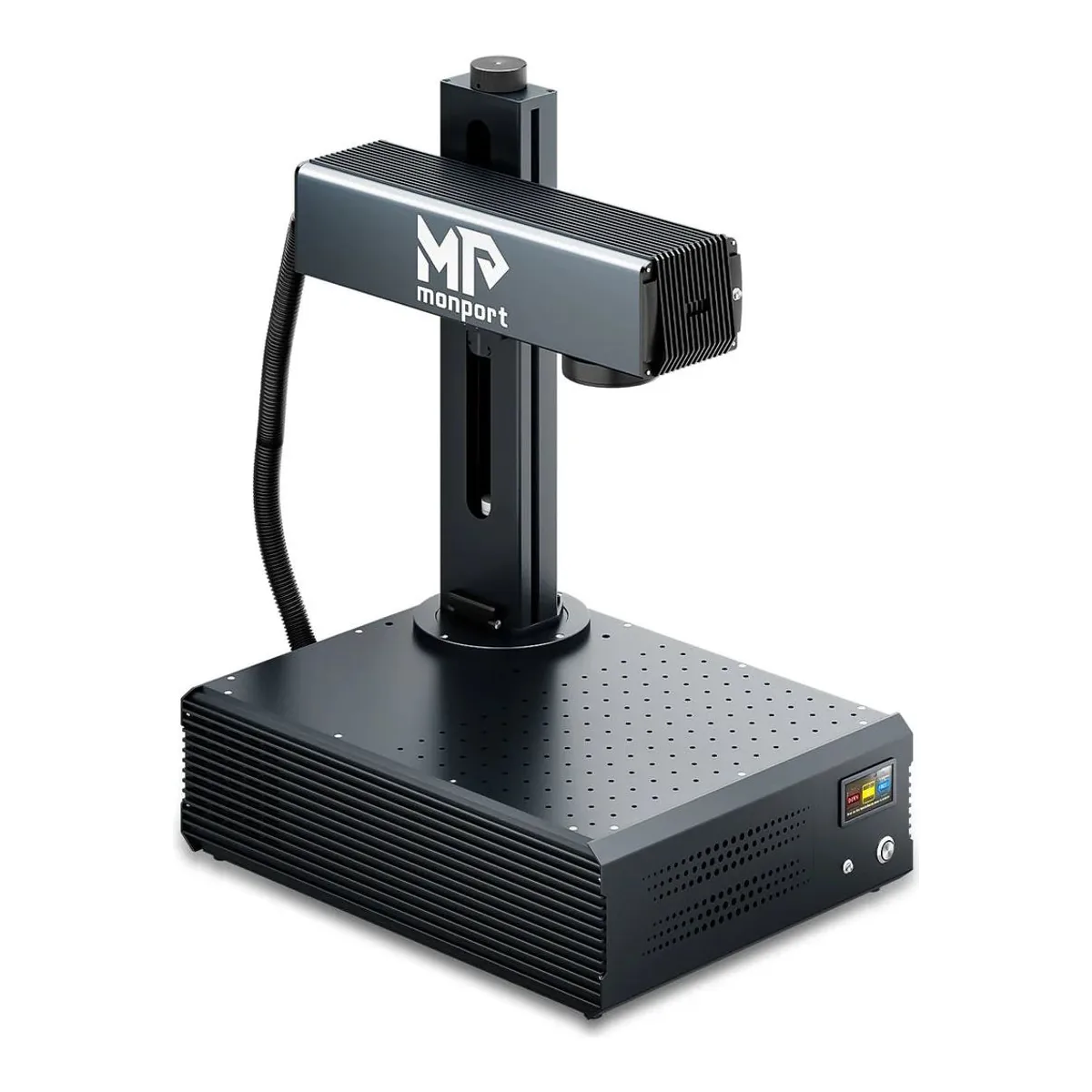
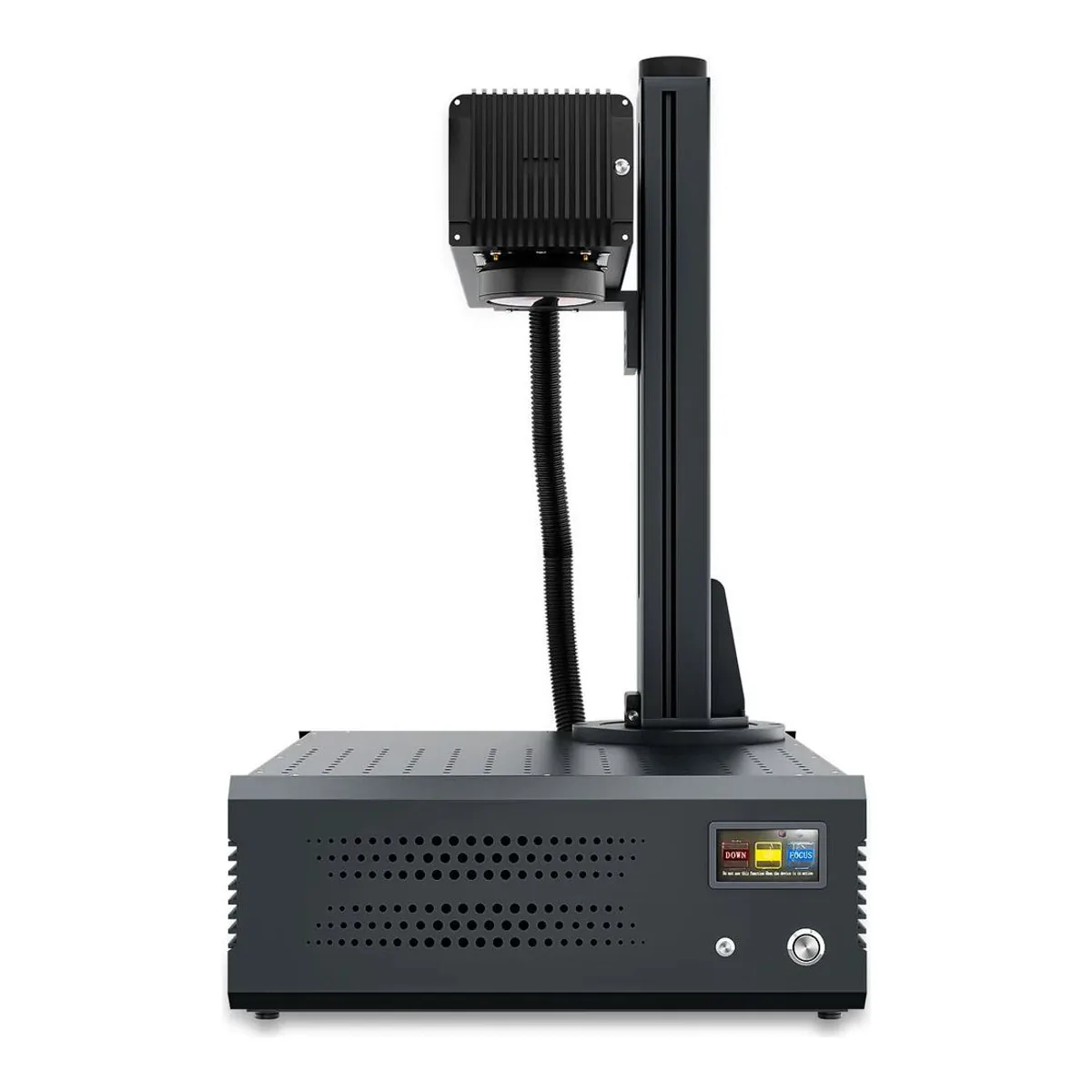
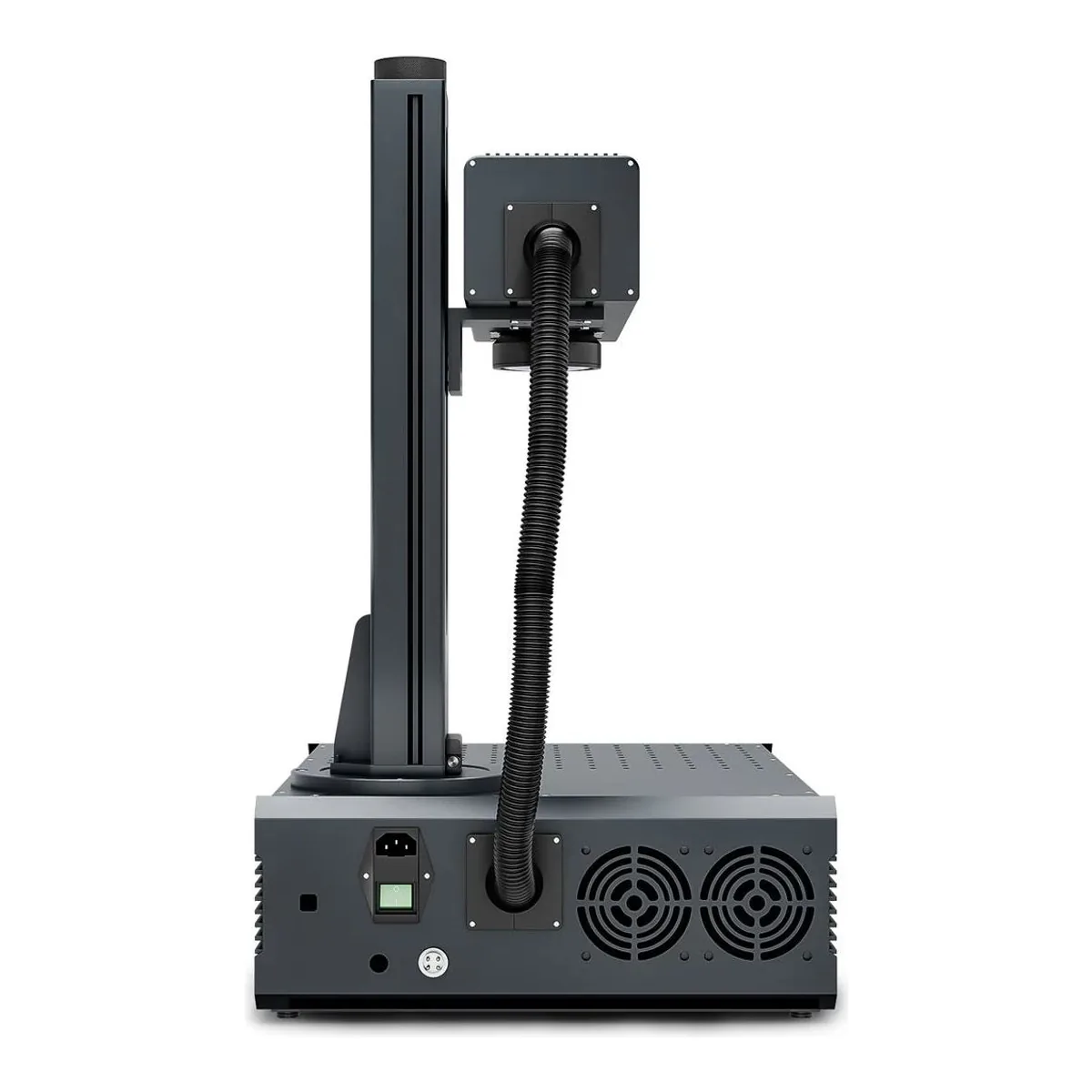
A closer look at the Monport GA 60W MOPA
Made up your mind?