Best ultra short throw projector: five picks, by room
The best ultra short throw projector depends on how much light the room lets in. Five laser UST picks from Hisense, Epson and AWOL Vision, one per buyer.
We earn a commission on qualifying purchases through the links here, at no cost to you. It never decides what makes the list.
The picks
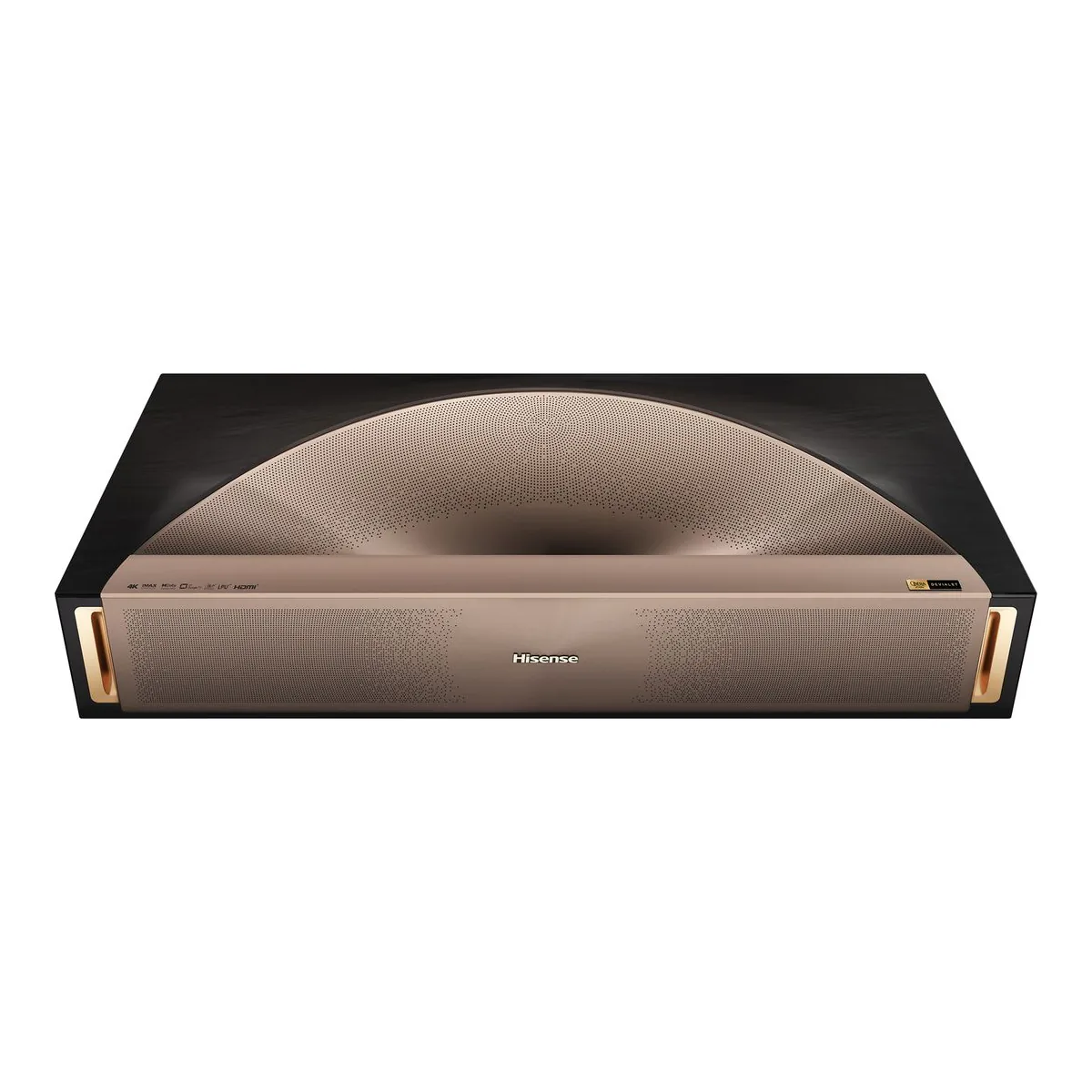
Best ultra short throw projector overall
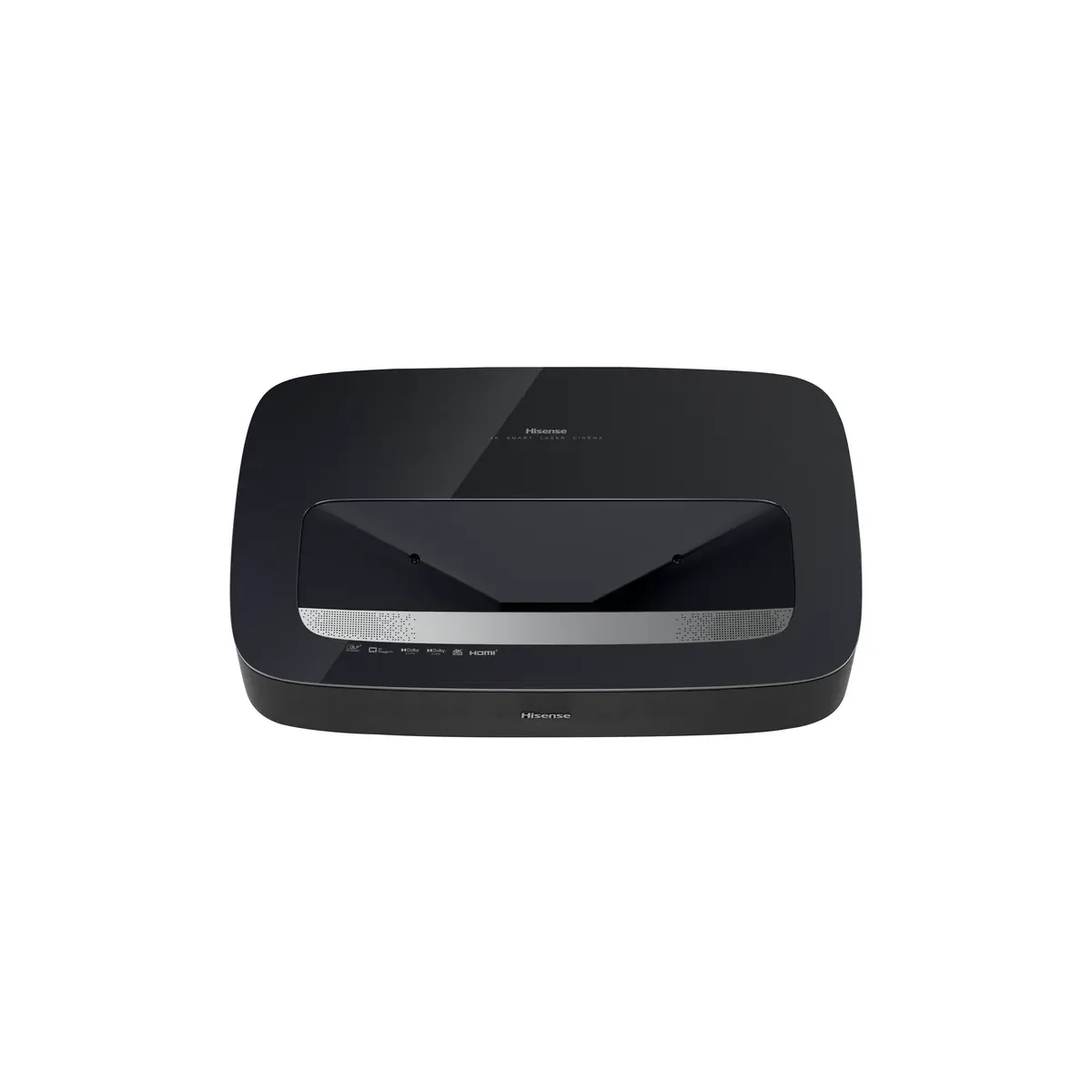
Hisense L9Q
A 5,000 ANSI lumen triple laser that ProjectorCentral measured above its own specification, with a Devialet 6.2.2 system and four HDMI inputs.
- 5000 ANSI Lumens brightness from a red, green and blue triple laser light source
- 0.18 throw ratio, 80 to 200 inch image
- Dolby Vision, HDR10+, HDR10 and HLG
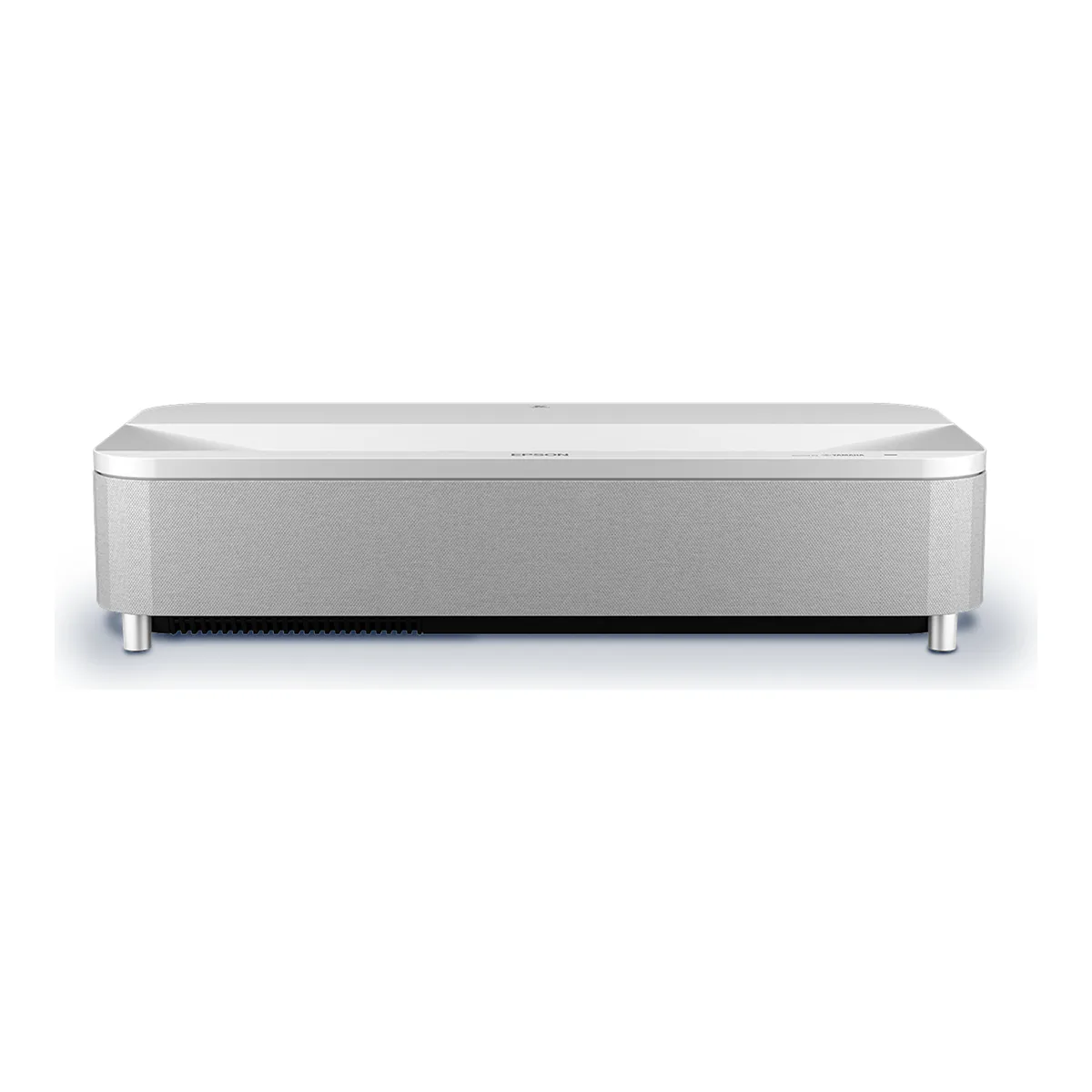
Best ultra short throw projector for a bright room
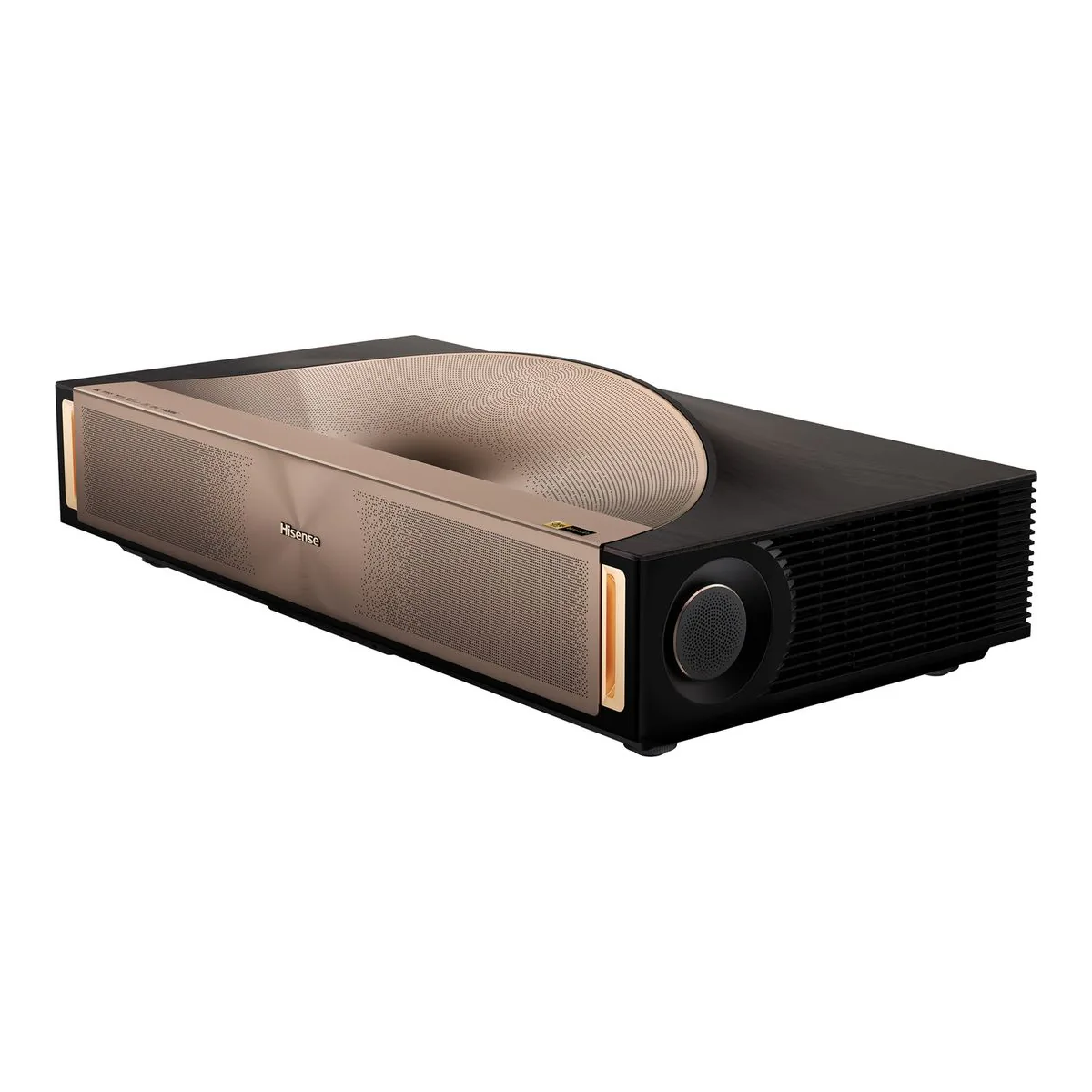
Epson EpiqVision Ultra LS800
4,000 lumens of color and white from a 3-chip 3LCD engine, which cannot show a rainbow, sitting 3.9 inches from the wall.
- 3-chip 3LCD ultra short-throw design, 4K PRO-UHD by pixel-shift resolution enhancement, at a maximum resolution of 3840 x 2160
- 4,000 lumens of color brightness (IDMS 15.4) and 4,000 lumens of white brightness (ISO 21118), equal because the 3-chip engine outputs color and white light at the same level
- Throw ratio 0.16 to 0.40, so an image up to 150 inches from a few inches off the wall
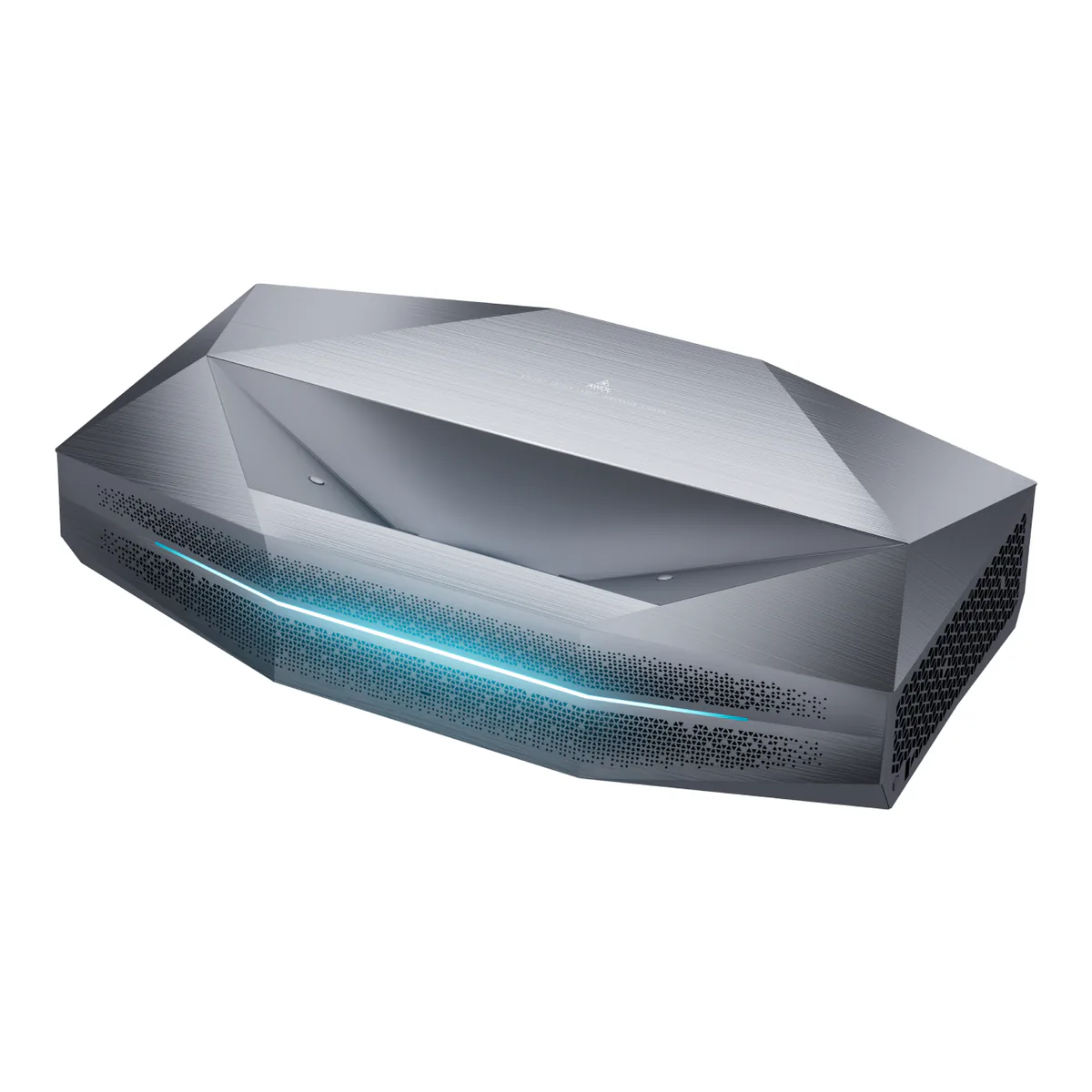
Best ultra short throw projector for gaming
AWOL Vision Aetherion Max
Three HDMI 2.1 inputs, VRR, and input lag under 10 ms at 60Hz on PCMag bench, from Game Mode alone.
- 3300 ISO lumen brightness from an RGB triple pure laser light source with no color wheel
- 0.2:1 throw ratio, projecting 80 to 200 inch images
- 6000:1 native contrast with iris, 60000:1 with EBL
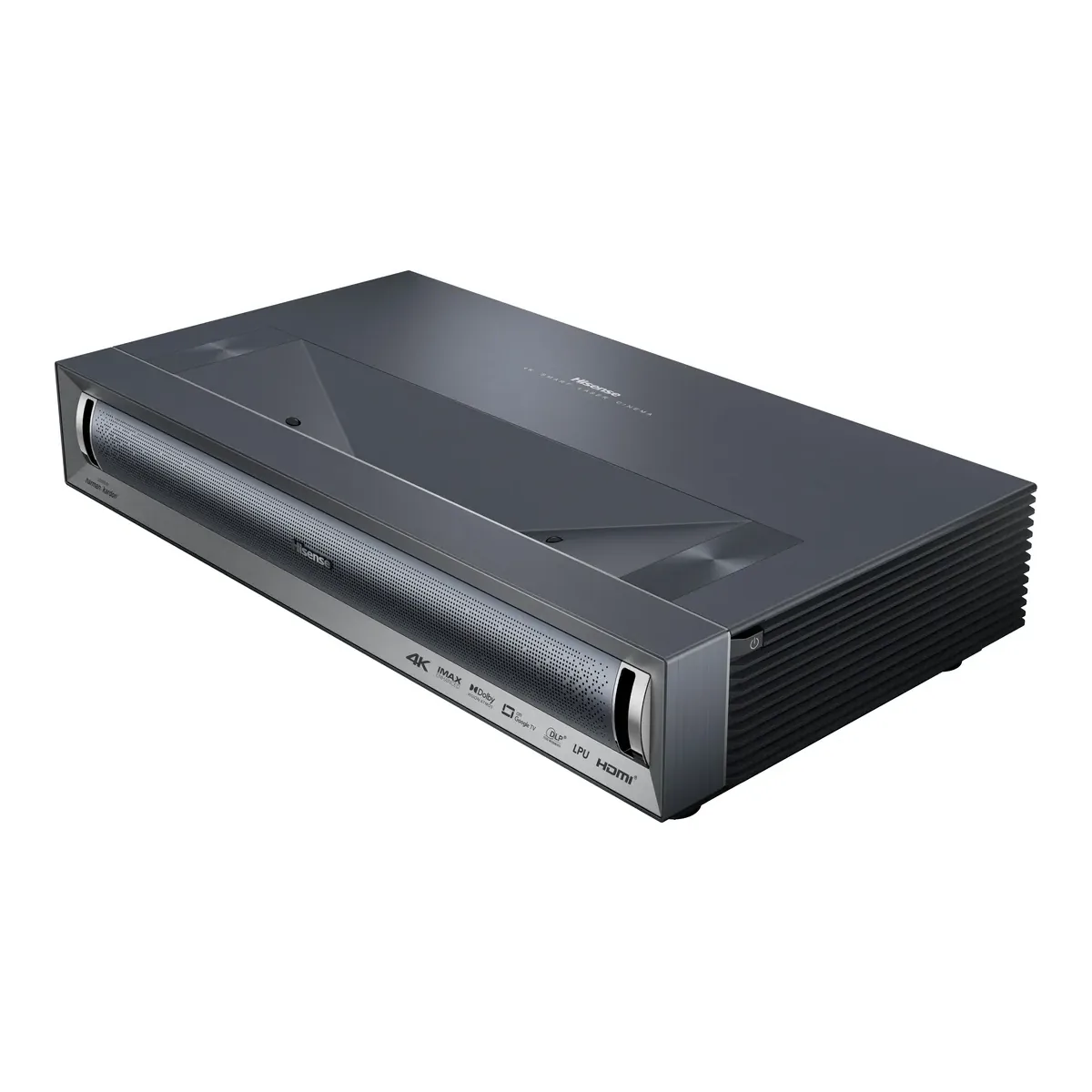
Best ultra short throw projector for home theater
Hisense PX3-PRO
A triple laser that beat its own contrast specification on ProjectorCentral bench, with Dolby Vision and eARC on its own port.
- Red + Green + Blue Trichroma Laser light source
- 3000 ANSI Lumen brightness and 3000:1 native contrast
- 0.22:1 throw ratio, 80 to 150 inch image
Best cheap ultra short throw projector
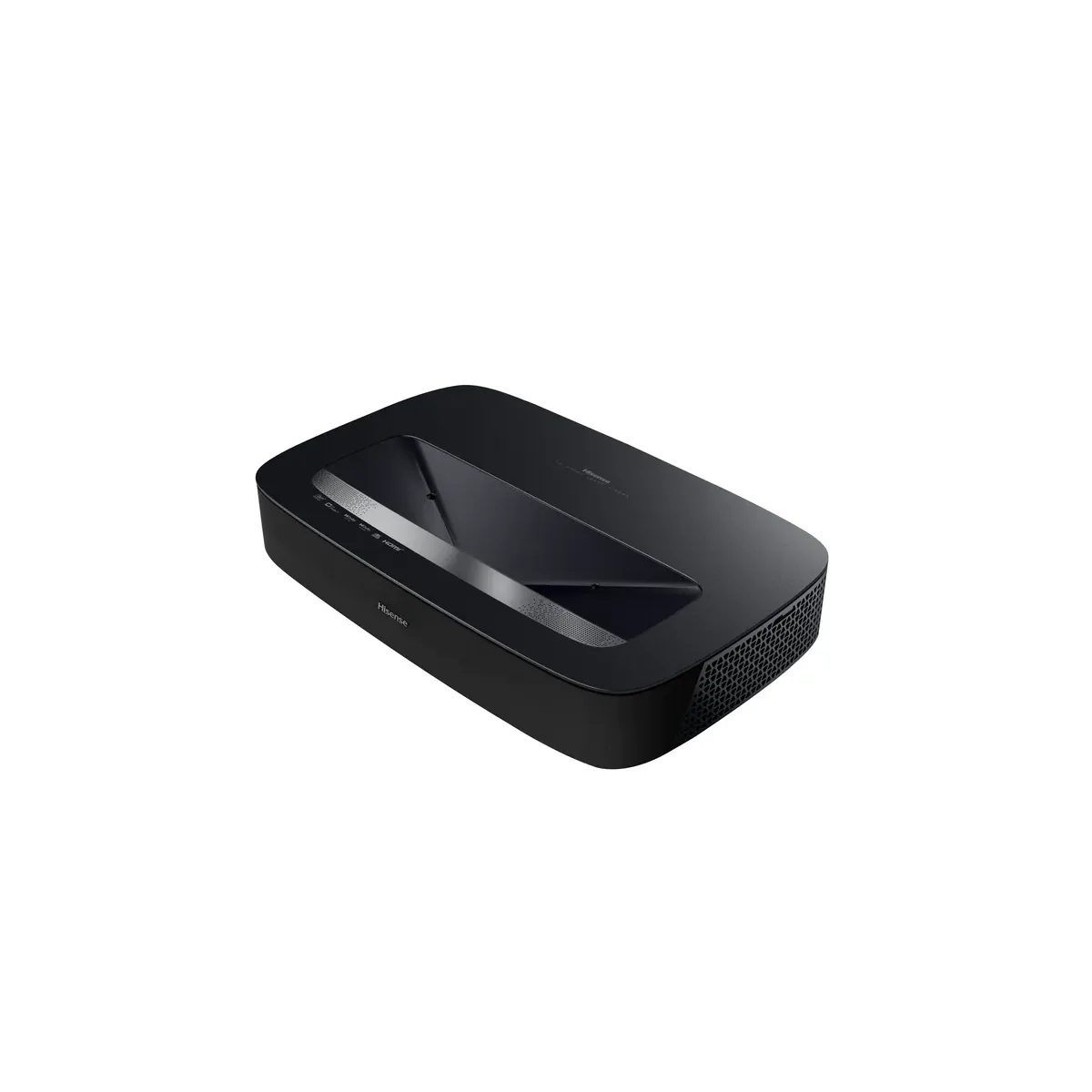
Hisense PL2
Google TV, Dolby Vision and eARC from the PX3-PRO line on a single laser, at 2,700 ANSI lumens.
- 2700 ANSI Lumens brightness with a 3,000:1 native contrast ratio
- 0.22 throw ratio, 80 to 150 inch projection size
- X-Fusion Laser Engine rated for 25,000+ hours
Measure two things before you look at a single spec sheet: how far your media stand sits from the wall, and how much daylight reaches that wall. The best ultra short throw projector for a sunny living room is the wrong one for a basement with black paint, and every machine here is built for one of those rooms more than the other.
The distance is the easy half. All five throw a 100 inch picture from less than 9 inches away. The light is the hard half, and it splits the shelf into a best ultra short throw projector for a bright room, one for home theater in the dark, one for gaming and a cheap one that gives up color range to get there.
What the picks rest on
Each maker's own specification sheets and manuals, instrumented reviews from ProjectorCentral (all but the PL2), PCMag (the L9Q and the Aetherion Max) and ProjectorReviews (the same two), and reviews from TechRadar, RTINGS, What Hi-Fi and Secrets of Home Theater. In the YouTube comments, 16 people report owning a PX3-PRO, one of them on the UK version. On the L9Q it is 3 who own or owned one, plus one buyer's review on Hisense's own store. Of the Aetherion Max commenters who talk about owning one, most are Kickstarter backers still waiting for it and two say they have it. None of the 99 commenters under the PL2's videos says they own one.
Five ultra short throw projectors, one row each
| Spec | Hisense L9Q | Epson LS800 | AWOL Aetherion Max | Hisense PX3-PRO | Hisense PL2 |
|---|---|---|---|---|---|
| Throw ratio | 0.18:1 | 0.16 to 0.40 | 0.2:1 | 0.22:1 | 0.22:1 |
| Distance for 100 in | 5.4 in, projector back to wall, including 30 mm of screen depth | 3.9 in, projector back to wall | 6.2 in, screen to projector back | 8.5 in, projector back to wall | 8.4 in, screen surface to projector back |
| Brightness | 5,000 ANSI lumens | 4,000 lumens, color and white | 3,300 ISO lumens | 3,000 ANSI lumens | 2,700 ANSI lumens |
| Light source | Triple laser, red, green and blue | Laser diode, up to 20,000 hours | Triple laser, red, green and blue | Triple laser, red, green and blue | Single laser plus phosphor |
| Audio | Devialet 6.2.2, 116W, eARC on HDMI 3 | Yamaha 2.1, 20 W total | 2x25W plus 2x20W, eARC on HDMI 2 | Harman Kardon, 50W, eARC on HDMI 3 | 30W stereo, eARC on HDMI 3 |
Basis: manufacturer documentation, except the LS800's distance and the PL2's light source, which are ProjectorCentral's; Hisense calls the PL2's an X-Fusion Laser Engine. The LS800's throw is Epson's wide and tele figure. The makers state brightness three ways. Hisense quotes ANSI lumens, AWOL quotes ISO 21118, and Epson quotes color light to IDMS 15.4 and white light to ISO 21118, so the column is not one scale. The distances are not measured from the same point either, so each cell names it.
Best ultra short throw projector overall: Hisense L9Q
The brightest machine here, and on the evidence the most complete. Hisense specifies the triple laser at 5,000 ANSI lumens, and ProjectorCentral measured 5,185 in its brightest mode. At a 0.18 throw it makes 100 inches from 5.4 inches off the wall, it carries two HDMI 2.1 and two HDMI 2.0 inputs with eARC on HDMI 3, and the Devialet 6.2.2 system runs 116W. ProjectorReviews reports it took first place for dedicated theater, mixed room and overall picture quality in the 2025 Ultra Short-Throw Projection Throwdown.
The caveats are what the extra light costs. ProjectorCentral measured 3,900:1 contrast against Hisense's 5,000:1, and found that reaching the specification takes the Brightness Enhancer, which leaves the image "heavily green-biased". PCMag's list of cons includes frequent rainbow artifacts. Of the 3 commenters who own or owned one, 2 returned it, one over color fringing and one over "a coil wine or fan blade hitting a wire sound after 30 minutes". The third says auto alignment never worked for them, and the store reviewer writes "auto keystone could be better, i always end up needing to manually adjust".
Skip it if you always watch in the dark. TechRadar says as much: in a dark home theater "the L9Q's 5,000-lumen brightness is likely going to be over the top", and its suggestion is the PX3-PRO below. Skip it as well if you want less than 100 inches, because at 80 inches the gap to the wall is 2.2 inches.
Best ultra short throw projector for a bright room: Epson EpiqVision Ultra LS800
Built for the lights on. The L9Q above is brighter on paper and on ProjectorCentral's meter, which measured 4,084 ANSI lumens from the LS800 in its brightest mode. What the Epson has instead is its engine: three LCD chips put out color and white light at the same level, and ProjectorCentral credits the design with "3-chip immunity to rainbow artifacts", the flicker a single-chip DLP can show. Its 0.16 throw puts the back of the cabinet 3.9 inches from the wall for 100 inches, the shortest gap here. There is a full LS800 review with its gaming numbers and the screen it wants.
One of its three HDMI 2.0 inputs carries ARC, not eARC, and eARC is the port that passes native Dolby Atmos in full.
Skip it if the room goes dark for movies. ProjectorCentral lists a limited color gamut and no Dolby Vision among its cons, and the triple lasers here are where the color is.
Best ultra short throw projector for gaming: AWOL Vision Aetherion Max
The fastest projector here, and not narrowly. PCMag's Bodnar tester read 9.8 milliseconds at 1080p/60Hz, 9.6ms at 4K/60Hz and 3.2ms at 1080p/240Hz, and PCMag says it is the first it has seen that needs nothing more than Game Mode for that. It supports VRR, and all three HDMI inputs are 2.1, with eARC on HDMI 2. RTINGS lists 4K at 60Hz plus 1080p at 120Hz and 240Hz, and ProjectorCentral credits it with 4K/120Hz input.
The rest of it is a strong movie projector too: an RGB triple laser rated at 3,300 ISO lumens, a 7-level iris, and Dolby Vision, HDR10+ and IMAX Enhanced. ProjectorCentral's cons are the enhanced black level mode, which "causes clipping in HDR", and some rainbow effect that remains. PCMag found it shows more rainbows than an LCD projector and fewer than almost any DLP model.
Skip it if you are sensitive to rainbows, and put the LS800 above on the list instead. The Aetherion Pro shares its chassis at 2,600 ISO lumens, so check which one a listing is before you buy.
Best ultra short throw projector for home theater: Hisense PX3-PRO
The dark room pick, and TechRadar's own answer to who should skip the L9Q. The PX3-PRO's triple laser is specified at 3,000 ANSI lumens, and ProjectorCentral measured 2,669, under the specification but inside the ISO tolerance. Where it beat Hisense's figure was contrast: specified at 3,000:1 native, measured just over 4,000:1, which ProjectorCentral says outperforms any UST projector its reviewer could name. Its verdict is that the PX3-PRO "should be one of the top choices for anyone in the market for an ultra-short-throw projector".
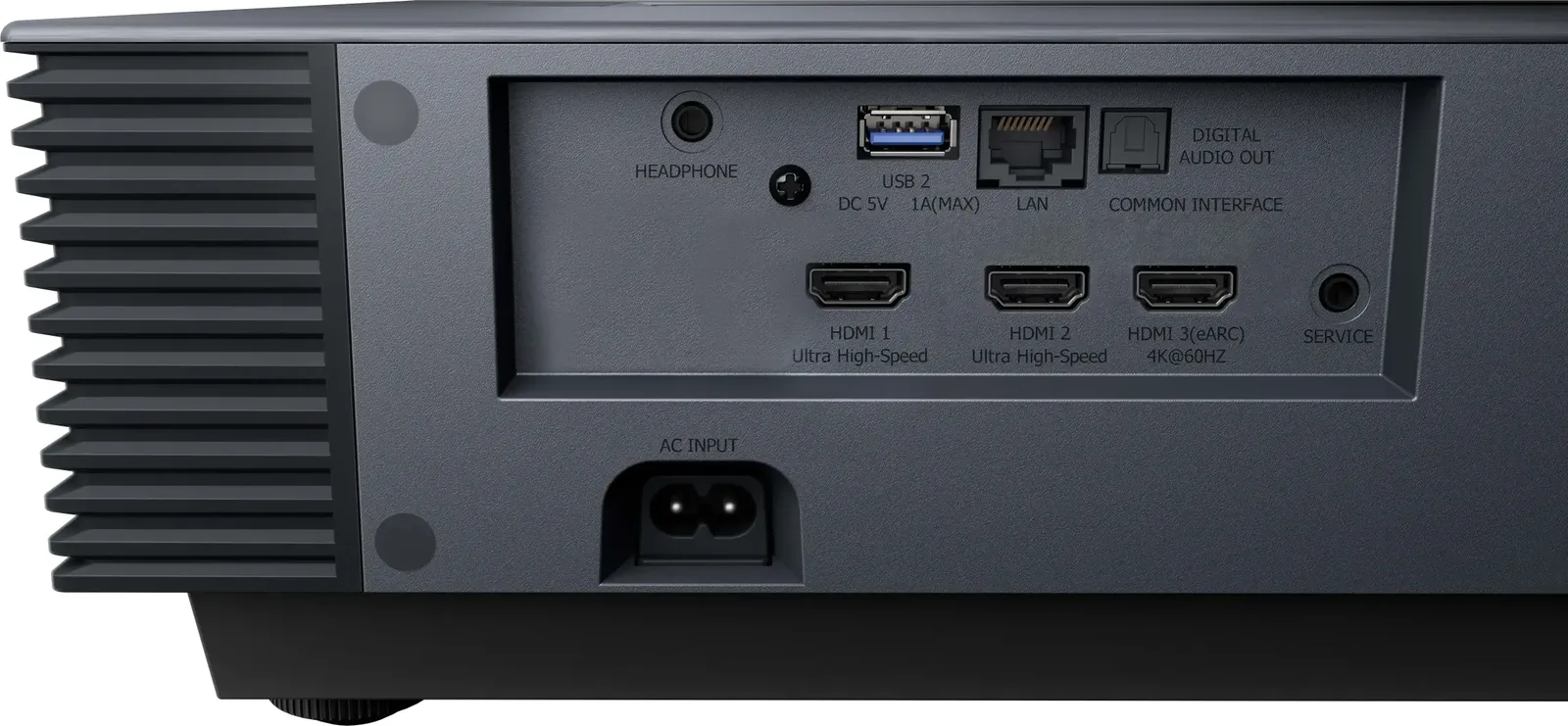
Dolby Vision, HDR10+, HDR10 and HLG are all here, and eARC sits on its own HDMI 2.0 port, so a receiver never takes one of the two 2.1 inputs. Of the 16 commenters who own one, 9 are clearly happy with it, one in the words "It's not even entirely necessary to draw the curtains". The complaints scatter, with no single one recurring. The oddest: "The device turns itself on after approximately 60 minutes several times a day", from an owner whose replacement unit did the same.
Skip it if you game on a console at 60Hz. RTINGS calls its lag there disappointing, "making it a tough sell for console gamers", and says it has been replaced by the PX4-PRO, which adds VRR.
Best cheap ultra short throw projector: Hisense PL2
What Hi-Fi places the PL2 below the PX3-PRO in Hisense's Laser Cinema line, and ProjectorCentral describes it as more budget-friendly. The cut is the light engine. In place of three lasers it uses "a more common and cost-effective single-laser+phosphor light engine, resulting in a more restricted range of colors", and Hisense specifies it for 85% of DCI-P3. Brightness is 2,700 ANSI lumens against the PX3-PRO's 3,000.
The rest carries over: Dolby Vision, Google TV, a 0.22 throw, two HDMI 2.1 and one HDMI 2.0 with eARC on HDMI 3. What Hi-Fi measured 30ms of lag in game mode on a UK unit, which took 4K at 60Hz only and 1080p at 120Hz. Hisense's own sheet lists HSR240, a 240Hz high refresh mode.
Skip it if you plan to use its speakers. What Hi-Fi calls the low end "undeniably weak", and its 30W stereo pair is a step down from the PX3-PRO's 50W Harman Kardon system.
ALR screens, and why every one of these wants one
If a bright room is why you are buying one, the screen is half of how it copes. Epson says its SilverFlex screens are engineered to absorb up to 90% of the ambient light, and that is the job every ambient light rejecting screen is sold on. Hisense sells its own ALR screens for all three of its models, the SilverFlex comes in 100 and 120 inches for the LS800, and AWOL sells screen bundles direct. None of the five comes with one.
So budget the screen with the projector, and match its size to the throw chart, not to the wall. The rest of the category sits on the ultra short throw projectors page.