VEVOR 1100 CFM vs 1550 CFM: The Circuit That Decides
Buy the 1100 CFM model if a single 120 volt outlet is what your shop has and one bag set clears often enough between empties. Buy the 1550 CFM model only once a dedicated 220 volt circuit is available, because that circuit is the actual reason its motor moves about 41 percent more air, not a better filter or a wider port.
What decides it: Whether the extra airflow is worth the jump from a 120 volt outlet to a dedicated 220 volt circuit.
We earn a commission on qualifying purchases through the links here, at no cost to you. It never decides what makes the list.
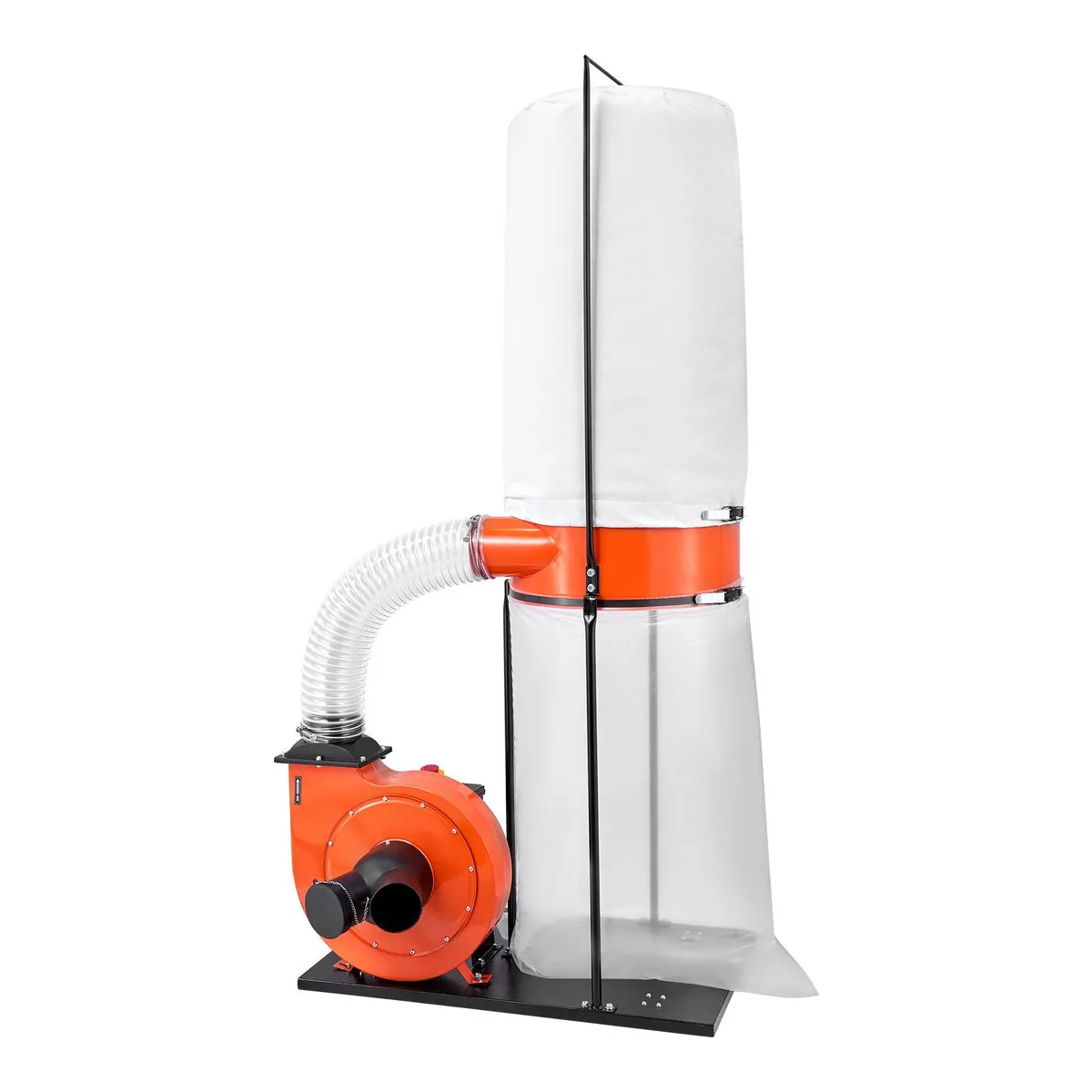
VEVOR 1100 CFM
Pick this if a shop with a single 120 volt outlet to spare, where one 35 gallon collection bag and one 42 gallon filter bag clear often enough between machines.
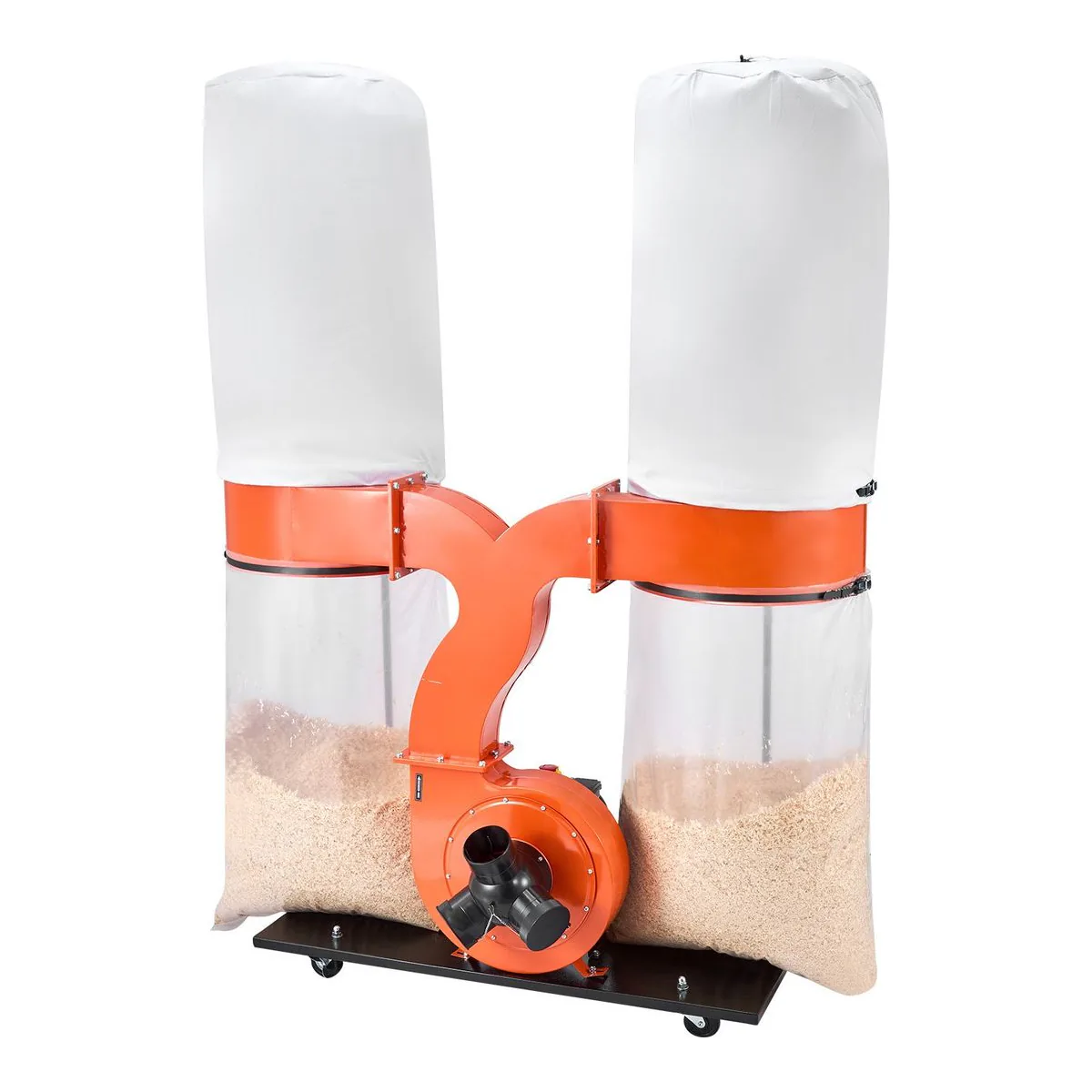
VEVOR 1550 CFM
Pick this if a shop that already has a dedicated 220 volt circuit and wants the second bag set, so two machines running back to back do not fill a single bag mid job.
| VEVOR 1100 CFM | VEVOR 1550 CFM | |
|---|---|---|
| Airflow (CFM at stated static pressure) | 1100 CFM | 1550 CFM |
| Filtration (microns, MERV if stated) | 2.5 micron | 2.5 micron |
| Max static pressure | Not stated | Not stated |
| Inlet size and port count | 6 in main, 2 x 4 in auxiliary | 6 in main, 2 x 4 in auxiliary |
| Motor (hp, volts, amps) | 1.5 HP, 120V | 3.0 HP, 220V |
| Collection capacity | 35 gal collection, 42 gal filter | 2 x 35 gal collection, 2 x 42 gal filter |
| Noise (dBA at stated distance) | Under 90 dB | 90 dB or below |
VEVOR sells the same dust collector twice, at two different sizes, and the gap between a VEVOR 1100 CFM vs 1550 CFM purchase is not the filter, the intake ports or how loud either one runs. Every one of those numbers is identical on both machines, read off the same manufacturer spec table. What actually changes is the circuit each one needs, the bag count, the floor space, and about 38 pounds.
VEVOR 1100 CFM vs 1550 CFM: what is identical
Filtration is 2.5 microns on both. Both spin at 3400 RPM. Both take the same 6 inch main port plus two 4 inch auxiliary ports. Noise sits at essentially the same ceiling too, VEVOR states the 1100 CFM model kept under 90 dB and the 1550 CFM model at 90 dB or below, and both build the frame from the same Q235A steel with non-woven fabric bags. None of that is a coincidence. This is one motor and one cyclone housing, sold at two different scales.
Basis: manufacturer specification tables for both models.
The one number that actually separates them
VEVOR's 1550 CFM model moves about 41 percent more air than its 1100 CFM counterpart, 1550 CFM against 1100. That gain comes from doubling the motor: 3.0 HP against 1.5 HP. A plain 120 volt outlet runs the 1100 CFM model. The 1550 CFM model is wired for 220 volt, which in most shops means a dedicated circuit rather than whatever outlet happens to be nearest the machine. Read How to size a dust collector to the port you already have before either number gets you past that requirement.
Basis: manufacturer specification tables for both models.
Bags, and the weight that comes with them
A bigger motor also means a second bag set here. One 35 gallon collection bag sits under one 42 gallon filter bag on the 1100 CFM model. Two of each hang off the 1550 CFM model's central housing instead, so it clears about twice the debris before either bag needs emptying. VEVOR states 106.04 lb for the 1550 CFM model against 68.12 lb for the 1100 CFM model, a gap of just under 38 lb split across the bigger motor, the second bag set and the wider frame that carries both.
Basis: manufacturer specification tables for both models, and the weight gap is our own arithmetic over both figures.
The second bag set costs floor space too
Twin bags do not stack the way a single bag does, they stand side by side, and VEVOR's own dimensions show it. The 1100 CFM model measures 36.22 inches wide. Widening to fit the second bag set pushes the 1550 CFM model out to 56.69 inches, better than 20 inches more footprint, while its height and depth barely move: about 3 inches taller and, if anything, a shade shallower. A corner that comfortably fits the 1100 CFM model may not fit the 1550 CFM model at all, so measure it before the circuit question ever comes up.
Basis: manufacturer specification tables for both models.
Which one to buy
A single 120 volt outlet settles this before any CFM number does. If that is what the shop has, the 1100 CFM model plugs in without an electrician and the 1550 CFM model does not. The 1100's one bag set is enough for a shop running one machine at a time in a corner under four feet wide. Paying for the 1550 CFM model only makes sense where a 220 volt circuit already exists, the wider footprint fits, and the second bag set solves a real problem, a shop running two tools back to back that would otherwise overflow a single bag mid cut. Buying the bigger one for the CFM number alone, with no 220 volt circuit to run it on, is buying a spec nobody in that shop can use.
VEVOR sells more sizes than this pair. The same platform runs at several other CFM ratings on this shelf, so a shop that outgrows either one is not stuck choosing between these two the second time around. What does not change anywhere in that range is the trade underneath both machines: more CFM buys a bigger motor, and a bigger motor buys a higher voltage requirement before it buys anything else.
Read the wider dust collector shelf for how these two sit against Jet's cyclone line, which trades VEVOR's plain vortex cone for a true cyclone separator at a higher price.