Robot mower yard size: the rating is an empty rectangle
Buy the mower whose rated area comfortably exceeds your measured lawn, and pass on the one that matches it. The rated figure is coverage on flat open turf at full charge, and a real yard gives up a large share of it to beds, trees, narrow necks and the trips back to the dock. Measure the grass and not the lot, decide whether it is one piece or several, and treat the printed rating as a ceiling you should sit well under.
The area a listing prints is calculated in ideal conditions. Bob Vila spells it out: the up to so many square feet a manufacturer claims is worked out with ideal mowing conditions in mind, and slopes, obstacles and irregular shapes all inhibit a mower. Consumer Reports adds that a flat rectangular yard is easier for a robot to cover quickly than one broken up by slopes, rocks, trees or walkways. The same mower that rates for a quarter acre of open turf therefore covers noticeably less of a real quarter acre.
What decides it, in order
Work down these. Each one narrows the answer, and the first is the one most buying guides skip.
Do you know your mowing area, or only your lot size?
The rating is measured against the grass a mower actually cuts and never the parcel on the deed. A house, a driveway and the beds come out first, and what is left is often half of what the lot suggests.
- Only the lot size
- Measure the turf on its own before shopping. A quarter acre is 10,890 square feet on paper, and the part a mower touches is whatever survives the house, the drive and the planting.
- The measured lawn
- Start there, then read the next three questions, because the rated number assumes that lawn is one open rectangle and almost no lawn is.
How broken up is the grass?
Every island the mower steers around and every corridor it threads is time and battery it is not spending on open turf. Bob Vila and Consumer Reports both say that is what pulls real coverage below the rating.
- One open rectangle
- The closest a yard gets to the test conditions, so the rating is close to true. Even here the edges and the charging trips still cost you some of it.
- Beds, trees and narrow necks
- Derate hard, and size up a tier. A machine rated for your exact area will run out of day before it runs out of lawn.
Is the lawn one piece, or split by a driveway or a path?
By default a robot mower does not cross a driveway or a path, so a split yard needs either a defined transit route or a mower that treats it as separate zones. The rated area never mentions this.
- One connected piece
- One mower and one map cover it, and the rating means what it says minus the derating above.
- Split by a drive or a path
- The rated area does not add up across ground with no route between the pieces. You need multi-zone support, a transit path if the model offers one, or a second unit, and the coverage figure will not warn you which you need.
Does it finish on one charge, or several?
Battery runtime and travel speed cap how much a mower cuts in a day. Consumer Reports describes these machines moving about the lawn for hours, with pauses to recharge, before they finish.
- Cuts and docks on one cycle
- A small lawn well under the rating, and the number barely matters.
- Needs several cycles a day
- The rated area is a daily ceiling reached only if the mower has the hours to reach it. A lawn near the rating is a mower running most of the day, so leave headroom.
The printed coverage rating is measured in an empty rectangle. Robot mower yard size, the figure a listing sells as "up to" so many square feet, is the coverage a machine reaches on flat open turf at a full charge, and almost nobody mows flat open turf. The useful question is not whether a mower's rating matches your lawn. It is how much of that rating your particular lawn gives back.
Bob Vila's testers say it directly, that the claimed area is calculated with ideal mowing conditions in mind, and that slopes, obstacles and irregular shapes all inhibit a mower. Consumer Reports frames the same gap from the other side: a flat, rectangular yard is easier for a robot to cover quickly than one broken up by slopes, rocks, trees or walkways. Neither is a knock on any brand. It is what a coverage number is, and what it leaves out.
What robot mower yard size leaves out
Start with the grass and leave the deed for later. A quarter acre is 10,890 square feet on paper, and a robot only ever meets the part that is lawn, after the house, the driveway and the beds are taken out. Consumer Reports puts the typical residential lot at only about half lawn, sometimes less, and the mower cares only about that second number.
Then read how that lawn is shaped. One rating that reads as "up to 8,712 square feet" describes a mower on open turf. Give it beds to circle, a tree line to follow and a narrow neck between the front and the back, and the same machine spends its charge on steering. So size up a tier. A mower rated for your lawn's exact area has no room for the way your lawn actually sits.
The lawn that is really two lawns
A robot mower does not mow a driveway or a path, and by default it does not cross one either. Some multi-zone models let an owner draw a fixed transit route over that gap: Consumer Reports describes an app letting you define the pathway the mower takes without mowing between the front yard and the back yard, and Robo Lawn Scout calls the wired equivalent a guide path through the choke point. It is a feature to shop for, and the coverage rating does not assume it. Without it, a yard split by a driveway or a path is not one lawn the ratings can sum. It is two areas that each need covering, which means a mower with real multi-zone support or a second machine. Nothing in a coverage spec tells you this, and delivery day is the worst time to find out. If your grass is in pieces, that decision comes before the size decision, and it leans on how the mower finds its way around.
Time is the other half of the number
Coverage is capped by the clock as much as by the battery. Consumer Reports is blunt that you have to be fine with a machine moving about your lawn for hours, with pauses to recharge, before it finishes. So the rated area is really a daily ceiling, and you reach it only if the mower has the hours in the day to get there. A lawn near the top of a mower's rating is a mower that runs most of the day to keep up, which is fine if you expected it and a surprise if you did not. Slope eats into this too, and a hill changes the math again, which is its own sizing question.
You still own a trimmer
Size the mower right and it will keep the open grass cut without you. It will not finish the job. Consumer Reports is direct that many models do not cut as close to a fence line or a garden wall as a push mower does, so you are, in their words, not completely off the hook: the edges and the tight corners are still a trimmer's work most weeks. Read the coverage number as what it is, the open middle of the lawn on a good day, and buy enough of it that the middle is never in doubt. Across the category board, every shelf is sized by what the job demands, whatever the label says, and how the evidence here is graded sets what a figure has to clear before it is printed.
Questions people actually ask
- What size robot mower do I need for a quarter acre?
- Measure the grass first, because a quarter acre lot is rarely a quarter acre of lawn once the house, the driveway and the beds are removed, and Consumer Reports puts a typical lot at only about half lawn. A quarter acre is 10,890 square feet. Even in a better than typical case where two thirds of that survives as turf, you want a mower rated well above 7,000 square feet so it finishes inside its charge cycles with the edges and detours accounted for.
- Why does my robot mower cover less than its rated area?
- Because the rating is measured on flat, open, rectangular turf and your lawn is not that. Bob Vila notes the figure assumes ideal mowing conditions, and Consumer Reports notes that slopes, trees and walkways that break a lawn up slow a robot down. Add the trips back to the dock to recharge, and the practical coverage lands below the printed rating.
What that lands on
Machines that satisfy the chain above. The condition is on each one, because a machine that is right for one answer is wrong for another.
We earn a commission on qualifying purchases through the links here, at no cost to you. It never decides what makes the list.
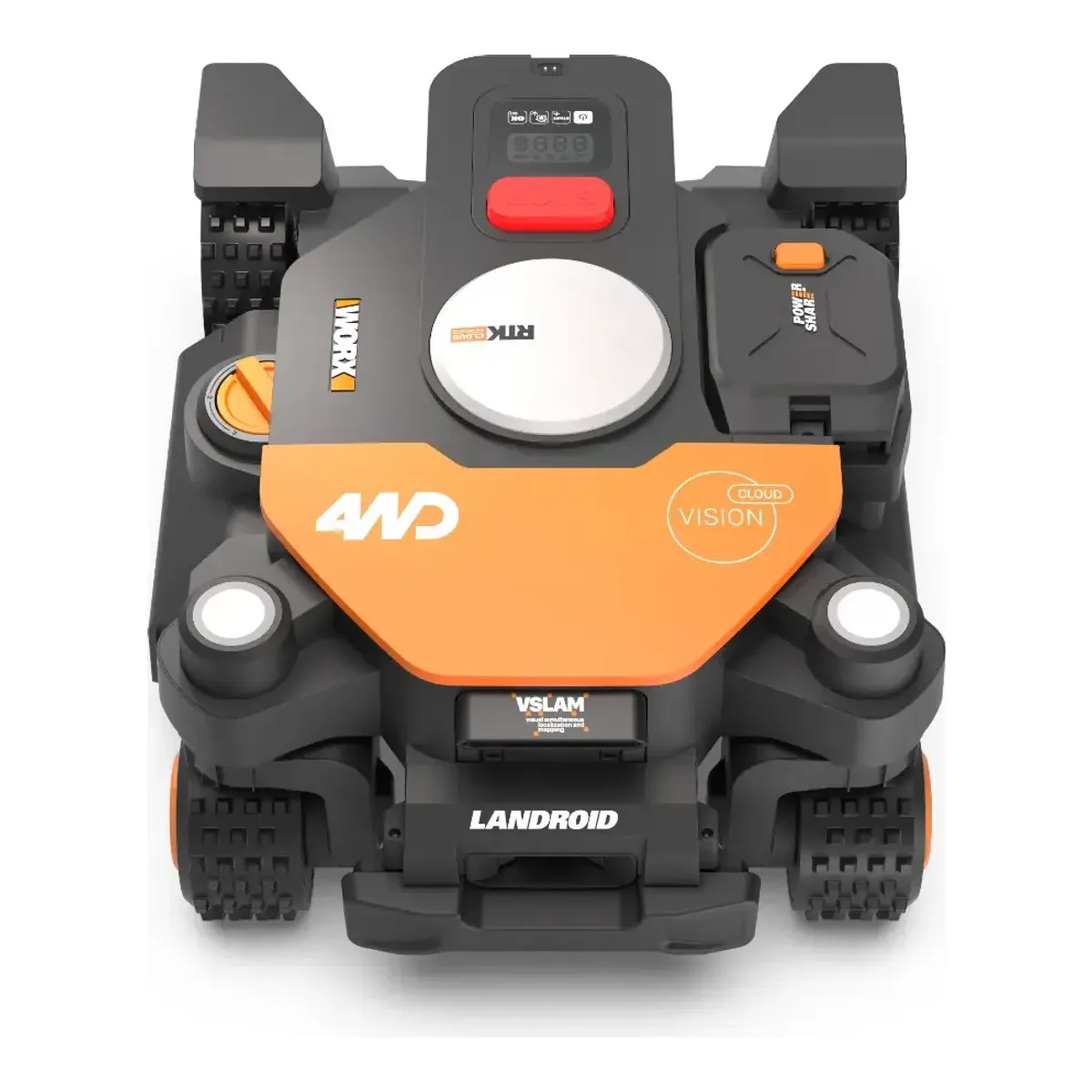
WORX Landroid Vision Cloud 4WD WR342
Right when your measured lawn is on the smaller side and you are sizing up a tier instead of matching it. A mostly open rectangle is close to the test condition. A mower rated a step above the grass you actually cut then has margin for the beds and the trips back to the dock.
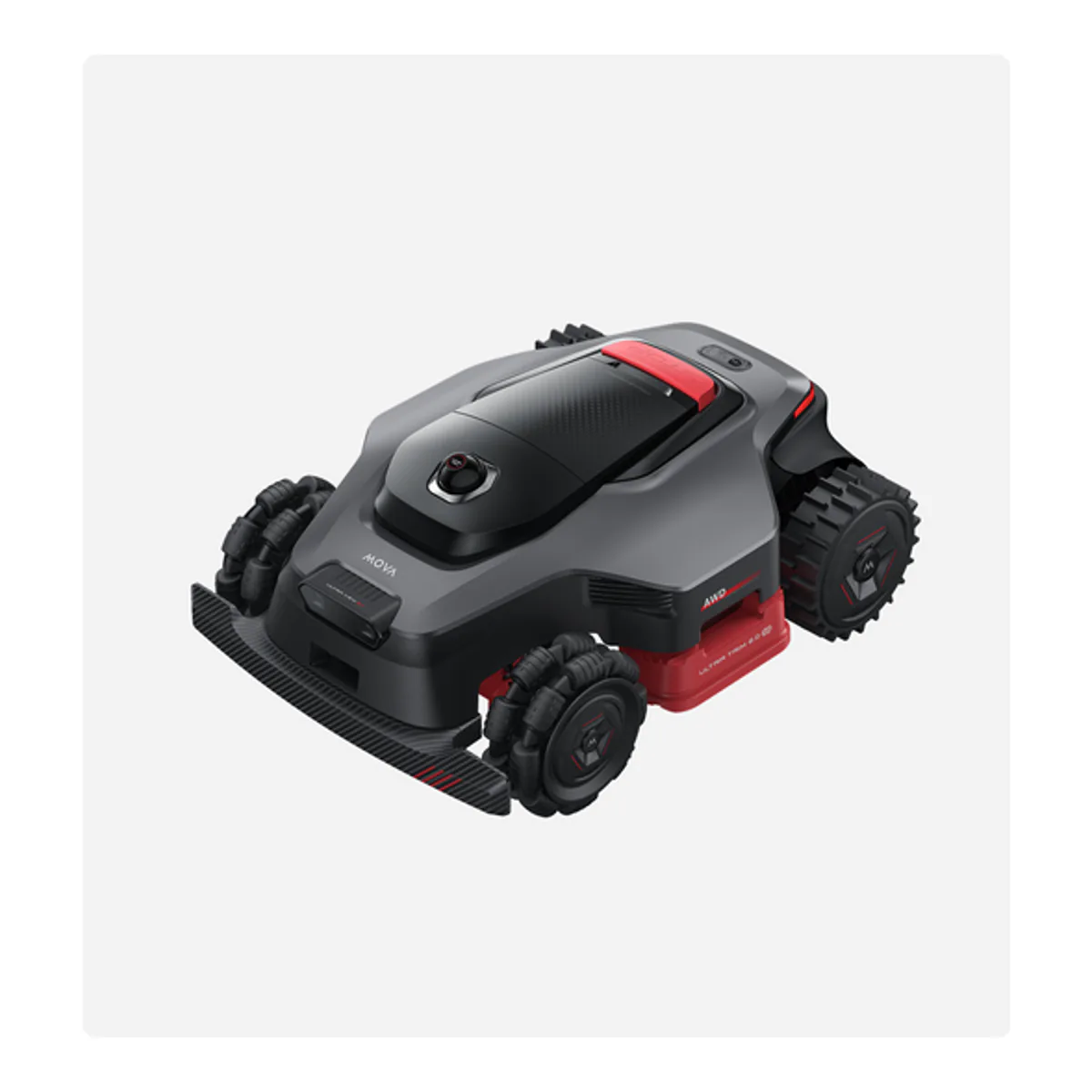
MOVA LiDAX Ultra 3000 AWD
Right when the lawn is bigger and broken up by beds, trees and narrow necks, so you derate hard and size up. Multi-zone mapping matters here, because the rated area never adds up across ground the mower threads rather than sweeps.
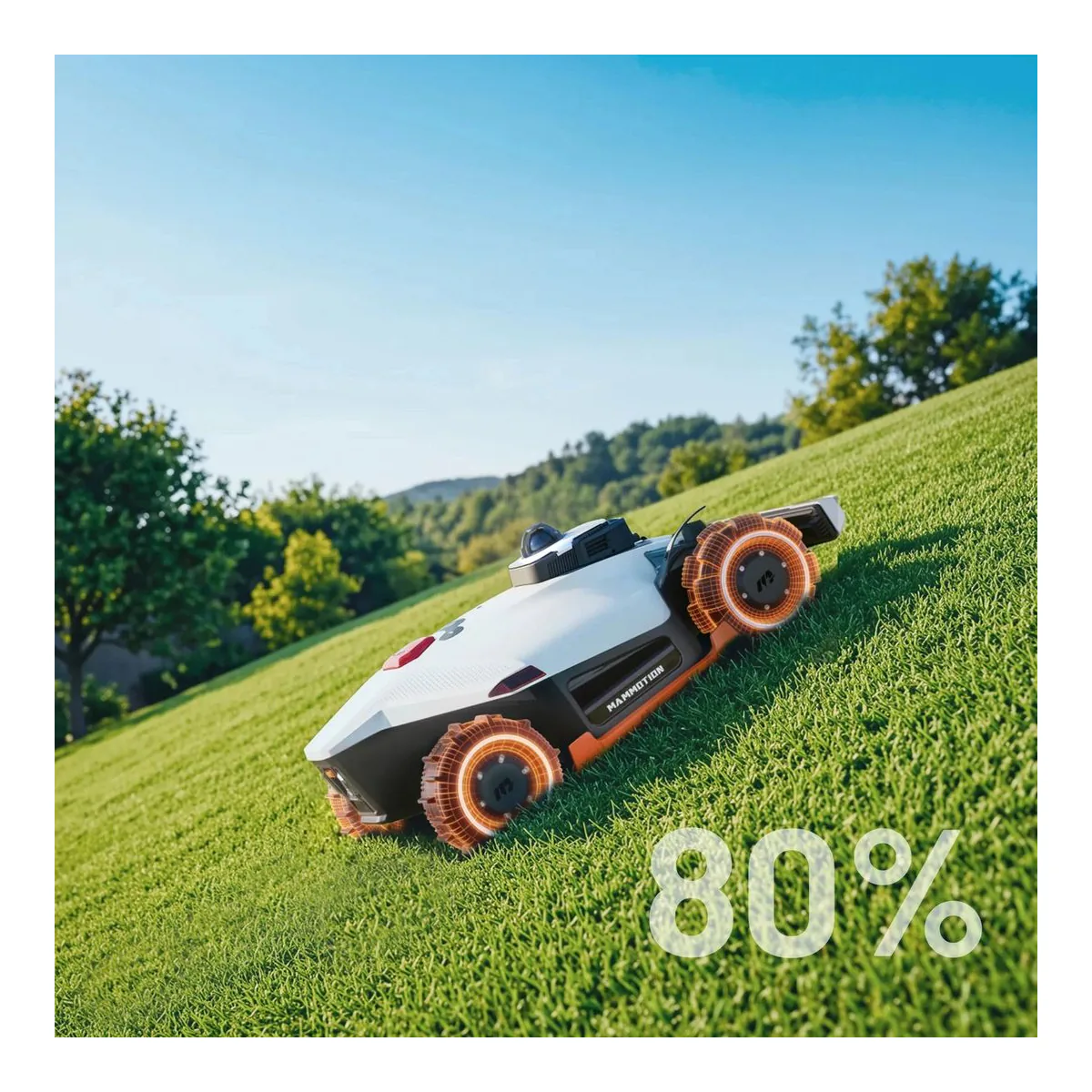
Mammotion LUBA 3 AWD 5000
Right when the lawn is an acre or more and split into zones, and it will finish over several charges and not on one. This is the large multi-zone machine, so expect it to cycle back to the dock and resume. It will not clear the whole map in a sitting.