Robot mower boundary: perimeter wire or go wireless
Choose by how much open sky the lawn has and how much setup you will spend. A wireless RTK or vision mower sets up from an app and needs a clear view of the sky, so it suits open lawns and struggles under dense canopy. A boundary wire is the older method the industry is leaving behind, but it needs no signal and keeps working under trees, so it is still the safe answer for a shaded or complicated yard.
Wireless is sold as the no-wire upgrade. It is one, right up until the lawn has trees. RTK positioning needs a clear view of the satellites. Mammotion says the mower and its reference station each want at least a 90 degree open sky view, and Consumer Reports notes that a lot of tall trees can challenge a mower ability to connect with a satellite signal. A boundary wire needs no sky at all, so it is still the reliable answer under a canopy the app cannot see through.
What decides it, in order
Work down these. Each one narrows the answer, and the first is the one most buying guides skip.
How much open sky does the lawn have?
Wireless RTK positioning is line of sight to the satellites, so tree canopy and tall walls are its weakness and the single biggest predictor of whether it will work.
- Mostly open, few tall trees
- Wireless is the easy call. Mammotion says the mower and its reference station each want at least a 90 degree open sky view, and open turf gives them that.
- Dense canopy or tall walls
- RTK struggles here. Consumer Reports notes a lot of tall trees can challenge a mower ability to connect with a satellite signal, so you want a wire, a vision system, or a hybrid that falls back to a camera under cover.
How much setup effort are you willing to spend?
Removing the wire is most of the appeal of wireless, but wireless is not instant either, and a wire is the trade of more setup for less to go wrong later.
- As little as possible
- Wireless removes the perimeter wire, which is why Consumer Reports found none of the mowers it tested still required one. It is not instant either, since Bob Vila's testers still spent about an hour on the app-based setup, and the antenna itself needs a stable spot to stand.
- Whatever it takes for reliability
- A boundary wire is the older approach, and it gives what Robo Lawn Scout calls a deterministic rail the mower follows even if the Wi-Fi drops or the tree cover is heavy.
What should happen when the mower loses confidence?
This is the real difference between the two. A wire never doubts where the edge is; a wireless map does, and how it behaves then is the thing owners feel.
- It should keep going regardless
- Lean toward a wire, or a hybrid. When a wireless mower loses its fix, Robo Lawn Scout says it may pause, re-map, or refuse a strip until it regains confidence.
- Occasional pauses are fine
- A wireless RTK or vision mower handles most open yards well and self corrects. For the shaded spots, Bob Vila found the Segway vision system notably improved accuracy under dense tree cover and inside narrow corridors.
Is there a spot for the antenna or base station?
An RTK setup needs a fixed reference with its own clear sky, and putting it somewhere stable is a real task and no afterthought.
- A clear, high, stable spot exists
- Mount the reference station there. Mammotion mower can even move itself to an open sky area to restore satellite navigation if the signal drops.
- Nowhere obvious, and the ground is hard
- Factor it in before buying. Bob Vila testers found the antenna difficult to stake and stabilize in hard ground, which is the wireless version of the wire dig.
It comes down to one question the brochures answer last: how much open sky your lawn can see. A robot mower boundary is either a physical wire you lay around the grass or a map the mower holds in software, and the wireless kind depends on a clear view of the satellites to know where it is. On an open lawn that is a clean upgrade. Under a canopy that dependence becomes the whole problem, and the old wire quietly becomes the reliable option again.
The robot mower boundary choice, in one line
Open sky picks wireless, trees pick a wire or a camera. Consumer Reports found that none of the mowers it tested still required a perimeter wire, because companies have shifted to wire-free automation, and for most yards that is the better experience. But the same report notes that a lot of tall trees can challenge a mower ability to connect with a satellite signal, and Mammotion is specific that both the mower and its reference station want at least a 90 degree open sky view. A wire has no such requirement, and that single advantage keeps it alive.
What each one is actually good at
A wireless RTK or vision mower is fast to set up from an app, with no wire to bury, and it draws zones on a map you can edit later. Its failure mode is uncertainty: Robo Lawn Scout describes a wireless mower that, when its localization degrades, may pause, re-map, or refuse a strip until it regains confidence. A wire has the opposite character. The same source calls it a deterministic rail the mower follows even if the Wi-Fi drops or the tree cover is heavy. You trade the setup for a path that never doubts itself.
Neither is completely without friction. Bob Vila testers set up a wire-free RTK mower from the app in roughly an hour, and their trouble was staking the antenna in hard ground. The map itself gave them none. A wire earns its keep the opposite way. Robo Lawn Scout describes a first wired install on a two zone yard as a full day of DIY time laying the loop and running it through corridors, which the wire-free mower skips entirely, and still recommends that wired route for a demanding suburban layout over the wire-free convenience.
The hybrid is the tree answer
The interesting middle ground is the mower that adds a camera to the satellite fix. Bob Vila found that a vision system noticeably sharpened accuracy beneath heavy tree canopy and in tight passages, the same places bare RTK loses the signal. Mammotion goes further and lets the mower move itself to an open sky area to restore satellite navigation when the signal drops. If your lawn is mostly open with a few shaded corners, a hybrid is usually the mower that handles both without a wire.
So the boundary decision is really the sky decision. Walk the lawn and look up. If most of it sees open sky, wireless is the easier machine and the rest of the sizing follows from how much area it can cover in a day and what the slopes demand. If the trees win, plan for a wire or a vision hybrid before anything else, because no coverage or slope number matters on a mower that cannot tell where it is. Every shelf on the category board gets sized this way, by the constraint that actually governs, whatever the headline spec says.
Questions people actually ask
- Do robot mowers still need a perimeter wire?
- Most new ones do not. Consumer Reports found that none of the models it tested required perimeter wire, as companies shift to wire-free automation using RTK satellite positioning, cameras, or both. Wire has not vanished. Robo Lawn Scout's own advice for a real suburban yard with gates, trees and narrow connectors is to stay with a wired system, mid-tier or higher, for the predictable homing it gives once the boundary is routed correctly. In that advice, wire is no budget fallback. So the wire is now the exception and no longer the default. The case for it is reliability on a demanding layout, and no longer a mower that cannot run without it.
- Does a wireless robot mower work under trees?
- Less well. Canopy is the main thing to check before buying one. RTK positioning needs a clear view of the sky, and Consumer Reports notes tall trees can challenge a mower ability to reach a satellite signal, while Mammotion asks for a 90 degree open sky view for both the mower and its base station. The fixes are a vision system, which Bob Vila found improves accuracy under dense cover, a hybrid that combines both, or a boundary wire, which needs no sky at all.
What that lands on
Machines that satisfy the chain above. The condition is on each one, because a machine that is right for one answer is wrong for another.
We earn a commission on qualifying purchases through the links here, at no cost to you. It never decides what makes the list.
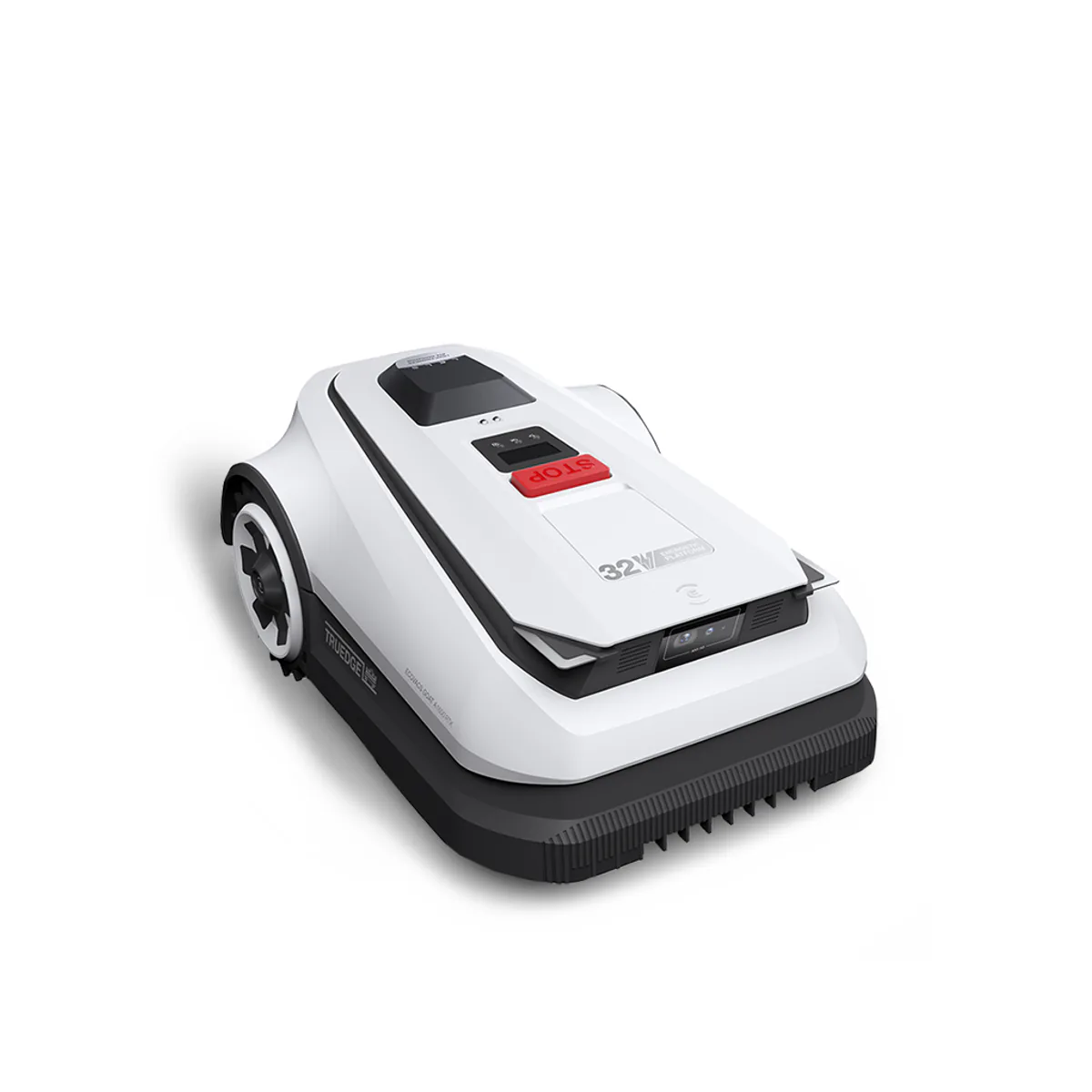
ECOVACS GOAT A2500 RTK
Right when the lawn has open sky and you will stake a reference station for it. This is the RTK route, no perimeter wire to bury. ECOVACS markets its LiDAR-enhanced RTK as holding a fix in shade, but that is a maker claim, so for dense canopy the wire-free LiDAR mowers below are the surer bet.
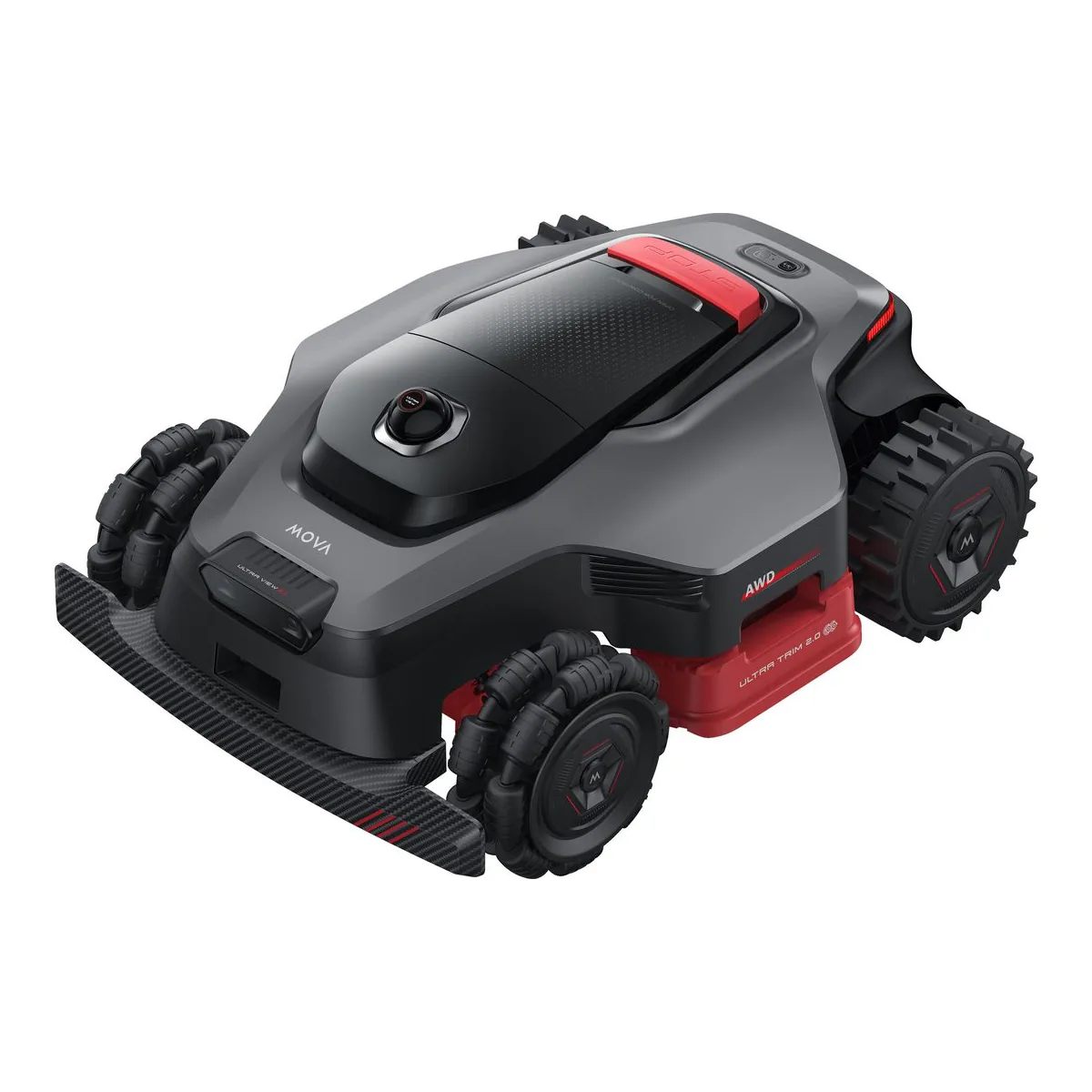
MOVA LiDAX Ultra 2000 AWD
Right when trees are the problem and you do not want to site an antenna. It is wire-free and RTK-free, navigating on LiDAR and vision. It has no reference station that needs a clear view of the sky, so it keeps working under cover.
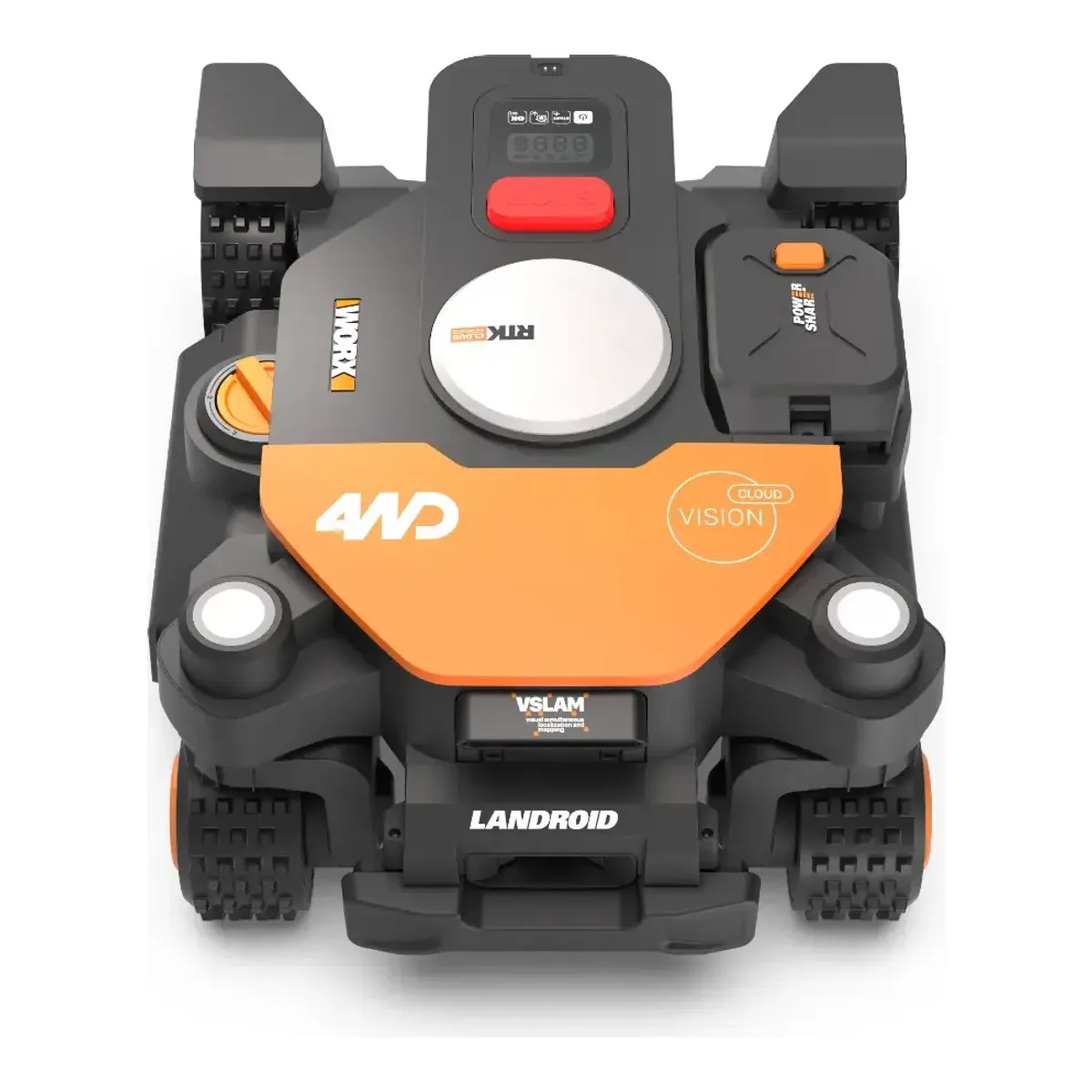
WORX Landroid Vision Cloud 4WD WR342
Right when the yard mixes open turf and shaded corridors and you want RTK Cloud positioning with a vision fallback for the shaded stretches. It maps with stereo vision and no buried wire, and when trees block the signal it leans on the cameras until the satellites come back.