WORX Landroid Vision WR342 review: the setup is the work
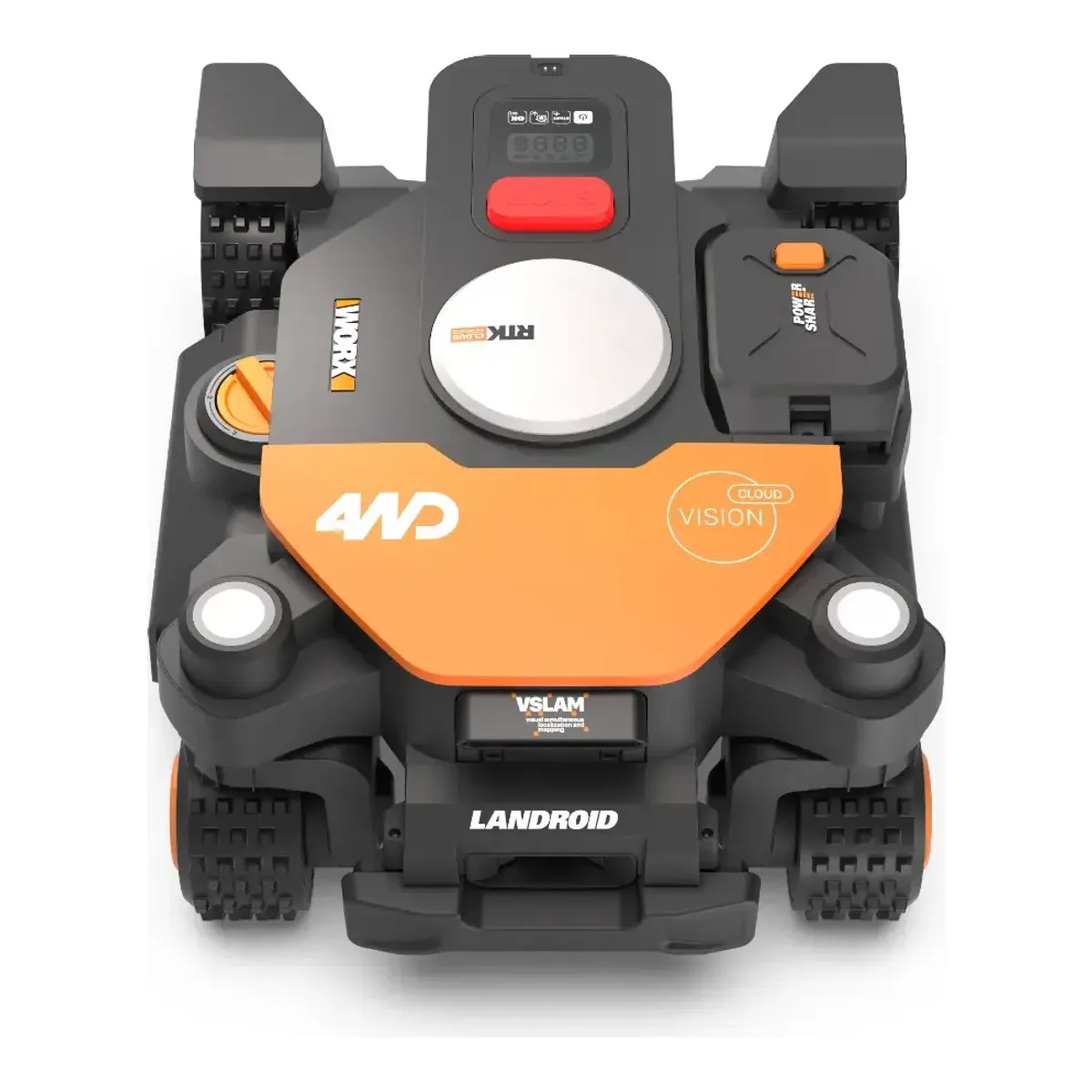
The WR342 is the robot mower for a steep half acre, on the strength of an 84 percent slope rating that an independent test of its smaller sibling backed up, as long as you accept that the first day belongs to firmware and mapping rather than to mowing.
- Recommended for lawns up to 1/2 acre
- Four wheel drive with a terrain adaptive chassis and front wheel steering
- RTK Cloud navigation plus V-SLAM, no on-site antenna required
- Electric cutting height adjustment from 1.57 to 3.54 in
- Climbs slopes up to 84 percent (40 degrees)
We earn a commission on qualifying purchases through the links here, at no cost to you. It never decides what makes the list.
Buy something else if you want a robot mower cutting grass the afternoon it arrives.
The WORX Landroid Vision WR342 gets there, on a schedule set by the setup and not by the grass. Both WR342 owners who have written up their first week call the setup the hard part: one spent it on firmware updates, Wi-Fi that would not connect and maps that would not upload. No spec sheet contains that first week, so we start there.
As a wire-free robot mower the Landroid Vision Cloud 4WD leads our robot mower picks. It ties the steepest slope rating on that shelf, on a setup that puts nothing on your roof and nothing in your lawn, without needing a hill to be the whole reason you bought it.
Will it mow the day it arrives?
Probably not. Two traps come before anything else. It will not join Wi-Fi below half battery, and a PIN has to be set before anything else works. One owner hit both and assumed they had a dead unit. Another watched six rounds of software updates, then ran into the app's own rate limit and was told to wait a day.
Only the charging station needs Wi-Fi; the yard does not, because RTK Cloud correction arrives over the internet. Nothing goes on a pole on your roof. Charge it fully, set the PIN, update the firmware, then map, and the reports go calm.
What the WORX Landroid Vision WR342 covers
WORX rates it for 0.5 acre, a rating that belongs to the model and not the battery: the same lineup sells as the WR341 at a quarter acre, the WR344 at one acre and the WR346 at an acre and a half, compared rung by rung on our WORX robot lawn mower lineup page. Runtime per charge is published nowhere, so treat it as unstated. WORX does state a 100 min charge on a 20 V 5 Ah PowerShare battery, the pack that also fits WORX's other cordless tools, which one owner names as their reason for buying: a mower whose battery you can replace does not become e-waste. An owner of the smaller 600 square meter WR340E, a rung below the quarter acre WR341E, reports a cut taking most of a day, so read half an acre as one long, continuous job.
Basis: manufacturer documentation for coverage, charge time and battery, and one owner on the smaller model for the runtime observation.
Slope, and what four wheel drive buys
An 84 percent slope rating, or 40 degrees. EasyLawnMowing took the quarter acre WR341E to a steep bank and found traction held while turning and while crossing the face of the slope, which is the half that separates a slope machine from a number in a table. Climbing straight up is the easy part. Another owner reports grades near 50 percent handled without drama.
Every slope figure on this shelf is a best case, and this one comes closer to surviving contact than most.
Basis: manufacturer documentation for the rating, EasyLawnMowing's own test of the WR341E for the behavior on it.
Where the vision gets shy
Anything that is not grass or leaves gets identified and steered around, which is what you want until the lawn itself is the obstacle. One 4WD owner reports it refusing patches only 1 to 2 inches taller than their 2 inch cut height, and treating dandelions as no go areas. A WR342 owner with bare sand watched it circle the sand without crossing, and their fix, a no vision zone, then let it drive into what it had been avoiding, so they extended the bumper past the front wheels themselves.
Skip this mower if your lawn has bare ground, sand, or grass that gets away from you, because vision is why it needs no wire and it is also the thing you cannot argue with.
Edges, and the Cut-to-Zero question
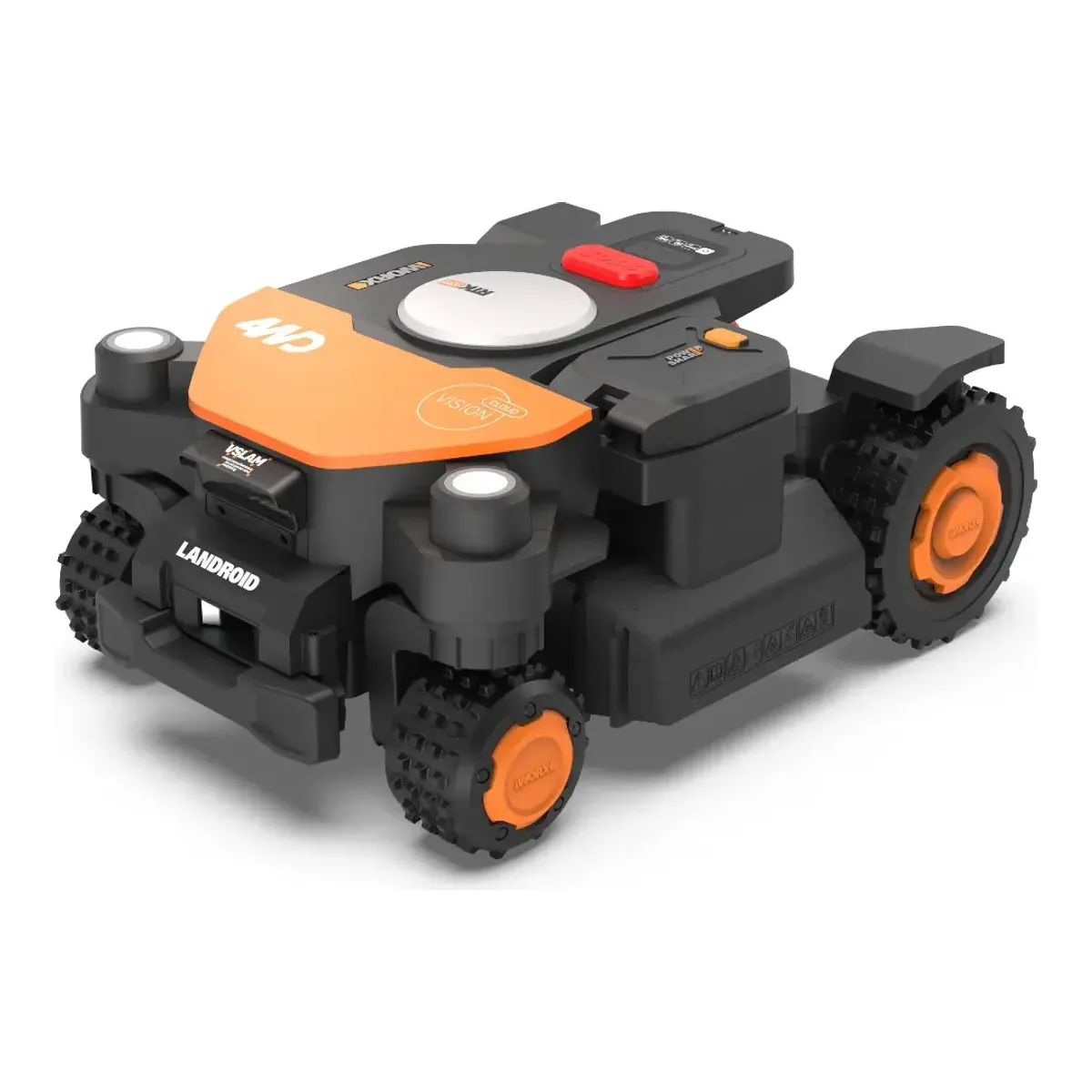
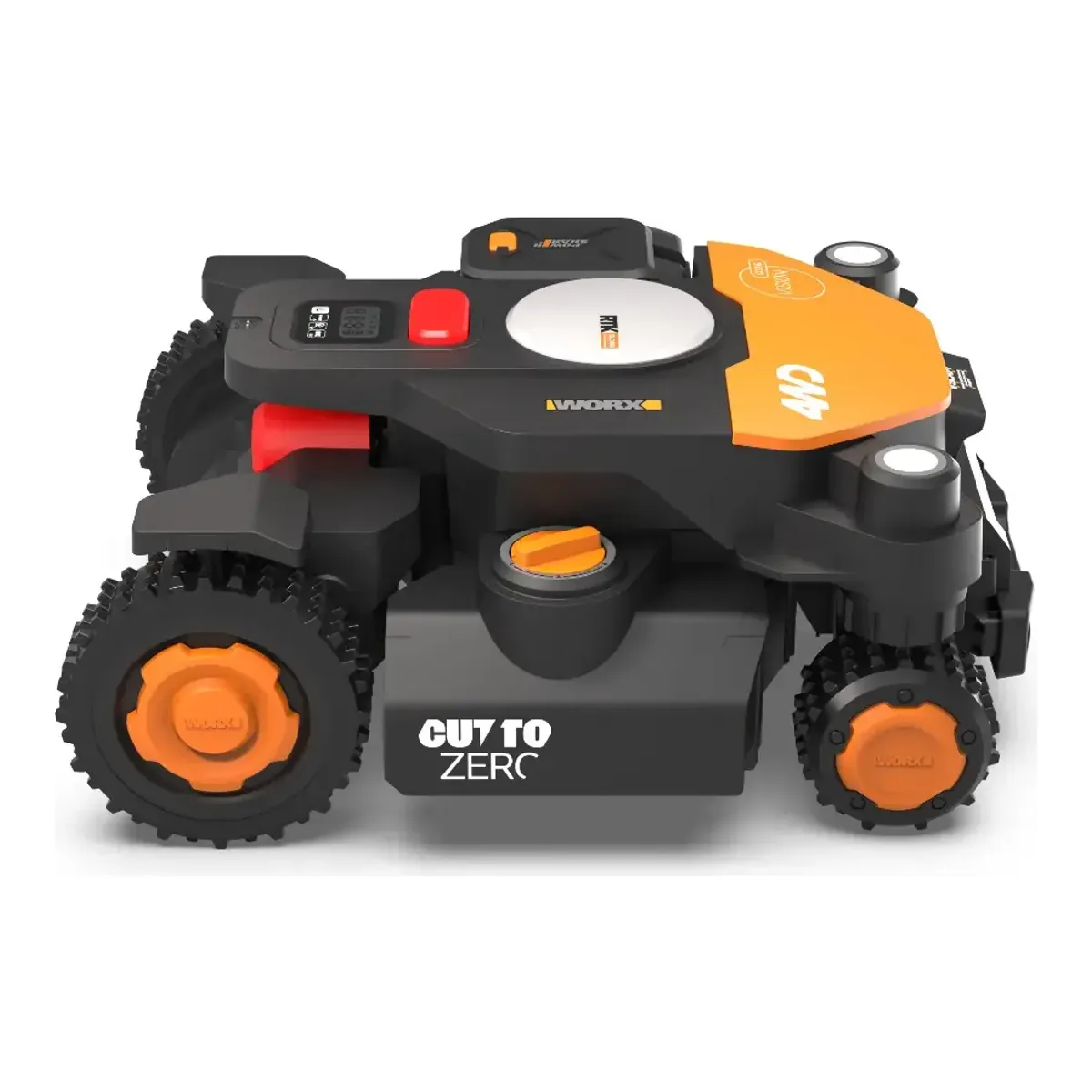
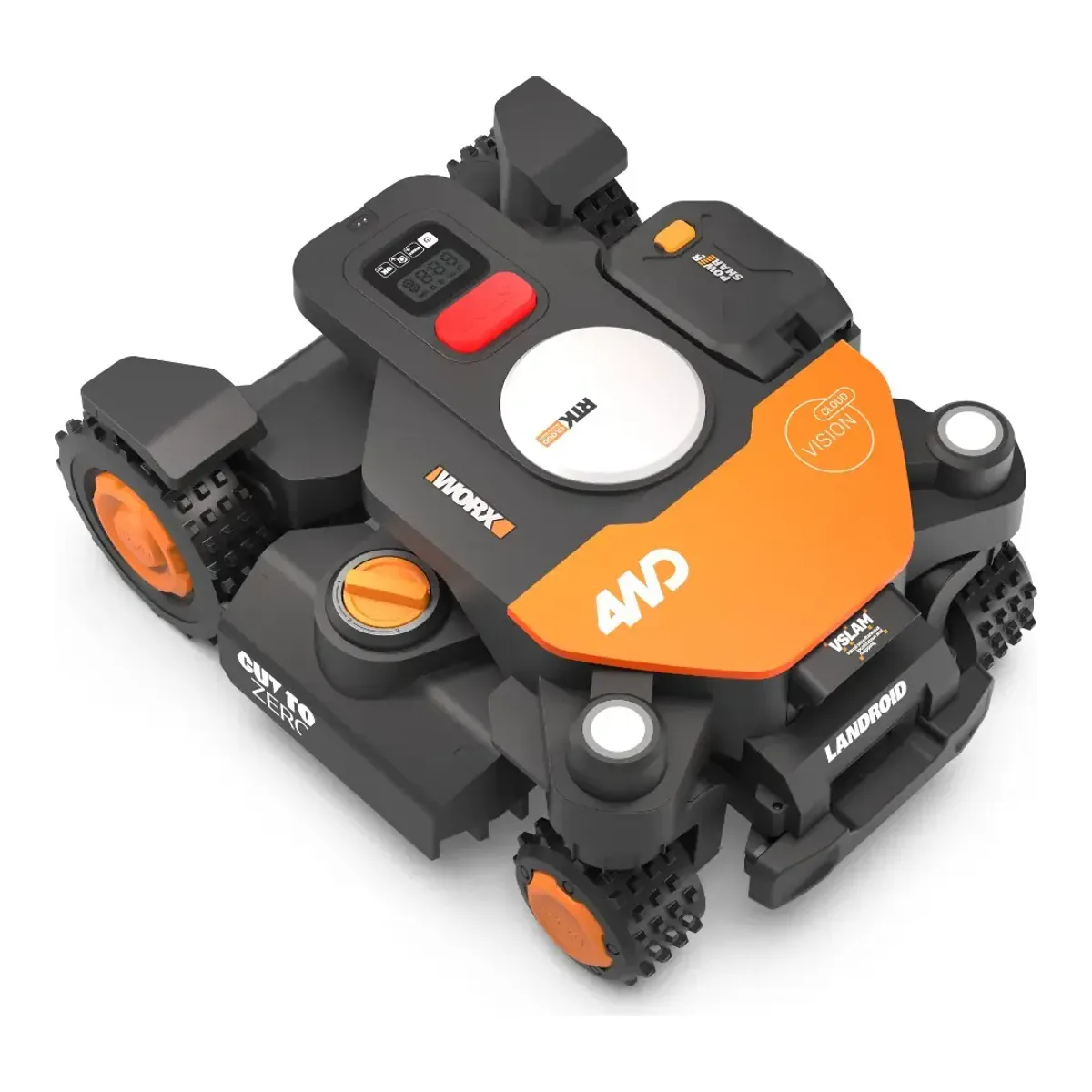
WORX lists the Cut-to-Zero module on the WR342 specification table, and the render shows it bolted to the side as its own housing, separate from the deck. That same module is sold as an optional extra on the European WR341E in the test above, and the one owner in our source thread who discusses it names it as a paid bundle add-on, not standard equipment: they call a deal that threw it in for free a good find. The tester's own comparison table backs that up a rung further: on the European lineup, only the range-topping WR344E bundles Cut-to-Zero as standard, and the half acre WR342E's own listed add-on is a radio link accessory instead. Confirm what ships in your carton before counting on a cut to the edge, because the disc sits inboard without it.
Mapping matters here too: auto mapping stays conservative at a hard edge and leaves trimming, while walking the perimeter by hand gets closer to it. If you share an open boundary with a neighbor, manual is what you will be doing anyway.
What we would check in six months
Every complaint above traces back to software: an over cautious camera, an app that rate limits a new owner, a map that will not upload. All of it is fixable over the air, on a platform new enough that some of it probably will be. The one owner who touched hardware did it themselves, extending the bumper past the front wheels. They did not wait on a firmware fix for the sand it would not cross. Whether the vision loosens up on tall grass and bare ground is the thing that would change who should buy this mower.
A closer look at the WORX Landroid Vision Cloud 4WD WR342
Made up your mind?