Robot mower slope: the rating is dry grass, straight uphill
Read the slope figure as a dry, straight uphill, mid-lawn best case and take it down for everything your yard adds: crossing the face of a hill, a wet morning, and any slope that runs to the boundary. Measure the steepest patch as rise over run in percent grade and not degrees, and buy a mower rated well above that number instead of matching it.
A slope rating is a percentage measured going straight up a dry hill in the open middle of the lawn: the easiest slope a mower ever meets. Lymow points out that the scale itself misleads, because a 45 degree slope is a 100 percent grade and not 45 percent. Husqvarna publishes a separate and lower maximum slope by the boundary than in the work area, because a hill that runs right to the edge is the case that actually stops a mower.
What decides it, in order
Work down these. Each one narrows the answer, and the first is the one most buying guides skip.
How steep is the steepest patch, and in what units?
Brands rate slope as a percent grade, which is not the same as degrees, and the two scales pull apart quickly. Measure the worst part of the lawn, because the mower meets it every pass.
- You have not measured it
- Read rise over run. Husqvarna gives the arithmetic, where percent grade is vertical height divided by horizontal distance times 100, and Robo Lawn Scout's version of the same formula gives 1 foot of rise over 10 feet of run as a 10 percent grade. Take the reading on the steepest patch, not the average.
- You have the figure in degrees
- Convert before you compare. Lymow spells it out, that a 25 percent slope is about 14 degrees and a 45 degree slope is a 100 percent grade, so a mower rated for 45 percent is nowhere near a 45 degree bank.
Does the mower climb the slope, or cross the face of it?
The rating is for straight uphill travel. Mowing along the contour of a hill is where a machine slips sideways. It is a harder job than the number describes.
- Straight up and down
- The closest a real slope gets to the rated condition, so the figure is close to true. Leave margin for the first wet morning.
- Across the face
- Derate hard. A grade a mower takes cleanly head on can slide it sideways when it works along the contour, and that sideways slip is what tears the turf and beaches the machine.
Does the slope sit mid-lawn, or run to the boundary?
A hill that reaches the edge is the limiting case, and Husqvarna rates it separately and lower than an identical slope in the open work area.
- Mid-lawn, with flat edges
- The work area rating applies. Standard Husqvarna Automower models manage 25 to 50 percent there depending on the model, and only the AWD line, the 435X AWD and 435X AWD NERA, goes to 70 percent.
- Right up to the boundary
- This is where mowers fail. Husqvarna lists a lower maximum slope by the boundary than in the work area, and its own fix is to position the boundary further in on flat ground before the slope begins.
Is the grass ever wet when it mows?
A scheduled mower runs in the morning dew and after rain, and slope plus water is the combination that turns a rated hill into a slipping one.
- It only mows dry
- You can trust the rating nearer its number, though never at it.
- It mows on a schedule, wet or dry
- Take a large margin. Husqvarna warns that turning around an obstacle on a steep slope raises the slipping risk especially in wet conditions and can wear out the grass. Lymow describes wheels spinning on wet grass and tearing the roots, and mowers sliding past boundaries on steep descents.
The slope number on a robot mower is measured going straight up a dry hill, in the one direction the machine spends the least time traveling. Most of a mowing session is spent turning, crossing the face of a bank, and working the wet edge in the morning, and a robot mower slope rating describes none of those. It describes the best case, and the best case is not where a mower gets stuck.
Reading a robot mower slope rating
First, get the units right, because the scale is a trap on its own. Brands quote a percent grade, and Lymow lays out how far that sits from degrees: a 25 percent slope is about 14 degrees, and a 45 degree bank is a 100 percent grade, not 45 percent. A lawn that looks like a gentle 20 degrees to the eye is already past what many mowers rated in the twenties of percent will hold. Measure it properly instead of guessing. Husqvarna gives the arithmetic: percent grade is vertical height divided by horizontal distance times 100, and Robo Lawn Scout puts the same formula in feet, where 1 foot of rise over 10 feet of run is a 10 percent grade. Take that reading on the steepest patch of the lawn, because the mower has to clear the worst one on every pass. The average does not count.
Up the hill is easy. Across it is not
A rating is for climbing. The harder job is mowing along the contour, where the machine leans across the grade and the downhill wheels do the holding. Contour work is where a robot slips sideways, chews a line in the turf, and occasionally beaches. Standard Husqvarna Automower models are rated for slopes of 25 to 50 percent depending on the model, and only the AWD line, the 435X AWD and 435X AWD NERA, reaches 70 percent, and even those figures describe the head on case and leave out the rest, because a slope you would trust a mower to climb straight up still deserves a wide margin before you trust it to work across the face.
The boundary is the slope that stops it
The single most useful thing Husqvarna publishes is a separate, lower maximum slope by the boundary than in the work area. A hill in the open middle of a lawn gives the mower room to correct. The same grade running right to the edge does not, so the machine reaches the limit of its map and its traction at the same moment. Husqvarna's own fix is to pull the boundary in, positioning it further in on flat ground before the slope begins, and to fence off anything steeper than the mower's rating as a stay out zone. If your steep part touches the edge of the lawn, design around that number and set the rated work area figure aside.
What to check next
Go and measure the worst slope on the lawn, on a wet morning, across the face and not up it. The mower has to survive that pass, and the rating never tested it. Husqvarna warns that turning around a tree or a rockery on a steep slope raises the slipping risk especially in wet conditions and can wear out the grass. Lymow describes wheels spinning on wet turf and mowers sliding past a boundary on a steep descent. Once you know that worst number, size the coverage around it too, because a hill is slower to mow and eats into the area a mower can cover in a day. How the machine holds a line on a slope also depends on how it navigates, which is the next decision to make.
Questions people actually ask
- Can a robot mower handle a steep hill?
- Up to a point that is lower than the rated figure implies. Standard Husqvarna Automower models are rated for 25 to 50 percent slopes, and only the AWD line reaches 70 percent, but those figures are for a dry slope climbed straight uphill in the open lawn. A hill you mow across, in the wet, or one that runs to the boundary all cut the safe figure down, so a steep lawn wants a mower rated well above the grade you measured.
- Is robot mower slope measured in percent or degrees?
- Almost always in percent grade, which is rise divided by run times 100, and that is not degrees. Lymow gives the conversion, where a 25 percent slope is about 14 degrees, and a 45 degree slope is a 100 percent grade and not 45 percent. Confusing the two is how a lawn that looks manageable in degrees turns out to exceed a mower rated in percent.
What that lands on
Machines that satisfy the chain above. The condition is on each one, because a machine that is right for one answer is wrong for another.
We earn a commission on qualifying purchases through the links here, at no cost to you. It never decides what makes the list.
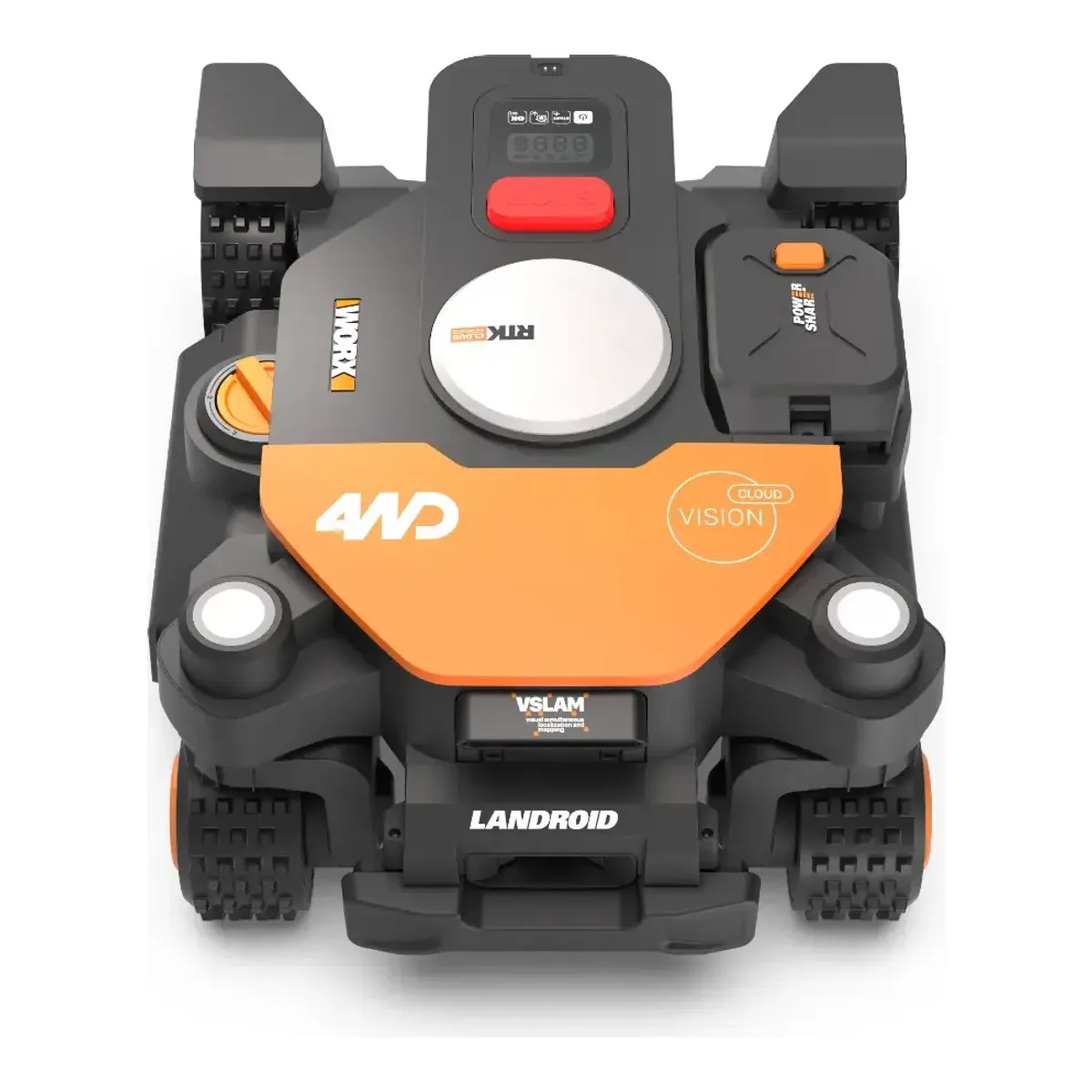
WORX Landroid Vision Cloud 4WD WR342
Right when the steepest patch is a real bank and the mower has to cross its face as well as climb it. Four-wheel drive rated well above your measured grade is the right match. A rating taken straight uphill and dry is the easy case your hill is not.
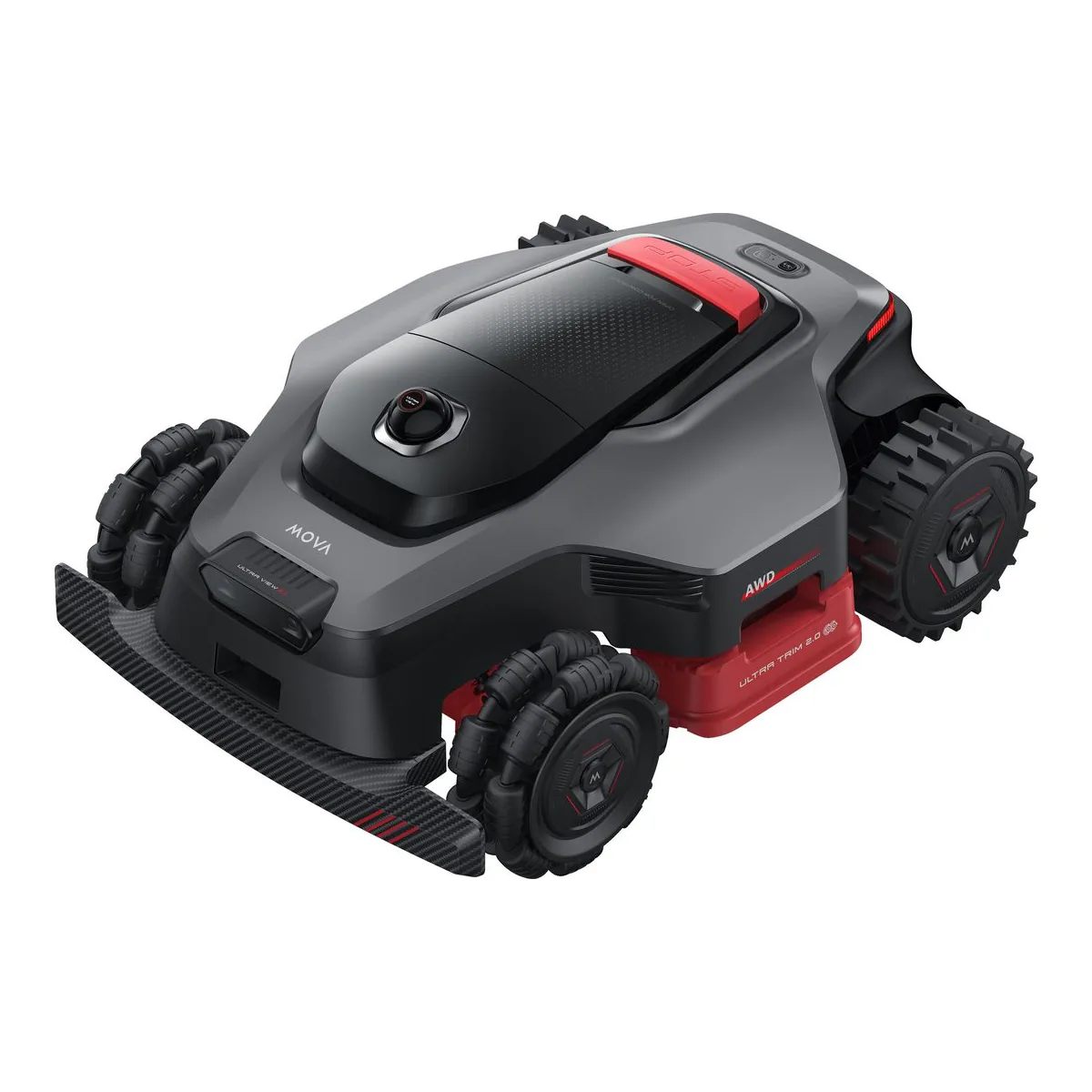
MOVA LiDAX Ultra 2000 AWD
Right when you mow across the face of the slope on wet mornings, and you want all-wheel drive rather than two driven wheels slipping sideways on the contour. Buy the margin, since wet grass and a side-slope are exactly what the dry straight-uphill number leaves out.
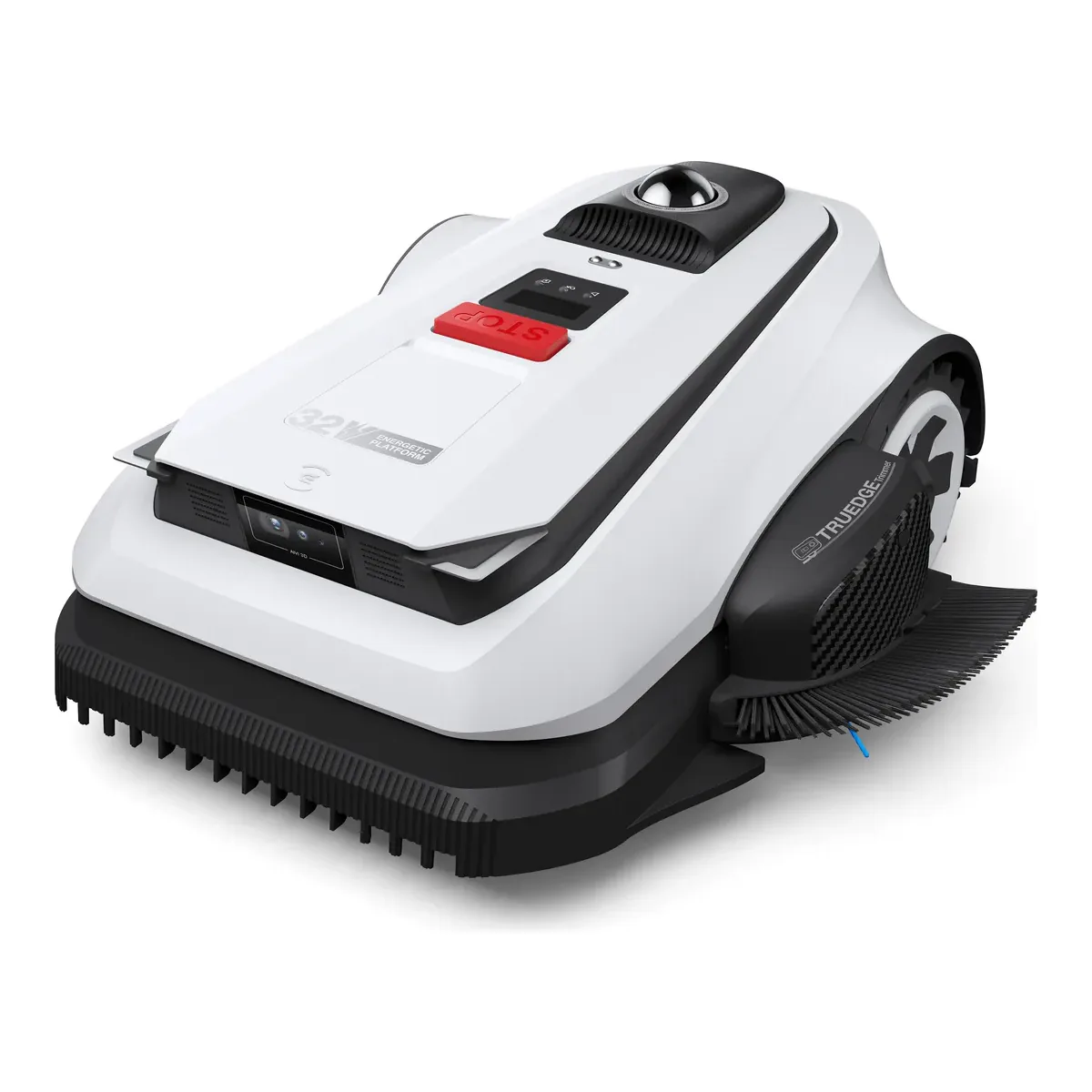
ECOVACS GOAT A2000 LiDAR PRO
Right when the slopes are gentler and sit mid-lawn with flat edges. Watch the boundary, because this mower rates a lower maximum slope right at the virtual boundary than in the open work area, which is the case Husqvarna rates separately and the one that beaches machines.