Epson Ultra Short Throw Projectors Compared (LS650, LS800, Lifestudio Grand, Grand Plus)
Stop at the Lifestudio Grand Plus if the screen runs past 120 inches or a console needs 4K at 120Hz. It is the only one of the four with HDMI 2.1, it throws 150 inches from 11.2 inches off the wall, and it has the dynamic tone mapping the Grand lacks. For a 100 to 120 inch picture in a lit living room, the Lifestudio Grand gets you Google TV and eARC on a body 18.4 inches wide. The LS800 and LS650 are the Android TV pair those two followed.
We earn a commission on qualifying purchases through the links here, at no cost to you. It never decides what makes the list.
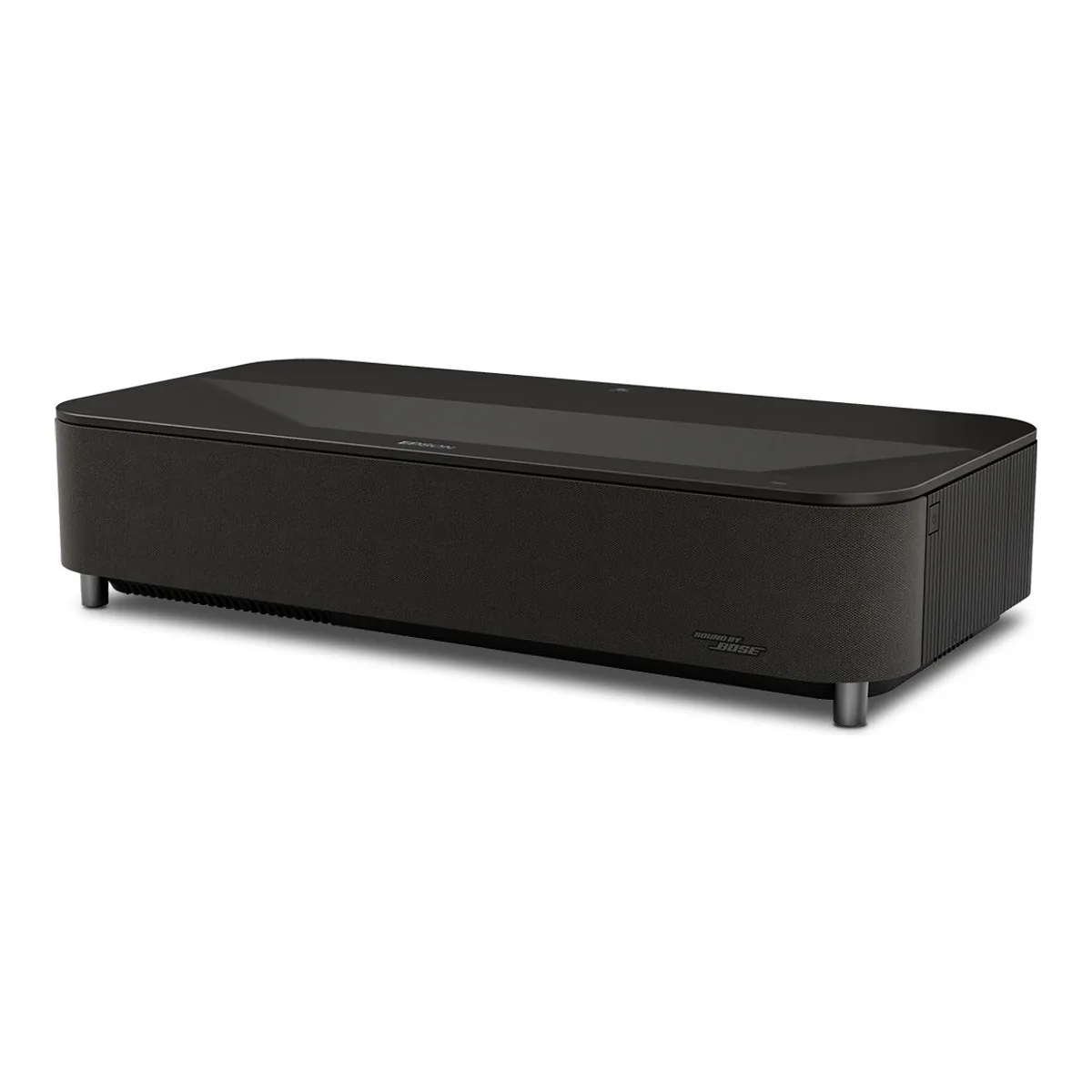
Epson Lifestudio Grand Plus
Stop here if you want a picture past 120 inches, a 4K 120Hz console, or the most measured light of the four: ProjectorCentral read 4,451 ANSI lumens in Dynamic.
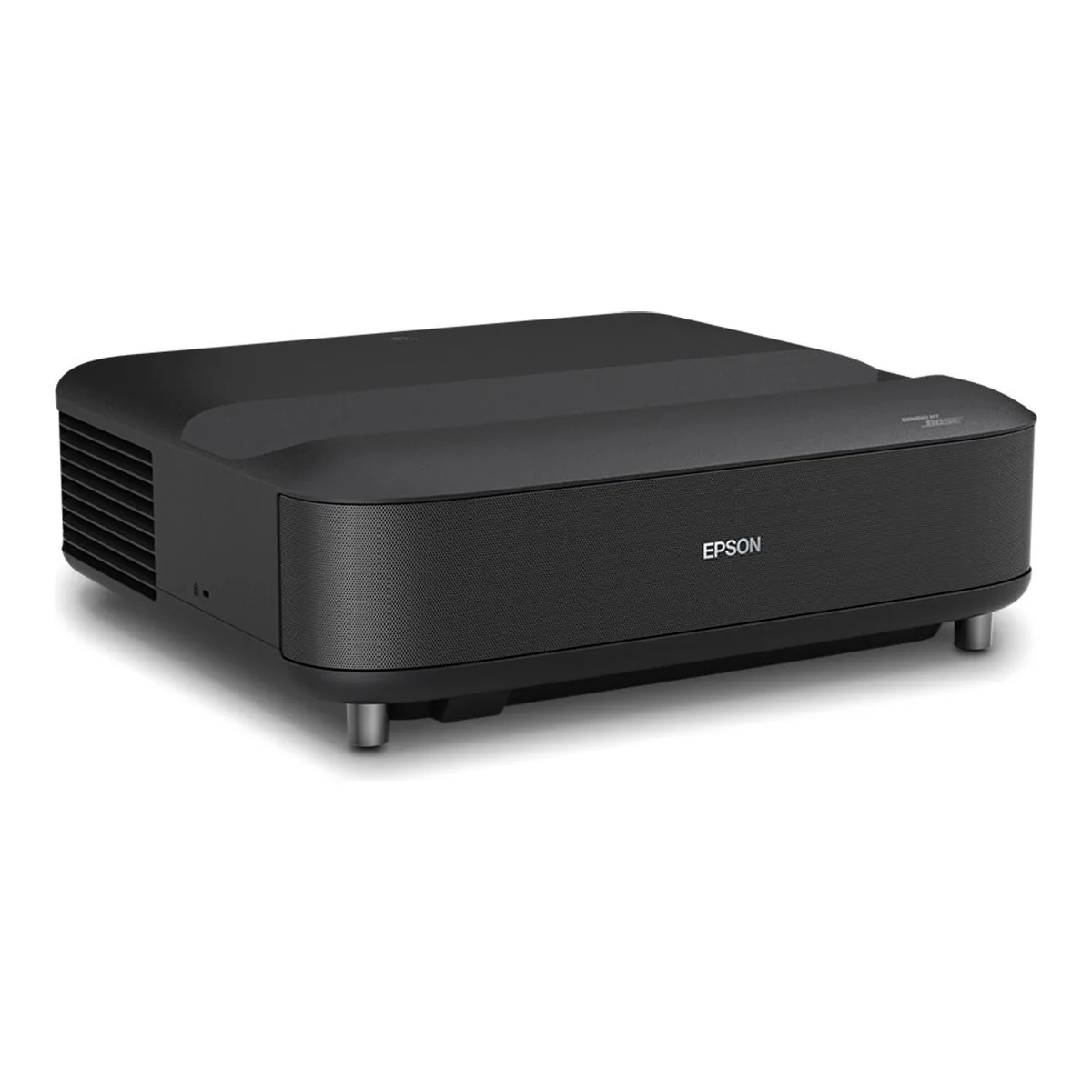
Epson Lifestudio Grand
Stop here if the screen is 120 inches or smaller, the room keeps its lights on, and you want Google TV built in. ProjectorCentral measured 3,776 ANSI lumens in Dynamic.
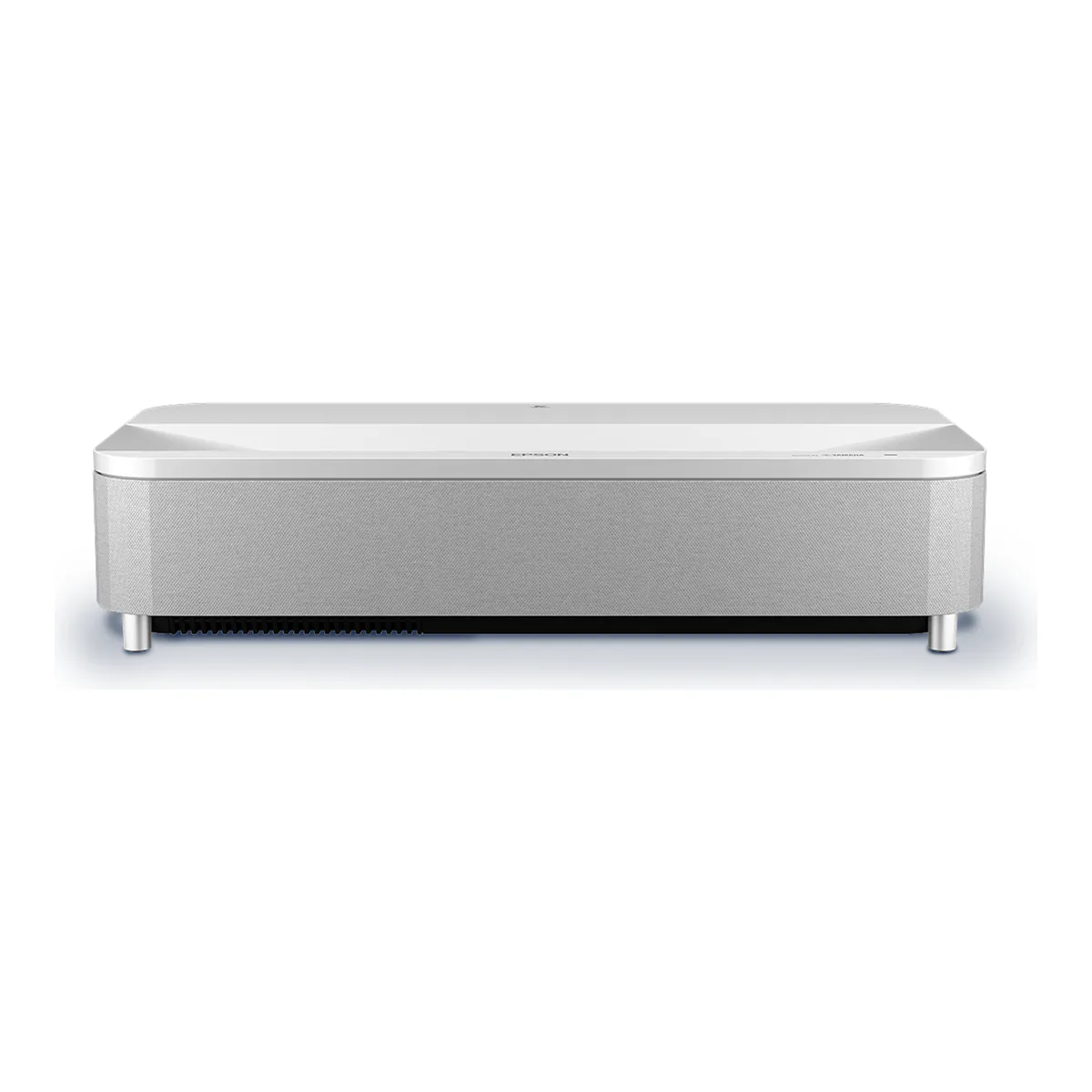
Epson EpiqVision Ultra LS800Discontinued
Stop here if you play at 1080p and want the lowest lag of the four: ProjectorCentral measured 12.3 ms at 1080p/120 on the game port. Plan on a streaming stick for Netflix, and wire disc players to the receiver since there is no eARC.
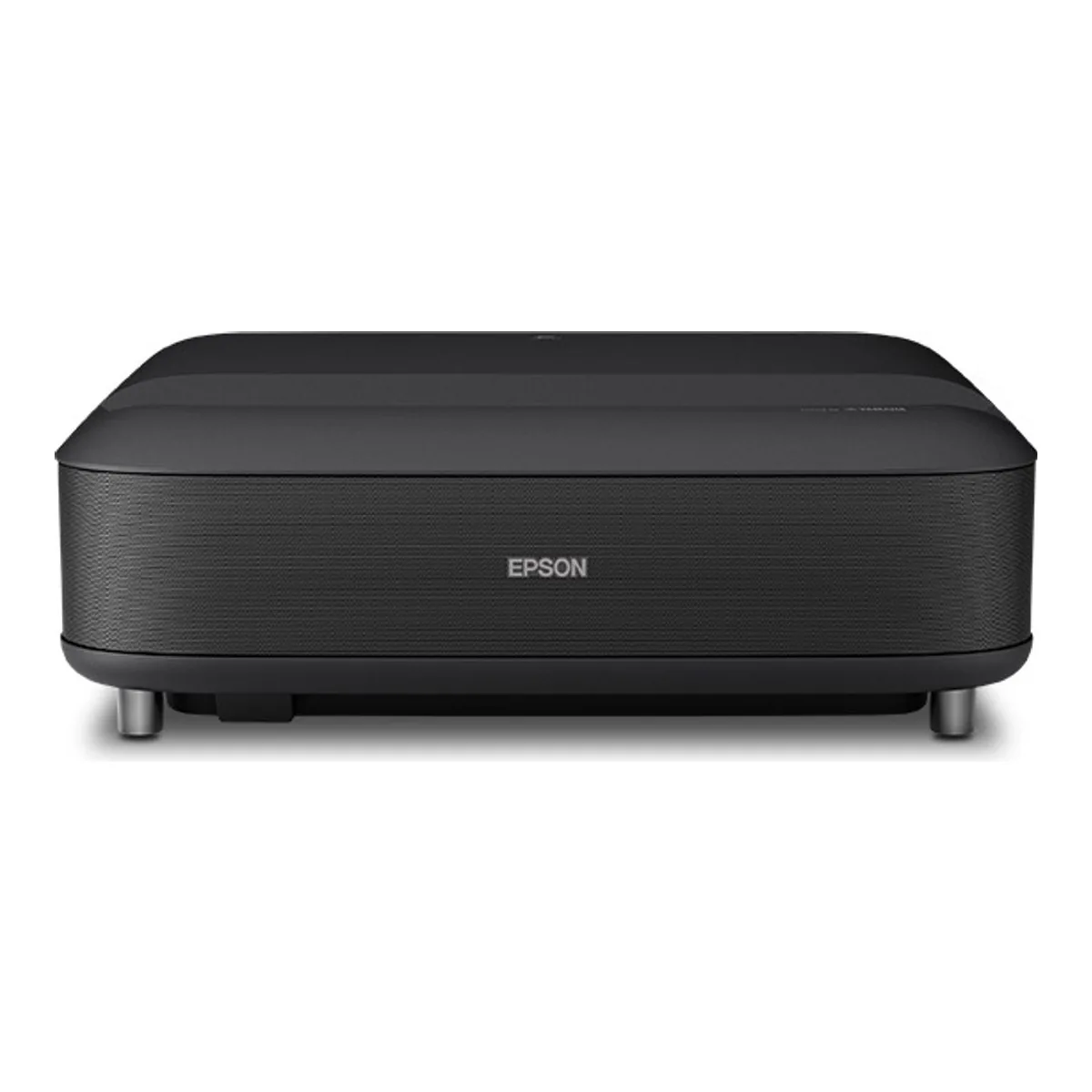
Epson EpiqVision Ultra LS650
Stop here if the picture stays at 120 inches or under, a streaming box handles Netflix anyway, you will not game above 60Hz, and you want the dynamic tone mapping the Grand dropped.
| Rated brightness | Image size | Throw ratio | HDMI inputs | Top refresh | Smart TV | Width x depth x height | |
|---|---|---|---|---|---|---|---|
| Epson Lifestudio Grand Plus | 4,000 lumens, color and white | Up to 150 in | 0.16 | 3: two 2.1, one 2.0; eARC on HDMI 2 | 4K at 120 Hz | Google TV | 27.4 x 13.4 x 6.2 in, 27.6 lb |
| Epson Lifestudio Grand | 3,600 lumens, color and white | 60 to 120 in | 0.25 | 3, all 2.0; eARC on HDMI 2 | 1080p at 120 Hz | Google TV | 18.4 x 15.7 x 6.2 in, 16.6 lb |
| Epson EpiqVision Ultra LS800 | 4,000 lumens, color and white | Up to 150 in | 0.16 | 3, all 2.0; ARC on HDMI 2 | 1080p at 120 Hz | Android TV | 27.4 x 13.4 x 6.2 in, 27.6 lb |
| Epson EpiqVision Ultra LS650 | 3,600 lumens, color and white | 60 to 120 in | 0.26 | 2, both 2.0; eARC on HDMI 2 | 1080p at 60 Hz | Android TV | 18.4 x 15.7 x 6.2 in, 16.3 lb |
The four Epson ultra short throw projectors on sale come in two sizes, and each size has shipped in two generations. The compact one, 18.4 inches wide on the spec sheet, was the LS650 and is now the Lifestudio Grand. The wide one, 27.4 inches across and 27.6 lb, was the LS800 and is now the Lifestudio Grand Plus. So the Epson ultra short throw projectors come down to two choices made in two generations: an Android TV pair, and the Google TV pair that took over from it.
Size sets the screen. Everything else moved between generations.
That means the first question is your wall and the second is your sources. If Hisense, AWOL Vision or XGIMI are still on the list, our ultra short throw projector rankings put the whole category side by side. Behind the ladder below: Epson's specification sheet for each model and ProjectorCentral's instrumented review of all four, with What Hi-Fi on the LS650 and TechRadar on the Grand.
Epson ultra short throw projectors stop at 120 inches or 150
The LS650 and the Grand throw 60 to 120 inches, from ratios of 0.26 and 0.25. Both wide models reach 150 on a 0.16 ratio. Under 80 inches, rule out the Grand Plus: ProjectorCentral gives 80 inches thrown from 0.9 inches away as its floor, while the compact pair goes down to 60.
Counterintuitively, the bigger box is the shallower setup. For a 100 inch image, ProjectorCentral's placement figures put the back of an LS650 about 10.5 inches from the wall with its front about 26 inches out, while an LS800 sat 3.9 inches back with its front at 17.3. A 150 inch picture from the Grand Plus needs 11.2 inches. So a long, shallow credenza suits the wide pair and a narrow, deep one suits the compact pair, and our UST wall distance arithmetic sizes it for your own screen before you buy a stand.
HDMI 2.1 and 4K at 120Hz: Grand Plus only
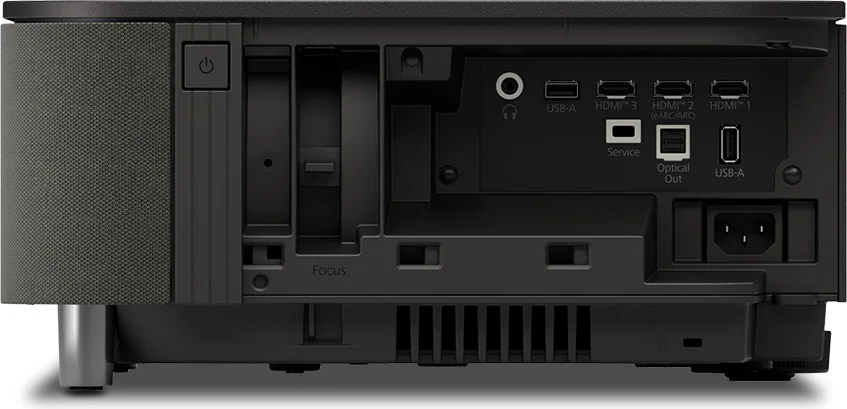
Of the four, only the Grand Plus has HDMI 2.1.
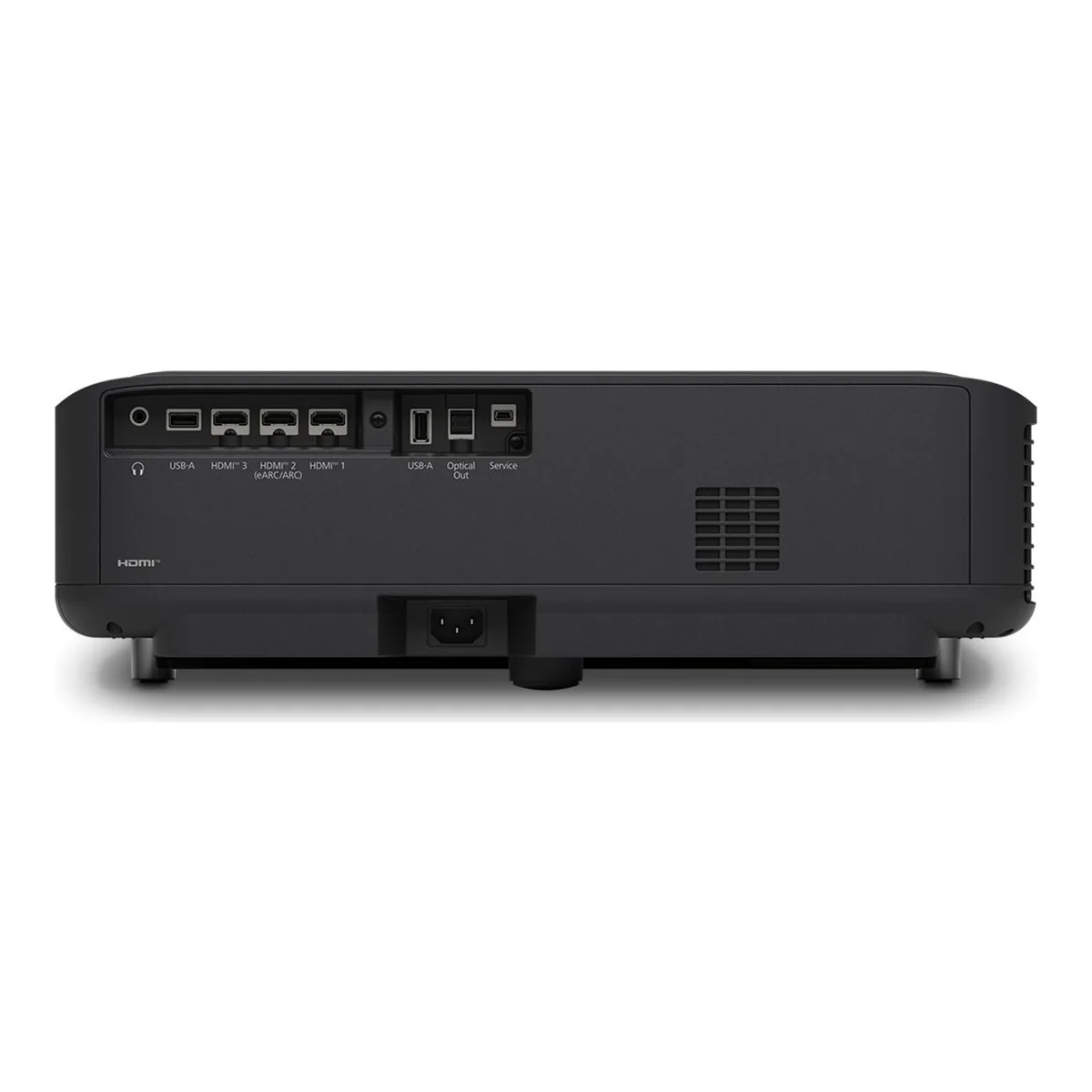
The LS650 has two HDMI 2.0 inputs and a 1080p 60Hz ceiling. The LS800 and the Grand carry three and reach 1080p at 120 Hz, the LS800 only on its game port. ProjectorCentral's Grand review calls its ports HDMI 2.1 in the prose and lists them as 2.0 in its connections table; Epson's sheet says 2.0 at 18 Gbps with a 1080p 120Hz ceiling, and we follow the sheet. Epson made HDMI 1 and 2 on the Grand Plus full 48Gbps HDMI 2.1 ports, and that is what lets a current console run 4K at 120 Hz.
Lag tells a different story, and here the oldest wide model wins. The LS800's dedicated game port skips Android entirely and measured 22.1 ms at 1080p/60 and 12.3 ms at 1080p/120, the lowest ProjectorCentral recorded on any of the four. Plug into its other two inputs and lag jumps to 101 to 113 ms. The same outlet put the Grand Plus at 29 ms at 60 Hz and 20 ms at 4K/120, the Grand at 34 ms at 60Hz, and the LS650 at 24ms in its Fast mode. All four suit casual play on the right input. A competitive player who wants 4K at 120 has one choice.
Audio splits the generations just as cleanly. The LS800 has plain ARC on HDMI 2, so lossless Dolby Atmos from its own apps, or from a player plugged into the projector, cannot reach a receiver. Plug the player into the receiver and the problem goes away. The other three all carry eARC on HDMI 2.
Android TV or Google TV
Neither Android TV model has a certified Netflix app, so an LS650 or LS800 owner plans on a streaming stick for that one service.
Google TV on the Grand and the Grand Plus fixes it, and Epson's Grand Plus sheet lists Netflix among its apps. Per the same sheet, Google TV and its features require a Google account and an internet connection of 5 Mbps for HD or 25 Mbps for 4K.
Tone mapping, contrast and calibration
Dynamic tone mapping skipped a model: the LS650 has it, the Grand does not, and only the wide Grand Plus brings it back. ProjectorCentral called the gap on the Grand a notable omission, given how good Epson's version is.
Calibration moved the other way. Gain and bias controls and a color management system are missing on both Android TV models, and both Lifestudio models add Gain and Offset plus a full CMS. That matters to anyone paying a calibrator and to nobody else.
None of the four covers DCI-P3. Measured gamut reached 78.43 percent (xy) on the Grand Plus and 76.35 percent on the Grand, with native contrast near 1,400:1 on the Grand and 1,800:1 on the Grand Plus. Dark rooms are not where any Epson UST wins.
Resolution is the quiet upgrade. Shifting its 1080p panels in two phases, the LS650 puts about 4 million pixels on screen, and the LS800 uses the same 4K PRO-UHD shifting. Epson rates the Grand Plus for a full 8.29 million.
Epson LS650 vs LS800
Brightness, size and ports go to the LS800: 4,000 lumens against 3,600, 150 inches against 120, a third HDMI input with the game port, and 1080p at 120 Hz. What goes the other way is eARC, 11.3 lb of weight, and a picture What Hi-Fi found more consistent in color, with slightly better blacks. That review still warns the LS650's black levels wash gray in a dark room. Outside the US it sold as the EH-LS650. Our LS800 review has the full set of its measurements.
Lifestudio Grand vs Grand Plus
Four things come with the step up: 30 more inches of picture, HDMI 2.1, dynamic tone mapping and 400 more rated lumens. It costs 9 inches of width and 11 lb, and a picture under 80 inches is off the table. For a 100 to 120 inch screen with lamps on, the Grand covers it, and our Lifestudio Grand review runs its throw table inch by inch.
Buying an LS800 or LS650 now
Epson lists the LS800 as discontinued and names the Grand Plus as its replacement, yet Amazon still lists it new. The LS650 is still in Epson's own store, and on Amazon a third-party seller has it new. Either one needs a streaming box in the plan. The LS800 also wants every disc player wired to the receiver, since it has no eARC. If you game at 1080p on a 150 inch screen and want the lowest lag of the four, a new LS800 does a job neither Lifestudio matches.