UST projector distance from wall: use the front edge
Measure the front edge, not the back. The wall distance on a UST spec sheet runs from the back of the projector, and the chassis adds another 10.6 to 13.4 inches in front of it, so at 100 inches, with the image on a bare wall, the six models in our registry put their front edge between 16.7 and 21.6 inches out. Pick the screen size first, check that your console is deeper than the front edge figure for that size, then check the wall width and the height of the image above the console.
Every UST projector comes with a distance figure, and they are measured from different places. ProjectorCentral's 3.9 inches for Epson's LS800 runs from the back of the projector to the wall. Hisense's 5.4 inches for the L9Q runs to the wall with 1.2 inches of screen depth already counted, so it is 4.2 on a bare wall. The PX3-PRO and PL2 sheets draw theirs to the projected image, and AWOL prints image to rear and image to front side by side. Read across brands, the smallest number is not always the shallowest placement, and of the charts we read only AWOL's prints the front edge, the depth your furniture has to hold.
What decides it, in order
Work down these. Each one narrows the answer, and the first is the one most buying guides skip.
Which distance did the maker actually print?
Two charts can both say "distance" and mean points more than an inch apart, which on a UST is several inches of picture. Convert every figure to the same reference before comparing.
- Back of the projector to the wall
- ProjectorCentral puts Epson's LS800 3.9 inches off for 100 inches. XGIMI's manual gives the AURA 2 7.02 inches, which its site calls 17.8 cm from the wall; the manual does not label the projector end, so we read it as the back, as the other charts do. Add the chassis depth to get the front edge.
- Back to the wall, screen depth included
- Hisense's L9Q chart is drawn with its own screen in place and folds 30mm, 1.2 inches, of screen depth into the 5.4 inch figure at 100 inches. On a bare wall the back sits about 4.2 inches off.
- The projector's rear to the projected image
- Hisense's PX3-PRO and PL2 sheets draw A from the projector's rear to the image, 8.5 and 8.4 inches at 100 inches. On a bare wall that is the wall; on a screen, the screen's own depth sits behind it.
- Image to front and image to rear
- AWOL's Aetherion manual prints both: 18.9 inches to the front and 6.2 inches to the rear at 100 inches. The front column is the furniture number, already worked out.
How deep is the top of your console, measured from the wall?
The projector sits on the console with its back a few inches off the wall and its whole chassis in front of that. The front edge has to land on the furniture, so that figure goes against the console depth.
- Under 16.7 inches
- Below the L9Q's roughly 16.7 inches, none of the six fits a 100 inch image on a bare wall by its chart. Drop to a smaller size off the maker's chart, or find deeper furniture.
- 16.7 to 18 inches
- On a bare wall at 100 inches, the L9Q fits from about 16.7, the LS800 from 17.3 and the AURA 2 from about 17.7. On a screen, add its depth. At 120 inches the LS800 and AURA 2 pass 20 and the L9Q reaches about 19.8.
- 18 to 20 inches
- The Aetherion Max fits from 18.9 inches at 100 inches, along with the three above. The PX3-PRO, at about 20.2 inches by our arithmetic, just misses.
- 20 inches or more
- The PX3-PRO fits from about 20.2 inches, and the PL2 from about 21.6. On a screen, add its depth to both. Depth past that is what buys a bigger image.
How wide and how tall can the image be?
A UST image starts some way above the projector, and a 16:9 image grows in width faster than most people picture from the diagonal.
- 100 inches
- The image is 87.2 by 49 inches. On the PL2 its bottom edge sits 15.2 inches above whatever the projector rests on, so the top is 64.2 inches above the console.
- 120 inches
- The image is 104.6 by 58.8 inches, before the screen frame. The gap under the image grows with the size, so the top climbs by more than the 9.8 inches of extra image height.
- 150 inches and up
- Hisense's L9Q chart gives 130.7 by 73.5 inches at 150 and 174.3 by 98.1 at 200. At 200 the image alone is 98.1 inches tall, more than an 8 foot ceiling before the console is counted.
How big before the picture runs short of light?
The same lumens spread over the whole image, and the area grows with the square of the diagonal. The chart says where the projector can reach. Brightness says where it still looks right.
- Stay at 90 to 130 inches
- XGIMI recommends exactly this range for the AURA 2 even though it is rated to 150, and says exceeding it may affect the picture.
- Go to 150 or past it
- A 150 inch image has 2.25 times the area of a 100 inch one. ProjectorCentral wrote of the 3,000 lumen PX3-PRO that at 150 inches a bit more light output would have been ideal. Of these six, the L9Q has the most light, at 5,000 ANSI lumens, and its chart runs to 200.
3.9 inches. ProjectorCentral puts the back of Epson's EpiqVision Ultra LS800 that far off the wall for a 100 inch image, the smallest UST projector distance from wall figure among the six models we cover. The same review puts the front of the machine 17.3 inches out, and the front is what your TV console has to hold.
Every ultra short throw projector comes with a distance figure, the brands measure it to different points, and of the charts we read only AWOL's prints the furniture depth. Ultra short throw projector placement comes down to three numbers: how deep the console is, how big the wall is, and how large an image the light output can carry. Below, all three are worked across the six UST projectors in our registry from the makers' throw charts and ProjectorCentral's measurements. The ultra short throw projector picks sort them by room; this is the tape measure that comes before them.
UST projector distance from wall, measured to different points
ProjectorCentral's Epson figure runs from the projector's back panel to the wall. Hisense's chart for the L9Q gives 5.4 inches at 100 inches, also from the back of the projector, but to a wall with 1.2 inches of Hisense screen depth already counted in it. The PX3-PRO and PL2 sheets draw the distance from the projector's rear to the projected image, 8.5 and 8.4 inches, so any screen depth sits outside the figure. AWOL's Aetherion Max manual prints two columns, image to rear and image to front: 6.2 and 18.9 inches. Then reviewers quote them loosely, and ProjectorReviews describes the L9Q at about 5.4 inches from the screen, which is not the point Hisense measured to.
A UST projector distance from screen and one from the wall are different figures.
Where the front edge lands
Put every model on one basis, the image on a bare wall, and add the chassis depth to the back distance. AWOL's UST projector throw distance chart prints the front figure directly and ProjectorCentral gives it for the Epson; for the other four it is arithmetic. At 100 inches:
| Projector | Throw ratio | Distance as printed | Chassis depth | Front edge, bare wall |
|---|---|---|---|---|
| Hisense L9Q | 0.18 | 5.4 in, with 1.2 in of screen counted | 12.5 in | 16.7 in |
| Epson LS800 | 0.16 | 3.9 in, back to wall | 13.4 in | 17.3 in |
| XGIMI AURA 2 | 0.177 | 7.02 in, to wall | 10.6 in | 17.7 in |
| AWOL Aetherion Max | 0.2 | 6.2 in, image to rear | 12.7 in | 18.9 in |
| Hisense PX3-PRO | 0.22 | 8.5 in, rear to image | 11.7 in | 20.2 in |
| Hisense PL2 | 0.22 | 8.4 in, rear to image | 13.2 in | 21.6 in |
Basis: manufacturer throw charts and spec sheets, plus ProjectorCentral for both Epson figures. The other four front edges are our arithmetic: the printed distance, less the L9Q's 1.2 inches of screen, plus the published depth. Epson's datasheet labels the LS800's dimensions in an order that would make it 6.2 inches deep; ProjectorCentral reads 13.4 as the depth, which is the only reading that squares with its own 3.9 and 17.3, so the table follows it. On a framed screen, add the frame's depth to every row.
The spread across that last column is 4.9 inches. Measure the console top from the wall itself, because a baseboard or a cable gap pushes the furniture out before the projector is even on it.
Why the lowest throw ratio does not always sit closest
XGIMI's AURA 2 has a lower throw ratio than the L9Q, 0.177 against 0.18. Its chart still puts it 7.02 inches off the wall for 100 inches, where the L9Q sits about 4.2 inches off a bare wall. A throw ratio describes the lens. Where that lens sits inside the cabinet is a separate fact, and only the throw chart carries it.
The LS800 shows the other half. Its 0.16 lens puts the back closest to the wall of the six, yet at 13.4 inches it is also the deepest box here, so its front edge lands second, behind the L9Q.
An inch of console is several inches of picture
Going from 100 to 120 inches moves the projector out 2.9 inches on the LS800, 3.1 on the L9Q, 3.2 on the Aetherion, 3.31 on the AURA 2 and 3.8 on the PL2.
Twenty inches of diagonal for about three to four inches of depth. That cuts two ways. A console two inches too shallow does not cost you a sliver of picture, it costs you a screen size. And a fixed frame screen leaves little slack the other way: Hisense notes on its L9Q chart that a 5% deviation is acceptable for the figures, so treat every chart as the place to start and the screen edge as the place to finish. Mark where the feet sit once the image fills the frame, because somebody will bump it while dusting.
UST projector screen size against the wall
Width catches people first. A 100 inch image is 87.2 by 49 inches, and 120 inches is 104.6 by 58.8, before the screen frame adds its border. Hisense's L9Q chart carries on to 130.7 by 73.5 inches at 150 and 174.3 by 98.1 at 200.
The diagonal hides the height. A UST throws upward, so the image starts well above the projector: the PL2's chart puts the bottom edge 15.2 inches above the projector's base at 100 inches, which sets the top 64.2 inches above your console. Add the console height and check it against the ceiling.
Then the light, which sets the real UST projector max screen size.
The same lumens cover the whole image and the area grows with the square of the diagonal, so 120 inches is 1.44 times the area of 100 and 150 inches is 2.25 times. XGIMI rates the AURA 2 to 150 inches and still recommends 90 to 130, saying anything past that may affect the picture. ProjectorCentral wrote of the 3,000 lumen PX3-PRO that at 150 inches a bit more light output would have been ideal. The L9Q against the PX3-PRO is largely that argument, at 5,000 lumens against 3,000.
The screen fixes the size before the projector does
If you are buying an ambient light rejecting screen, its size is the decision and the projector placement follows it. Epson sells its SilverFlex ALR screen for the LS800 in two sizes only, 100 and 120 inches. Hisense draws the L9Q's throw chart with its own screen's dimensions, which is where that 1.2 inches of depth comes from.
A screen from a third brand changes the depth behind the image, and every number in the chart shifts with it. Read the screen maker's frame depth, add it to whichever reference the projector chart uses, and only then hold a tape against the console.
Questions people actually ask
- How far from the wall does a UST projector sit?
- For a 100 inch image, the back of the projector sits between 3.9 and 8.5 inches from the wall on the six models in our registry, by the makers' charts and ProjectorCentral. The front edge, which is what the furniture holds, lands 16.7 to 21.6 inches out from a bare wall, because the chassis itself is 10.6 to 13.4 inches deep.
- Does a lower throw ratio mean the projector sits closer to the wall?
- Not reliably. XGIMI's AURA 2 has a 0.177 throw ratio and sits 7.02 inches off for 100 inches. Hisense's L9Q has a 0.18 ratio and sits 5.4 inches off with 1.2 inches of screen counted, 4.2 on a bare wall. The ratio describes the lens. The chart describes the box.
- What is the max screen size for a UST projector?
- The rated maximum on these six runs from 150 inches (Epson LS800, XGIMI AURA 2, Hisense PX3-PRO and PL2) to 200 inches (Hisense L9Q, AWOL Aetherion Max). Light runs out before the chart does: XGIMI recommends 90 to 130 inches for the AURA 2.
What that lands on
Machines that satisfy the chain above. The condition is on each one, because a machine that is right for one answer is wrong for another.
We earn a commission on qualifying purchases through the links here, at no cost to you. It never decides what makes the list.
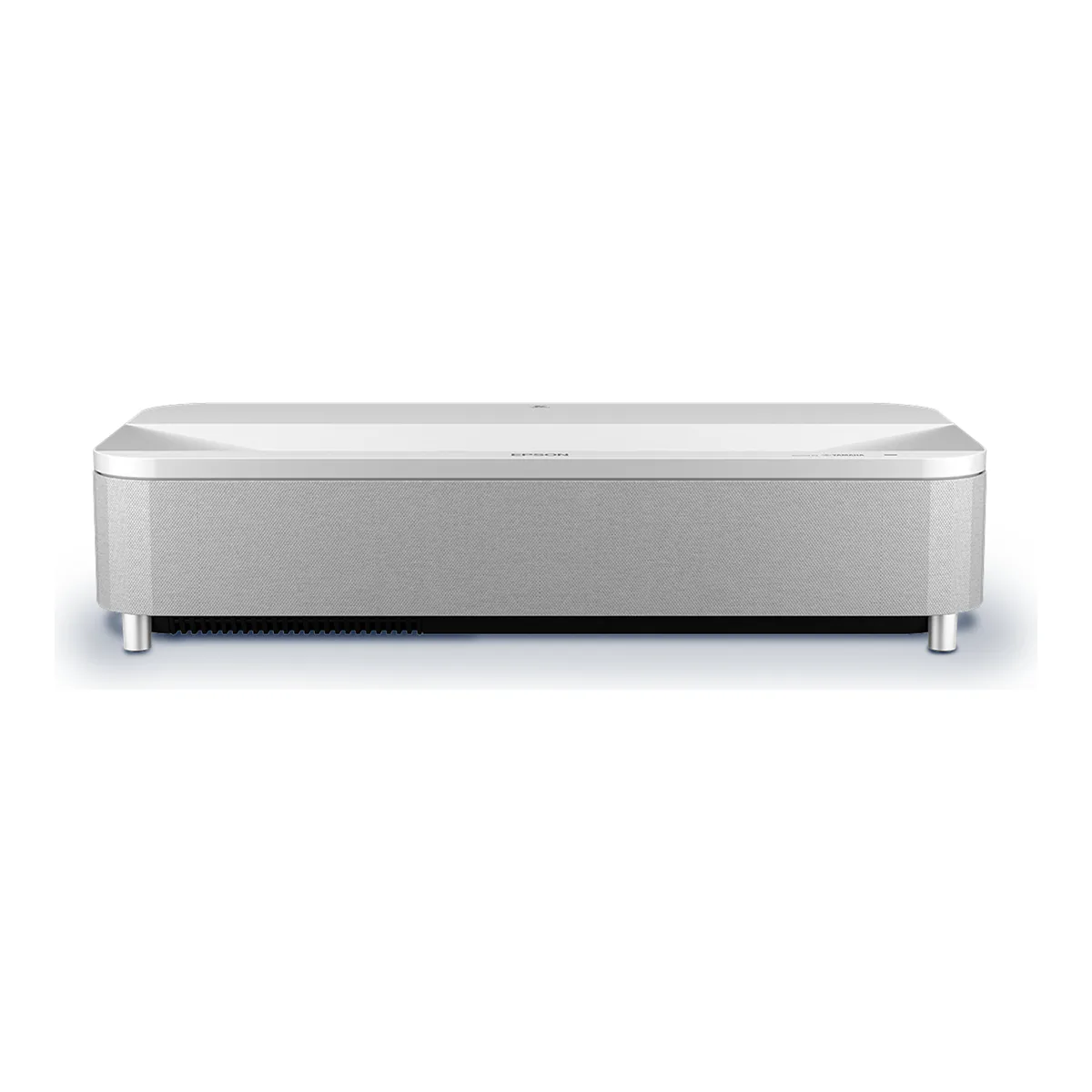
Epson EpiqVision Ultra LS800
Right when you want a matched ALR screen at 100 or 120 inches, the two sizes Epson sells its SilverFlex in. ProjectorCentral puts its back 3.9 inches off the wall at 100, the closest of the six, and its front edge at 17.3 and 20.2 inches for the two sizes. It is rated to 150 inches.
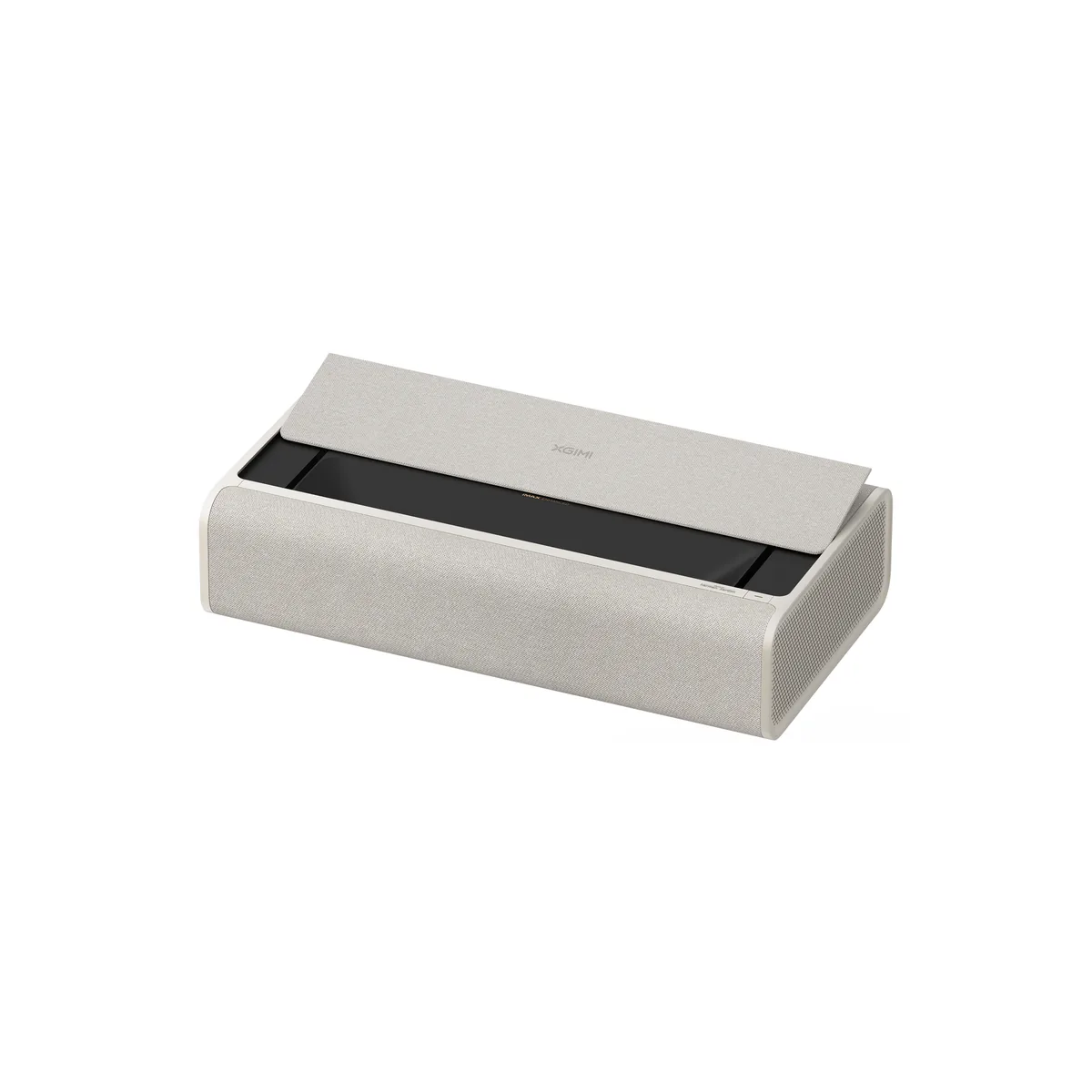
XGIMI AURA 2 (New)
Right when you will stay between 90 and 130 inches, the range XGIMI itself recommends. It sits 7.02 inches off for 100 inches and its chassis is the shallowest here at 270 mm, so the front edge lands near the Epson's.
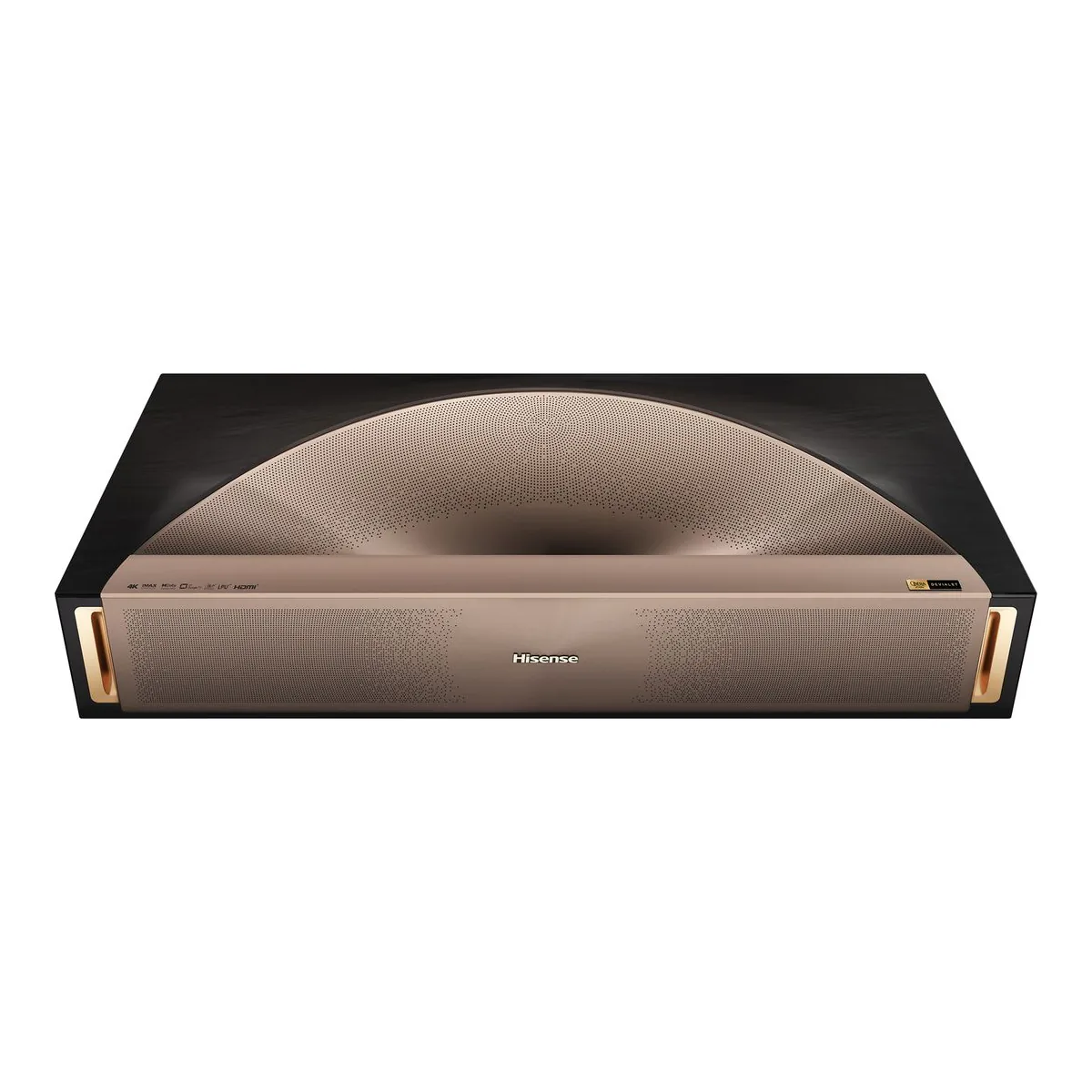
Hisense L9Q
Right when the console is shallow or the wall wants more than 150 inches. On a bare wall its front edge lands about 16.7 inches out at 100, the least of the six by our arithmetic. Its chart runs to 200 inches at 21.1 inches back with its screen counted, and 5,000 ANSI lumens is the most light on this shelf to spread over that area.