MOVA LiDAX Ultra 2000 AWD review: no RTK, no signal to lose
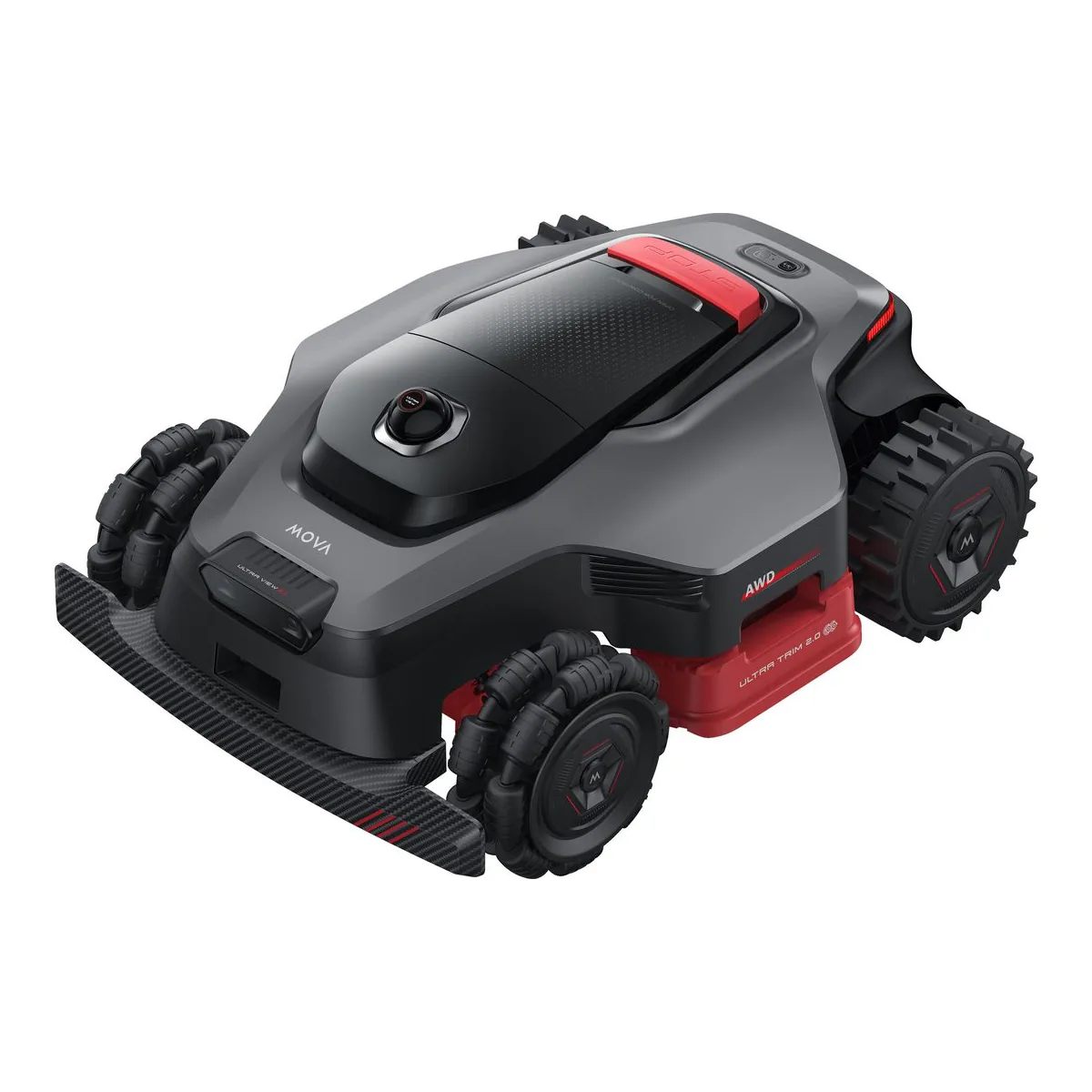
The 2000 AWD earns its place on a half acre lawn with any real slope or obstacle, on the strength of four hub motors documented for this AWD row alone; a plain 2000 in the same lineup is never shown carrying them, and one owner of that non-AWD machine says to skip it. The RTK-free navigation means there is no cell signal to lose either.
- Rated for a 0.5 acre lawn, mowing 0.2 to 0.25 acre per single charge
- Wire-free and RTK-free, navigating on 360 degree 3D LiDAR and AI dual vision alone
- Four 116W hub motors climb slopes up to 80 percent
- Detects and avoids more than 300 obstacle types, as small as 0.8 by 0.8 in, and climbs 2.4 in obstacles
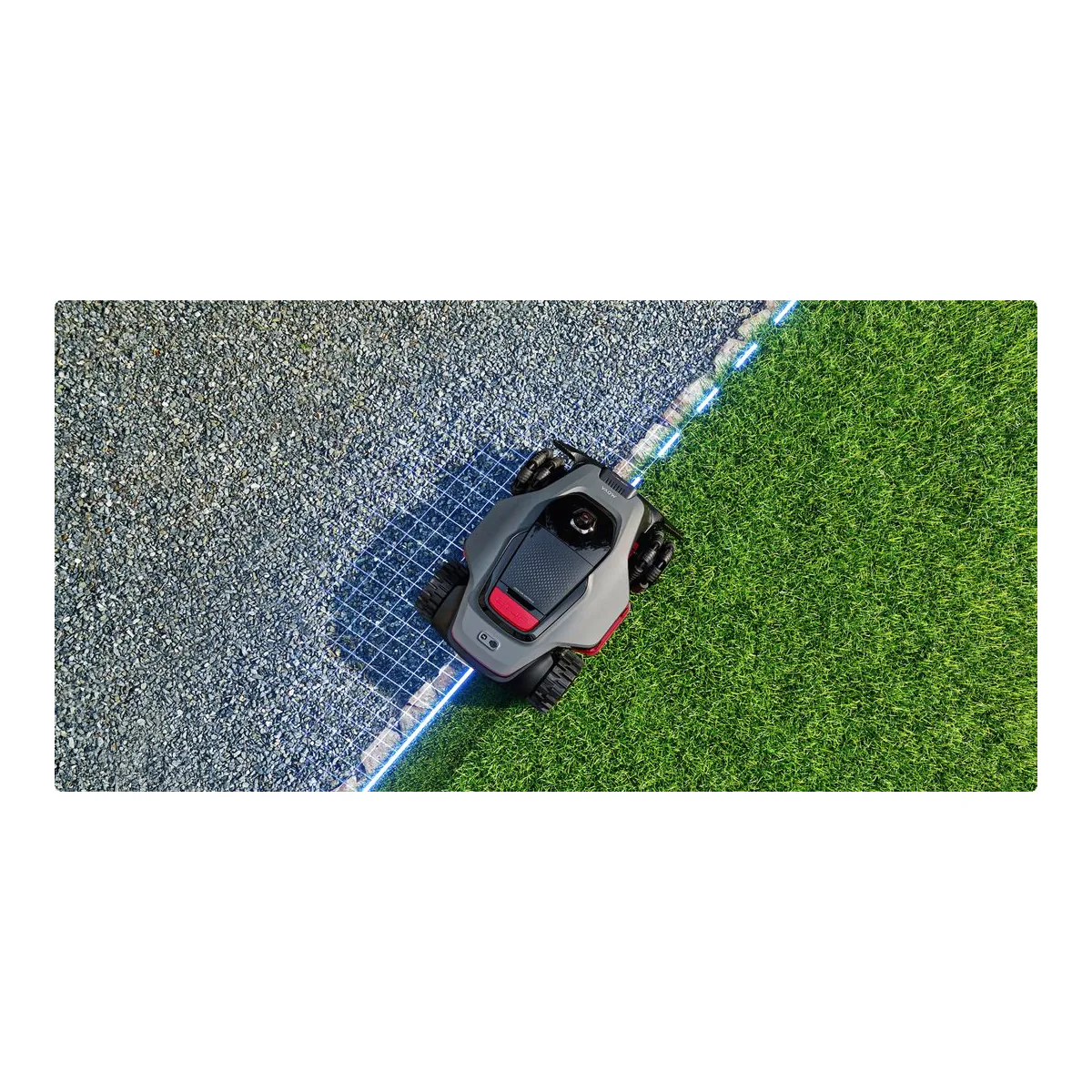
- UltraTrim keeps the gap between the cutting discs and the lawn edge under 1.2 in
- Manages up to 150 mowing zones across two independent maps
- 165 minutes of continuous operation per charge
We earn a commission on qualifying purchases through the links here, at no cost to you. It never decides what makes the list.
This shelf splits into two camps on how a wire free lawn mower actually finds its own boundary. Half of it puts an antenna or a cellular radio somewhere in the yard, trusting a signal from a satellite or a carrier and hoping the trees do not get in the way. The MOVA LiDAX Ultra 2000 AWD sits in the other camp, alongside a couple of ECOVACS's own GOAT models. It asks nothing of the sky or a cell tower, and maps the yard with a 360 degree 3D LiDAR and a pair of cameras instead. The boundary it holds is whatever those sensors saw on the mapping pass.
This MOVA LiDAX Ultra 2000 AWD review reads the manufacturer's own spec table, a fresh Amazon listing check, and the comments under owner videos that name the 2000 line specifically: the AWD version reviewed here and the non-AWD one it is compared against below, with the larger 3000 AWD rung above either left out. It joins the LiDAR-only half of our robot mower picks, as the simplest route on this shelf to a half acre lawn that still ships with all wheel drive.
MOVA LiDAX Ultra 2000 AWD, and why AWD is the whole page
Two MOVA robot mowers on this same product page share a name. There is the trap. MOVA sells a plain "Lidax Ultra 2000" alongside this AWD version, both rated for the same 0.5 acre, and the difference is the drivetrain: this one runs four 116 watt hub motors, one per wheel, where the plain 2000 does not. It is no spec sheet footnote. One owner who ran the non-AWD 2000 reports the casters kept snagging on landscape edging, it would not get close to the fence, it struggled on hills, tore up the grass, and regularly missed its own charging dock. His advice, in his own words, was to get the all wheel drive.
A spec sheet alone will not catch two products sharing a model number and a coverage rating, so read the AWD suffix in this name carefully. Basis: manufacturer documentation for the shared rating and this unit's four hub motors; the plain 2000's own drivetrain is inferred from the AWD naming and one owner's account below. No documented spec row for that SKU states it.
No RTK, no antenna, no signal to lose
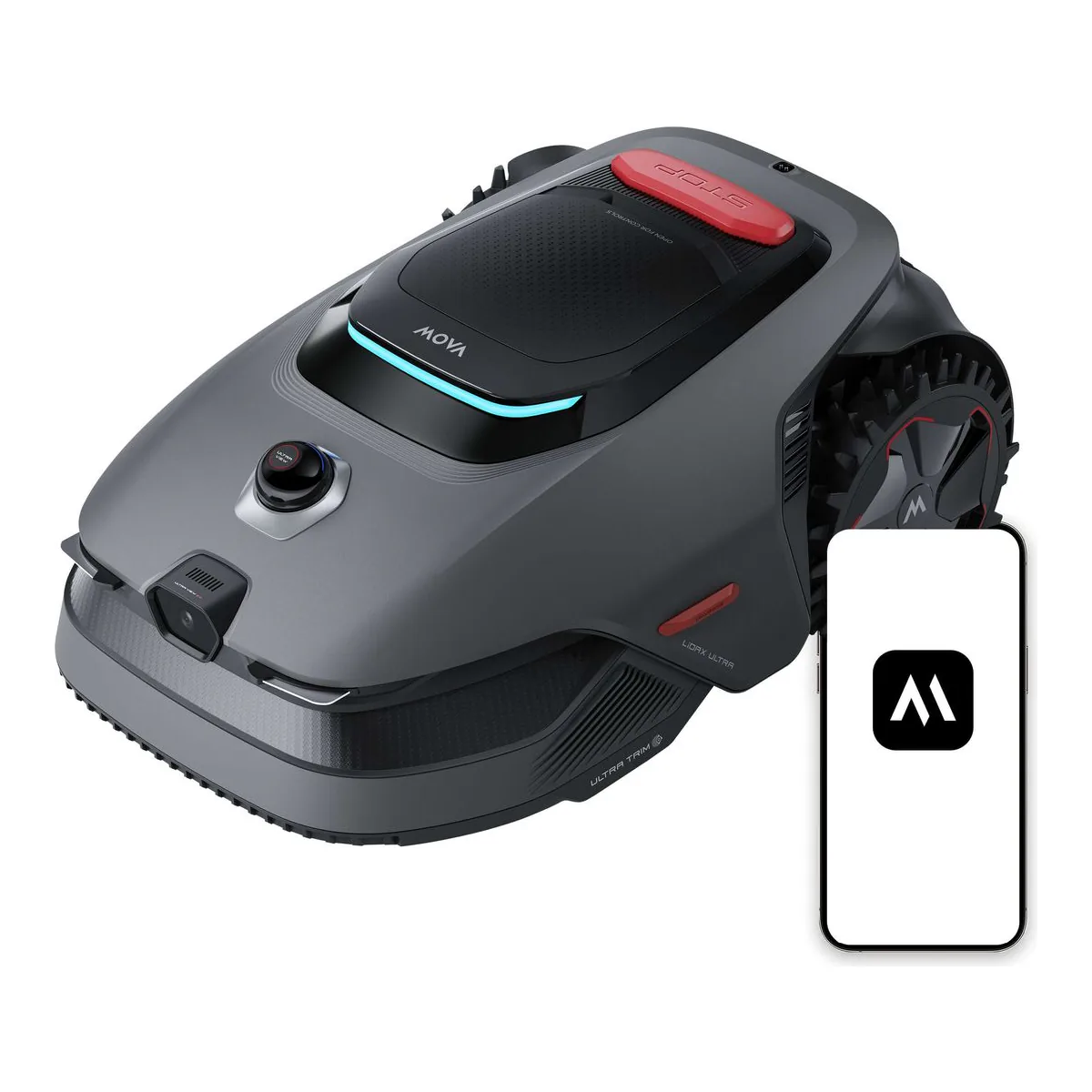
If an RTK free robot mower is specifically what you are after, MOVA built this one that way from the ground up. It is not a fallback mode. The navigation is LiDAR and AI dual vision alone. No stake to plant, no cellular RTK subscription, no antenna to lose line of sight under a tree. One owner reports it running fine on nothing but a mobile hotspot, which fits the design: the sensors do the positioning locally, and connectivity serves only the app. The fix on the boundary line never touches it.
Not every antenna-free design on this shelf is built the same way, though. The Segway Navimow X430 on this same shelf and WORX's Landroid Vision mowers, which run RTK Cloud on every rung, both skip a physical stake in the ground and still lean on RTK, with the correction arriving over a cell network or the internet. ECOVACS's own GOAT lineup runs both bets at once: the A2000 and A3000 navigate on LiDAR plus a camera, no RTK, the same camp as this MOVA, while a separate model in the same family plants an actual antenna instead.
MOVA's LiDAR and camera pair skip the whole category of failure where a weak signal, and no mechanical fault, is why the mower stops trusting its own map. Two ECOVACS models share that property, so MOVA does not own it alone.
Basis: manufacturer documentation for the navigation architecture, one owner account for the hotspot behavior.
The rating is 0.5 acre. The charge does not cover that in one pass.
MOVA's own spec table lists two different numbers and it would be easy to read them as one. The mapping area is rated at 0.5 acre, but the area it actually mows on a single charge is 0.2 to 0.25 acre, using the 165 minute runtime the same table states. A half acre lawn on this machine is two to three charge cycles, not one sitting, and measuring the lawn against what a single charge covers tells you whether that matters.
Basis: manufacturer documentation for both figures.
What the sensors catch, and the question nobody answered
MOVA states the AI dual vision and LiDAR pairing detects more than 300 obstacle types, down to something as small as 0.8 by 0.8 inches, which is closer to a golf ball than a football. The sensor housing up front sits low, between the front wheels, close enough to the ground to catch what is a few feet ahead. It is not scanning the horizon.
What the cached comment threads do not settle is how it handles a shared driveway between two mapped zones. An owner asked that very question, how the mower gets from one side of a split lawn to the other when a driveway sits between them, and no video or comment thread in our sourcing answers it. Replies are not something we collect on this platform, so a real answer may exist where we cannot see it. If your property needs that crossing, confirm it before you buy.
Basis: manufacturer documentation for the detection figures.
Edges, under UltraTrim
MOVA calls the edge system UltraTrim, and its own current spec table states what it is built to do: the cutting discs extend outward to hold the gap between the blade and the lawn edge under 1.2 inches. Cutting height itself adjusts from 1.2 to 3.9 inches, set from the app; there is no dial on the deck. Whether that 1.2 inch gap holds on a real lawn, away from the flat demo patch on a spec sheet, only a season of ownership actually tests.
Basis: manufacturer documentation.
Who should buy the 2000 AWD, and who should not
Buy it for a half acre lawn with real slope, a fence line, or garden beds the mower has to work around, where the four hub motors and a tighter edge cut earn their keep. Skip it if your lawn is flat, open, and comfortably under a quarter acre on one charge: the plain non-AWD 2000 carries the same rated coverage, and four hub motors are buying traction a flat yard will never ask for. Skip it too if a driveway splits your lot into zones the mower has to cross unattended, until MOVA or an owner actually answers how that crossing works.
Dual maps and up to 150 zones cover most multi-area lawns without that question. What is left open is something every cached source here agrees is real: a machine that trusts its own eyes over a signal from anywhere else. That is either the whole reason to buy it or the whole reason to wait for a longer track record, depending on how much you trust a camera over a cell tower.
A closer look at the MOVA LiDAX Ultra 2000 AWD
Made up your mind?