Best robot mower: picks for slopes, size and setup
The best robot mower depends on your slope, your acreage and whether a wire is worth avoiding. Six picks, each ranked for one real constraint that decides it.
We earn a commission on qualifying purchases through the links here, at no cost to you. It never decides what makes the list.
The picks
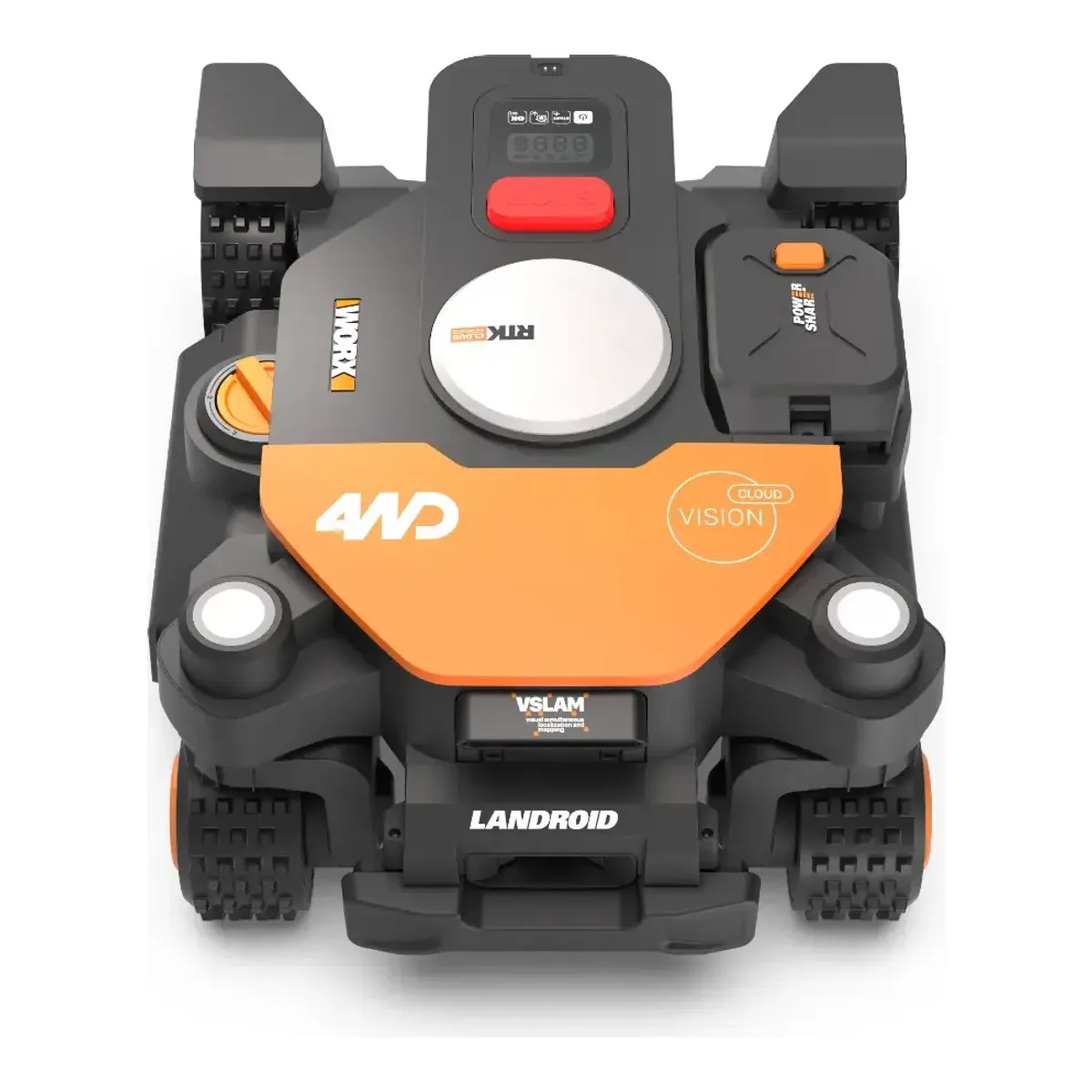
Best robot mower overall
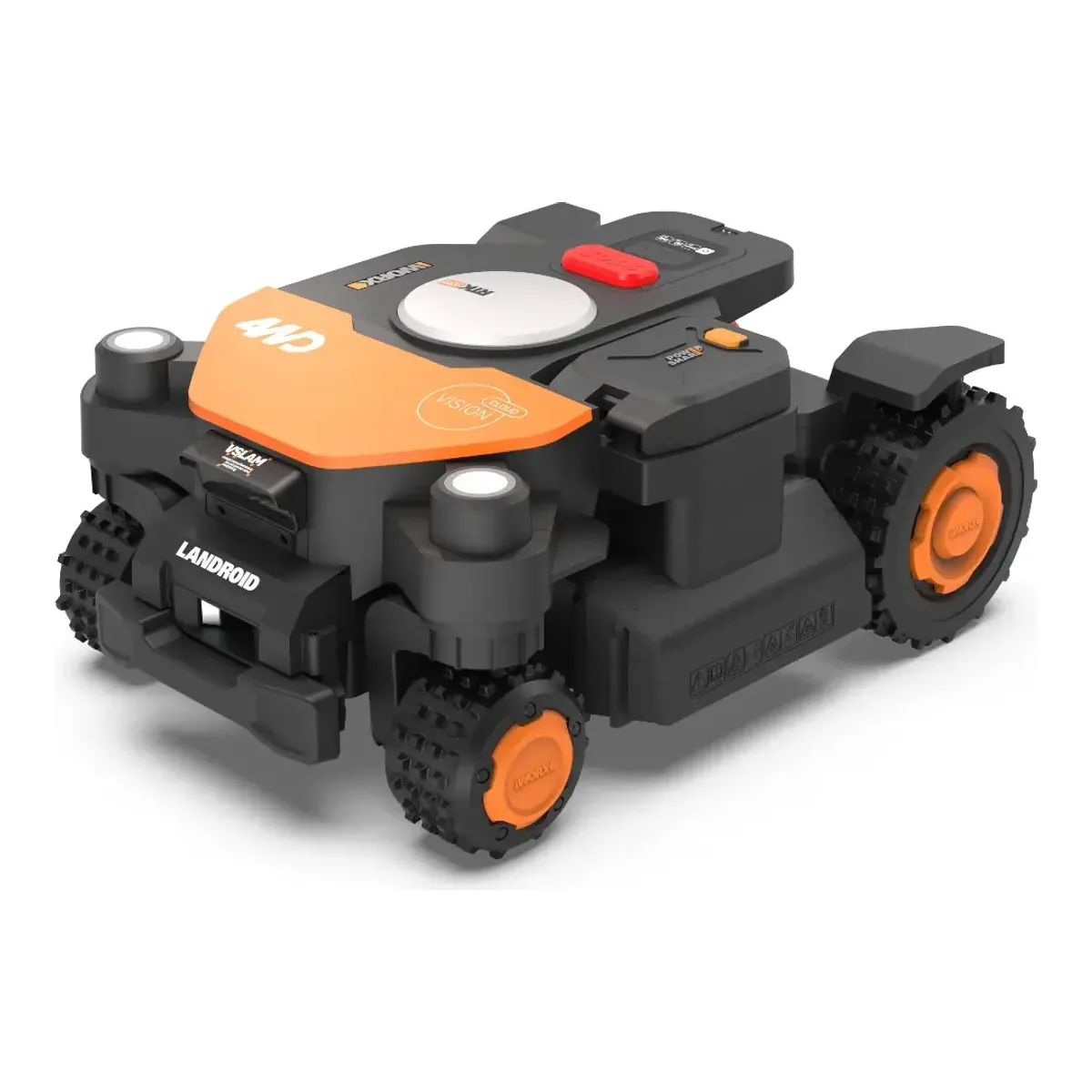
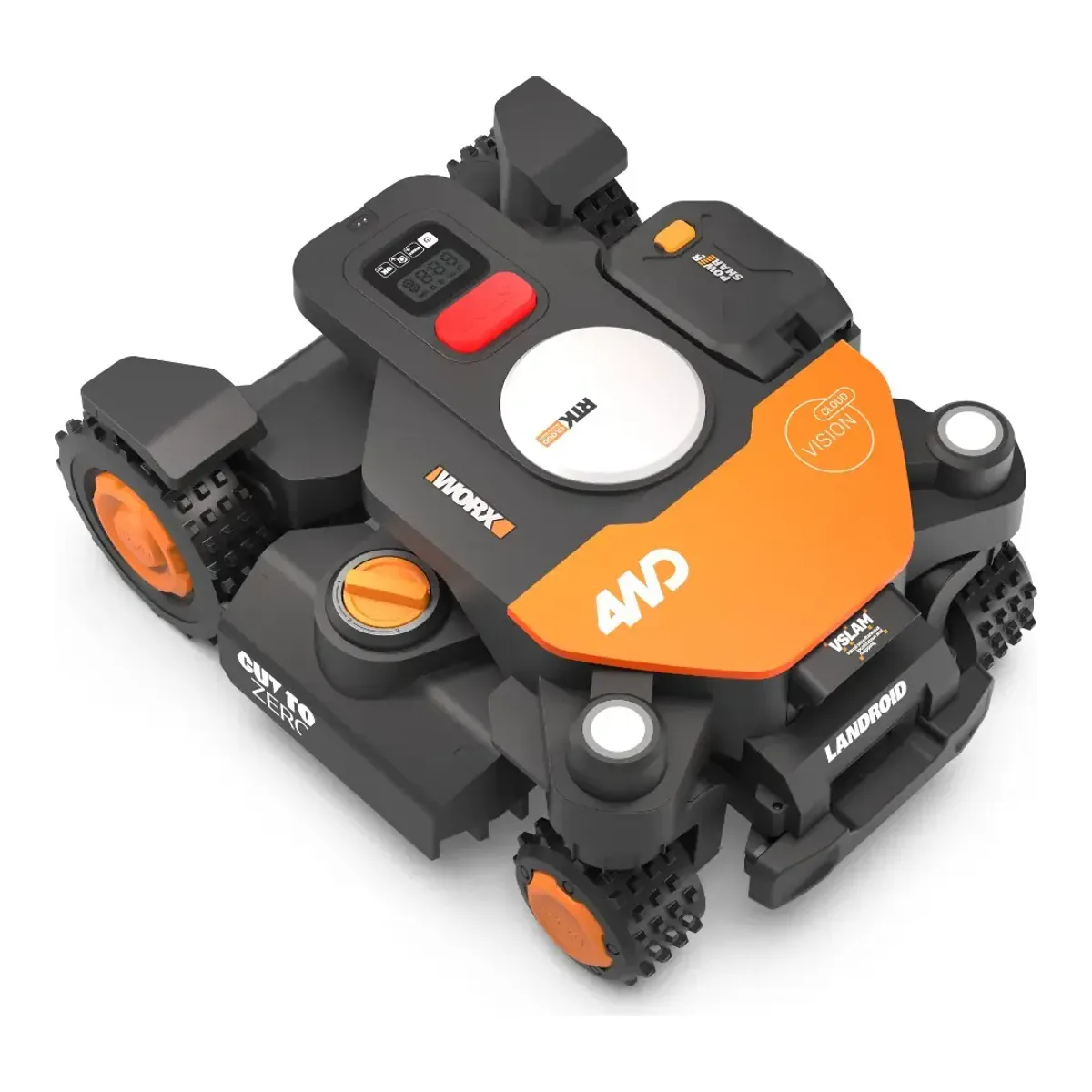
WORX Landroid Vision Cloud 4WD WR342
Four wheel drive and an 84 percent slope rating on a half acre lawn, wire-free from a cloud RTK signal with no physical antenna.
- Recommended for lawns up to 1/2 acre
- Four wheel drive with a terrain adaptive chassis and front wheel steering
- RTK Cloud navigation plus V-SLAM, no on-site antenna required
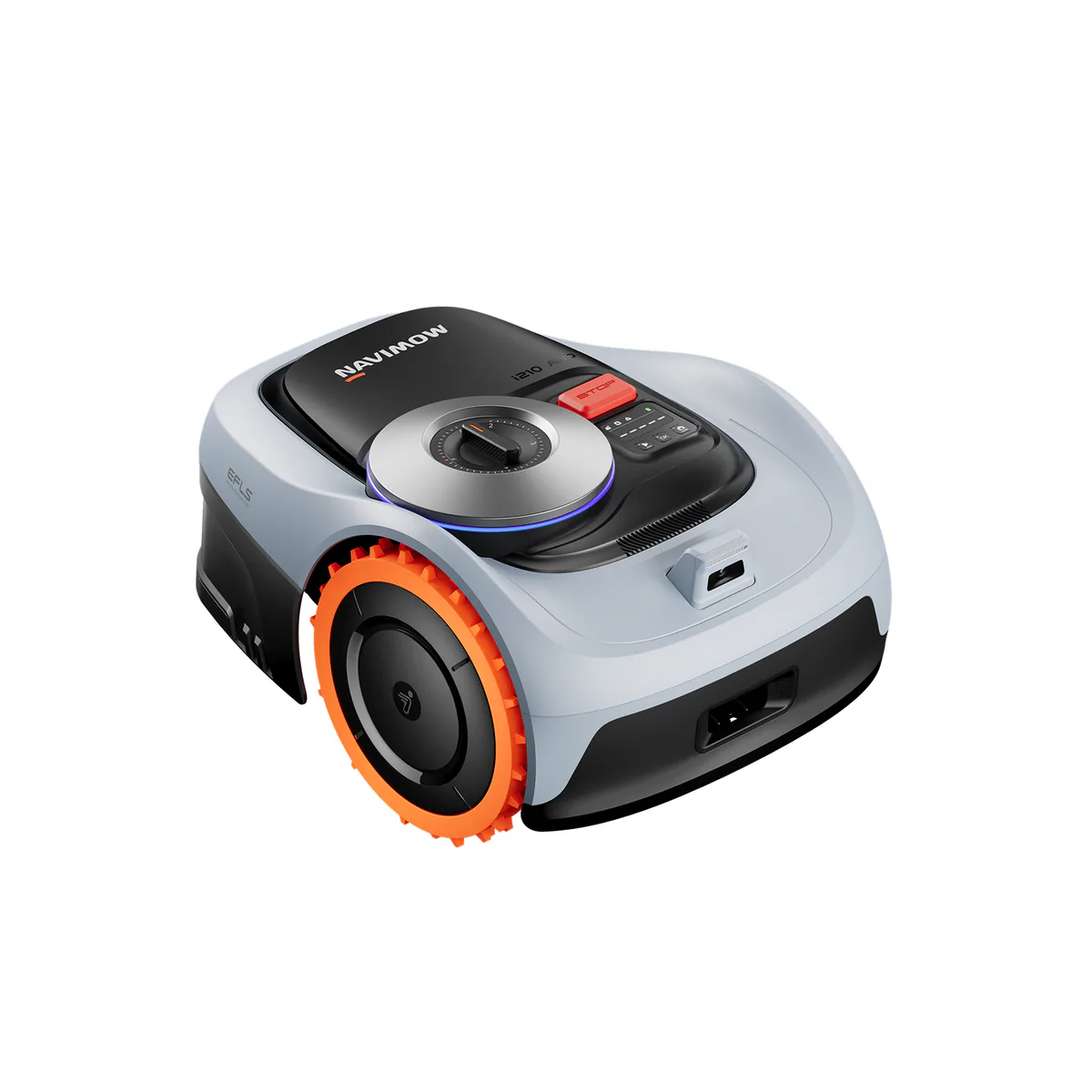
Best all wheel drive robot mower for a small yard
Segway Navimow i210 AWD
All wheel drive with off-road wheels and zero-turn rear steering for a quarter-acre yard that is bumpy rather than big, with VisionFence sorting more than 150 obstacle types.
- Rated for 0.25 acre of lawn, with a daily mowing area of up to 0.37 acre per 24 hours
- EFLS Network RTK plus vision positioning; the box ships a GNSS antenna and installation kit for use where Network RTK coverage is not available
- All wheel drive with off-road wheels and zero-turn rear steering, climbs slopes up to 45 percent (24 degrees)
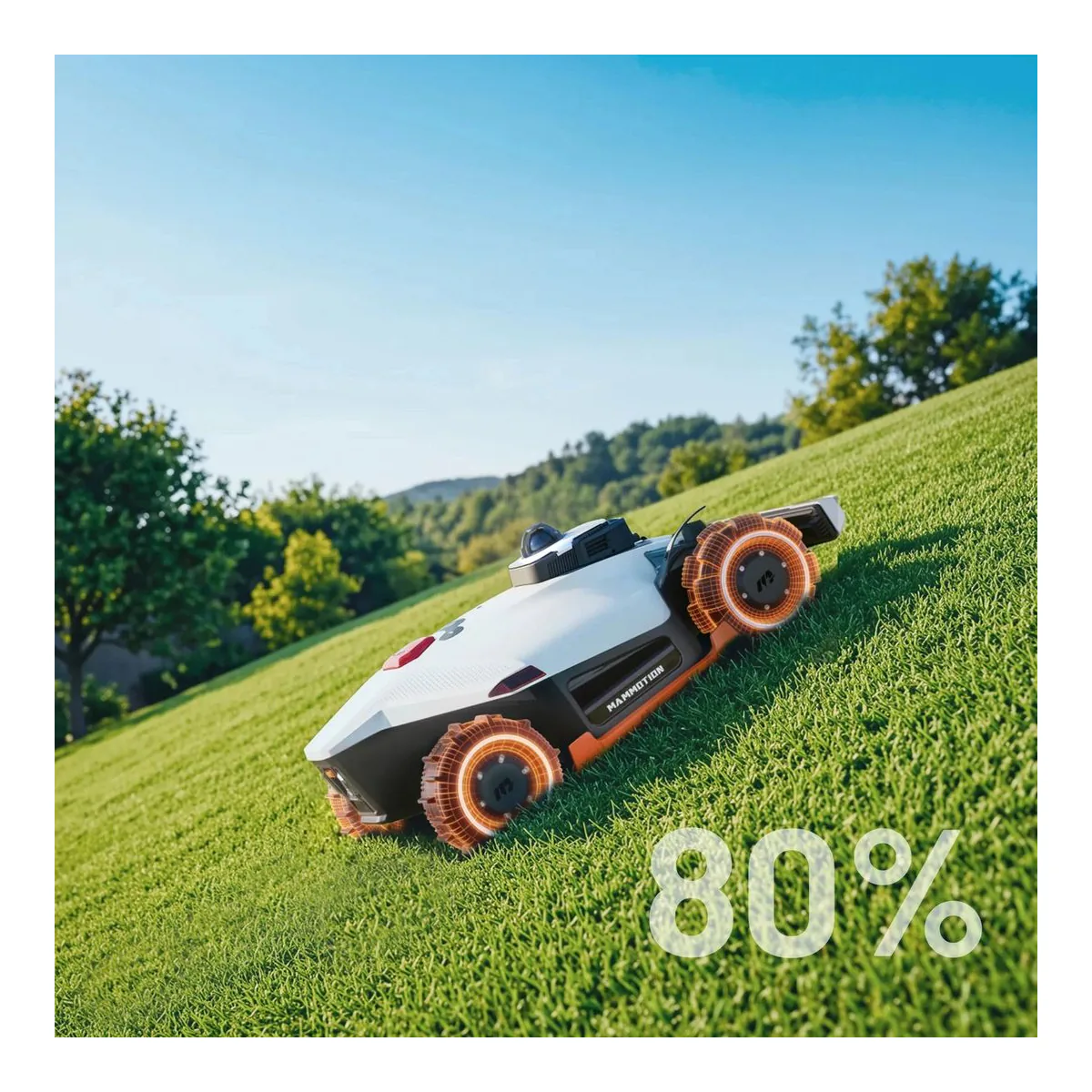
Best robot mower for a large yard
Mammotion LUBA 3 AWD 5000
The widest rated lawn here at 1.25 acres, mowed in sessions of up to 0.42 acre, so the full lawn is at least three charge cycles rather than one.
- Rated for 1.25 acres of lawn; Mammotion's FAQ gives up to 0.42 acre per charge for the LUBA 3 line
- All wheel drive, climbs slopes up to 80 percent (38.6 degrees)
- 360 degree LiDAR, NetRTK and AI vision; the US box includes an RTK reference station, which the manual makes optional where 4G is stable
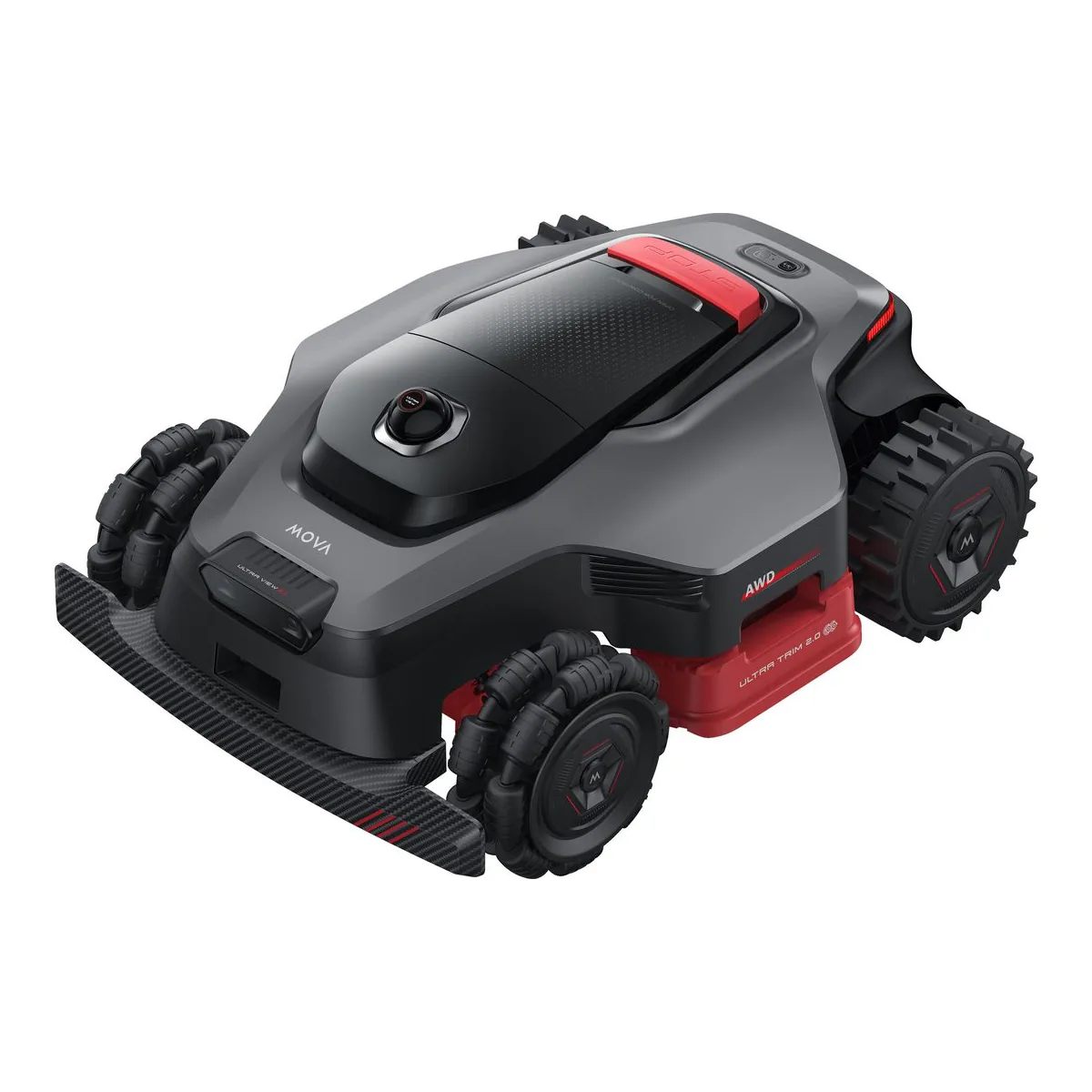
Best wire-free robot mower
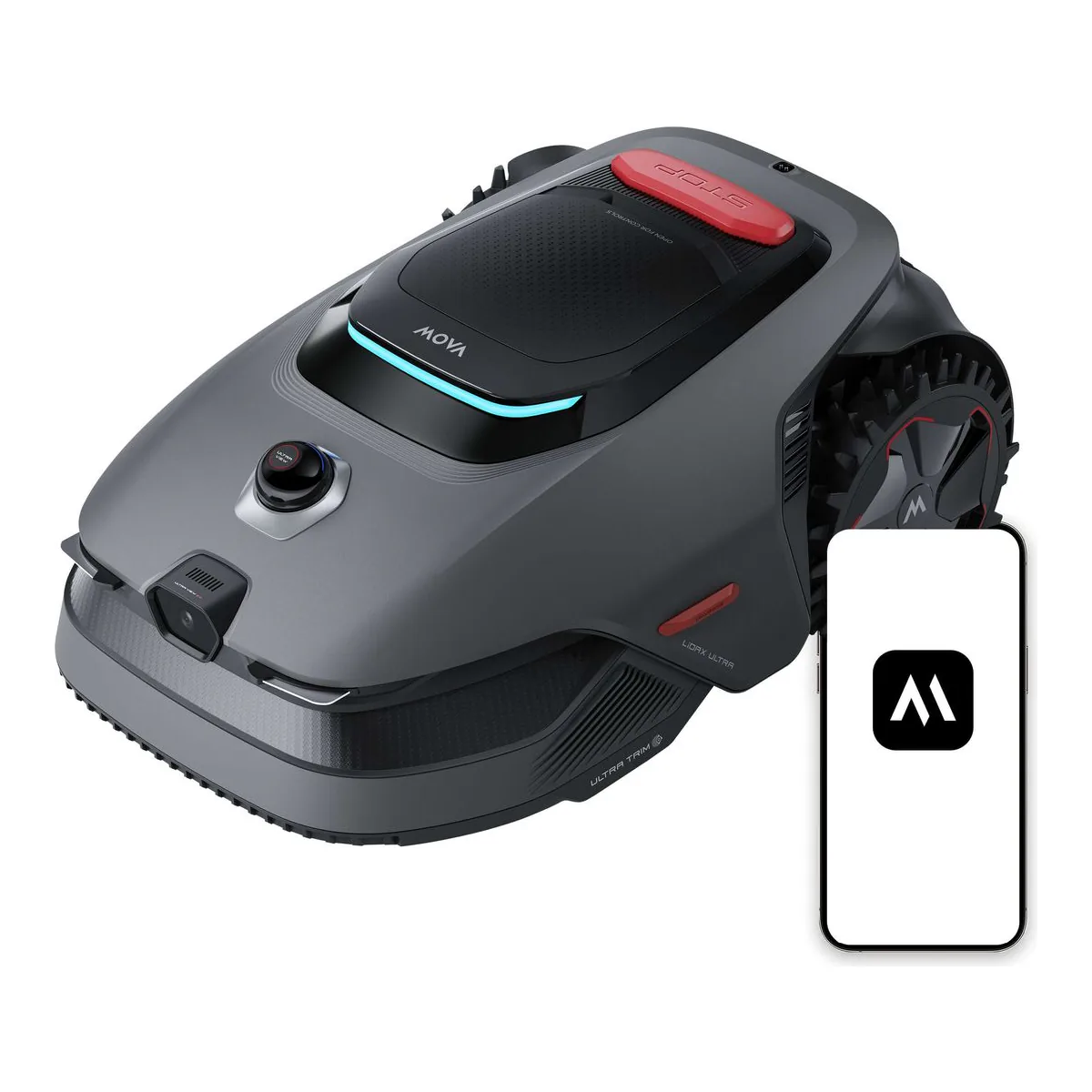
MOVA LiDAX Ultra 2000 AWD
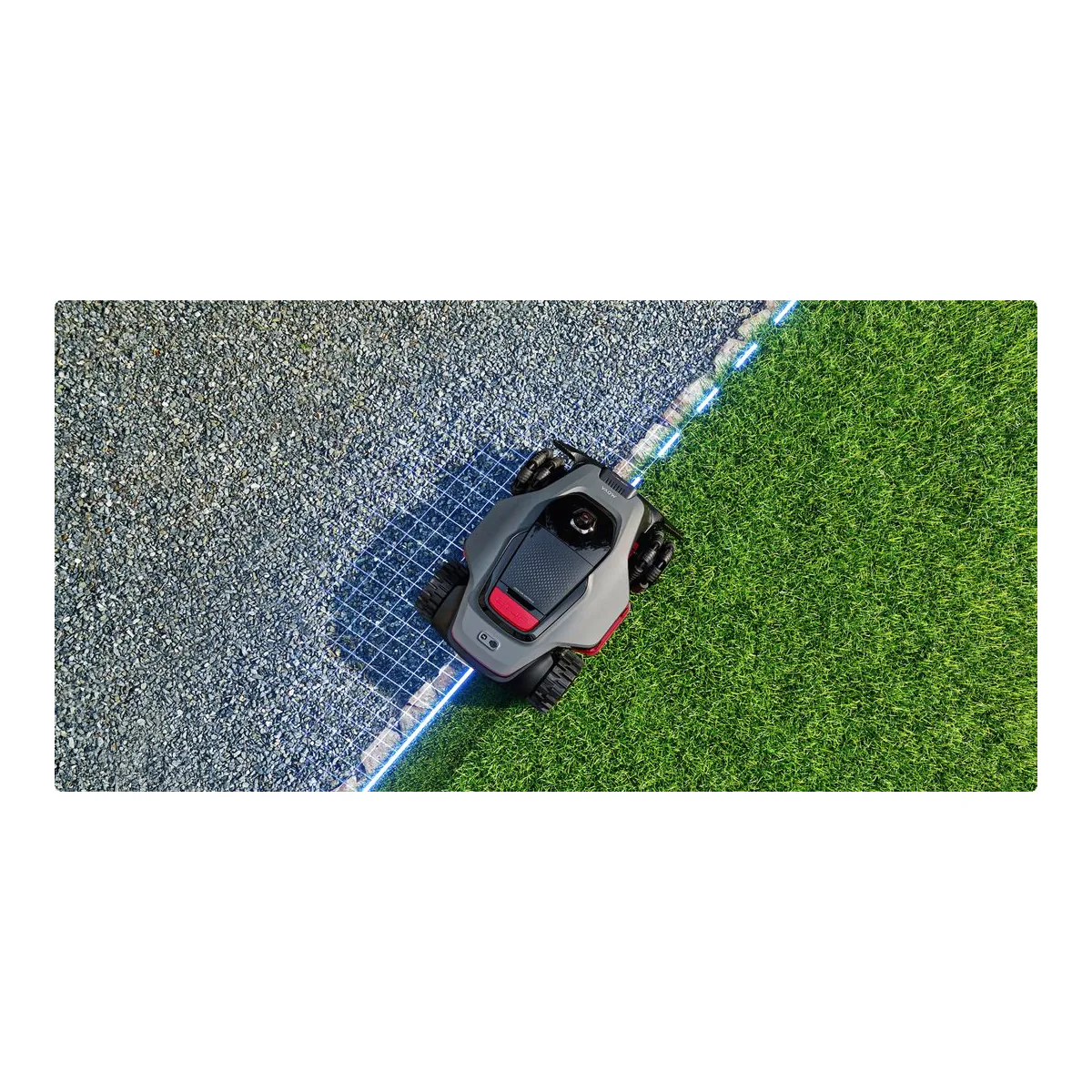
Navigates on LiDAR and AI vision alone, so it is not gambling on a positioning service staying up.
- Rated for a 0.5 acre lawn, mowing 0.2 to 0.25 acre per single charge
- Wire-free and RTK-free, navigating on 360 degree 3D LiDAR and AI dual vision alone
- Four 116W hub motors climb slopes up to 80 percent
Best robot mower for rough terrain
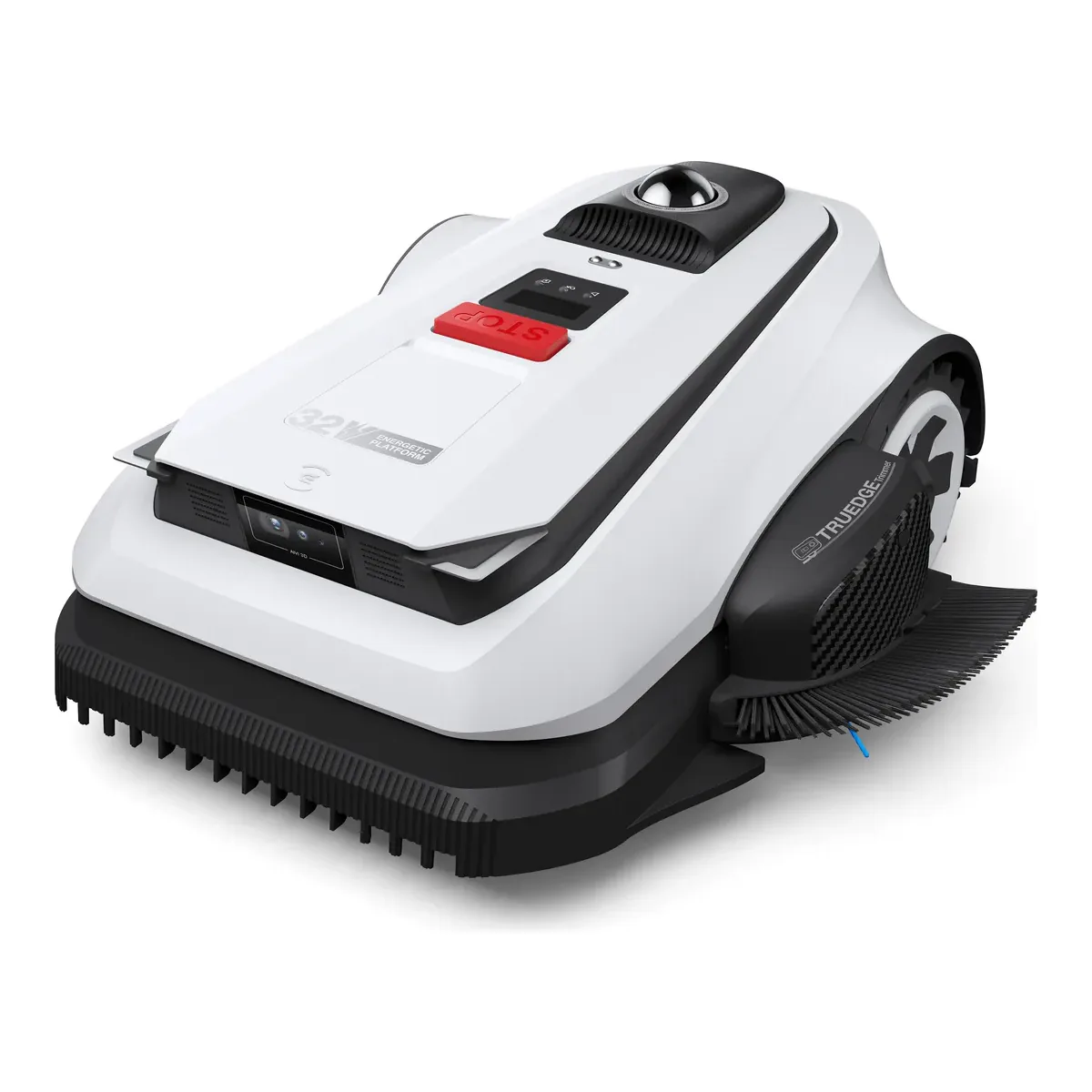
ECOVACS GOAT A2000 LiDAR PRO
A built-in edge trimmer and a published ability to hold a line 1.97 inches from a flagged obstacle, for a busy lawn more than a steep one.
- Recommended for lawns up to 1/2 acre
- Dual navigation with a 360 degree LiDAR, a 3D ToF sensor and an AI camera
- Detects and avoids more than 200 obstacle types from 1.97 in away
Best budget robot mower
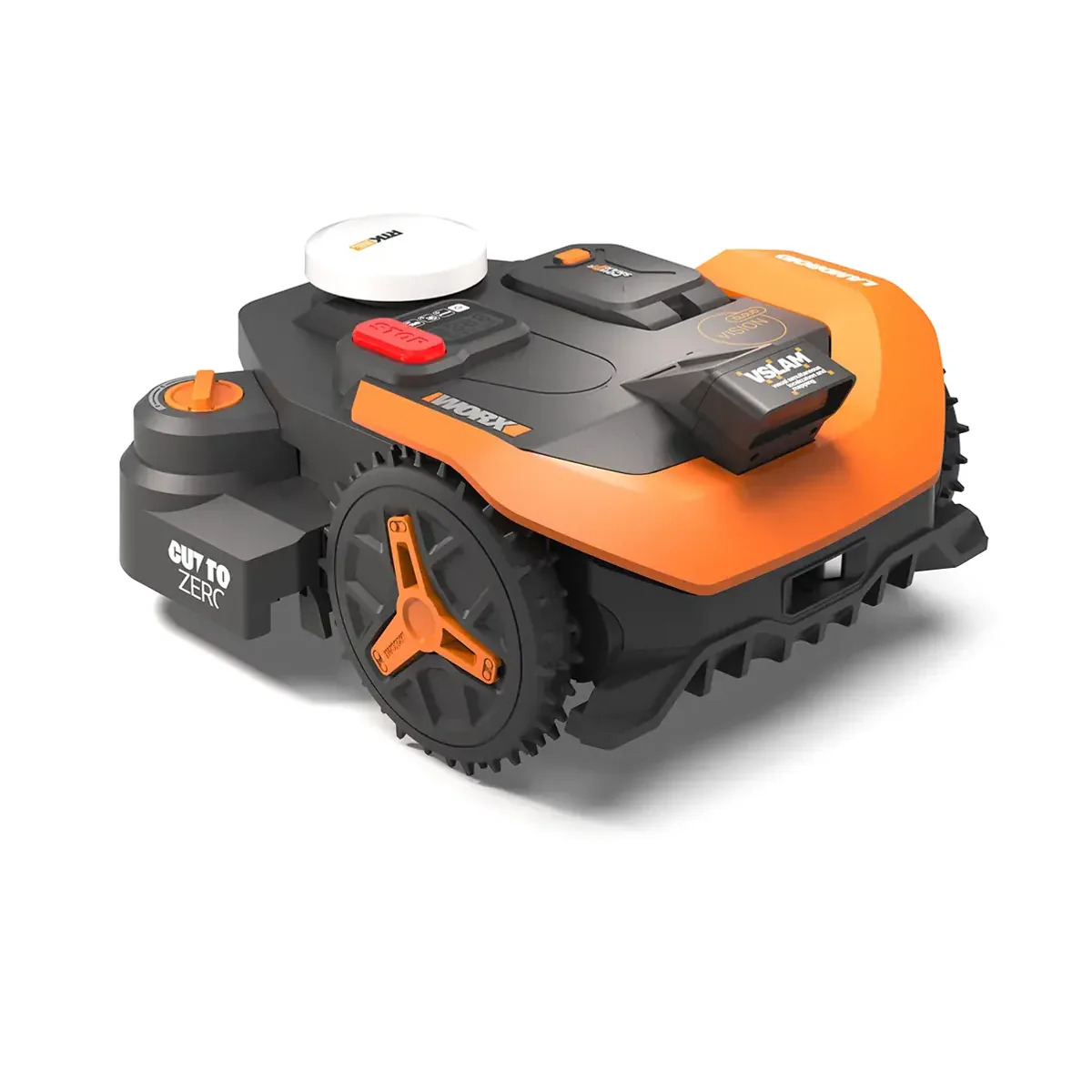
WORX Landroid Vision Cloud WR320
The same wire-free vision navigation as the WR342, without the 4WD chassis its sibling is named for, for a flatter half acre lawn.
- Recommended for lawns up to 1/2 acre
- RTK Cloud navigation plus V-SLAM, no on-site antenna required
- Electric cutting height adjustment from 1.57 to 3.54 in
The highest number on any single spec does not make the best robot mower. The match does: one number lined up against the constraint your yard actually has, whether that is how steep it gets, how much of it there is, or whether you want a wire in the ground at all. Get that match wrong and a mower with excellent reviews still struggles on your particular lawn. The spec sheet does not know your yard.
These six are ranked that way. All six are wire-free, which is where this shelf has moved: instead of burying a perimeter wire, they read the yard with some mix of RTK positioning, LiDAR and a camera, then hold a map of it. What separates them is which constraint they were actually built around.
How these picks are built
Every spec below is read off the manufacturer's own product page or manual, with the live listing checked to confirm each ASIN resolves to the model its row names, six models across five brands. One exception belongs in the open: ECOVACS publishes no coverage figure for the GOAT, so its half acre comes off the listing itself. One pick carries a counted owner record, eight people across the Landroid Vision Cloud 4WD line in our WR342 review, each read individually and never counted off a cluster header. The MOVA adds a handful of hand-read owner comments and the only named test here run on the exact model picked. The WORX test covers the WR341E sibling instead. The other four rest on documentation, so nothing outside those two claims an hours-in-the-field verdict.
The whole shelf on one axis
| Spec | WORX WR342 | Navimow i210 AWD | LUBA 3 AWD 5000 | MOVA LiDAX Ultra 2000 AWD | GOAT A2000 LiDAR PRO | WORX WR320 |
|---|---|---|---|---|---|---|
| Coverage | 0.5 acre | 0.25 acre | 1.25 acres | 0.5 acre | 0.5 acre | 0.5 acre |
| Boundary method | Wire-free, RTK Cloud + V-SLAM | Wire-free, Network RTK + vision | Wire-free, LiDAR + NetRTK + AI | Wire-free, LiDAR + AI, no RTK | Wire-free, LiDAR + ToF + AI | Wire-free, RTK Cloud + V-SLAM |
| Max slope | 84% (40°) | 45% (24°) | 80% (38.6°) | 80% | 50% work area, 20% at boundary | 30% (17°) |
| Cut height | 1.57 to 3.54 in | 2 to 3.6 in | 1.0 to 2.7 in | 1.2 to 3.9 in | 1.18 to 3.54 in | 1.57 to 3.54 in |
| Obstacle avoidance | Stereo AI, unnamed count | 150+ types | 300+ types | 300+ types | 200+ types, 1.97 in | Stereo AI, unnamed count |
Basis: manufacturer documentation, except the GOAT's coverage, which ECOVACS does not publish and which comes off the live listing. Two figures are worth reading twice. The GOAT's slope rating drops from 50 percent in the open lawn to 20 percent right at the boundary line, the boundary-versus-work-area gap the slope page warns is where a mower actually fails. And WORX states no specific obstacle count for its Vision Cloud line, only that it treats anything that is not grass or leaves as an obstacle. That is a different design choice from a counted list, and no weaker for it.
Best robot mower overall: WORX Landroid Vision Cloud 4WD WR342
Buy this one if your yard is an ordinary half acre with at least one slope or rough patch you do not want to think about twice.
Four wheel drive and a terrain-adaptive chassis carry an 84 percent slope rating, the highest on this list. Setup is a cloud RTK signal plus a stereo camera, with no antenna on your roof or pole in the lawn, and the cutting height is set in the app. It does want Wi-Fi at the dock: the tester who ran the WR341E sibling found that the charging station needs a signal and the whole yard does not.
Skip it if your lawn runs well past half an acre, because the coverage rating is built for a smaller footprint than the LUBA below. WORX sells bigger rungs of the same chassis, compared rung by rung on our WORX robot lawn mower lineup page.
Best all wheel drive robot mower for a small yard: Segway Navimow i210 AWD
A quarter-acre lot that is bumpy, tight or gently sloped is a different problem from a big open one, and this is the mower built for it. All wheel drive rides on off-road wheels with zero-turn rear steering, so it turns in its own length and keeps traction over roots and ruts a two-wheel-drive deck spins on. Its 45 percent slope rating is plenty for the grade a small lot usually has. VisionFence sorts more than 150 obstacle types, and the rated area is 0.25 acre with up to 0.37 acre mowed across a 24 hour day. Check the coverage at your own address first. Segway conditions its own antenna-free claim on Network RTK coverage being available where you are, and the box still ships a GNSS antenna and an installation kit for the addresses it does not reach. Skip it if your lawn is large or steep, because the coverage and the climb both stop well short of the picks built for those.
Best robot mower for a large yard: Mammotion LUBA 3 AWD 5000
The widest rated lawn on this shelf at 1.25 acres. Read it beside the figure Mammotion puts in its own FAQ: up to 0.42 acre mowed per charge, on a battery its manual rates at 180 minutes of mowing (the product page says 215). So a full 1.25 acres is at least three charge cycles for this mower, never one. Our Mammotion LUBA 3 AWD review covers the 40 percent edge slope and the turf it tears on tight turns.
All wheel drive still climbs an 80 percent grade, and the mower manages up to 50 mowing zones, the figure Mammotion's own FAQ gives against a marketing panel on the same page claiming 100, so a lawn in several disconnected pieces still fits on one map. Mammotion prints 41 lbs for the LUBA 3 AWD line as a whole, with no per-rung figure, and does not say whether that is with the battery in. Both WORX figures do: the WR342 above is 37.3 lbs and the two wheel drive WR320 at the bottom of the list is 31. Traction costs weight.
The service terms need reading twice. Mammotion ships three years of free 4G data and asks for a subscription after that. What becomes of the iNavi positioning it rides on is not settled on its own page: one panel folds iNavi into that same three year window, another promises it free for the lifetime of the product, and the FAQ sides with the second. It is also described as working without a physical base station, though the same page's parts list names an RTK reference station, antenna and ground pile in this mower's box. Plan on planting something regardless of what the service itself needs.
Skip it if your lawn is half an acre or less, since the smaller picks here cover that with room to spare. Mammotion itself sells a 0.75 acre rung between this one and the half acre machines; none of the six picks here is that rung. WORX jumps straight from half an acre to a full one.
Best wire-free robot mower: MOVA LiDAX Ultra 2000 AWD
Every mower here is wire-free, and two of them hold position without RTK as well. This one pairs that independence with the rest of the sheet. It maps on 360 degree 3D LiDAR and AI dual vision alone, so a property with a weak cellular signal or a spotty view of the sky is not gambling on a positioning service staying up. All wheel drive still handles an 80 percent grade against the 50 percent the other LiDAR-only pick manages. Read its half acre as a map, not a sitting: MOVA rates 0.2 to 0.25 acre per charge, so a full one is two or three of them. Dual maps plus 150 mowing zones cover a front and back yard as two properties from one mower, though MOVA's own setup notes a second charging station for the second map, so a detached yard may want a dock of its own.
Skip it if you want your mower to take its position from an RTK network, the approach four of these six use, and not from its own sensors. Both camps claim centimeter-level precision, and what actually differs is whether a service has to be up.
Best robot mower for rough terrain: ECOVACS GOAT A2000 LiDAR PRO
The GOAT pairs a 360 degree LiDAR with a 3D time-of-flight sensor and an AI camera, and what comes out of it is the tightest obstacle distance published for any of the six: a stable line as close as 1.97 inches from something it has flagged. Segway publishes a 1 meter berth for the Navimow, and the other four publish no distance at all. A built-in TruEdge trimmer finishes the strip a mower normally leaves for a string trimmer. That combination is built for a yard busy with toys, beds and furniture. A steep yard is a different problem. The mower is IPX6, which is what ECOVACS points at when it says cleaning is a rinse, and the station is IPX4, rated for splashing and not a hose. Skip it if your slope is the problem, not the clutter: its rating drops to 20 percent right at the boundary, the lowest figure on this list for the exact spot where slope costs a mower its footing.
Best budget robot mower: WORX Landroid Vision Cloud WR320
The half acre rung of the same Vision Cloud lineup as the WR342 above, and the one WORX does not put 4WD in the name of. It is not the bottom of that line either, since WORX lists a quarter acre Vision Cloud under it. It reads the same cloud RTK signal and the same stereo AI camera, and it still covers a half acre lawn with electric cutting height from 1.57 to 3.54 inches. What it gives up is the climbing. A 30 percent slope rating is the lowest work area figure of any pick here, against 84 percent for the model whose name carries the drivetrain. Skip it if your yard has any real grade to it, because the WR342 above is the same setup experience for a chassis built to actually climb.
What decides it before any spec sheet does
Measure the lawn itself before comparing coverage numbers. A rated area is a best case on flat open turf, and how much of your lot is actually mowable grass usually settles which coverage tier you need before a single review does. Then walk the slope with the worst grade on it, on a wet morning if you can, because that is the condition every rating here quietly assumes away. And if the lawn is split by a driveway or a path, how the mower finds its own way around matters more than any award here. A wire-free mower still needs a legible route between the pieces of a yard that is not one open rectangle.
None of that is on the spec sheet. It is the reading you do before the sheet means anything.