Aetherion Max vs Hisense PX3-PRO: games or 3D
Buy the Aetherion Max if a console or a PC plugs into it, since it supports VRR and measured about half the PX3-PRO's 1080p/60 lag on ProjectorCentral's bench. Buy the PX3-PRO if 3D discs matter to you: ProjectorCentral saw no noticeable crosstalk on it, and PCMag found the Max's 3D crosstalk far too distracting.
What decides it: Whether a console drives it, or 3D discs do.
We earn a commission on qualifying purchases through the links here, at no cost to you. It never decides what makes the list.
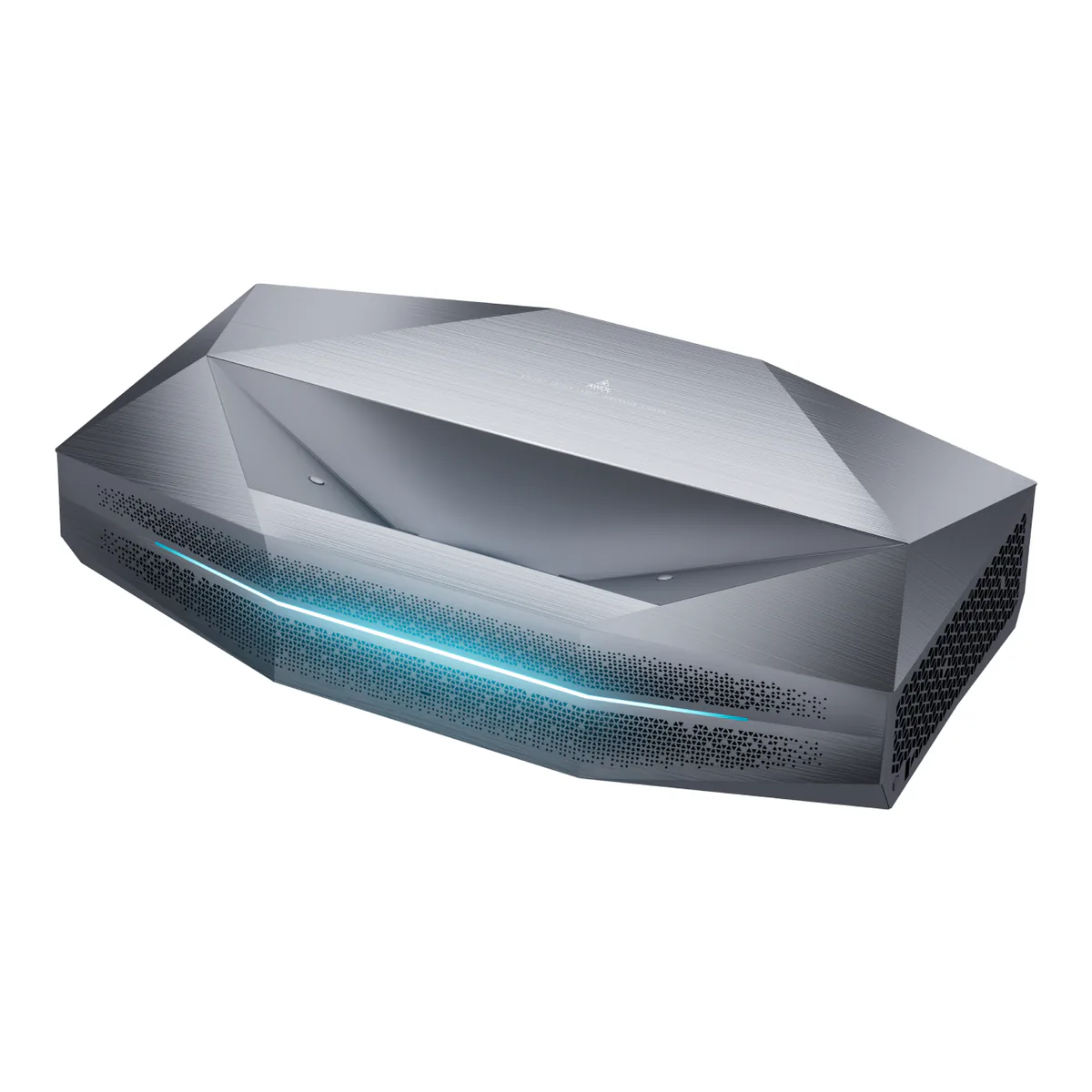
AWOL Vision Aetherion Max
Pick this if a living room where a console or gaming PC is the main source, with three HDMI 2.1 inputs, VRR and lag in the low teens at 60Hz, and a screen of 120 to 130 inches.
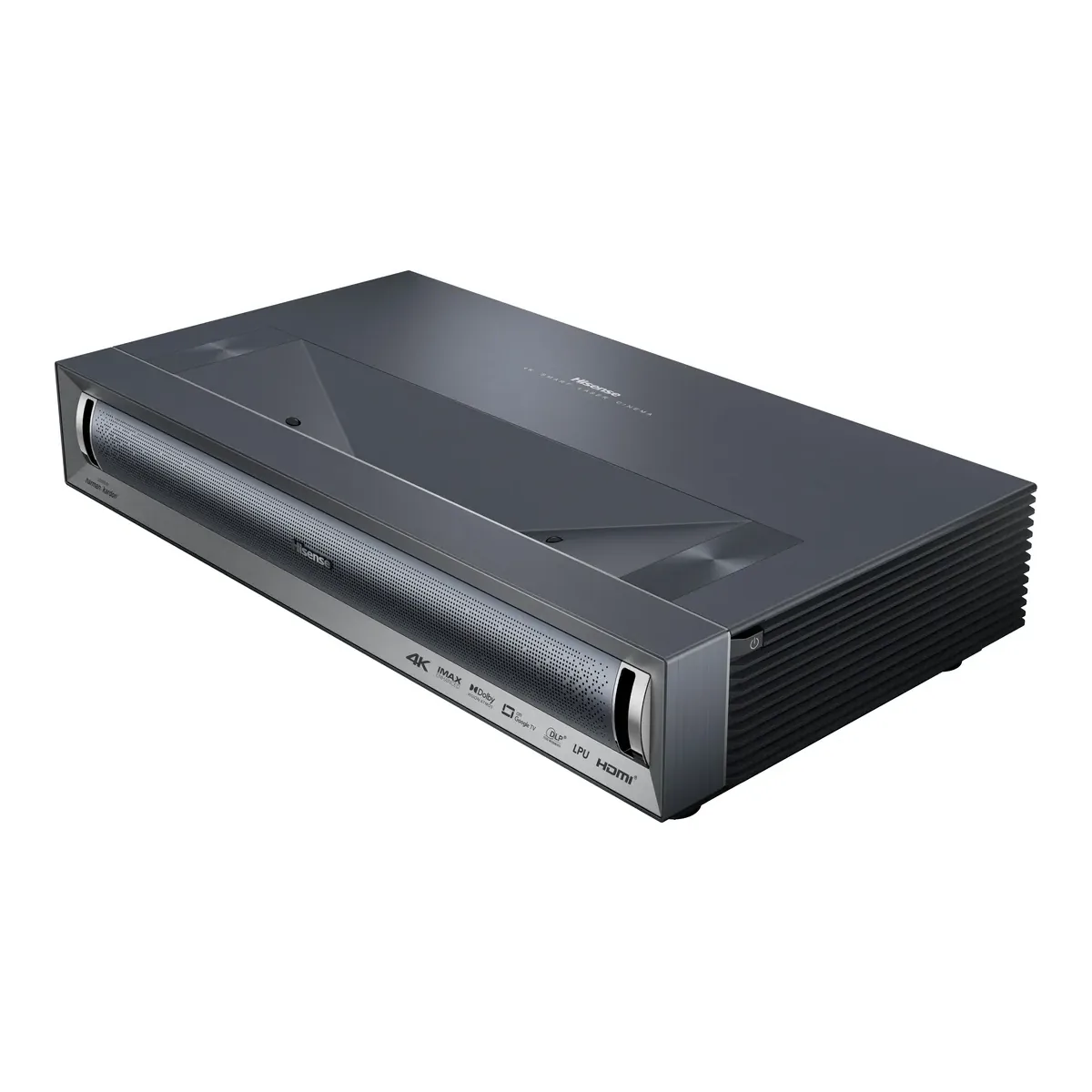
Hisense PX3-PRO
Pick this if anyone with a shelf of 3D Blu-rays and active glasses, who mostly watches films on it and has no console that needs VRR.
| AWOL Vision Aetherion Max | Hisense PX3-PRO | |
|---|---|---|
| Throw ratio | 0.2:1 | 0.22:1 |
| Distance for 100 in | 6.2 in, screen to projector back | 8.5 in, projector back to wall |
| Brightness (ANSI or ISO) | 3,300 ISO lumens | 3,000 ANSI lumens |
| Light source | Triple laser, red, green and blue | Triple laser, red, green and blue |
| Native resolution | DLP 0.47 in DMD, 4K by pixel shift | DLP 0.47 in DMD, 4K by pixel shift |
| Screen it needs | None bundled on this listing | Hisense ALR screen, sold separately |
| Audio out | 2x25W plus 2x20W, eARC on HDMI 2 | Harman Kardon, 50W, eARC on HDMI 3 |
Plug a console into each and the difference shows before the picture does. On the AWOL Aetherion Max vs Hisense PX3-PRO question, ProjectorCentral's lag readings carry most of the answer: 13ms at 1080p/60 on the AWOL, 25ms on the Hisense, both in their gaming modes. The PX3-PRO has no VRR, and RTINGS calls its 60Hz lag "a tough sell for console gamers".
The rest is closer than the spec sheets make it look. Both are red, green and blue triple lasers on a 0.47 inch DLP chip shifted to 4K, both ultra short throw, both Google TV, and they weigh 19.3 lb and 19.8 lb. Where they part is gaming, contrast, sound and 3D. We read the manuals and spec sheets for both, ProjectorCentral's instrumented reviews of each, PCMag's lag tests on the Max, RTINGS on both and ProjectorReviews on the AWOL.
Aetherion Max vs Hisense PX3-PRO for gaming
The AWOL wins this outright.
ProjectorCentral measured it at 14ms at 4K/60, 9ms with FreeSync on, and 3ms at 1080p/240. The PX3-PRO, with DLP Turbo Mode on, measured 21ms at 4K/60 and 7ms at 1080p/240 on the same site's bench, and turning Turbo on disables keystone and 3D while it runs. The AWOL that ProjectorCentral tested was an engineering sample. PCMag's review backs the result anyway: its Bodnar tester read 9.8 ms at 1080p/60Hz from Game Mode alone.
VRR is the other half. AWOL lists VRR and ALLM on the Max; RTINGS says the PX3-PRO's successor, the PX4-PRO, "supports VRR, which the PX3-PRO doesn't". The Hisense carries a Designed for Xbox badge anyway.
Both hand a receiver the eARC port and still leave two HDMI 2.1 inputs for consoles. The AWOL puts eARC on HDMI 2, one of its three 2.1 ports. The Hisense puts it on HDMI 3, its single HDMI 2.0 port.
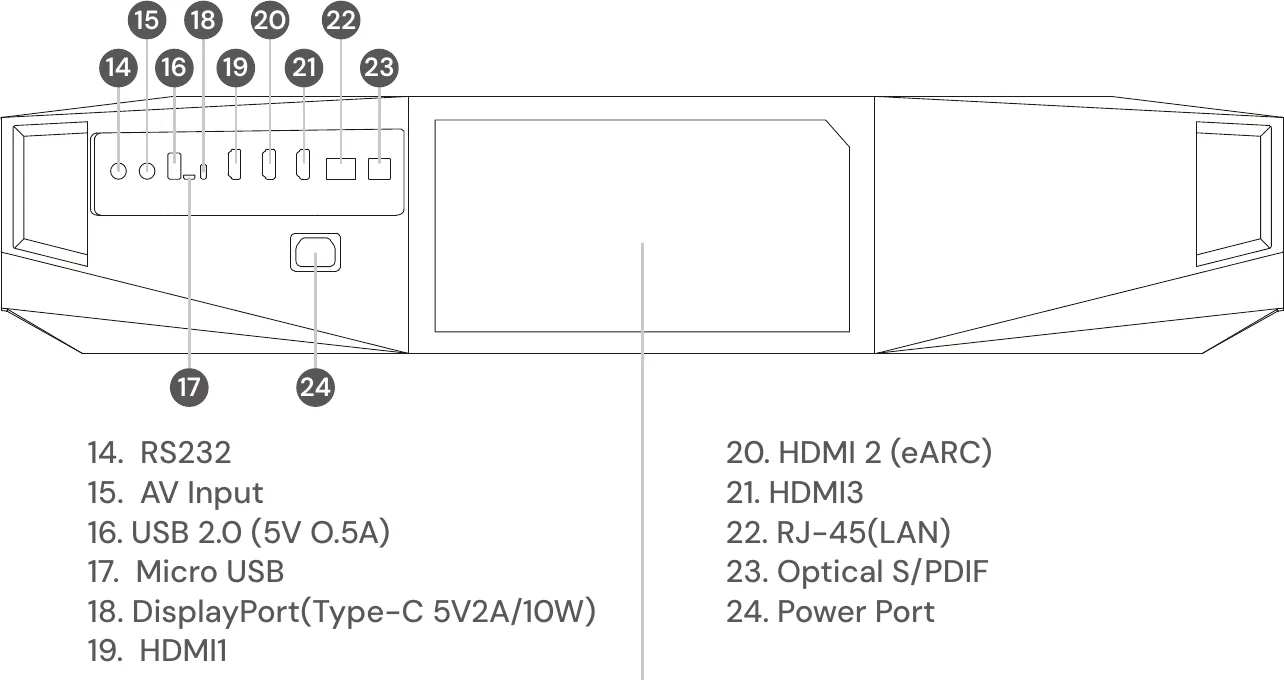
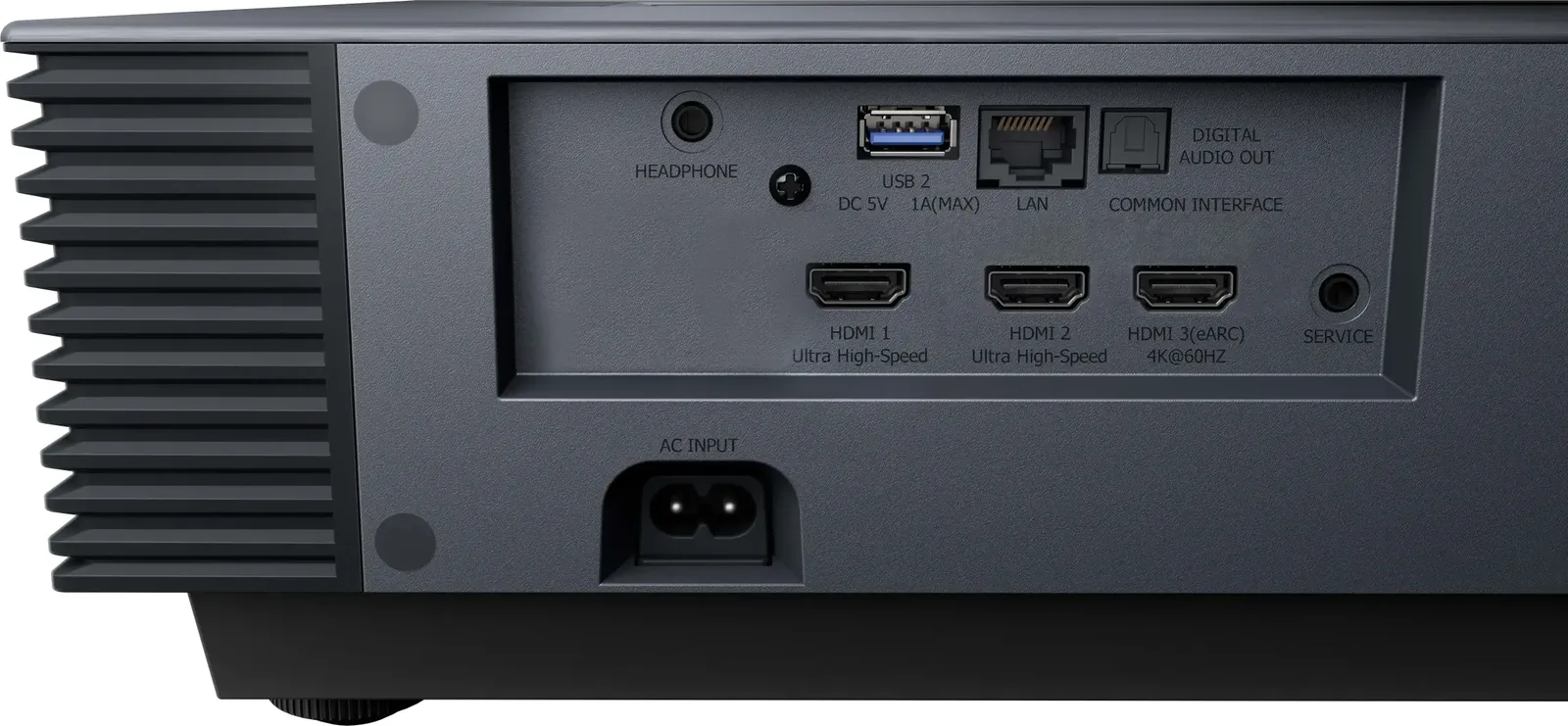
The AWOL adds a USB-C port that carries DisplayPort, which matters if the gaming machine is a laptop.
Brightness is near level
AWOL rates the Max at 3300 ISO lumens and Hisense rates the PX3-PRO at 3000 ANSI. ProjectorCentral measured 3,031 ANSI lumens from the Max in Vivid, 8.15 percent under its rating, and 2,669 from the PX3-PRO in HDR Vivid, which it puts inside the 20 percent tolerance ISO21118 allows. In watchable modes the PX3-PRO measured 2,002 in Filmmaker Mode and 1,975 in Theater, and ProjectorCentral says the Max "performs more like a 2,200 to 2,900 ANSI lumen projector when using the more practical picture modes". On ProjectorCentral's numbers the AWOL comes out a little ahead. RTINGS rates the PX3-PRO's brightness great and the Max's very good, so do not pick between them on light.
Size the screen to that, on either. AWOL says the Max projects up to 200 inches and ProjectorCentral puts its ideal at 120 to 130. Hisense says 150 for the PX3-PRO, and ProjectorCentral lists as a con that it "May lack sufficient brightness for images above 120 inches". At 100 inches the AWOL sits 6.2 inches from the wall on its 0.2 throw, and the Hisense 8.5 inches on its 0.22.
Contrast goes to the AWOL, with a setting to leave off
The lab numbers do not line up neatly, so start with the one bench that tested both. RTINGS calls the Max's contrast impressive and the PX3-PRO's decent, and in the PX3-PRO review it compares the Aetherion Pro, the dimmer AWOL that shares the Max's lens iris, and finds it "dimmer than the Hisense, but the much better contrast results in images with more depth".
The figures behind that come from different setups. ProjectorCentral measured native contrast on the PX3-PRO at just over 4,000:1. On the Max it measured full on, full off contrast from approximately 9,575:1 to 22,000:1, a range that depends on the iris and on Enhanced Black Level, which is laser dimming. ProjectorReviews read the Max at 3,076:1 native and around 25,000:1 dynamic. So most of the AWOL's lead sits in its dynamic contrast, the part the iris and EBL supply.
The catch is EBL. In HDR it clipped highlights on ProjectorCentral's sample, which the reviewer calls the biggest issue with the Max, and the reviewer's own choice was EBL off with the iris alone.
Rainbows, the single chip DLP artifact, show on both. ProjectorCentral saw them on the PX3-PRO as minimal, on small highlights or white text, while RTINGS warns they "will bother those sensitive to them". The Max has an anti-rainbow mode that PCMag found cut them without ending them.
3D and sound
3D is the PX3-PRO's to win. PCMag saw "more obvious crosstalk than I've ever seen in any other projector" on its Max and called it "far too distracting for watching anything". AWOL expects a firmware fix, and in the meantime switching to another 3D mode and back cleared it for PCMag, though not every time. ProjectorReviews praised the Max for reliable 1080p frame-packed 3D playback and did not comment on crosstalk. On the PX3-PRO, ProjectorCentral found 3D "good, with no noticeable crosstalk", if a bit dark, and one RTINGS commenter who bought it planning to return it over 3D input lag found it "good and/or passable" for 3D games.
Sound is the AWOL's. It runs two 25W and two 20W drivers with Atmos and DTS:X, which ProjectorCentral calls "full and generally quite good". The PX3-PRO's 50W Harman Kardon system does Atmos, but ProjectorCentral found the surround effect minimal. With a receiver on eARC, neither speaker system matters.
On RTINGS' bench both ran warm before calibration, so plan on one for either.
When neither is right
If daylight reaches the screen, look brighter. The ultra short throw projector picks lead with the Hisense L9Q, and the L9Q against the PX3-PRO covers what 2,000 more rated lumens buys. If anyone in the house sees DLP rainbows easily, the Epson LS800 uses three LCD chips, which ProjectorCentral credits with immunity to rainbow artifacts. And RTINGS lists the PX3-PRO as replaced by the PX4-PRO, which adds the VRR this comparison turns on. The full Aetherion Max review has the rest of AWOL's ports and the 3D detail.