Hisense L9Q vs PX3-PRO: which room needs 5,000 lumens
Buy the L9Q if lamps or daylight reach the screen while you watch, because ProjectorReviews found it significantly brighter than the PX3-PRO, its Devialet system earns its place when you have no separate speakers, and it has a fourth HDMI input. Buy the PX3-PRO for a room you can darken, where the two measure alike on contrast and TechRadar recommends it over the L9Q.
What decides it: How much light reaches the screen while you watch.
We earn a commission on qualifying purchases through the links here, at no cost to you. It never decides what makes the list.
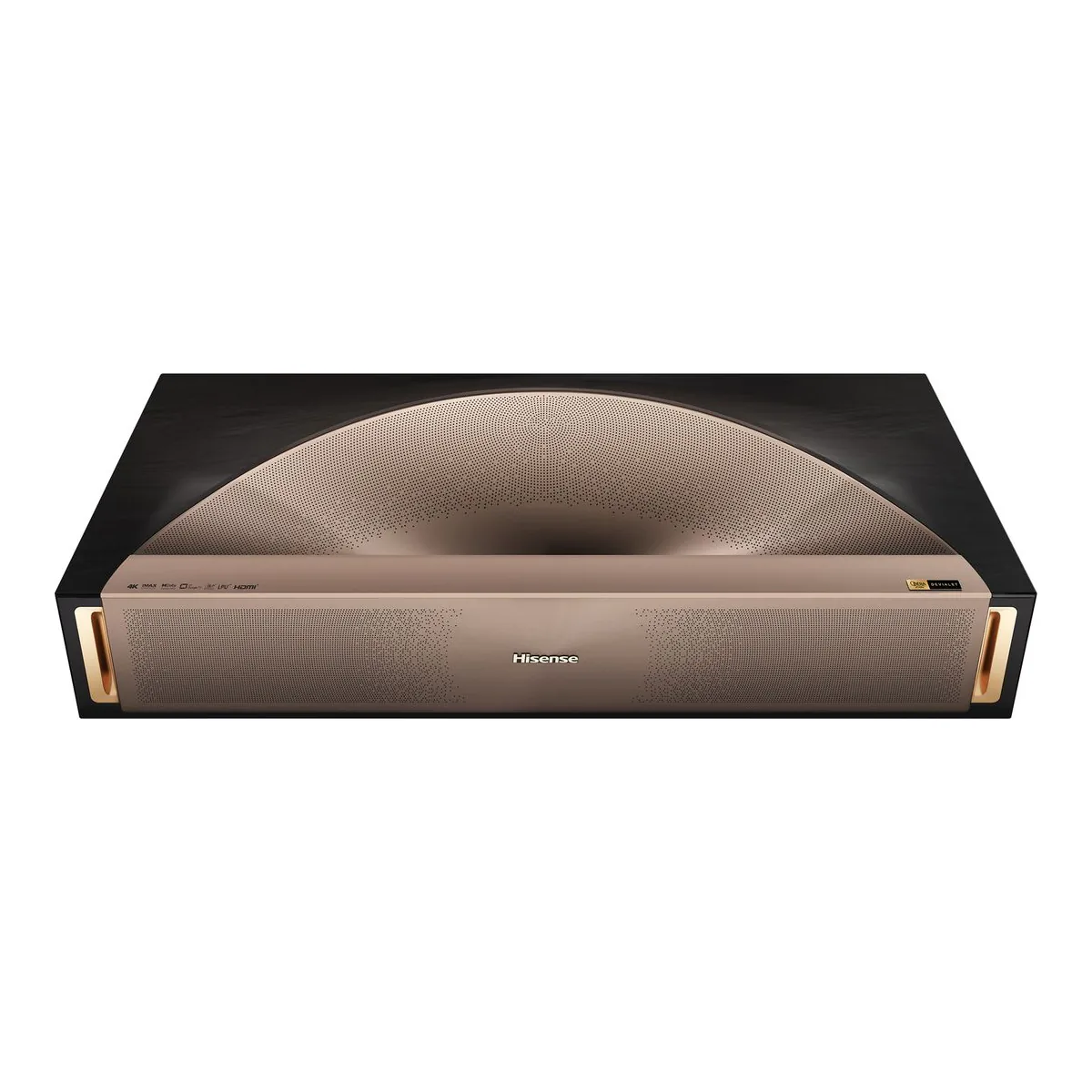
Hisense L9Q
Pick this if a living room with the lights on or the blinds open, a picture of 100 inches or more, and no receiver, where 116W of Devialet sound is the speaker system.
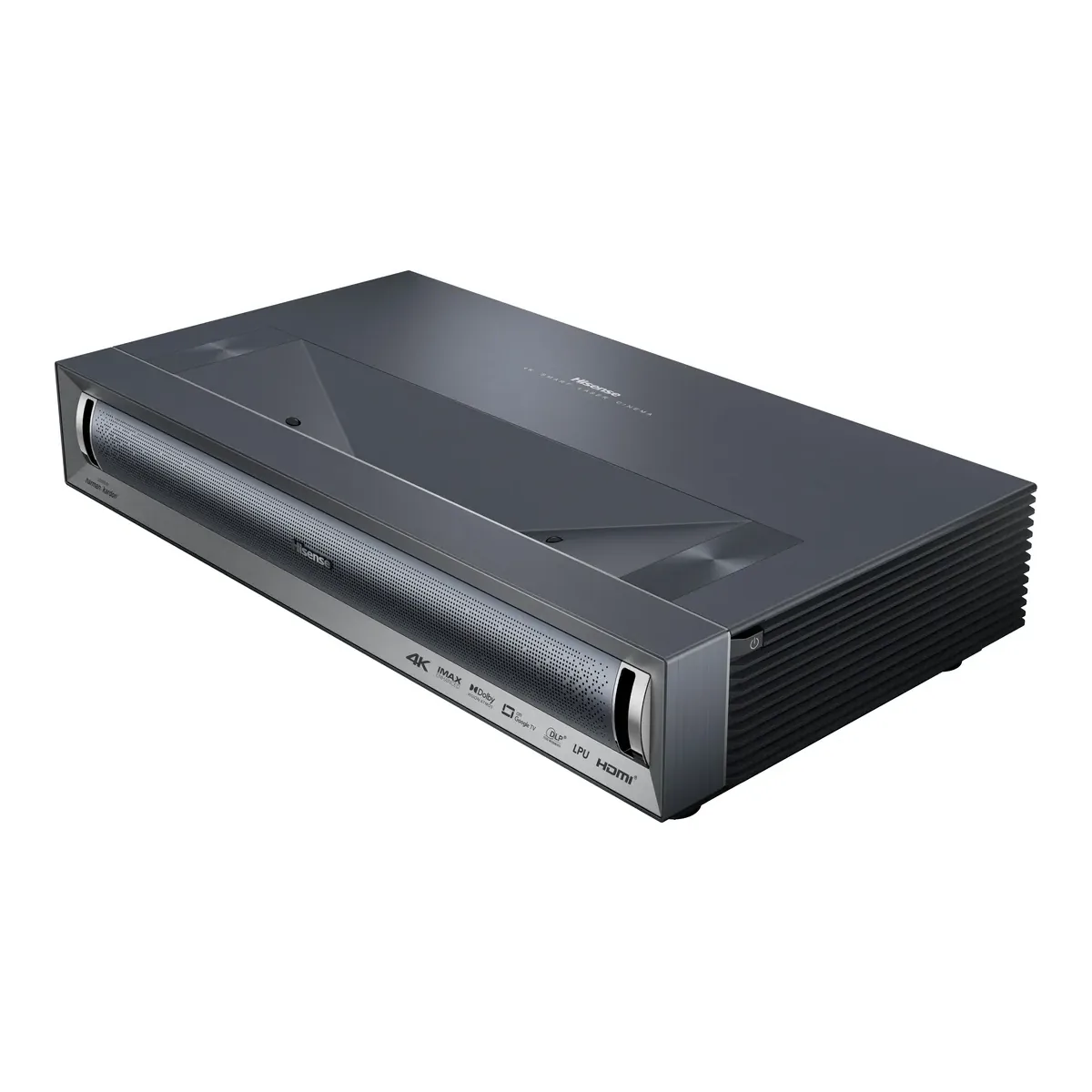
Hisense PX3-PRO
Pick this if a room you can darken, where its contrast measures level with the L9Q's, and anyone already running a receiver or a soundbar off the eARC port.
| Hisense L9Q | Hisense PX3-PRO | |
|---|---|---|
| Throw ratio | 0.18:1 | 0.22:1 |
| Distance for 100 in | 5.4 in, projector back to wall, including 30 mm of screen depth | 8.5 in, projector back to wall |
| Brightness (ANSI or ISO) | 5,000 ANSI lumens | 3,000 ANSI lumens |
| Light source | Triple laser, red, green and blue | Triple laser, red, green and blue |
| Native resolution | DLP 0.47 in DMD, 4K by pixel shift | DLP 0.47 in DMD, 4K by pixel shift |
| Screen it needs | Hisense ALR screen, sold separately | Hisense ALR screen, sold separately |
| Audio out | Devialet 6.2.2, 116W, eARC on HDMI 3 | Harman Kardon, 50W, eARC on HDMI 3 |
In ProjectorReviews' L9Q review the PX3-PRO is the previous model, and Philip Boyle, who wrote that review, has a PX3-PRO himself. His finding sums up Hisense L9Q vs PX3-PRO in two parts. The newer projector is far brighter. In the dark, the two are close to indistinguishable, and he thinks the older one has the slightly better black floor.
Both are TriChroma triple lasers, red, green and blue, on a 0.47 inch DLP chip shifted to 4K. Both do Dolby Vision, HDR10+, HDR10 and HLG, both run Google TV, both reach 240Hz at 1080p (the L9Q with its HDMI input set to Enhanced Pro, per TechRadar), and both put eARC on HDMI 3. Brightness is not the only difference, but it settles which of them belongs in your room.
Hisense L9Q vs PX3-PRO, and the 2,000 lumens between them
Hisense rates the L9Q at 5,000 ANSI lumens and the PX3-PRO at 3,000. ProjectorCentral measured both, in separate reviews: 5,185 from the L9Q in its brightest mode, and 2,669 from the PX3-PRO, which is under its rating but inside the tolerance ISO 21118 allows.
What that buys is a lit room. Boyle writes that the L9Q "can be used in rooms with moderate ambient light without significant loss of color quality", and calls it "significantly brighter than the PX3-PRO, which helps when watching content in areas with even above-average uncontrolled ambient light". Among PX3-PRO owners the lights-on case still gets made. One who chose it over the L9Q wrote "It's not even entirely necessary to draw the curtains to get a relatively pleasant image".
How much of that survives into a film mode depends on which review you read, and the two instrumented reviews disagree. ProjectorCentral, with the laser at its top level, measured 4,652 lumens in Filmmaker Mode and 5,061 in IMAX mode. ProjectorReviews reached 4989 only with the Brightness Enhancer on Ultra, and read between 2953 and 3263 from the presets at the factory laser level with the Enhancer off. Secrets of Home Theater found the Enhancer shifts the color temperature for the worse. Either way the L9Q is the brighter projector. How much brighter in a calibrated mode, the instrumented reviews leave open.
Contrast is where the gap closes
In a dark room the L9Q's extra light has nothing to fight, and the two measure alike. ProjectorCentral, again in its two separate reviews, measured 3,900:1 contrast on the L9Q against a 5,000:1 rating, and just over 4,000:1 on the PX3-PRO against 3,000:1. Boyle's own measurement of the L9Q was roughly 3223:1, which he describes as similar to the PX3-PRO. His words on the black floor are the ones to weigh: the L9Q looks "nearly indistinguishable from models like the PX3-PRO, a unit I think has a slightly better black floor".
TechRadar reaches the buying conclusion outright. In its list of reasons not to buy the L9Q: "If you're always going to be watching in a dark home theater, the L9Q's 5,000-lumen brightness is likely going to be over the top. Better to instead buy the PX3-Pro and apply those savings to a quality screen and sound system."
For a room you can black out, that settles it.
Color moved the other way. Boyle found the L9Q's default color the best ProjectorCentral had seen, ahead of the previous best, the PX3-PRO a year earlier.
What else the L9Q adds, and what it asks for
Sound first, since it is the other large difference. The L9Q carries a Devialet 6.2.2 system at 116W with Dolby Atmos and DTS:X. The PX3-PRO has 50W of Harman Kardon speakers with Dolby Atmos. Boyle found the L9Q noticeably better and says it "gets loud without noticeable distortion". If a receiver is already doing that job, none of this matters, and both hand it off on the same eARC port.
The L9Q has four HDMI inputs to the PX3-PRO's three: two HDMI 2.1 on both, plus two HDMI 2.0 on the L9Q against one. Its spec sheet also lists an RF tuner for NTSC, ATSC and Clear QAM.
Placement is tighter on the L9Q. At a 0.18 throw Hisense places it 5.4 inches from the wall for 100 inches, measured from the back of the projector and including 30 mm of screen depth. The PX3-PRO's 0.22 throw needs 8.5 inches from its back to the wall on Hisense's chart, which does not say whether that includes screen depth. That short throw is also why TechRadar calls a picture under 100 inches "almost unfeasible" on the L9Q: at 80 inches it sits 2.2 inches from the wall. It is a larger machine too, 28.4 lb and 24.6 inches wide against 19.8 lb and 21.7 inches, and it scales to 200 inches where the PX3-PRO stops at 150.
Gaming is closer than the badges suggest
The PX3-PRO carries a Designed for Xbox badge and the L9Q does not, though Boyle writes that the L9Q "shares all the core technical capabilities that earned the PX3-PRO this badge". ProjectorCentral measured both in DLP Turbo Mode, in separate reviews a year apart, and with High Refresh Rate Mode also on for the L9Q's 60Hz rows: the PX3-PRO at 25ms for 1080p/60, 21ms for 4K/60 and 7ms at 1080p/240, the L9Q at 27ms, 35ms and 8ms for the same three. PCMag's Bodnar tester read the L9Q at 17.6ms for both 1080p and 4K at 60Hz, and 4.6ms at 1080p/240Hz. Turbo Mode turns off keystone and 3D on both. Neither is the gaming pick on this shelf, either. RTINGS calls the PX3-PRO's 60Hz lag "a tough sell for console gamers" and notes it has no VRR.
What owners say after choosing
Five PX3-PRO owners turn up in the comments under the L9Q's own videos, and three of them are happy with it. A fourth, happy until now, has reserved an XGIMI. One wrote that the L9Q "seems to be pretty much the same as the PX3-pro other than a few tiny improvments". Of the 3 commenters who say they owned an L9Q, 2 returned it, one over color fringing and one over a fan or coil sound in quiet scenes. Those are too few owners to make a pattern of. Still, weigh them before you buy the newer one.
When neither is right
For gaming, the AWOL Vision Aetherion Max measured lower lag than either on ProjectorCentral's bench, 13ms at 1080p/60, and supports VRR. If you are among the people who see DLP rainbows, and Boyle says he is, the Epson LS800's three LCD chips are what ProjectorCentral credits with 3-chip immunity to rainbow artifacts. And RTINGS says the Hisense PX4-PRO replaced the PX3-PRO, and it adds VRR. All three sit with the L9Q and the PX3-PRO on the ultra short throw projector picks, and the LS800 review covers the one built for a room that never goes dark.