ECOVACS A3000 vs A2500 RTK: the antenna you have to plant
Buy the A3000 unless tree cover, a roofline or a fence regularly blocks a clear view of open sky, since it rates for more lawn on a bigger battery with nothing to stake in the ground. Buy the A2500 RTK only when that shaded-signal reliability justifies planting a reference station, an antenna pole and eight garden pegs to get it.
What decides it: Navigation architecture: a staked RTK reference station against LiDAR and cameras alone. Not slope, which is identical on both, and not coverage, where the antenna-free A3000 actually rates higher.
We earn a commission on qualifying purchases through the links here, at no cost to you. It never decides what makes the list.

GOAT A3000 LiDAR PRO
Pick this if a yard with a mostly open view of the sky, where a bigger rated coverage and a bigger battery matter more than RTK-grade positioning.
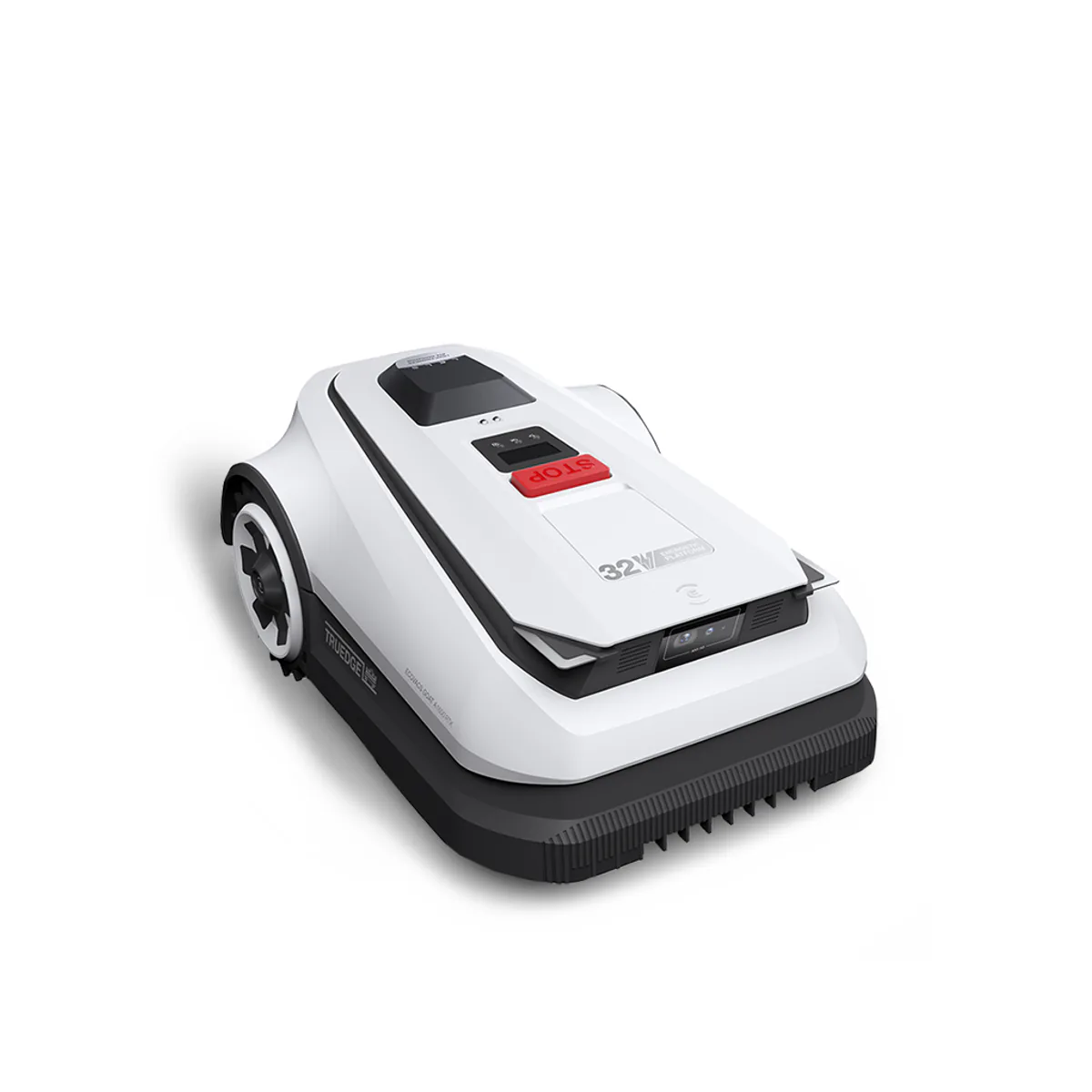
GOAT A2500 RTK
Pick this if a yard with heavy tree cover or structures that make a LiDAR-only mapping pass unreliable, where a staked antenna's steadier fix is worth the extra hardware.
| GOAT A3000 LiDAR PRO | GOAT A2500 RTK | |
|---|---|---|
| Coverage | 0.75 acre | 27,000 sq ft (about 0.62 acre), 5,382 sq ft per charge |
| Boundary method | Wire-free, multiline LiDAR + AI camera + 3D ToF | LiDAR-enhanced RTK (LELS): staked reference station, antenna and pole required |
| Max slope | 50% (27°) work area, 20% at the virtual boundary | 50% (27°), crosses 1.75 in obstacles |
| Cut height | 1.18 to 3.54 in, electric | 1.2 to 3.6 in, electric |
| Obstacle avoidance | 200+ types, 3D ToF + AI camera + LiDAR, avoids from 1.97 in | 200+ types, AIVI 3D (AI camera + 3D ToF) |
| Multiple zones | Not stated | Supported, zone count not published |
| Runtime and charge | Not clearly stated | 64 min from full to 15% charge, 45 min charge time |
ECOVACS A3000 vs A2500 RTK is a stranger comparison than ECOVACS A2000 vs A3000, because the two sides do not agree on what "more capable" even means, and one of them is missing a part the other calls its own invention. Both name more than 200 obstacle types under the same AIVI 3D branding. One of them needs a physical antenna staked in the lawn to work at all. That machine covers less ground.
What a staked antenna actually buys
The A3000 runs HoloScope 360, a rotating LiDAR paired with a 3D ToF LiDAR, and needs nothing planted in the yard at all. The A2500 RTK runs what ECOVACS calls LELS, LiDAR-enhanced RTK navigation, and its own spec sheet lists a separate RTK antenna dimension alongside the mower's, because the box ships a reference station, two mounting poles, a tripod peg and eight garden pegs on top of the mower and its charging station. Setting up the A2500 RTK is a different job from setting up the A3000, with extra hardware the A3000 never asks you to plant.
What that hardware buys is stated precision and stability under cover: 2 centimeter positioning accuracy, connecting to more than 40 satellites, up to 45, with ECOVACS claiming steadier reconnection in the shade than a comparable RTK system. LiDAR alone reads the geometry of what is actually there. A staked antenna adds a satellite fix on top of it. Whether that fix is worth the extra hardware comes down to one question: does your yard's tree cover, fencing or roofline block a LiDAR turret's clean view of its surroundings often enough to need a second, independent way of knowing where it is.
Basis: manufacturer documentation for both navigation systems.
The antenna does not buy more lawn
Here is the part a shelf full of RTK marketing does not prepare you for: the A3000 rates for up to 3/4 acre, and the antenna-equipped machine next to it rates for less. ECOVACS's own product page for the A2500 RTK states a rated coverage of up to 27,000 sq ft, about 0.62 acre. Its title band separately calls the same machine a 1/2 acre mower, which does not agree with either that 27,000 sq ft figure or the Amazon listing's own 5/8 acres claim. We print the 27,000 sq ft number, since it is the more specific figure and the Amazon listing rounds to close to the same lawn.
A battery gap explains why. The A3000 runs a 7.5Ah pack on 189W fast charging, a 70 minute charge. Its sibling's own spec table lists a 3000 mAh, 3Ah battery, charging in 45 minutes and covering 5382 sq ft, about 0.12 acre, on a single charge. Faster charging on a smaller pack is a real trade. It is no downgrade, but it does mean the RTK antenna is not the upgrade path to a bigger lawn. If acreage is the actual constraint, measure the yard first before assuming the model with more hardware covers more ground.
Basis: the A3000's 3/4 acre figure is the Amazon listing's, since its own manufacturer page states no acreage at all; the A2500 RTK's 27,000 sq ft figure is manufacturer body copy. Both battery figures are manufacturer documentation.
The A3000 has a trimmer. The A2500 RTK does not.
TruEdge is the branding on both product pages (ECOVACS spells it TrueEdge on the A3000's own page and TruEdge on the A2500 RTK's and A2000's, evidently its own inconsistency), and it does not mean the same hardware. The A3000's own spec table lists a trimmer head speed of 8500 rpm, a trimmer line length and a trimmer cutting width, and its inbox parts include a trimmer module, a trimmer brush and trimmer screws, the same way the A2000's page does. ECOVACS calls the A3000 its first trimmer-integrated robotic mower, automating the cut down to the edge with a physically separate trimmer unit alongside the main blades.
The A2500 RTK's own page never names a trimmer as a part, in its spec table or its inbox list, though its prose does use the verb "trimming" once for the blade-to-edge cutting itself. Its spec table carries no trimmer row, its inbox list has no trimmer module, and every trimmer accessory ECOVACS sells lists the A3000 and A2000 as compatible while never naming the A2500 RTK. What the A2500 RTK's own TruEdge branding describes is how close its dual blade-disc cutting gets to an edge, a 1.97 inch blade-to-edge distance. The blades ride that edge and nothing trims it. The A3000 uses the same 1.97 inch figure too, for its AIVI 3D obstacle clearance, which measures nothing about the edge. Same number, two products, two different claims, and on the trimmer itself the two products are not offering a version of the same feature at all.
Slope settles nothing here: both machines are rated for 50 percent, 27 degrees, in the work area, the same figure ECOVACS states for the A2000 as well.
Basis: manufacturer documentation for both pages, including each one's own spec table and inbox parts list.
When neither GOAT is the right question
A buyer choosing on battery size alone, not navigation, wants the A2000 vs A3000 comparison instead, since those two run identical LiDAR-plus-camera navigation, with no antenna on either one, and differ mainly in battery size, charge time and rated coverage. For anyone still open on the brand, the wider shelf holds two more answers. WORX's own antenna-free RTK Cloud design and the Segway Navimow X430's Network RTK take the same staked-antenna question with a third and fourth architecture entirely.
ECOVACS A3000 vs A2500 RTK, decided by what is above your lawn
Open sky, few trees, a fence line the LiDAR can already see clearly: the A3000 covers more lawn on a bigger battery with nothing to plant in the ground. Heavy tree cover, a roofline that regularly shades the yard, or a history of a LiDAR-only mower losing its own map under cover: the A2500 RTK's staked antenna was built for that specific problem, at the cost of a smaller rated lawn and real hardware to bury in the yard first.