JET JWDS-2550 vs Powermatic DDS-225: width or two grits
Buy the JET JWDS-2550 if your shop runs on 115 volt and a modest collector, or if you ever need to sand a panel wider than 25 inches, since it reaches 50 in two passes. Buy the Powermatic DDS-225 if you already have 230 volt power and a collector that can pull 1200 CFM, and you sand enough face frames and panels to want a coarse and a finer grit in one pass on a frame closed at both ends.
What decides it: Your circuit and your dust collector, before the drums.
We earn a commission on qualifying purchases through the links here, at no cost to you. It never decides what makes the list.
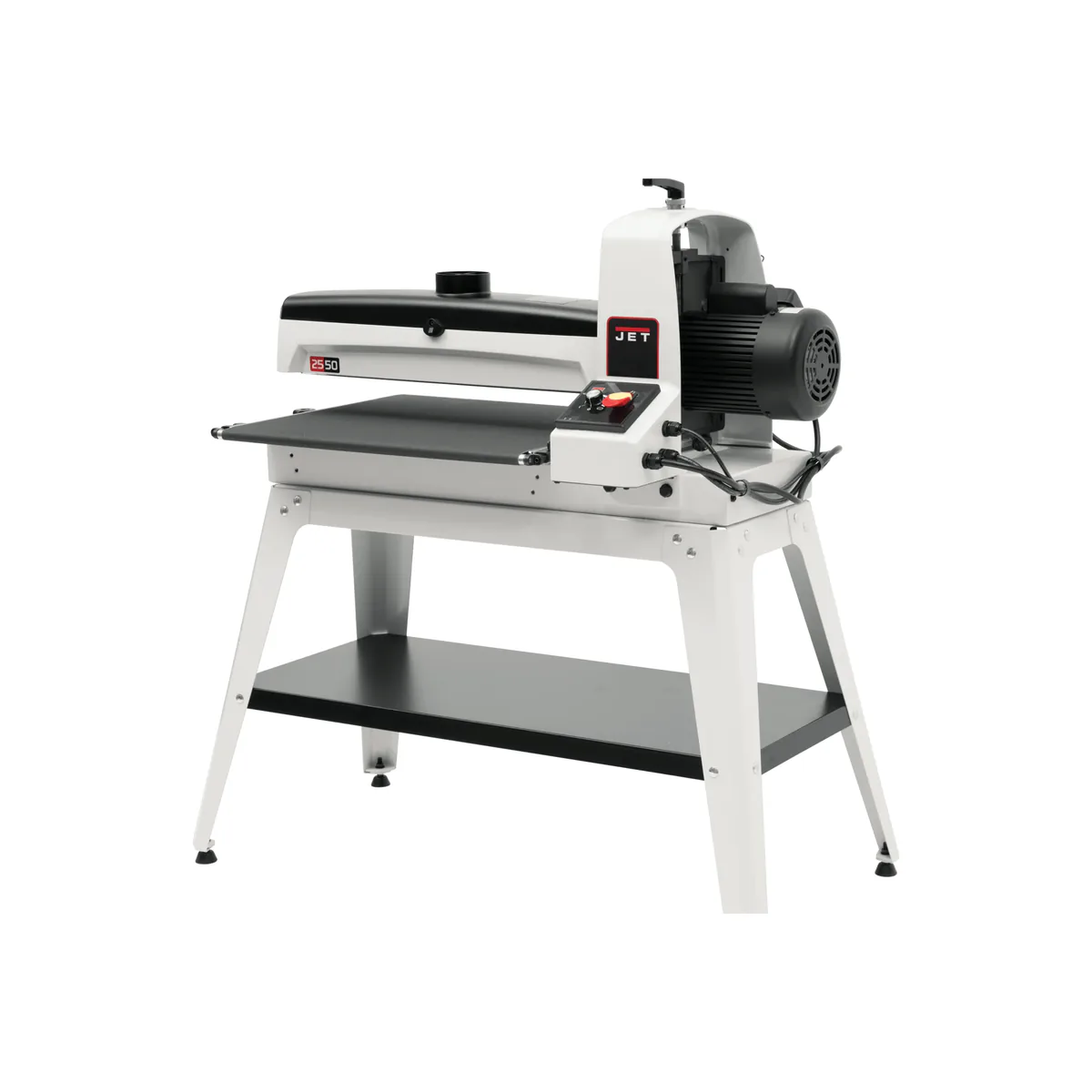
JET JWDS-2550
Pick this if a 115 volt shop with a 20 amp circuit to spare, a collector that meets 550 CFM, and the occasional tabletop wider than the drum.
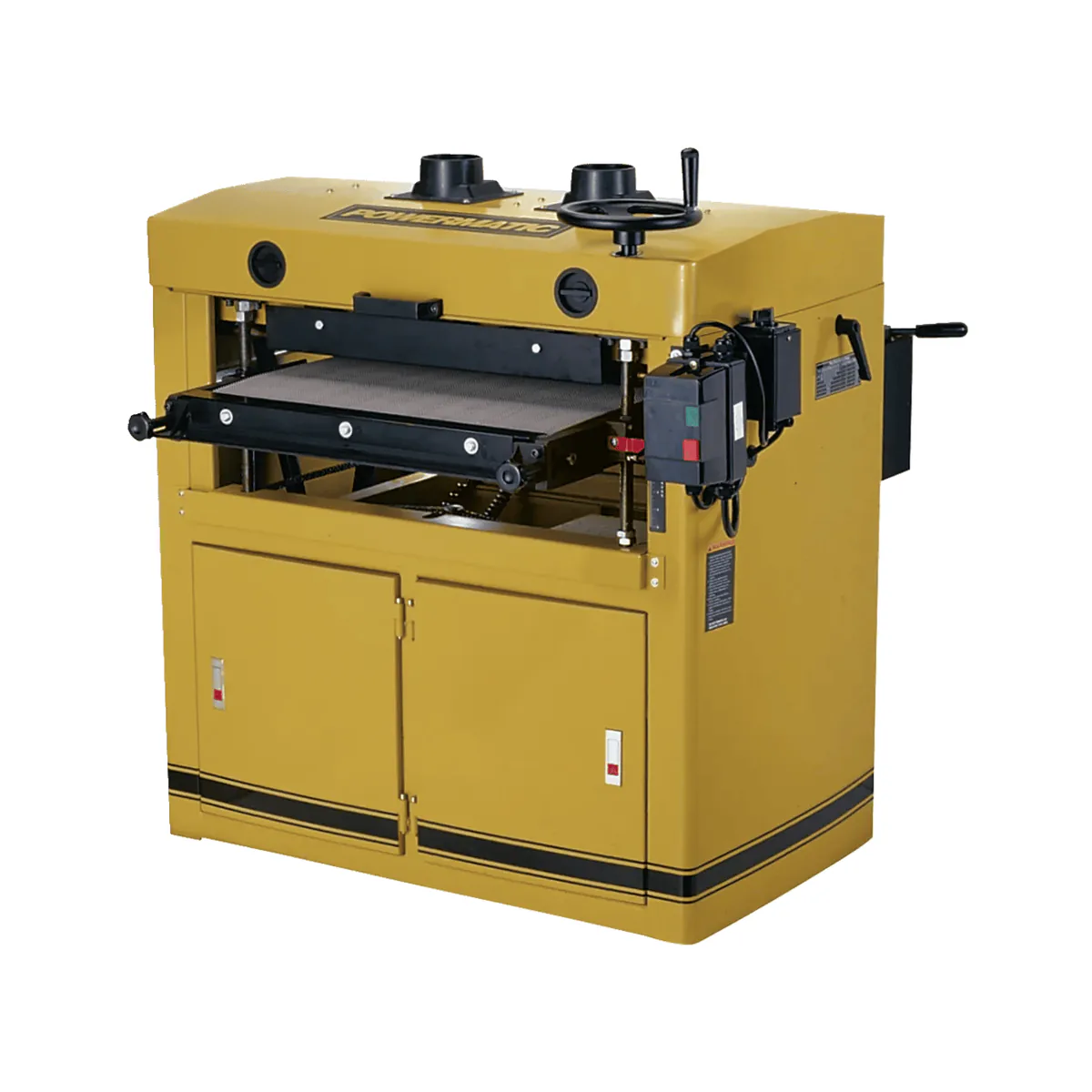
Powermatic DDS-225
Pick this if a shop with 230 volt power, a big central collector and floor for 730 pounds, sanding panels no wider than 25 inches in volume.
| JET JWDS-2550 | Powermatic DDS-225 | |
|---|---|---|
| Sanding width, single pass | 25 in, 50 in in two passes | 25 in, one pass only |
| Thickness capacity | 4 in max | 5-1/4 in max |
| Motor (hp, volts, amps) | 1-3/4 HP, 115V, 15 A | 5 HP, 230V |
| Feed rate | 0 to 10 FPM, SandSmart | 8 and 12 SFPM |
| Drum diameter and speed | 5 in, 1725 RPM | Two 6 in, 1700 RPM |
| Dust port diameter | 4 in, 550 CFM | Two 4 in, 1200 CFM |
Most shops can only run one of these, and it is usually decided at the breaker panel. In a JET JWDS-2550 vs Powermatic DDS-225 choice, the JET is a 1-3/4 HP machine on 115 volt that wants a dedicated 20 amp circuit and a collector pulling 550 CFM at its port. The Powermatic is 5 HP on 230 volt single phase, and its manual asks for 1200 CFM through two 4 inch ports.
That gap is wider than it reads. One DDS-225 owner calls 3 HP the bare minimum for a collector and wants 6 inch pipe to the two ports, and another found none of several 1-1/2 to 2 HP collectors sufficient before putting in a central system. If your collector is a single bag unit on wheels, the Powermatic is asking for a second purchase, and our drum sander picks make the JET the overall pick for its width on 115 volt.
JET JWDS-2550 vs Powermatic DDS-225: one pass at 25 inches
On the single pass, the Powermatic vs JET drum sander question is a tie. Both take a 25 inch board under the drum once. The JET's drum is open at one end, so a panel up to 50 inches can go through twice, turned end for end between passes. The Powermatic's frame is closed at both ends, and 25 inches is its limit.
An open end costs you a seam. JET's manual has the cure, setting the outboard end of the conveyor level or slightly low with a scrap board until the ridge goes, and one owner who could not adjust it out still gets a sanding line where the drum ends. The closed frame costs you width. What it buys, by one owner's account, is no chatter: a production shop owner who came to the DDS-225 from an open-end 16/32 called it a dream by comparison.
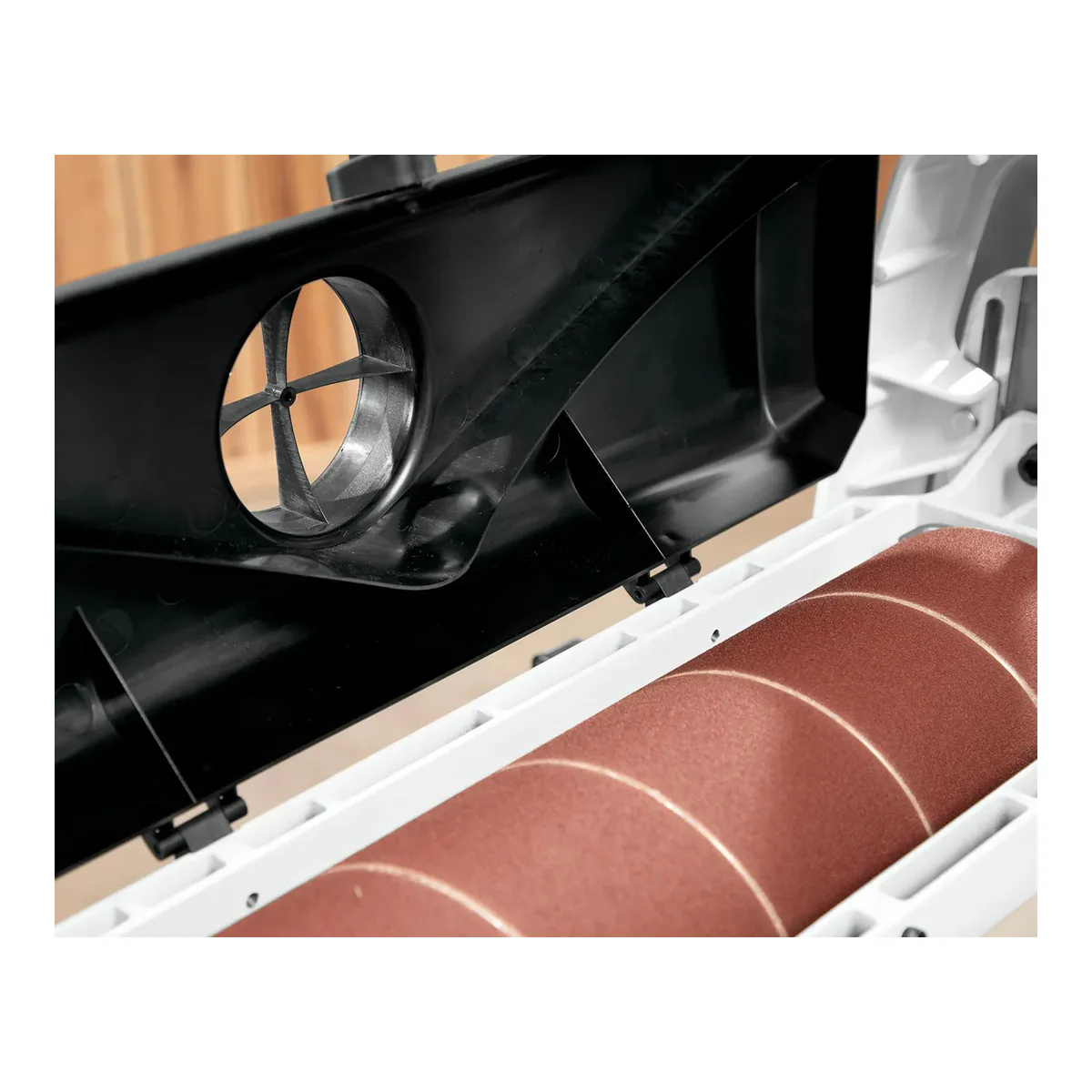
Then ask how often you would use the 50. The JET owner with about five years on theirs says the full width came out twice in that time, and they would buy the 16 inch model next.
Two grits in one pass, or one drum and SandSmart
Here the machines stop resembling each other. The DDS-225 carries two 6 inch drums one behind the other, shipped with 80 grit in front and 100 at the rear, so one pass does what takes the JET two passes and a paper change. The cost is setup: the rear drum sets against a red indicator at each end, and two owners describe the drum adjustments as easy to do and critical to get right. One set theirs in 15 minutes and has not touched it since.
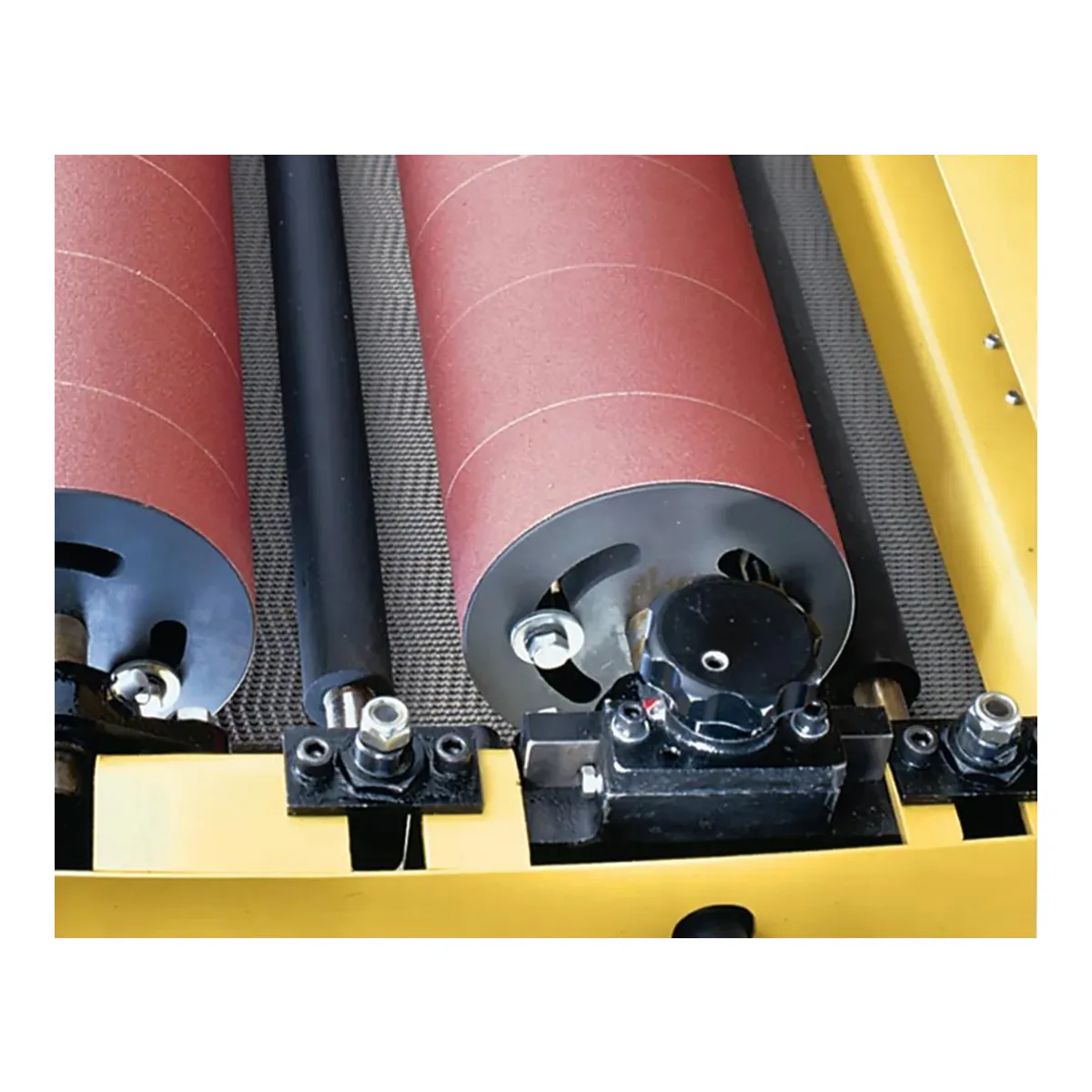
JET builds the 2550 around one 5 inch drum and a conveyor you can set anywhere from 0 to 10 FPM. SandSmart reads the drum motor's load and slows or stops the feed before a cut stalls. The Powermatic has two fixed speeds, 8 and 12 SFPM, and a reversing switch for backing out a jammed board.
Neither is a planer. Five of the 11 Powermatic owners we counted say it takes light passes and will not hog stock, and one settled on about 1/64 inch at a time.
Thickness, weight and floor
Powermatic's sander takes stock from 1/32 to 5-1/4 inches thick, against 4 inches on the JET. It also weighs 730 pounds, and its installation list opens with a forklift or a hoist. One owner on a mobile base found it hard to roll. The JET is 183 pounds for the machine alone, with the conveyor at 34 inches on its open stand, and that stand sits on leveling feet, since locking casters are an accessory.
Who reports what
Owner records are thin on both sides. We count six people who verifiably own a JWDS-2550, mostly from YouTube, and 11 DDS-225 owners on Sawmill Creek, LumberJocks and Woodworking Talk in threads back to 2008. None of those 11 mentions the JET, and two of them name SuperMax or Woodmaster instead. No named independent test of either machine turned up. The detail sits in our JWDS-2550 review and our DDS-225 review.
When neither is right
If your widest work is cabinet doors, both are more machine than you need. JET's 16 inch JWDS-1632 sands 16 inches a pass and 32 in two, on 115 volt, which is where that five year JET owner would go next time.
If you need more than 25 inches in one pass, Powermatic's manual lists the DDS-237 at 37 inches, on a 7.5 HP single phase motor or a 10 HP three phase one. And if you are feeding panels all day, one of those Powermatic owners moved on to a wide belt sander after a couple of years. The drum sander sizing page works through all three from your widest panel down.