Sony a7 V vs Canon EOS R6 Mark III: stills or video
Buy the Sony a7 V if stills come first and you want a long day on one battery: it holds wider dynamic range in photos above ISO 800, rates 750 shots on the screen against 510, and E-mount takes third-party lenses. Buy the Canon EOS R6 Mark III if you film, because it records internal 7K RAW, open gate and 4K 120p without a crop, and the a7 V does none of the three.
What decides it: Whether video modes or stamina matter more.
We earn a commission on qualifying purchases through the links here, at no cost to you. It never decides what makes the list.
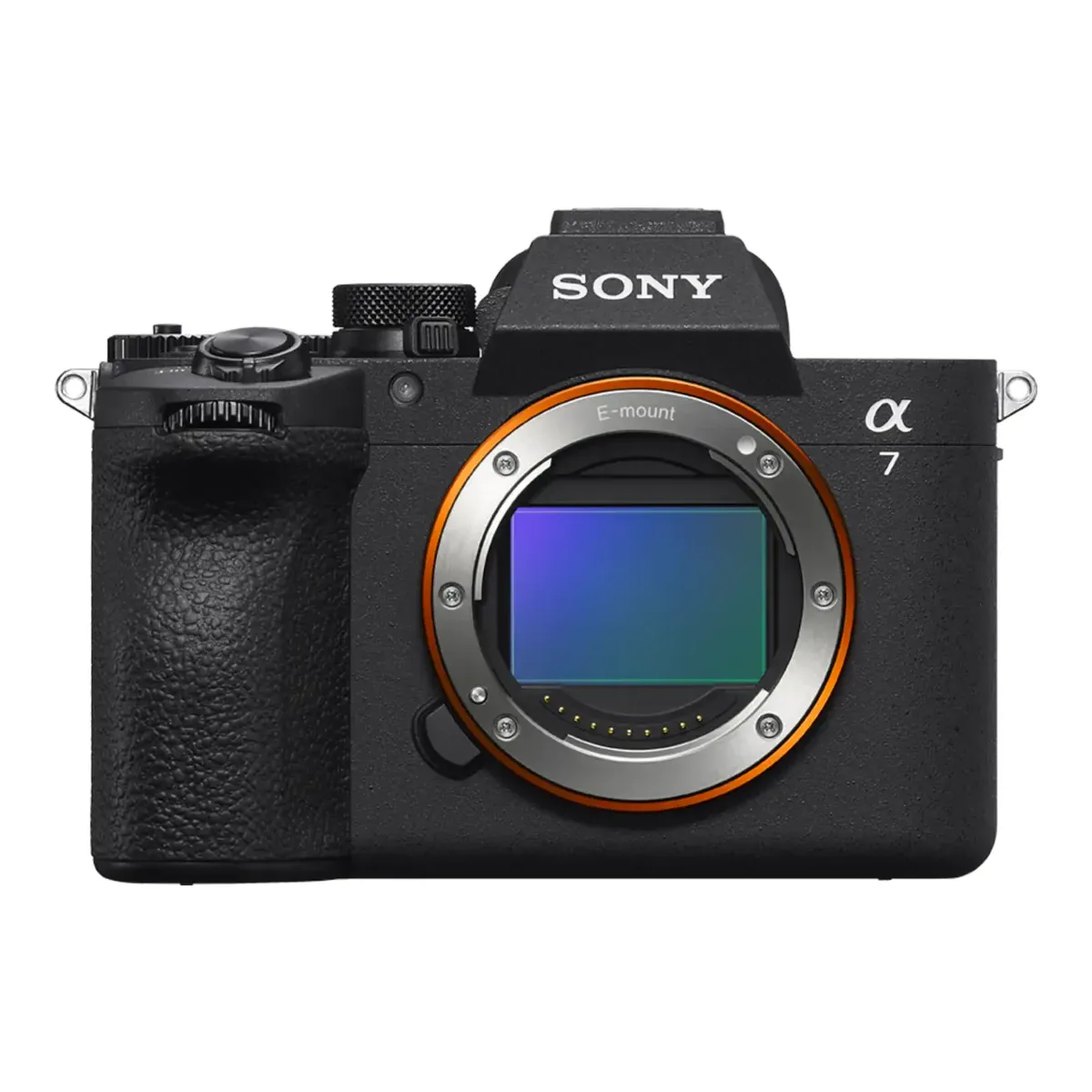
Sony a7 V
Pick this if stills first, weddings and travel on one or two batteries, less video rolling shutter, and a lens budget that wants third-party glass.
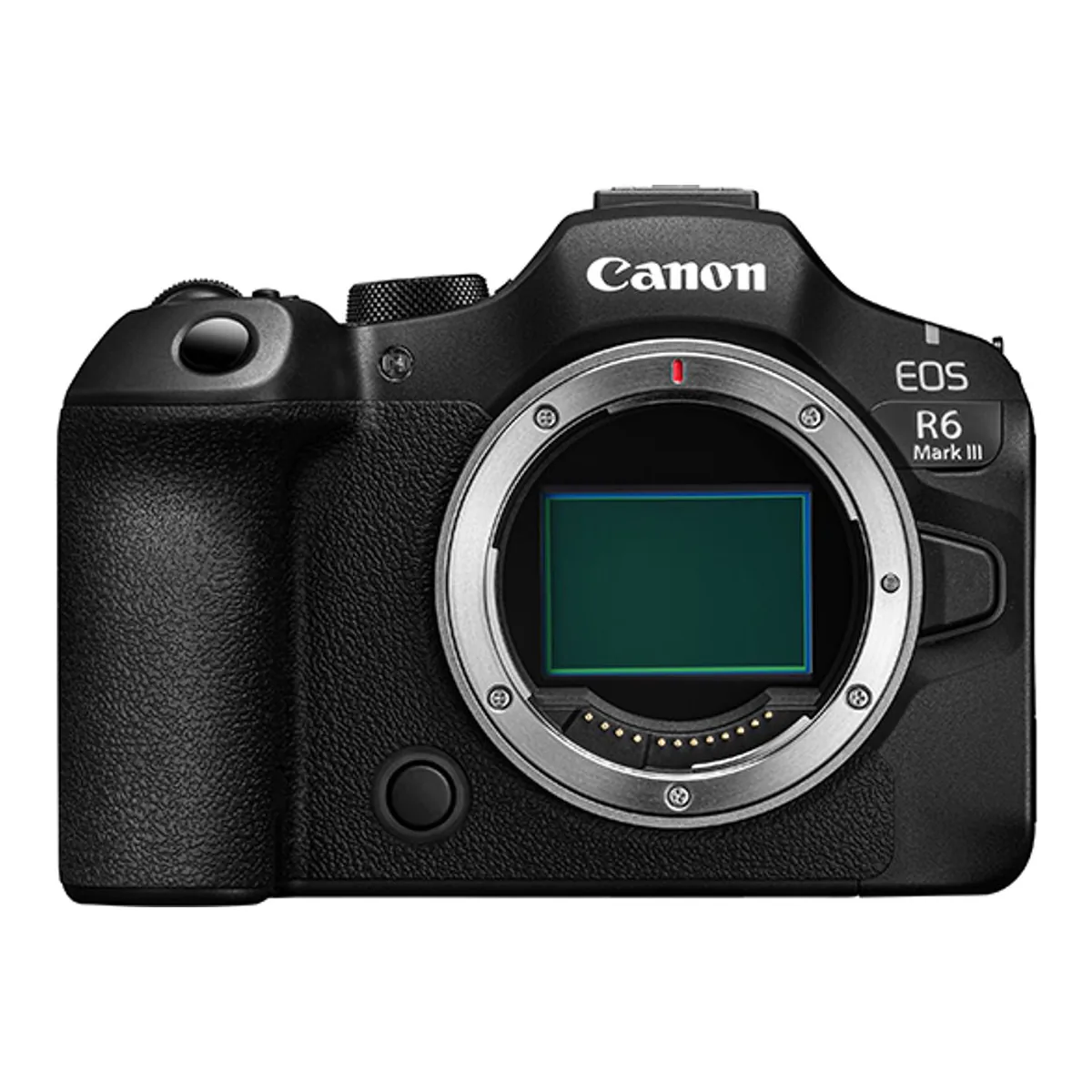
Canon EOS R6 Mark III
Pick this if paid video, vertical and horizontal cuts from one open gate clip, RAW for grading, and a more comfortable grip with larger lenses.
| Sony a7 V | Canon EOS R6 Mark III | |
|---|---|---|
| In-body stabilization | 5-axis sensor-shift, 7.5 stops center and 6.5 periphery (CIPA 2024) | Sensor-shift, up to 8.5 stops center and 7.5 periphery, lens dependent |
| Autofocus points and coverage | 759 phase-detection points, about 94% of the image area | Dual Pixel CMOS AF II, 1053 automatically selected AF areas |
| Sensor | 33.0MP full-frame partially stacked Exmor RS CMOS | 32.5MP full-frame CMOS |
| Processor | BIONZ XR2 with integrated AI processing unit | DIGIC X |
| Video ceiling | 4K 60p oversampled from 7K; 4K 120p in APS-C/Super 35mm mode only | 7K RAW to 59.94p (RAW Light), 7K Open Gate 3:2, 4K to 119.9p not oversampled |
| Continuous shooting | Up to 30 fps electronic (Hi+), 10 fps mechanical | 12 fps mechanical, 40 fps electronic, 20-shot pre-continuous |
| Battery and rated shots | NP-FZ100, about 630 shots viewfinder or 750 LCD (CIPA) | LP-E6P, about 620 shots LCD or 390 viewfinder, power saving mode |
Count the video modes and the Canon wins. Count the shots per battery and the Sony does, by a wide margin.
The Sony a7 V vs Canon EOS R6 Mark III choice is two cameras with nearly the same resolution, 33 and 32.5 megapixels, launched into the same class and built for opposite halves of the hybrid job.
Digital Camera World, DPReview and RTINGS have each set these two side by side, and they agree more than they argue. Our read comes from those tests, Sony's and Canon's specification tables, and the comments counted in our a7 V review and R6 Mark III review.
Sony a7 V vs Canon EOS R6 Mark III for video
Three modes on the Canon have no Sony equivalent. The R6 Mark III records 7K RAW internally to 59.94 fps in RAW Light, a 7K open gate mode that keeps the full 3:2 sensor so one clip can be cut vertical and horizontal, and 4K at 119.9 fps without a crop. Sony's own footnote limits the a7 V's 4K 120p to its APS-C/Super 35mm mode, and RTINGS notes it records no RAW video. Ten commenters under a7 V videos complain about the missing open gate.
The Sony's answer is quality inside the modes it has. Its 4K up to 60p is oversampled from a 7K readout across the full width, provided Sony's 4K angle of view priority setting is on, which Sony says can add noise in low light. Digital Camera World found its rolling shutter very well controlled, with high-speed trains staying upright. RTINGS agrees that the partially stacked sensor shows less rolling shutter in video than the Canon's, which is not stacked. The Canon's 120p is also the soft mode: DPReview found it subsampled and noticeably less detailed than the oversampled 4K up to 60p.
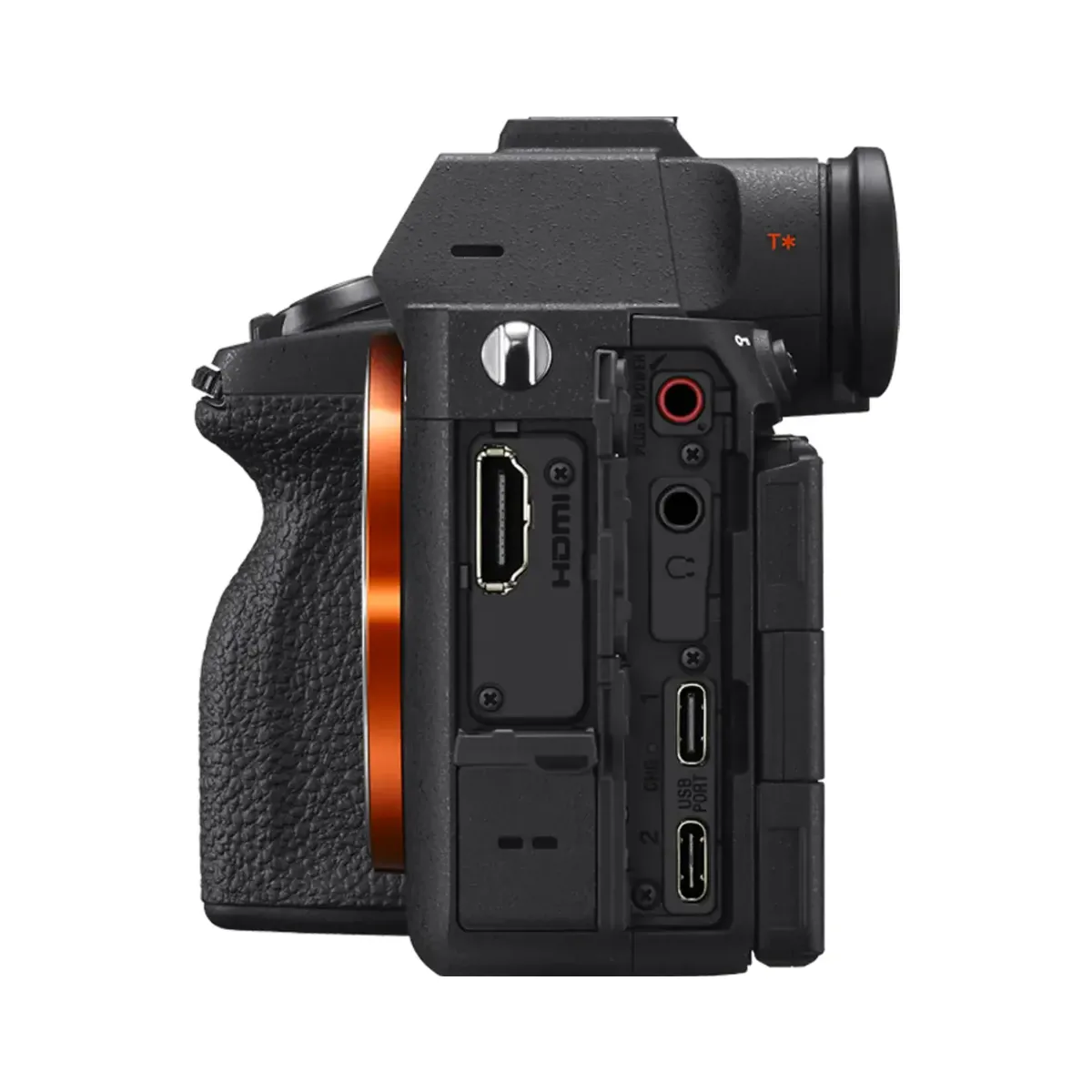
Heat is the Canon's clock to plan around. Canon's figures at 23°C, as DPReview prints them, stop 7K RAW at 60p after about 23 minutes, and the body has no fan. Oversampled DCI 4K 60p stops at about 23 minutes too, while the subsampled 4K 60p modes carry no documented limit. RTINGS shot 4K for more than an hour without an overheat, and DPReview shot several projects on it without a shutdown, though it expects the camera to struggle in hot, direct sun. No owner on either side reports overheating.
Stills: dynamic range against detail
Here the Sony pulls ahead, though not on resolution and not at base ISO. Digital Camera World found the two level at low ISO, then measured almost 1 stop more dynamic range on the a7 V than the R6 Mark III once past ISO 800, and RTINGS also credits the Sony with wider dynamic range in photos. DPReview had not finished its a7 V tests, and gave the Sony a good chance of outperforming the Canon on dynamic range with the mechanical shutter.
Detail goes the other way: Digital Camera World found the a7 V could not quite match the R6 Mark III's fine detail, even with the Canon's marginally lower pixel count. Noise is close: RTINGS found the Canon handles it better, and Digital Camera World measured the two especially close.
Bit depth on the electronic shutter is the quieter difference. DPReview lists the a7 V's 30 fps electronic burst at 14-bit, while the R6 Mark III drops to 12 bits for its 40 fps, which costs shadow latitude when you lift an underexposed frame. One Canon commenter called it their only gripe. The Sony's electronic shutter has its own cost, though: an a7 V owner who mostly shoots sports still calls its rolling shutter a real issue for the 30 fps and pre-capture bursts, which only run on the electronic shutter. DPReview measured the stills readout at about 13.5 ms on the Canon in 12-bit and about 15.1 ms on the Sony, so the Canon reads a little faster and gives up depth to do it.
Battery, grip and screen
Battery is the widest gap on the spec sheet. Sony rates the a7 V at 750 shots on the screen and 630 through the viewfinder on the NP-FZ100. Canon rates the R6 Mark III at 510 and 270, or 620 and 390 in power saving mode. RTINGS says the Sony lasts much longer on a charge, and Digital Camera World would shoot a full-day wedding on a couple of NP-FZ100 batteries. On video, RTINGS ran the Canon for slightly over an hour of continuous 4K per battery.
The grip goes to Canon. RTINGS rates it the most comfortable of the three bodies it compared, and DPReview found the a7 V not as comfortable to hold, especially with larger lenses. Digital Camera World's reviewer found their little finger dangling off the Sony's grip. The screen goes to Sony: it tilts and flips out to the side, and DPReview's reviewer, coming back from the a7 V, found the Canon's plain articulating display a downgrade.
Cards and lenses, which you also buy
Each body pairs one fast card slot with one SD slot, and the fast slots take different cards. The a7 V's first slot takes SD or CFexpress Type A, which Digital Camera World calls still expensive and not widely used outside Sony. The R6 Mark III takes CFexpress Type B, which RAW video needs.
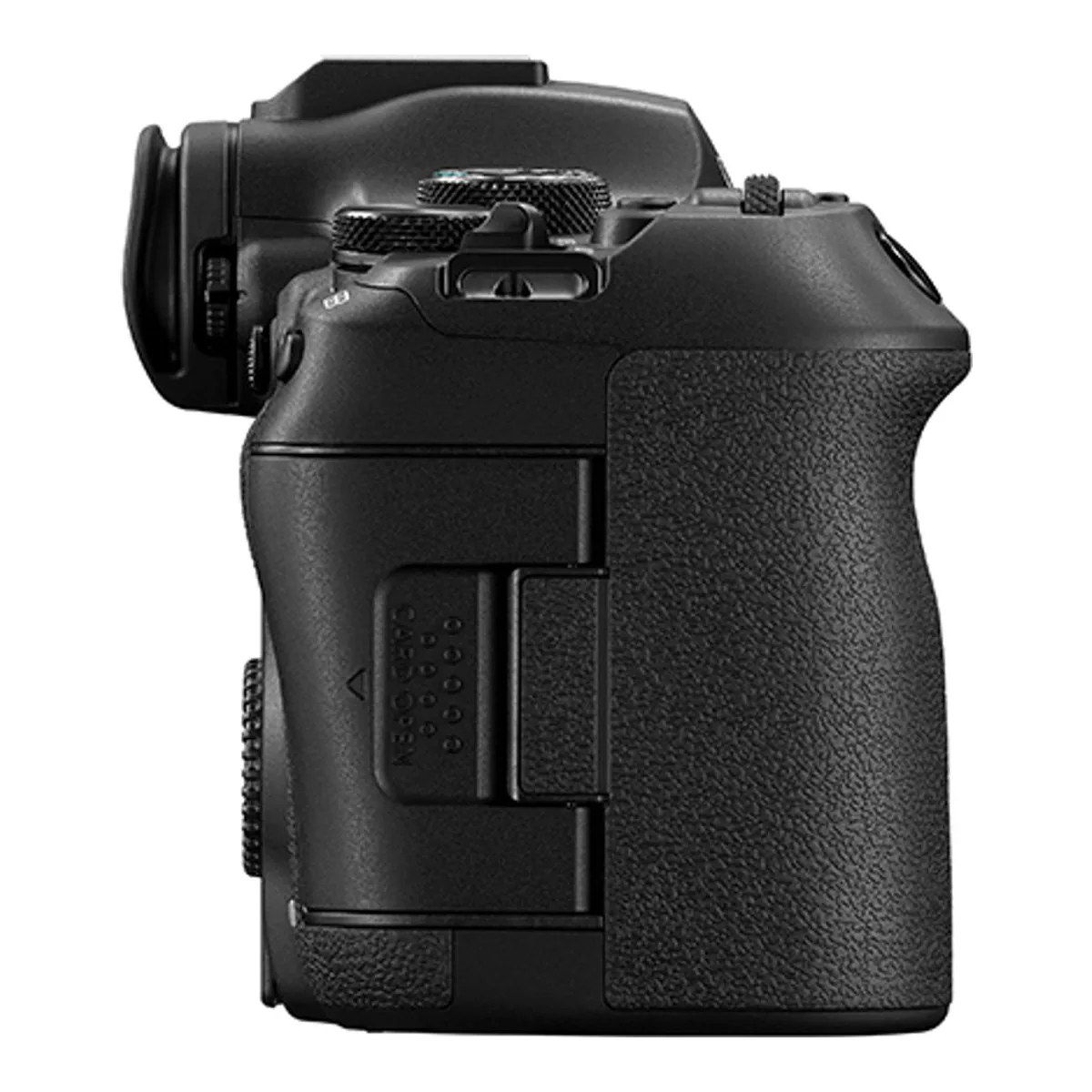
Lenses are where an owner on the Canon side argues for the Sony. One of the 15 R6 Mark III owners we counted loves the camera and writes, "I wish Canon users have access to third party full frame lens", then tells first-time buyers to go Sony or Nikon. DPReview notes that Sony allows third-party lenses on E-mount but limits non-Sony lenses to 15 fps, so the a7 V's 30 fps burst needs Sony glass.
What owners report so far
Both corpora are young. Across 402 commenters under a7 V videos, one body failed, and Sony swapped it for a new one after blaming the main board. Nobody among them reports overheating. Under R6 Mark III videos we counted 15 owners in 415 comments, eight of them writing within days of delivery, and none reports a thermal shutdown.
Neither record says anything yet about wear.
When neither is right
If you shoot long, ambitious video takes all day, a body with a fan suits you better than either; DPReview points to the Panasonic S1II, whose fan lets it record those modes for longer. If you only shoot photos and your lenses are Canon EF, the Canon reads them through Canon's adapter and the Sony question mostly goes away. The rest of the field, sorted by what you shoot, is on our mirrorless camera shortlist.
Before you pick a mount
The body is only half of this decision. Price the two lenses you would buy first in each mount, then the cards: a CFexpress Type B card if RAW video on the Canon is the plan, a Type A card if you want the a7 V's full buffer, which Digital Camera World puts at 85 RAW frames at 30 fps. The LP-E6NH batteries from an older Canon fit the R6 Mark III, but Canon disables several functions on them, wireless among them, so budget for LP-E6P packs too.