Canon EOS R6 Mark III review: buy for video
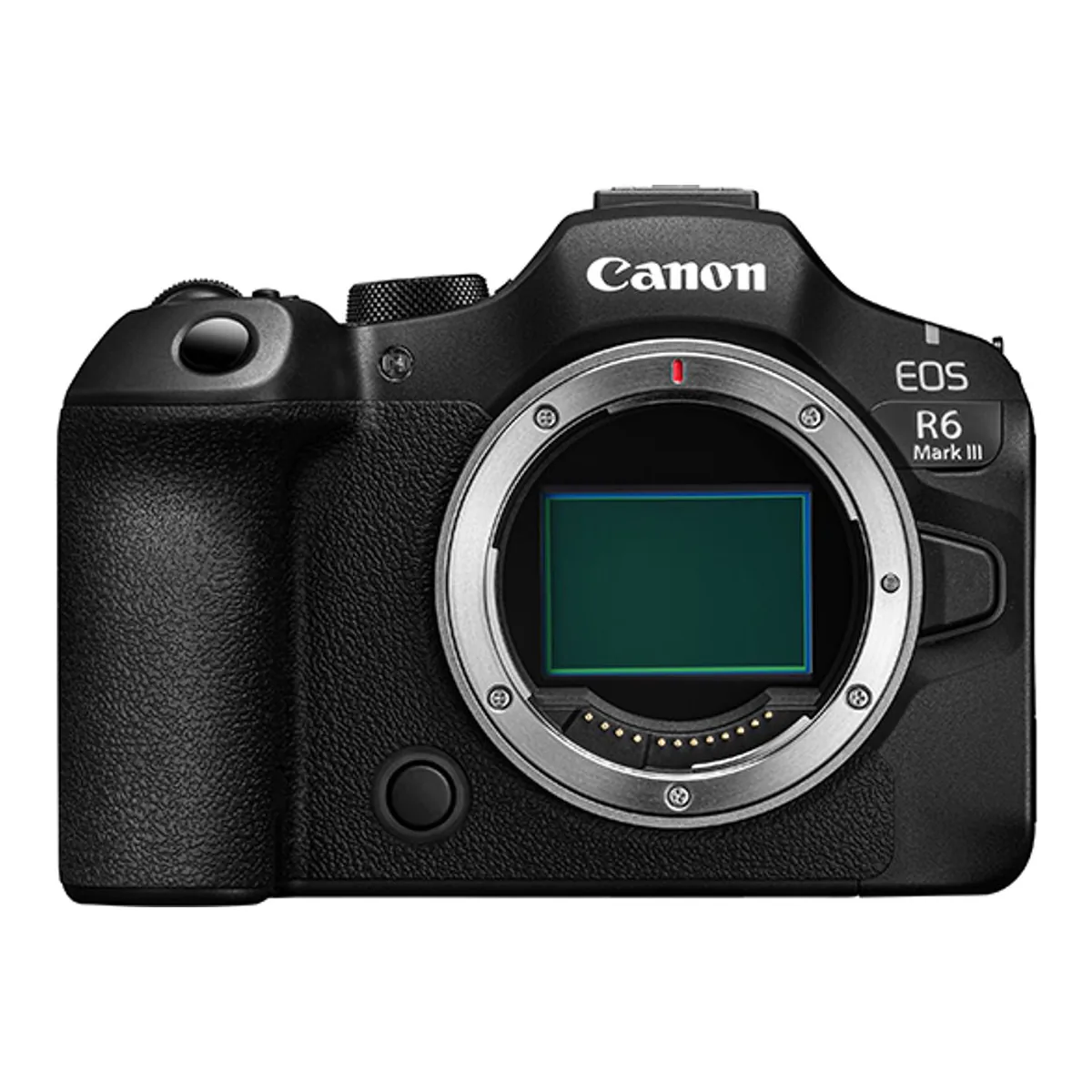
The full-frame hybrid to buy when video earns its keep: internal 7K RAW, open gate and 4K 120p without a crop, and no shutdown in two independent tests. Skip it for stills alone, where the Mark II tracks a little better, or for long RAW takes in hot sun: Canon's own figures stop 7K RAW 60p at about 23 minutes at 23°C, and DPReview expects it to struggle in direct sun.
- 32.5 megapixel full-frame CMOS sensor with the DIGIC X processor
- Sensor-shift IS rated up to 8.5 stops at the center and 7.5 at the periphery, depending on the lens
- Dual Pixel CMOS AF II with 1053 AF areas when automatically selected
- Up to 12 fps mechanical or 40 fps electronic, and pre-continuous shooting from 20 shots before the full press
- Internal 7K RAW to 60p in RAW Light, 7K Open Gate at 3:2, and 4K DCI and UHD to 119.9 fps
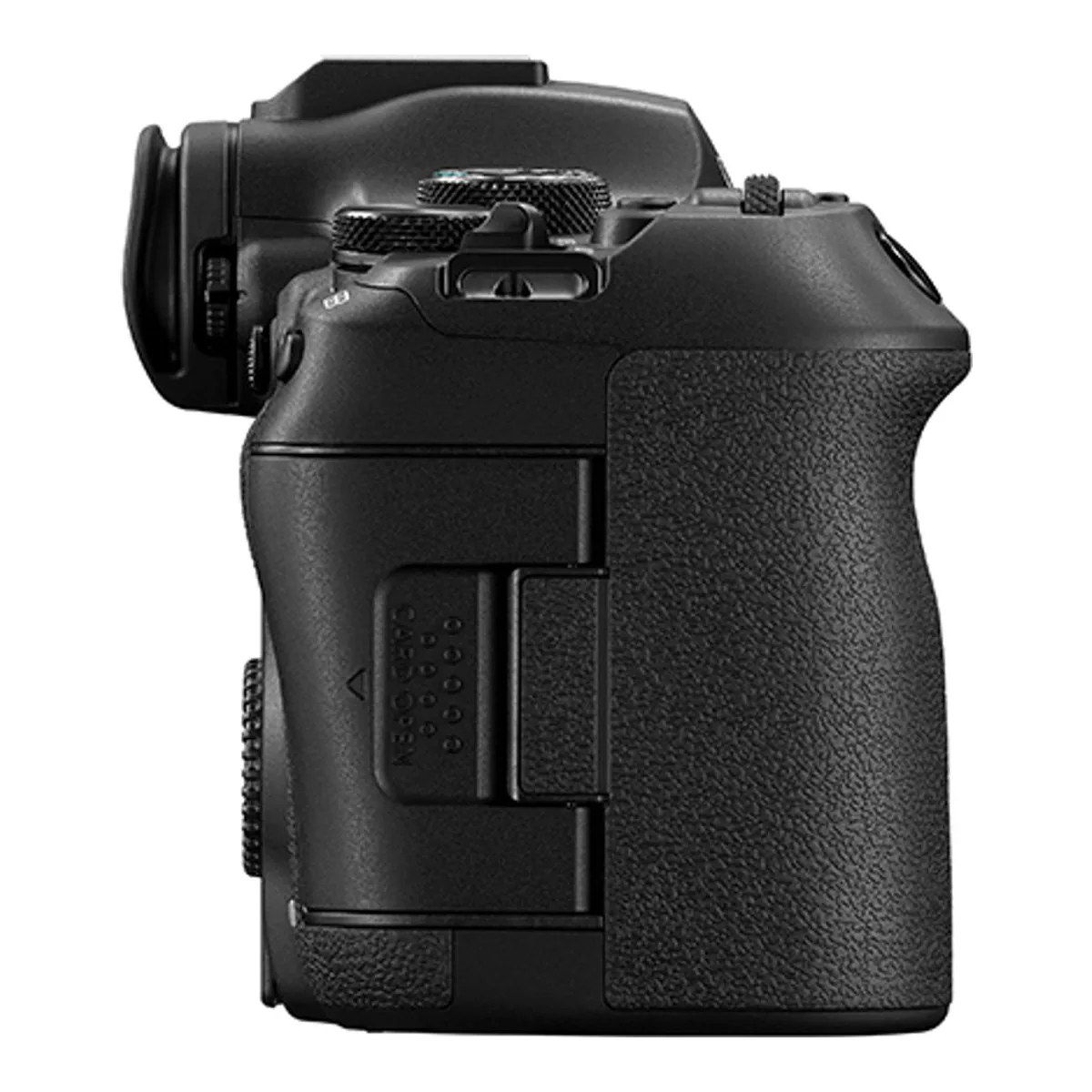
- One CFexpress Type B slot and one UHS-II SD slot
- LP-E6P battery, approximately 620 shots on the LCD or 390 through the viewfinder, in power saving mode
We earn a commission on qualifying purchases through the links here, at no cost to you. It never decides what makes the list.
Only if you film. Shoot stills alone and the Canon EOS R6 Mark III gives you about eight more megapixels, a deeper buffer and a slightly faster electronic shutter readout, while the Mark II it replaces keeps slightly more accurate tracking and holds its dynamic range further up the ISO dial. Film for a living, or plan to, and the gap runs the other way by a long distance.
That gap is why the R6 Mark III holds the video slot on our mirrorless camera shortlist. Our read below comes from Canon's specification tables, instrumented tests at RTINGS and DPReview, and the 415 comments under 13 videos about this camera, where 15 people say they have one in hand (how we count owners). Eight of the 15 wrote within days of delivery, so their reports are mostly first impressions.
R6 Mark III video: 7K RAW, open gate and the heat clock
The headline modes are all internal. 7K RAW runs to 59.94 fps in RAW Light, a 7K open gate mode records the full 3:2 sensor for vertical and horizontal crops from one clip, and 4K reaches 119.9 fps. DPReview found that 120p mode uncropped but subsampled, and noticeably softer than the oversampled 4K up to 60p. RAW needs a CFexpress 2.0 Type B card rated at least 400 MB/s, per RTINGS; proxies can go to the SD slot, alongside RAW in open gate but not with an MP4 main file.
Heat is the limit to plan around, because the body has no fan. Canon's figures at 23°C, as DPReview prints them, give about 23 minutes of 7K RAW at 60p, 23 minutes of oversampled DCI 4K 60p Fine, 28 minutes of DCI 4K 120p and 24 minutes of 7K open gate at 30p in MP4. The high auto off setting stretches only the last two, to 35 and 36 minutes. Subsampled 4K 60p, and the 4K Fine modes at 30p and slower, carry no documented limit, so a long interview belongs in 4K 30p or subsampled 4K 60p. Open gate at 30p is still capped.
Neither lab hit the wall in practice. RTINGS ran 4K for more than an hour with no interruption, and DPReview shot several projects, open gate included, without a shutdown, while expecting it to struggle in direct sun. No owner in the comments reports one. One buyer upgrading from the original R6 wrote, the day it was due to arrive: "I'm excited to finally not have overheat issues when filming 4K@30 and no 30 min recording limit."
Rolling shutter is the other trade, because this sensor is not stacked. DPReview measured 14.3 ms in the oversampled fine 4K and 7.1 ms in the standard modes, so the fast readout is the soft one.
In-body stabilization: 8.5 stops, short of a gimbal
Canon rates the sensor shift at up to 8.5 stops at the center and 7.5 at the edges, with a stabilized lens. For stills that holds up in testing. Video is harder: it smooths the shakes without replacing a gimbal: an entire handheld segment on an 85mm lens worked once warp stabilization tidied it in the edit, and a 70-200 was harder going.
Sensor and burst: 32.5 MP, and 40 fps at 12 bits
The 32.5 megapixel sensor resolves more than the Mark II and holds slightly more dynamic range at base ISO, then loses it faster as the ISO climbs. Switch to the electronic shutter for 40 fps and the readout drops to 12 bits, which costs shadow latitude. At that rate the buffer lasts around three seconds and can lock you out for up to eight while it clears. On the 12 fps mechanical shutter with a CFexpress card, RTINGS shot for 40 seconds, over 400 frames, without a slowdown.
One owner sold an R5 for it and calls the autofocus "very very good."
Battery and rated shots: about an hour of 4K
Canon rates the LP-E6P for 510 shots on the screen and 270 through the viewfinder, rising to 620 and 390 in power saving mode. Video is weaker: slightly over an hour of continuous 4K in RTINGS's test. USB-C power while recording solves a studio day. In the field, carry a spare LP-E6P. The older LP-E6NH and LP-E6N fit, but with them Canon drops the Wi-Fi and Ethernet functions, pre-continuous shooting and HDMI RAW output, may slow the burst, and limits video resolution, quality and frame rate. The original LP-E6 does not work at all.
Canon EOS R6 Mark III vs R6 Mark II
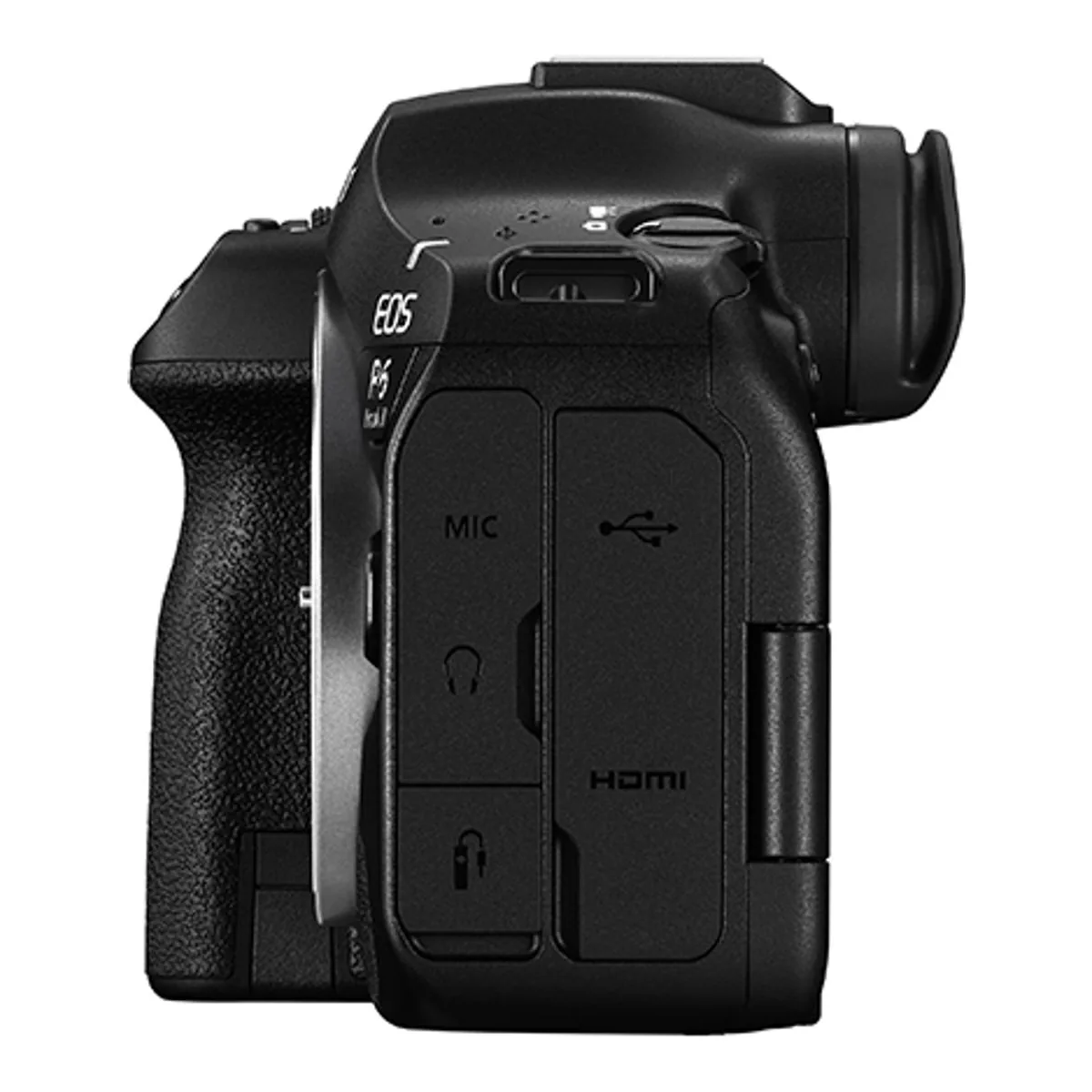
The step is a video step. Canon added internal 7K RAW, open gate, 4K 120p without a crop, a CFexpress Type B slot in place of one SD slot, a full-size HDMI port where the Mark II had micro HDMI, and a much deeper buffer. Yet the R6 Mark II kept more frames sharp in RTINGS's tracking test, though DPReview found the III's autofocus the more reliable, and RTINGS credits the Mark II with steadier face tracking in video, less rolling shutter in video and longer video runtime per battery. One owner runs both.
If your Mark II only ever takes photos, keep it.
R6 Mark III vs Sony a7 V
Pick the Sony a7 V for photos and stamina: its partially stacked sensor holds wider dynamic range in stills, and the battery lasts much longer. Pick the Canon for video and for the grip, which RTINGS rates the more comfortable of the two. Sony crops the a7 V for 4K 120p, and it records no RAW video.
Cards, lenses and the grip it takes
Four things to check before the box arrives. A CFexpress Type B card, if RAW video or the full buffer is the plan. The R6 Mark III battery grip, the BG-R20, which takes two LP-E6P batteries and roughly doubles the shot count. Lightroom: one owner is sending theirs back because it "Doesn't work with light room." On DPReview's forum, one user opened its sample raw files in Lightroom Classic and another says Adobe lists the camera from its October 2025 release. Run a current version of Lightroom before the first import. And the R6 Mark III stop motion version Canon sells beside this one, whose firmware raises live view to 1920x1280 for Dragonframe; this listing is the plain body.
Then the lenses. Three of the 15 owners came straight from a Canon DSLR, a 5D Mark III, a 70D and a 90D, and their EF glass can come with them. EF and EF-S lenses mount through Canon's EF-EOS R adapters, at 1.0x the focal length for EF and 1.6x for EF-S, while EF-M lenses do not fit at all.
A closer look at the Canon EOS R6 Mark III
Made up your mind?