WORX WR320 vs WR342: what 4WD buys
Buy the WR320 for a half acre lawn that is mostly flat: it carries the identical battery, charge time and cutting range for six fewer pounds of chassis. Buy the WR342 only where the lawn has real grade or uneven ground, because WORX's own spec table rates it for more than double the incline before the drivetrain earns its keep.
What decides it: Whether 4WD buys real slope capacity, not a bigger battery.
We earn a commission on qualifying purchases through the links here, at no cost to you. It never decides what makes the list.
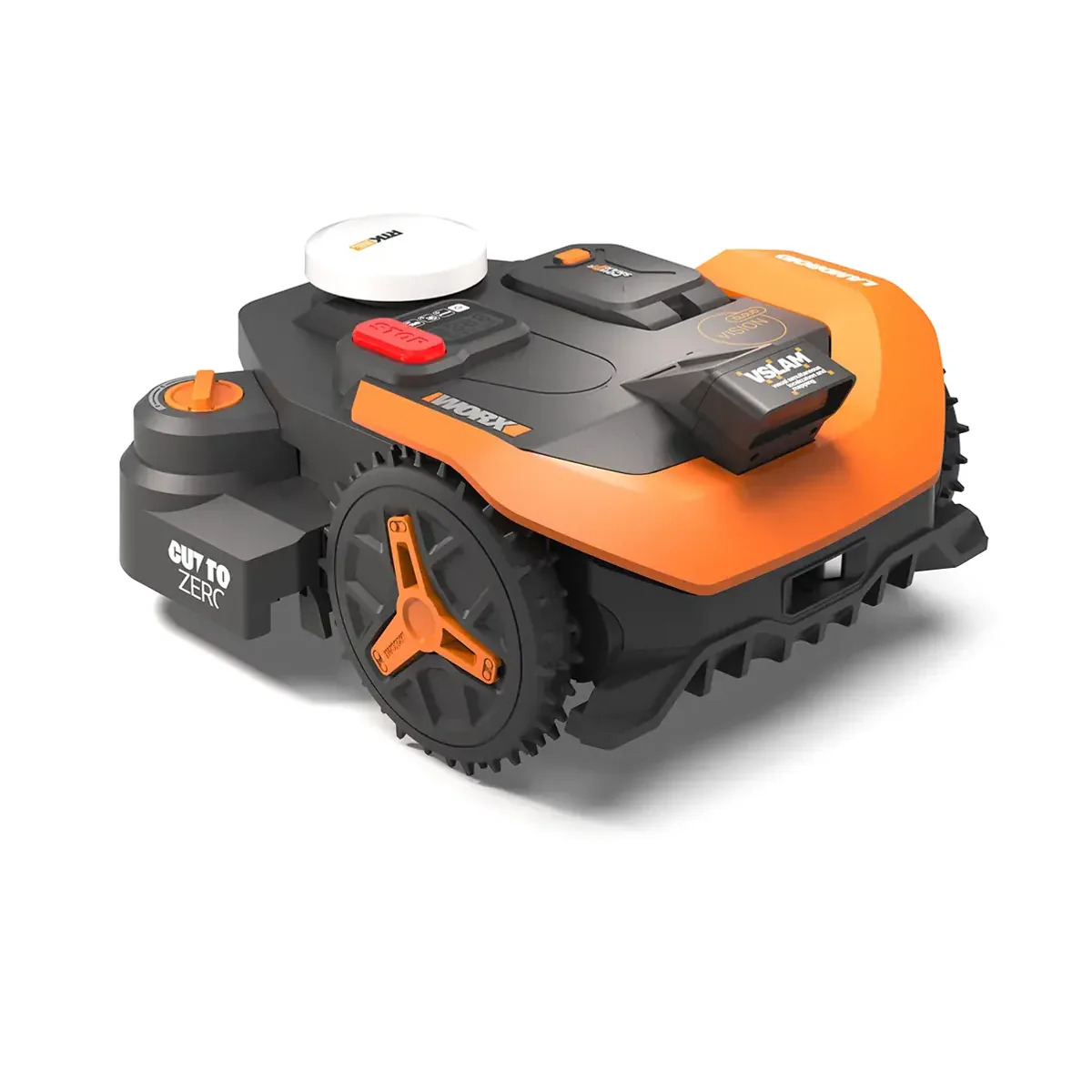
WORX WR320
Pick this if a half acre lawn that is mostly flat, where the identical battery, charge time and cutting range make the plainer chassis the one with nothing extra to carry.
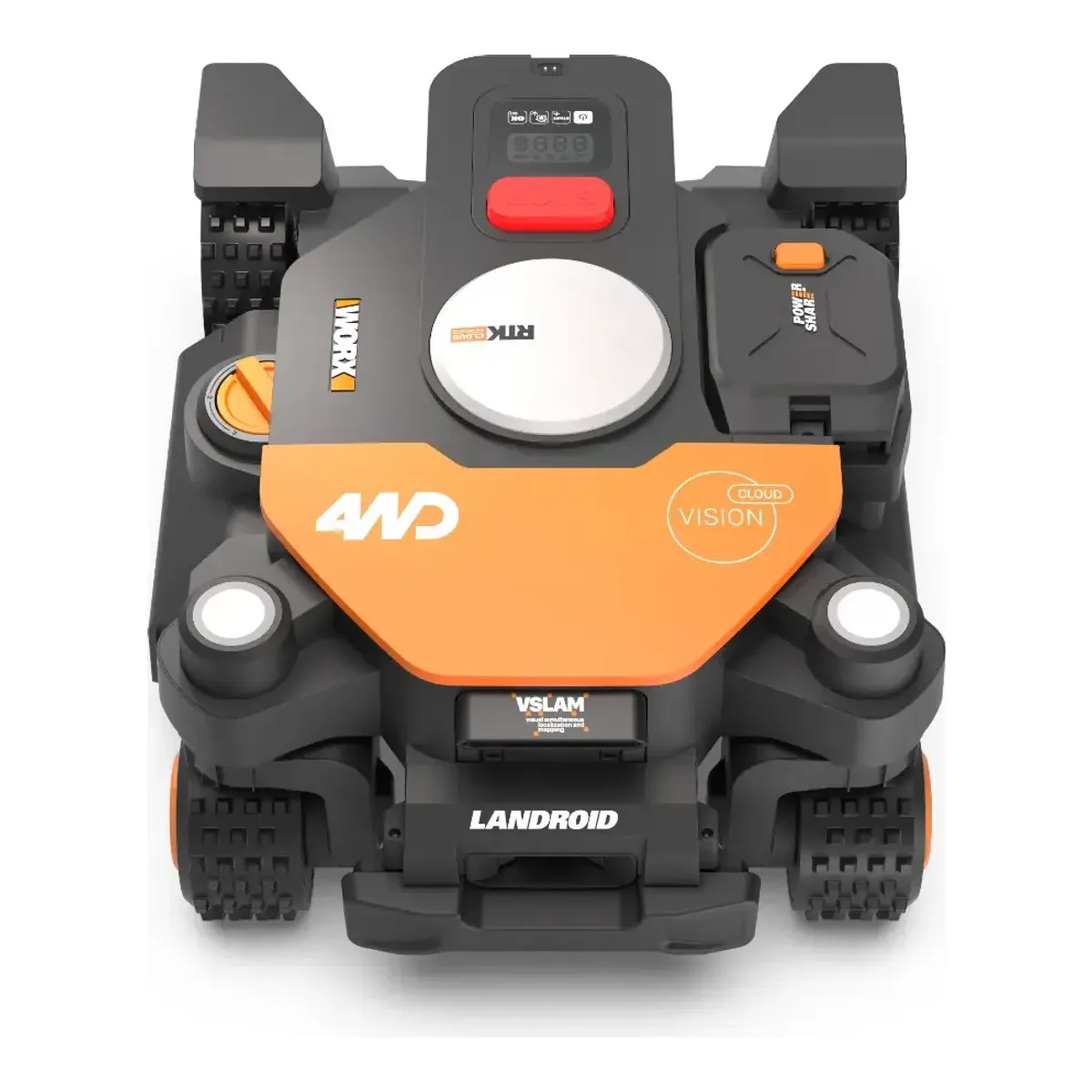
WORX WR342
Pick this if a half acre lawn with a real grade or uneven ground between the beds and the turf, rated to climb well past what the WR320's own spec table stops at.
| WORX WR320 | WORX WR342 | |
|---|---|---|
| Coverage | 0.5 acre | 0.5 acre |
| Boundary method | Wire-free, RTK Cloud + V-SLAM | Wire-free, RTK Cloud + V-SLAM |
| Max slope | 30% (17°) | 84% (40°) |
| Cut height | 1.57 to 3.54 in, electric | 1.57 to 3.54 in, electric |
| Obstacle avoidance | Stereo-vision AI, identifies anything that is not grass or leaves | Stereo-vision AI, identifies anything that is not grass or leaves |
| Multiple zones | Yes | Yes |
| Runtime and charge | Not stated; charges in 100 min on a 20V 5Ah battery | Not stated; charges in 100 min on a 20V 5Ah battery |
WORX sells the WR320 and the WR342 to the identical half acre lawn, on the identical 20V 5Ah battery, with the identical 100 minute charge. Ask what actually separates a WORX WR320 vs WR342 purchase and it comes down to one drivetrain and the slope number bolted to it. WORX's own marketing copy for the WR342 does not even repeat that number consistently once you keep reading past the spec table.
WORX WR320 vs WR342: identical lawn, identical battery
Coverage rates the same 0.5 acre on both machines, per each one's own manufacturer page. Battery capacity matches too, 20V 5Ah on both, in a charge WORX states as 100 minutes on either mower. Cutting height runs the same 1.57 to 3.54 inches, electrically adjusted on both, and both carry the same RTK Cloud plus stereo-vision navigation with no on-site antenna to plant. None of that separates a WR320 from a WR342, because none of it is different.
What is different sits under Maximum slope. WORX's own spec table states 30% (17°) for the WR320 and 84% (40°) for the WR342, the widest single-figure gap on this shelf between two mowers rated for the same size lawn. The WR342's own marketing copy repeats that climb further down the same page as 83 percent, not 84, a rounding-level self-contradiction against its own spec table with no second real figure behind it. We follow the spec table's 84 percent, the same way every comparison on this shelf treats a structured row over body prose.
Basis: manufacturer specification tables for both mowers, and the WR342's own product page for the marketing-copy figure it does not quite repeat.
What the extra drivetrain is built to survive
WORX's own product page states three things about the WR342 that the WR320's page states about neither: four wheel drive, front-wheel steering, and a terrain-adaptive chassis, the last one also its own checkbox row in the WR342's spec table. The chassis claim is specific. WORX describes the WR342 pivoting on independent front and rear axles so all four wheels stay planted over uneven ground, and steering through the front wheels. Spinning either side at a different speed is what WORX's own page names as a drawback of four-wheel-drive mowers generally, with no rival named. Search the WR320's entire cached product page for the words four wheel drive, terrain-adaptive or skid-steer and none of them appear once.
That difference in the chassis costs weight. WORX states 31.0 lbs with the battery for the WR320 against 37.3 lbs for the WR342, the extra drivetrain hardware adding just over six pounds to an otherwise identical machine. One 4WD platform owner, the exact model not stated in the cached thread, reports a sloped side yard with exposed roots handled without the mower once getting stuck across a month of runs, which is the kind of ground the WR320's own spec table gives no rating for at all.
Basis: manufacturer specification tables and each model's own product page, for both mowers.
A flat half acre against a real one
A flat half acre wants the WR320. Nothing above changes for it: the same RTK Cloud signal, the same stereo AI camera, the same Cut-to-Zero edge module, the same electric cutting range, on six fewer pounds of chassis built to do work a level lawn never asks it to do.
A half acre with a real grade wants the WR342. Its spec table rates it for more than double the WR320's incline, and on that yard the four-wheel drivetrain stops being a line nobody reads and becomes the reason to buy the mower. That rating is still a manufacturer number. An outside test of the smaller WR341E, the same 4WD chassis at a quarter acre, found it held traction crossing the face of a slope and not only climbing straight up it, the harder failure mode a single percentage does not describe.
How steep a slope actually gets before a mower loses its footing is the next read, before either rating settles anything.
A lawn that is not close to half an acre is a different rung entirely. WORX sells the same Vision Cloud 4WD chassis at a quarter acre, one acre and an acre and a half too, compared rung by rung on the WORX lineup page.
The WR342's own setup week, the firmware updates and the Wi-Fi trap that neither spec table mentions, is covered in full in its own review.
Somebody who has not settled on WORX at all should see the wider shelf, where staked antennas, LiDAR and Network RTK answer the same steep-yard question with three different kinds of hardware instead of a chassis upgrade.