Roborock Robot Lawn Mowers Compared (Q110H, X115H, X120H LiDAR, X130H)
For a lawn shaded by a house or trees and well inside half an acre, stop at the X120H LiDAR. It shares the RTK X1's four-wheel-drive chassis, deck and 80 percent slope rating and needs no satellite fix, but it mows slowly. On open lawns the X115H covers up to 3/8 acre and the X130H from there to 1 acre; past an acre, no Roborock is rated for the lawn. The RockNeo Q110H suits only a flat quarter acre, and no source we read tests a Roborock on a big shaded lawn.
We earn a commission on qualifying purchases through the links here, at no cost to you. It never decides what makes the list.
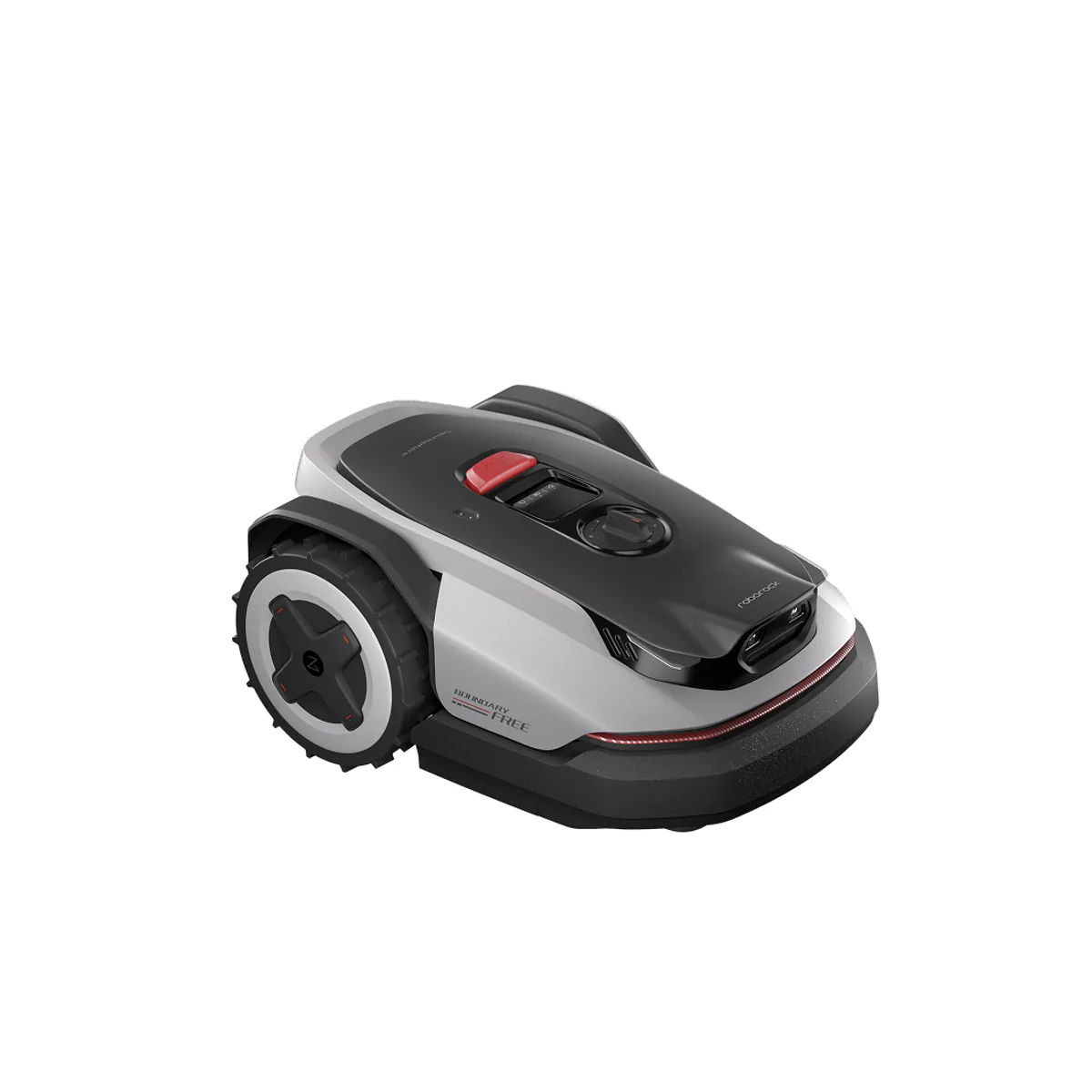
Roborock RockNeo Q110H
Stop here if your lawn is flat, a quarter acre or less, and kept short. Both independent tests we read found it can struggle on grades nearing its 45 percent rating.
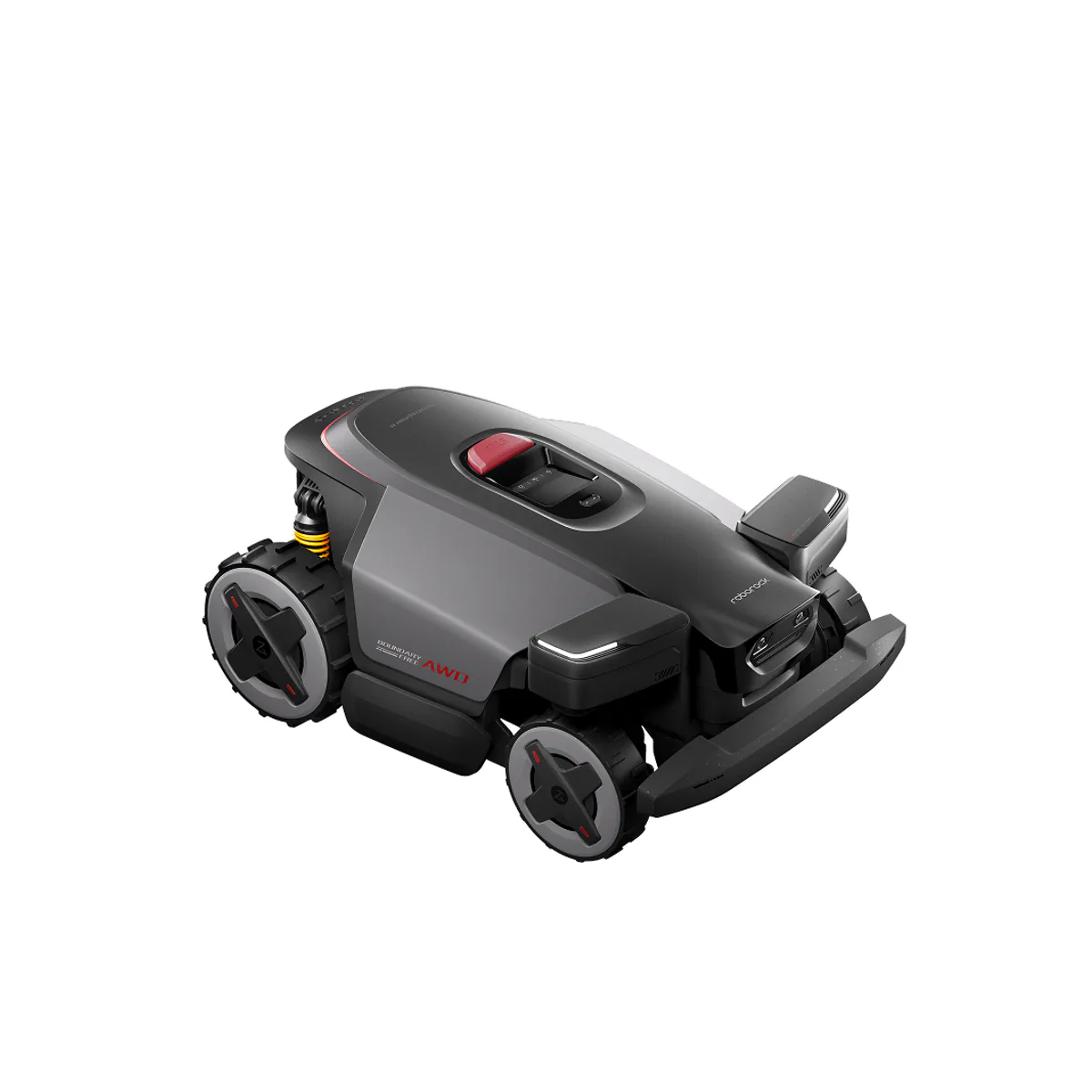
Roborock RockMow X115H
Stop here if your lawn is sloped, open to the sky and no bigger than 3/8 acre. On the same 6 Ah battery it is rated for ten minutes more per charge than the LiDAR model.
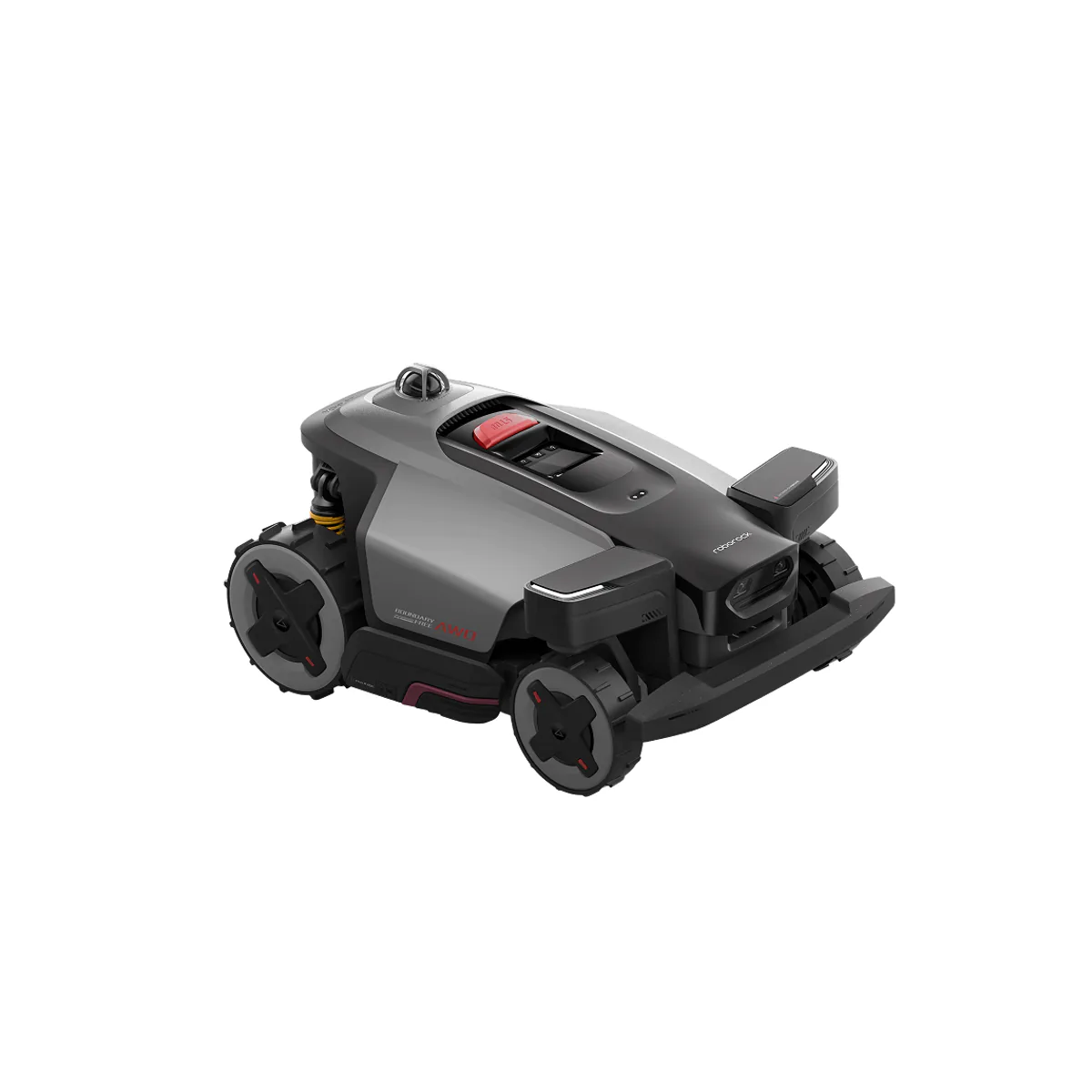
Roborock RockMow X120H LiDAR
Stop here if trees or the house shade part of a lawn comfortably under half an acre, the places a satellite fix drops out. Our full review covers this rung.
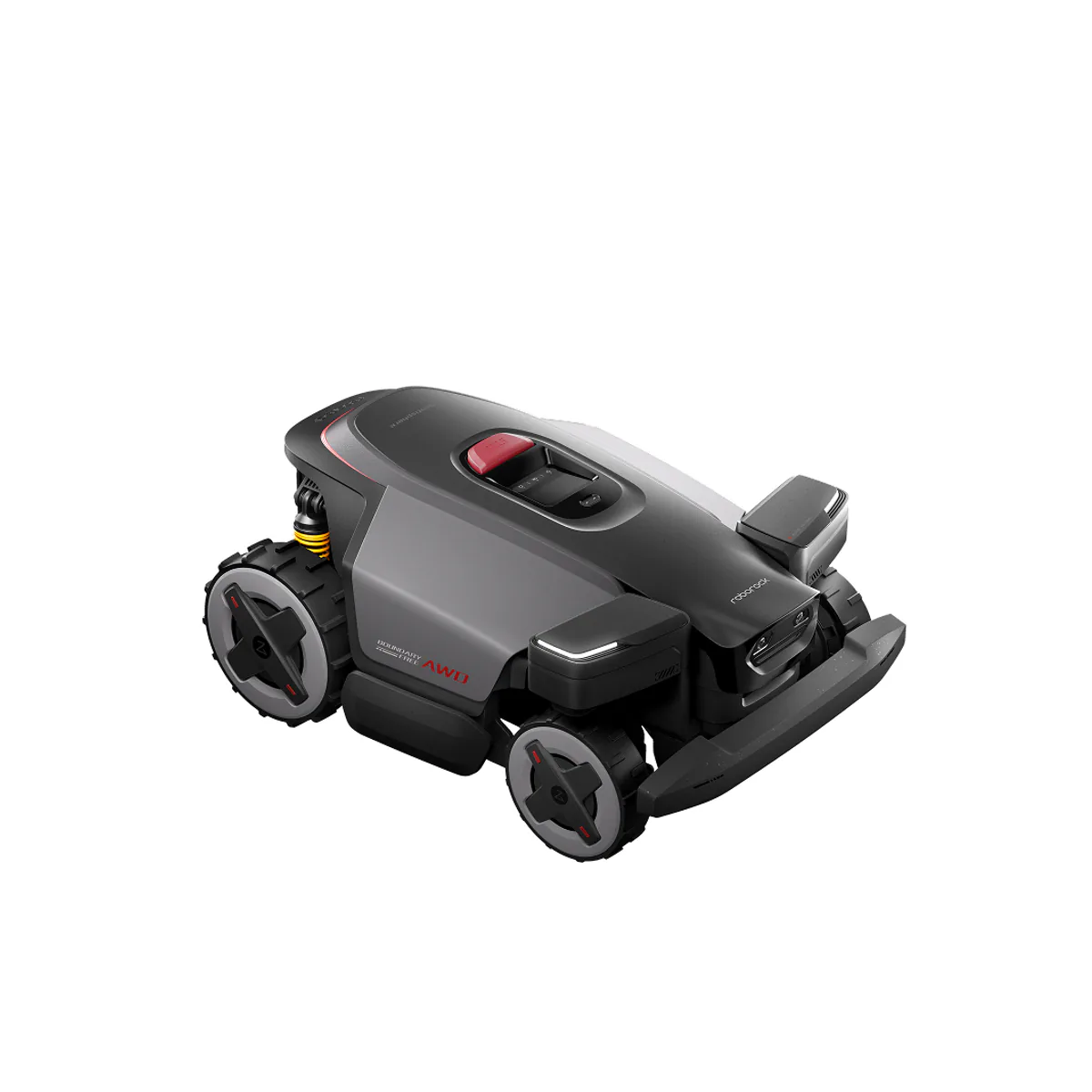
Roborock RockMow X130H
Stop here if your lawn is open, bigger than 3/8 acre and no more than 1 acre, and the schedule can give a 9.4 in deck long days to cover it.
| Coverage | Drive | Positioning | Slope | Battery | Mowing per charge | Deck | |
|---|---|---|---|---|---|---|---|
| Roborock RockNeo Q110H | 1/4 acre | Rear-wheel drive | RTK + VSLAM | 45% (24°) | 4.6 Ah, 75 min charge | 130 min | 3 blades, 8.7 in, 0.8 to 2.4 in, manual |
| Roborock RockMow X115H | 3/8 acre | 4WD, active steering | Full-band RTK + VSLAM | 80% (39°) | 6 Ah, 60 min charge | 120 min | 6 blades, 9.4 in, 1.6 to 3.5 in, electric |
| Roborock RockMow X120H LiDAR | 1/2 acre | 4WD, active steering | 3D LiDAR + VSLAM, no RTK | 80% (39°) | 6 Ah, 50 min charge | 110 min | 6 blades, 9.4 in, 1.6 to 3.5 in, electric |
| Roborock RockMow X130H | 1 acre | 4WD, active steering | Full-band RTK + VSLAM | 80% (39°) | 7.5 Ah, 70 min charge | 140 min | 6 blades, 9.4 in, 1.6 to 3.5 in, electric |
Three of the four Roborock robot lawn mowers on Amazon cut the same 9.4 in swath. The 3/8 acre X115H, the half acre X120H LiDAR and the 1 acre X130H share one deck, one four-wheel-drive chassis and one 80 percent slope rating. So the acreage in each name tells you less than it seems to. What splits the line is how each mower knows where it is.
Roborock's US store sells the X115H and X130H as two variants of one product, the RockMow X1, and the X120H as the RockMow X1 LiDAR. Roborock first showed the X1 at IFA 2025 as the Z1, and that name still slips into its own X1 copy. A fourth mower, the RockNeo Q110H, comes from a smaller rear-drive line. If you are still choosing between brands, our robot mower shortlist ranks the whole field.
Behind the ladder: Roborock's US spec tables for all four, AndroidGuys' test of the US Q110H, Notebookcheck's test of its European Q105 sibling, The Hook Up's 13 mower comparison, which included a pre-release X120H, and seven X120H owners counted for our review.
Roborock robot lawn mowers split on positioning, not size
RTK corrects a satellite fix against a reference point. That point is a station you mount in the yard, or, with network RTK, a provider's remote stations offered as a service. Both the RockNeo Q110H and the RTK X1 pair fuse it with VSLAM, camera positioning that takes over when the sky disappears. In the X1 box sits an RTK reference station and an extension cable for it, and Roborock's X1 page also describes network RTK with no base station. Only the X120H drops satellite positioning.
You see the difference beside a house. The Hook Up sent his mowers into a side yard where GPS reception is poor, and several GPS machines came apart: one mowed outside its boundary into a concrete pad, and another lost its GPS lock before it even got there and steered into the foundation. A Navimow X430 stayed in bounds. Every mower positioning on 3D LiDAR, the RockMow X1 LiDAR among them, had no problems. His Roborock was the LiDAR model, so whether the RTK X1's four cameras beat the fallbacks he watched fail is unproven either way.
Network RTK carries a catch of its own: The Hook Up calls it a service that is free now and probably will not be free forever.
Settle which boundary method your yard needs before a model number settles it for you.
RockNeo Q110H: a smaller mower with its own limits
Almost nothing mechanical carries over from the X1. The Q110H drives its rear wheels only, with two unpowered casters up front, and Roborock rates it for 45 percent (24 degrees) and 1.6 in obstacles. Three blades on an 8.7 in deck are set with a dial on the mower, from 0.8 to 2.4 in, and a 4.6 Ah battery gives 130 minutes per charge. At 27.1 lbs it weighs a little over half what an X1 does.
It has advantages of its own. Nothing in the X1 family cuts below 1.6 in, so a warm season lawn kept short has exactly one Roborock that can follow it down. Roborock gives it 130 minutes per charge, a longer rating than the X115H's or the X120H's, and rates it through 2.3 ft passages against 2.6 ft for the RTK X1.
Traction is the price. Scott Webster at AndroidGuys, testing the US Q110H, found the rear wheels can spin on loose or wet ground and lose grip climbing, while the casters slide on descents and catch in divots. He would treat the 45 percent maximum "as a specification rather than a recommendation". Notebookcheck's Marcus Schwarten ran the European Q105, the same mower on a 4 Ah battery. Navigation off the RTK antenna was reliable on his test lawn of about 300 square meters, though it sometimes skipped areas and came back for them late in the run. Its optional PreciEdge edge module was let down by software that gave overhanging border plants, and sometimes shadows, a wide berth. AndroidGuys adds that the module cuts at a fixed 55mm (about 2.17 inches) whatever height the main deck is set to.
Roborock's own US page carries two catches worth reading before checkout. Tracking over 4G needs the 4G and Anti-Theft Module, sold separately, where every X1 has 4G built in. And the Wi-Fi amplifier in the charging station that Roborock advertises is footnoted to the Q105N and Q110N; Amazon sells the Q110H.
On positioning, Roborock now pitches network RTK with no antenna to install, and its US box list names no reference station. AndroidGuys' review describes an included one, and says a firmware update added the network option that can make it unnecessary.
Roborock's US site also teases a RockNeo Q2 LiDAR: 45 percent slopes, three blades and 360 degree LiDAR with two cameras, with no rated area, no drivetrain detail and no date yet.
If your yard is flat and shaded, that is the Roborock to watch.
X115H and X130H: one mower, two batteries
Roborock's spec table for the pair differs on five lines. Rated area goes from 3/8 acre to 1, the battery from 6 Ah to 7.5, mowing time from 120 minutes per charge to 140, charging from 60 minutes to 70, and weight from 46.7 lbs to 47. Everything that shapes the cut is shared: six blades, the 9.4 in deck, electric height from 1.6 to 3.5 in, four-wheel drive with active steering and suspension, 80 percent, 3.1 in obstacles and Quad Vision avoidance.
That shared deck is why the X130H's acre deserves a second look. The Hook Up timed the LiDAR X1, on the same deck, at 2 hours and 5 minutes for a 0.1 acre back yard. At that pace an acre is about 20 hours and 50 minutes of blade time before a single recharge is counted. Your lawn's shape moves that figure. The deck width does not, and our guide to reading an acreage rating works it through against your own square footage.
X120H LiDAR: the same mower without the antenna
The LiDAR rung keeps the X1 drivetrain, deck and slope rating. Navigation is what changes: it positions on 3D LiDAR fused with VSLAM, avoids obstacles with Vision-LiDAR fusion in place of Quad Vision, and ships with no reference station. The dome makes it 13.1 in tall against 11.6 for the RTK pair, and it weighs 47.8 lbs to the X115H's 46.7. On the same 6 Ah battery it is rated for ten minutes less per charge than the X115H, though The Hook Up's unit ran past its own 110 minute rating, and it recharges ten minutes faster. Roborock rates it for 1/2 acre against 3/8 all the same. Its half acre carries a footnote saying it was reached within 24 hours, charging included, and the Q110H's quarter acre says 12 hours; the X1 page gives its 3/8 and 1 acre no basis, so the ratings may not be measured alike.
Speed is its weak spot. The Hook Up, testing a pre-release unit, named lower than average mowing capacity as one of its two downsides, and he aimed it at small to medium suburban lawns. Software is not a reason to pick either X1 over the other: Roborock footnotes AI mapping, custom pattern mowing and per-zone settings as arriving in an upcoming OTA update on the RTK and LiDAR pages alike.
It is also the X1 with evidence behind it. The Hook Up kept one as his own mower after testing 13. Of the seven owners counted for our RockMow X120H review, four report it working well, two of them within their first days. One calls it okay but slow and would never recommend spending that kind of money on it, one says it does not cut well, and one, matched to the model only by a video title, sent theirs back over what they called an apparent hardware error.
Who should stop where
Start with slope. A grade past 45 percent, or soft and uneven ground, rules out the Q110H, and our slope guide shows how to measure it. Then look up. A lawn shaded by trees or hemmed in by the house points at the X120H, the one rung that needs no satellite fix, as long as the lawn sits well under its half acre rating. Bigger and shaded, the step up is the X130H, an RTK machine whose camera fallback no source we read has tested. Under open sky, choose on area: up to 3/8 acre is the X115H, and from there to 1 acre the X130H, since a half acre rating leaves little room on a mower The Hook Up found slow. Past an acre, no Roborock is rated for the lawn. A flat quarter acre cut short is the case for the Q110H.
What we would check next
Two things, before calling the RTK X1 the equal of the LiDAR one. First, the side yard: put an X115H in a strip like The Hook Up's and see whether Quad Vision holds the line where other camera fallbacks wandered. Second, the acreage: time an X115H and an X120H on the same open lawn, since Roborock rates them differently on one battery and explains only one of the two numbers. Until both are answered, the X120H is the X1 with receipts.