JET ProShop II review: 52 inches of rip on a 120 volt plug
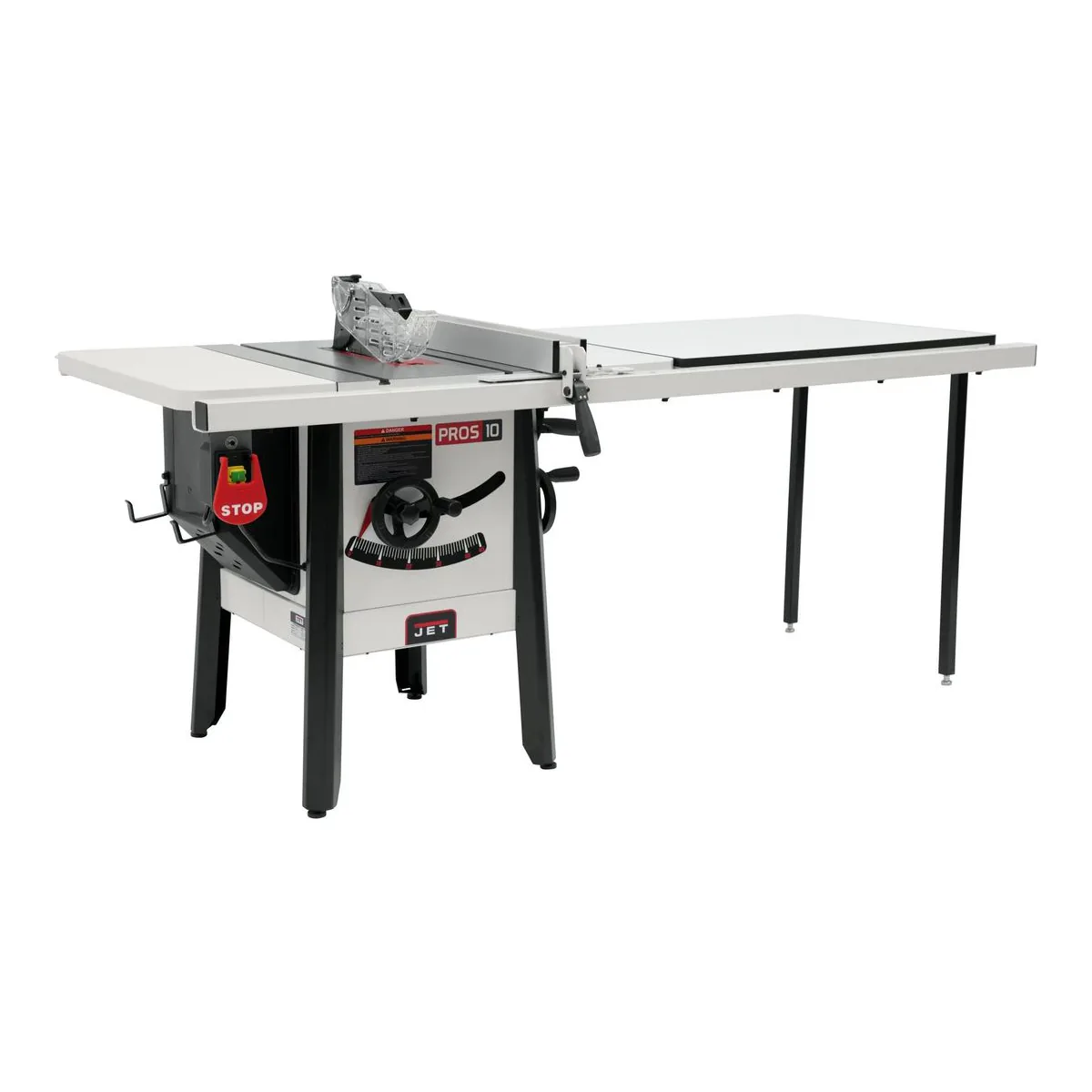
The JET ProShop II is the wide-rip table saw for a shop with no 230 volt circuit: 52 inches of rip on a standard 5-15P plug, with a blade, a cord and a magnetic no-volt-release switch in the box, and a riving knife that comes off without tools.
- 1.75 HP motor on 115 volt power
- 52 inch rip capacity with steel extension wings
- 10 inch blade on a 5/8 inch arbor
- 3.125 inch maximum depth of cut, 4 inch dust port
- Lever-released riving knife and a magnetic no-volt-release switch
We earn a commission on qualifying purchases through the links here, at no cost to you. It never decides what makes the list.
If the shop has no 230 volt circuit and no plan to add one, this is the saw on the table saw shortlist that still rips 52 inches. The JET ProShop II arrives wired for 120 volt with a six foot cord and a 5-15P plug already on it, the ordinary three-prong plug in a household wall. JET's manual puts a 10 inch 40 tooth blade and the arbor wrench in the box too.
Then it asks for two different circuits, depending on which JET document you read.
The circuit JET cannot agree with itself about
The manual for this saw asks for a dedicated 15 amp circuit and fits a 5-15P plug, the one a 15 amp receptacle takes. JET's own web spec page for the same stock number says 20 amp. Both are JET's, and they do not match. The same two documents also write the supply itself differently, 120 volt in the manual and 115 volt on the web page. That one is a single circuit called two things, and no real disagreement.
The amp figure underneath both is the part that cannot be right. JET prints 7.4 A for this 120 volt saw on both documents, as a bare motor-amps field on the web page and as listed full load amps in the manual, where the 230 volt version of the same machine gets 14.8 A. Those are backwards. A 1.75 HP motor is about 1,300 watts at the shaft, and 120 volt times 7.4 amps is only about 890 watts going in, which cannot produce it. Swap the two and the input works out almost identical at either voltage, as one motor should. The manual's own starting and no-load rows run the correct way round, 36 amps against 18 and 3.7 against 1.8, so the full load row is the odd one out. It is no JET convention. Wire the saw to the 20 amp circuit its web page asks for, and the 15 amp plug it ships with then sits inside a circuit with room to spare.
JET ProShop II rip capacity: 52 inches, and 13-1/2 on the near side
The manual gives rip right of the blade as 30 or 52 inches depending on the rail set, and this is the 52 inch kit, stock number 725005K. That makes it the widest rip on this shelf, wider than the 50 inches JET's own 3 HP cabinet saw reaches. Left of the blade you get 13.5 inches, which beats that cabinet saw's 12. Depth of cut is 3-1/8 inches at 90 degrees and 2-1/8 at 45, and the arbor takes a 13/16 inch dado stack at up to 8 inches in diameter, the same dado ceiling JET publishes for its XACTA cabinet saw.
The main cast iron table is 20 by 27 inches, reaching 44 by 27 with the wings on, and JET gives the assembled saw as 82 by 40 inches with the 52 inch rail set against 60 by 40 with the 30 inch one. That 82 is the span to measure the wall against, since the rails run left to right. It is a long way past the base underneath it, which the manual puts at 23-1/2 by 24-1/2 inches. JET's web page disagrees there too, repeating the assembled 82 by 40 in its base field. Of its three self-contradictions on this saw, that one is the easiest to spot. The rails, the wings and the wood extension table this kit includes account for the difference.
The riving knife, the guards, and a switch that stays off
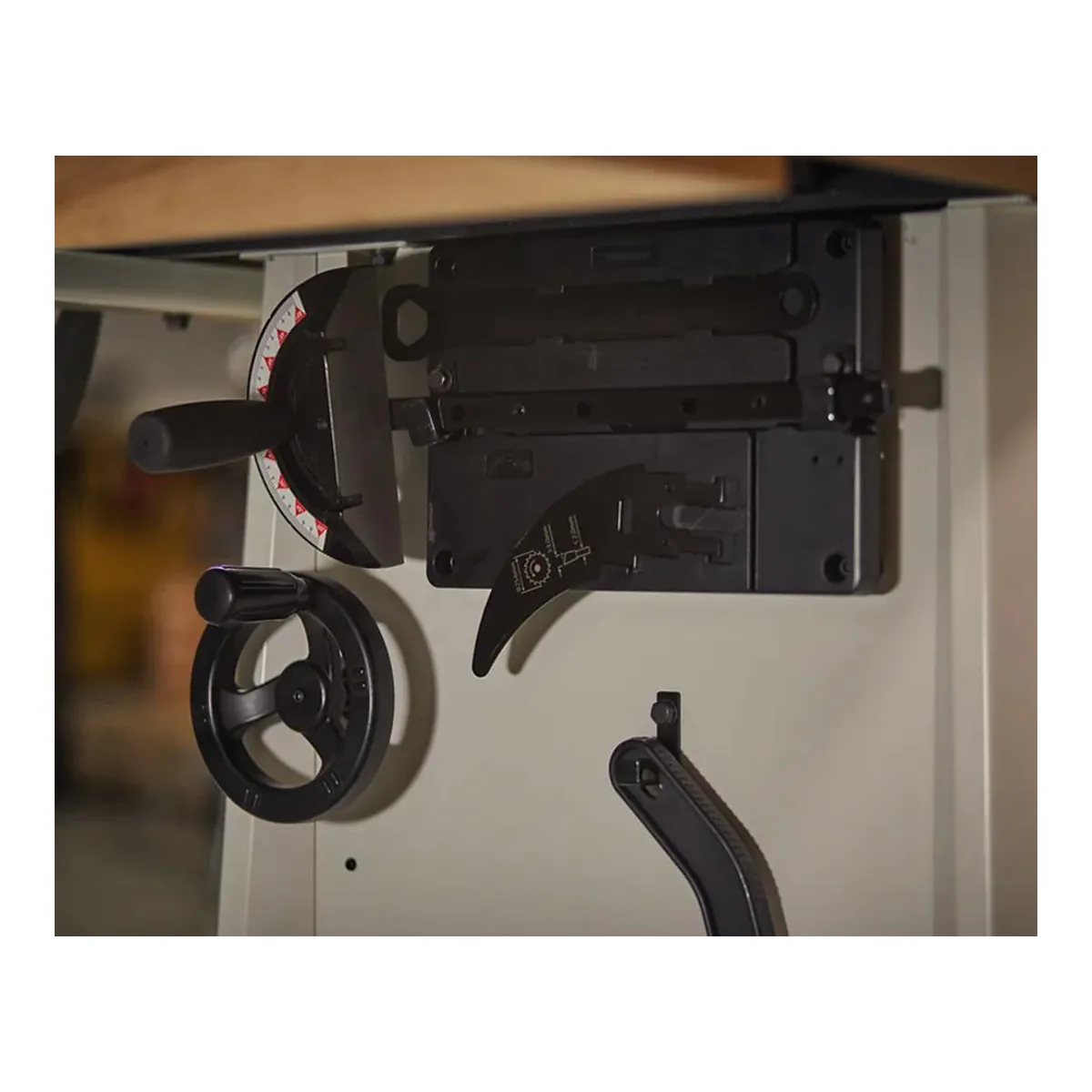
Two riving knives ship with this saw. Learn the difference between them before the first cut, because it is a safety detail. The blade guard mounts on the standard knife, and the manual changes it with a lever. No wrench: pull the lever up through the table opening, swap, push it back down. The second knife is low profile, sitting just below the top of the blade so it can stay in for non-through cuts like a dado or a groove, and the manual is explicit that the blade guard is not used with that one. JET sets the knife-to-blade gap at the factory and still tells you to verify it before the first cut, and again after every blade change: it must land between 0.12 and 0.32 inches, and the manual carries the procedure for bringing it back if it does not.
Roland Johnson's test of this platform in Fine Woodworking adds the parts a spec sheet cannot: alignment pins make the low-profile knife easy to put back where it was. The two blade guards lift independently and hold themselves up on detents, so a cut close to the fence stays workable with a guard on, where otherwise it becomes a reason to remove one and never refit it. The arbor arrived parallel to the miter slots, elevation and tilt reached 45 degrees easily, and the miter gauge bar carries expansion screws so it can be snugged into the slot instead of rattling in it.
One caveat on that test, because it governs which findings transfer: Johnson ran a cast-iron-wing saw with the 30 inch fence, listed as JPS10-115 against this manual's JPS2-115, so his observations are used here for the machine and not for this kit's rails or wings.
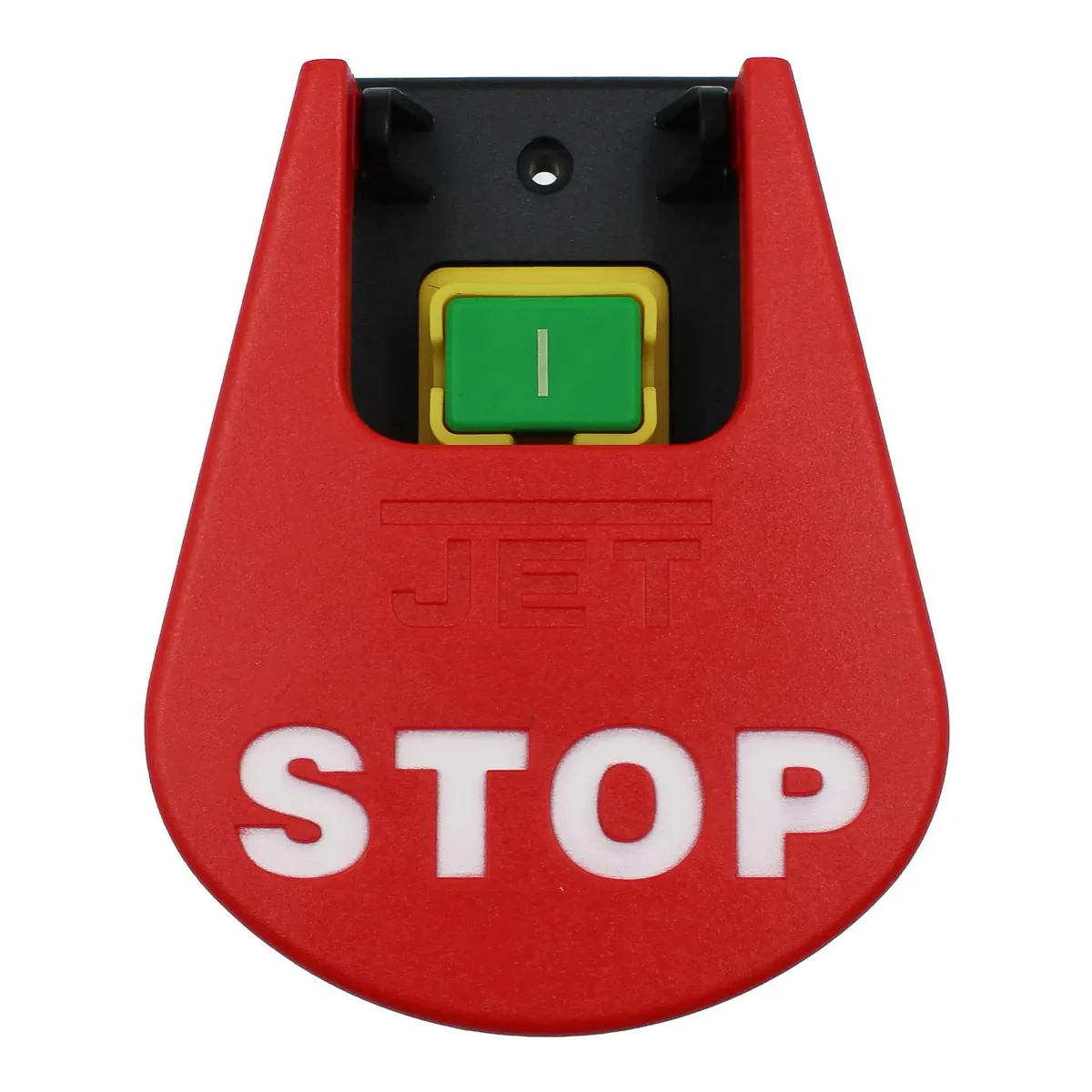
The switch is JET's own spec, and the useful kind. A magnetic KJD17B of the no-volt-release type means that when power drops, the saw stays off until somebody presses start again. It will not restart under a hand or a workpiece when the lights come back.
One thing this saw will not do, and the manual is flat about it: this is the 120 volt build, wired for 120 volt only. JET sells the 230 volt version as a separate machine. There is no conversion, so unlike the SawStop pair on this shelf there is no rewiring your way up later.
There is no flesh-detecting brake here, and none is offered for it. Skip this saw if that is the feature you came for, because the two SawStop saws are the only picks on this shelf that stop the blade on skin contact.
Table saw dust collection: the fine dust lands in the bin, the chips do not
The manual asks for a minimum of 400 CFM through the 4 inch port, which is another figure JET's web page puts lower, at 350. Size for the manual. Fine Woodworking's test says what those numbers do not: the blade sits in a housing plumbed straight to the port, and while the dust collection confines the fine particles to the bin, "the heavier stuff falls to the floor beneath the saw". Plan for a broom as well as a hose, and size the collector by what the port actually needs.
Which shop this one actually fits
Match it to the wall first, then to the floor. As a 120 volt table saw sold on Amazon under the bare JPS-10 designator, it wants a dedicated circuit at the 20 amp size JET's web page specifies, not one shared with a dust collector, and the 82 inch span of the assembled saw. Together those make a smaller electrical ask than the 230 volt-only JET Deluxe XACTA makes and a wider rip than either SawStop here offers. Know what to call it while shopping, too: JET files this as a contractor table saw and Fine Woodworking reviewed the platform as a hybrid table saw, so both terms find the same machine. Check which wings a listing is selling before ordering, because the ProShop II name covers a steel-wing and a cast-iron-wing version at both 30 and 52 inches of rip, and the rail set is what moves that 82 inch span.
A closer look at the JET ProShop II
Made up your mind?