QIDI Max4 review: heated chamber, early bugs
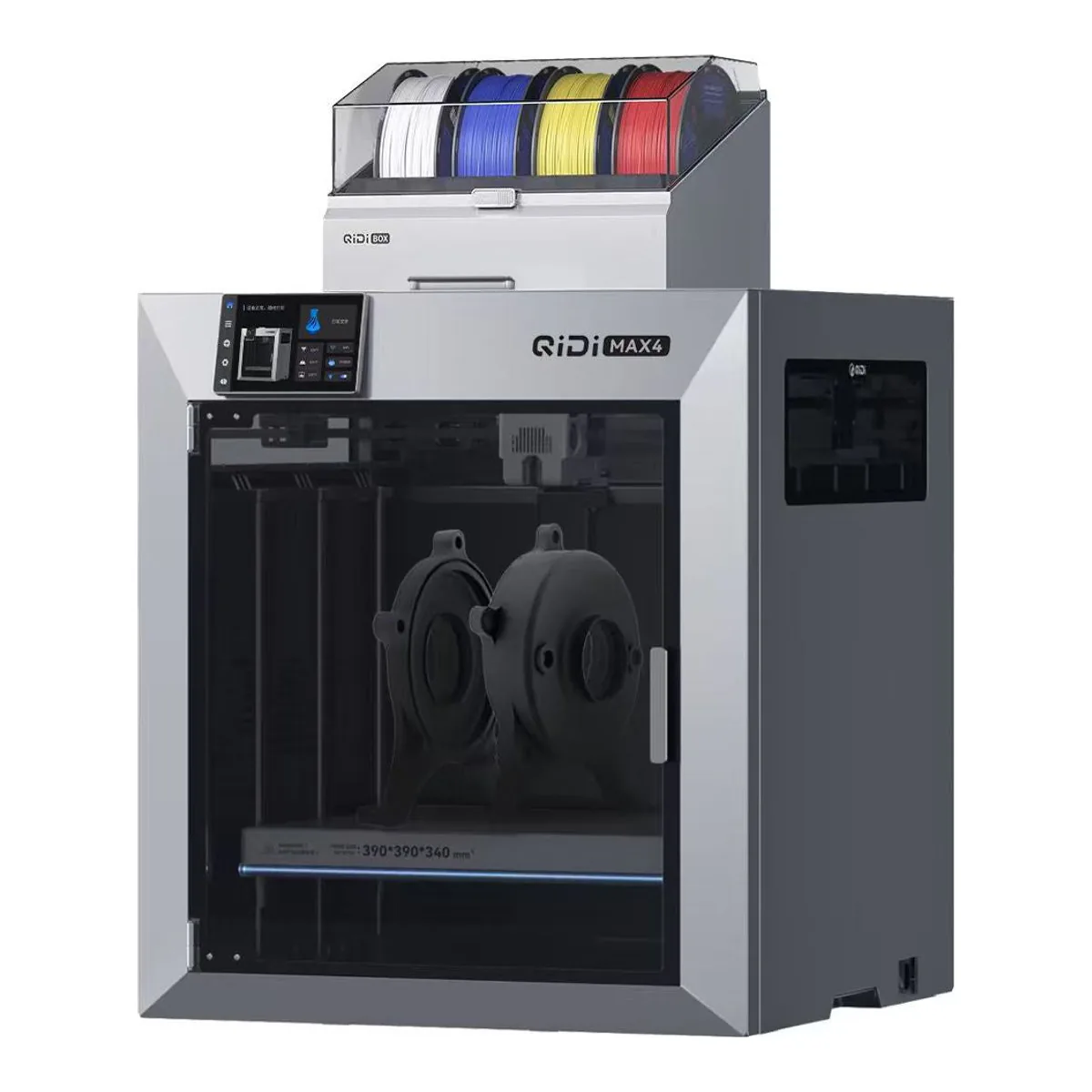
The QIDI Max4 Combo is a large CoreXY printer that heats its own chamber to 65°C for ABS, ASA and nylon, with a 370°C hotend and a four spool QIDI Box on top. Three owners report it running for 20 hours to a month at a stretch, but seven of 27 name a hardware fault on their unit, and the Box is the part they complain about most. Skip it if you print mostly PLA.
- Print size 390 x 390 x 340 mm
- CoreXY with closed-loop stepper motors
- Up to 65° C independent chamber heating
- Print head up to 370℃, hardened steel dual gears, direct extruder
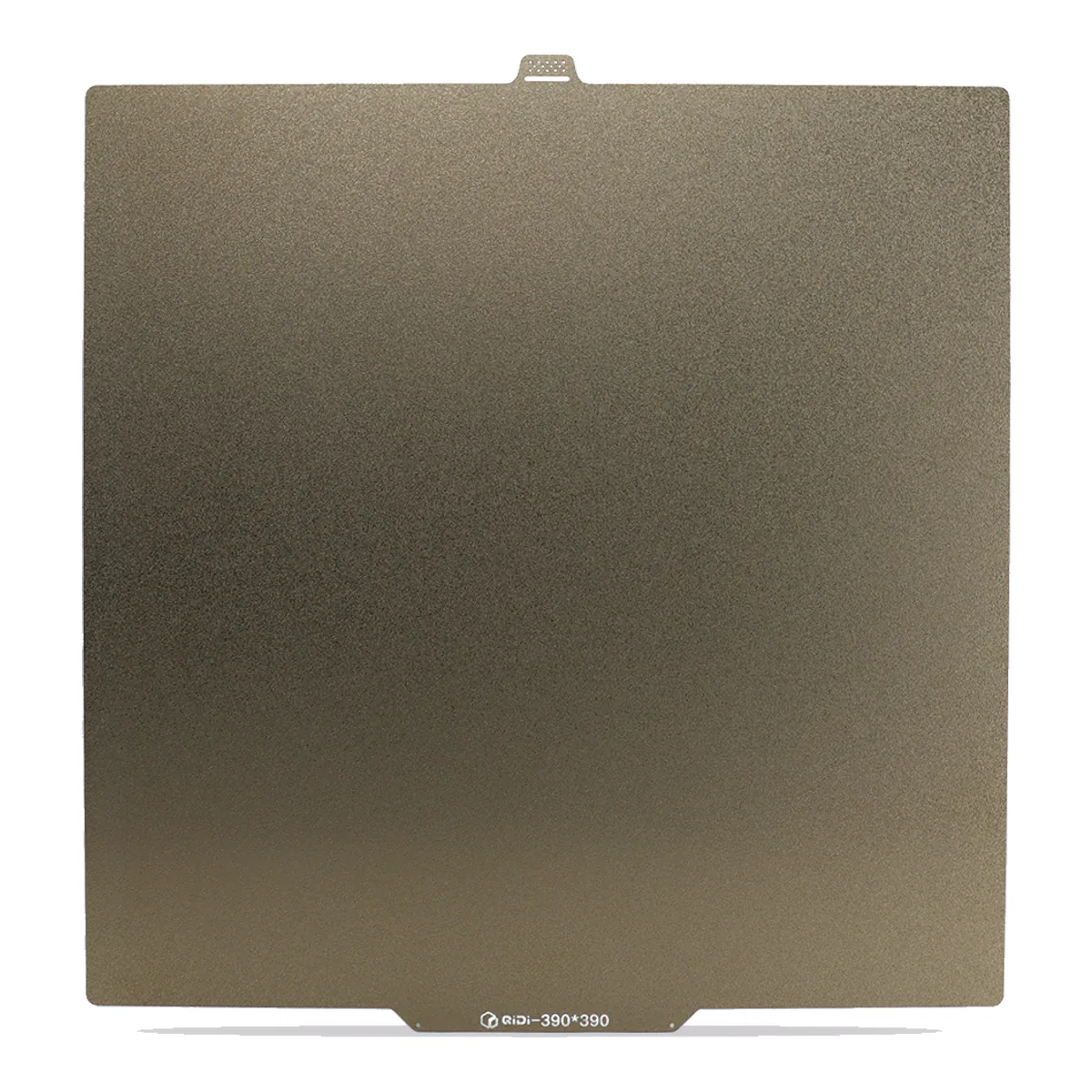
- Hot bed up to 120℃, dual-sided textured PEI plate
- QIDI Box in the Combo: four spools, drying up to 65℃
We earn a commission on qualifying purchases through the links here, at no cost to you. It never decides what makes the list.
Close this tab if your spools are all PLA. The QIDI Max4 Combo is built around a heater in its chamber, rated to 65°C, and for PLA QIDI's own FAQ caps that chamber at 45°C, with a Polar Cooler fitted that the Amazon listing sells separately. A PLA printer pays for heat above 45°C it never uses, plus a part to use any of it.
The buyer it does fit prints ABS, ASA, nylon or a carbon filled blend, at a size that splits on a smaller bed. For that person the QIDI Max4 puts a 390 by 390 by 340 mm build volume inside a heated, filtered box. The Combo adds one QIDI Box, a four spool feeder that also dries filament. It holds the heated chamber slot on our 3D printer shortlist, the only machine there that heats its chamber as sold.
Twenty-seven people who say they own one turned up among 276 commenting on eight YouTube reviews of it (how we count). Their reports sit beside QIDI's spec pages, FAQ and wiki, the live listing, and hands-on reviews from AppleInsider, nikktech and androidpctv. They describe a machine that prints well once it settles, and an early run that needed parts.
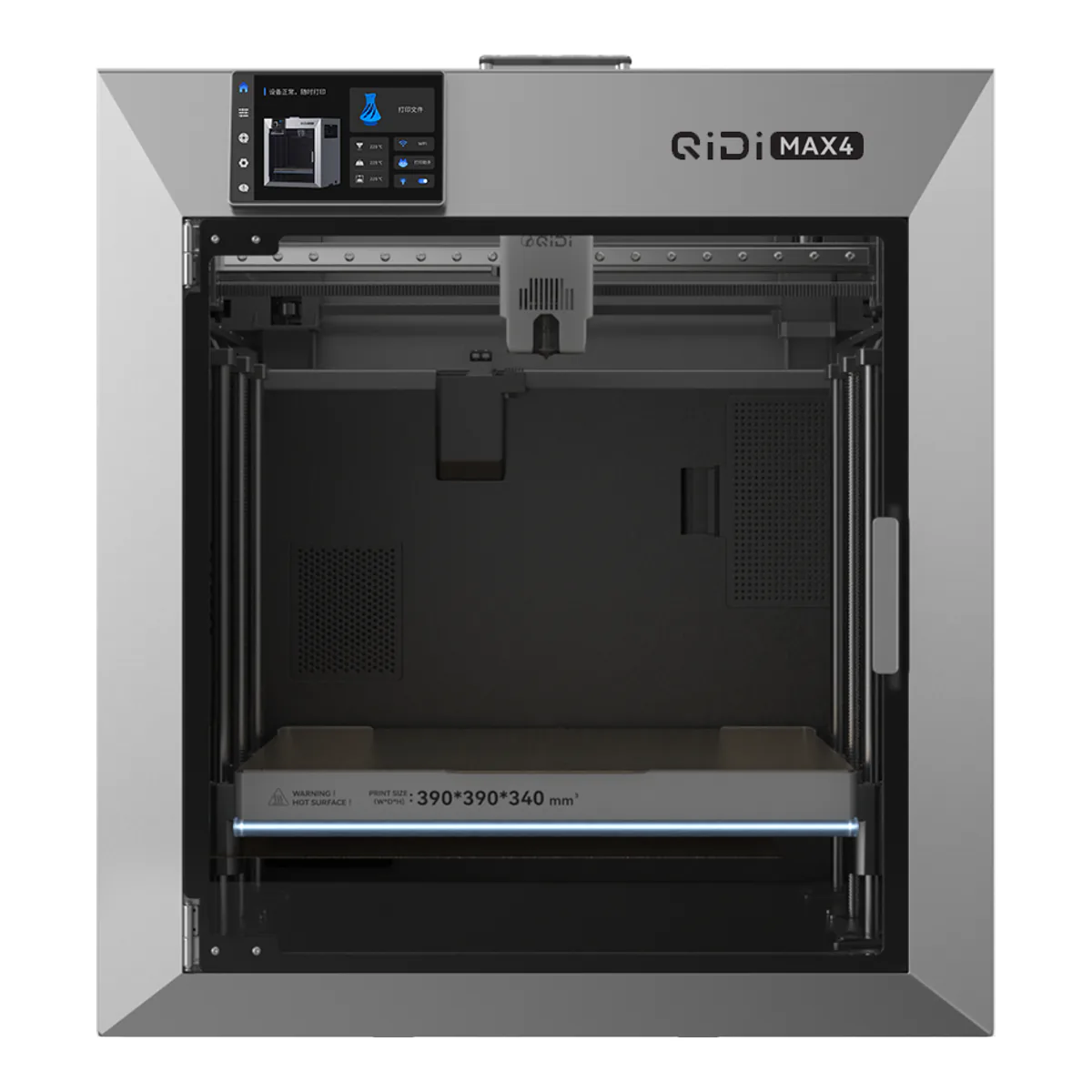
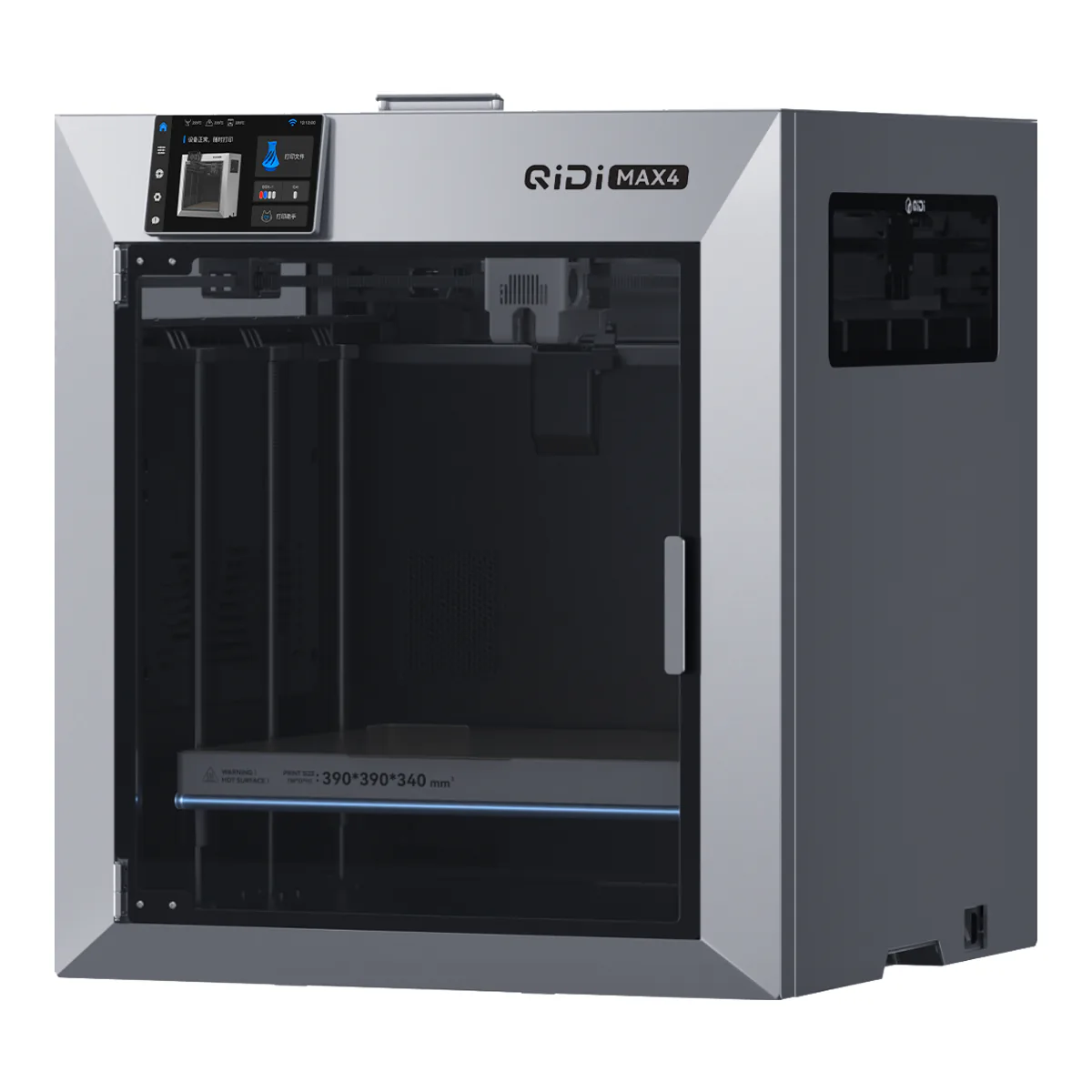
QIDI Max4 build volume: a 390 mm large format 3D printer
At 390 by 390 by 340 mm, the bed is the second largest on our shortlist, behind only the Sovol SV08 Max. The printer alone measures 558 by 578 by 612 mm, the QIDI Box adds 234 mm on its roof, and the Combo weighs 46.5 kg. One owner's first words after delivery were "That sucker is HEAVY," and AppleInsider says unboxing takes a couple of people.
Give it a solid bench. One owner reports "Noticeable Shaking as heavy as it is."
Motion system: CoreXY, closed loop
CoreXY on a 10 mm belt, driven by closed-loop stepper motors, with a linear rail on X and two lead screw motors on Z. The rated top speed is 800 mm/s, and QIDI's FAQ is candid that real speed depends on how fast the hotend melts plastic: high speed PLA and ABS typically print around 30 mm³/s against a rated flow of 40. androidpctv timed a PLA Benchy at 18 minutes.
Hotend and max temp: 370°C, and the hose
A direct extruder with hardened steel gears, a bimetal 0.4 mm nozzle, and up to 370°C. Leveling is automatic, with a load cell in the hotend. Optional nozzles come in 0.2, 0.6 and 0.8 mm.
Then the cooling. QIDI's spec table lists the extruder cooler as "Polar Cooler required", and the Amazon listing says plainly that "the max4 series does not come with the Polar Cooler". QIDI's own store currently adds one as a gift that ships separately, and AppleInsider's Combo came with one, so where you buy decides whether you pay for it. Two owners expected one in a bundle and did not get it.
Whether you want it is a fair question. Owners describe its job as cooling the filament path so PLA and PETG can print with the door shut without clogging, and they split on whether it does it: one runs it on PLA with the door closed and says it works well, another calls it "next to useless". AppleInsider found the printer fairly quiet without it and "like having an angry Roomba in the room with you" with it. Its hose also crimped when the head ran to the rear of the bed, and showed stress marks after 4 to 6 hours, until a riser from QIDI's wiki moved it. One owner printing carbon filled nylon reports heat creep and a hotend fan running well under its rated speed, the kind of clog risk QIDI sells the cooler against.
Heated bed: 120°C, and the plate holds on
A 120°C bed under a dual-sided textured PEI plate. Two owners say parts stick too hard, one adding glue and one hairspray to get them off, and three more raised the Z offset or fought adhesion and nozzle drag. The Amazon box list includes a glue stick. Commenters' tips under one review run from heating the plate past the plastic's softening point to a night in the freezer.
Multi-material: the QIDI Box
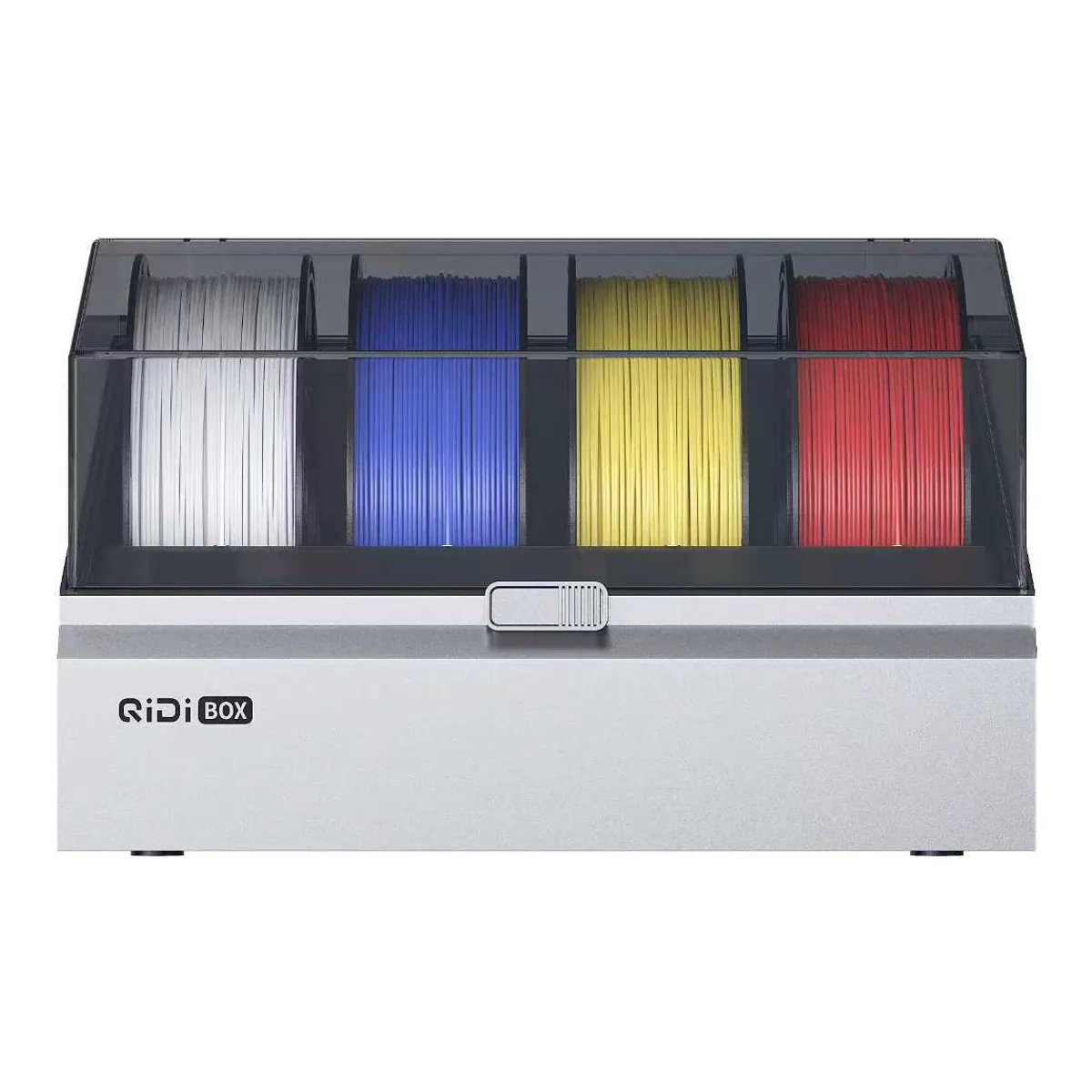
One Box holds four spools, detects tangles, clogs and run-outs, switches to a backup spool, and dries filament at up to 65°C while the printer runs. It stacks to sixteen colors with three more Boxes and an expansion kit. It feeds carbon and glass filled ABS, PLA, PETG and PET, plus PPS-CF. It refuses TPU 95A and softer, some silk PLA, glow in the dark PLA, damp PVA, cardboard spools and QIDI's own PAHT-CF (PPA-CF), and the Box's supported list names no carbon filled nylon.
It is also the most complained about part of the machine. Six owners report trouble: connection errors that ended with QIDI shipping an adapter board and cable, failed color changes that sent the head into a corner, feeding out of sync, and color changes that took one owner three minutes. Another tuned their config down to just over one minute. Three call it loud. One runs two Boxes without a complaint.
Purge waste is the other cost. nikktech measured multicolor prints throwing away "still like 9 times more than the filament required to print them", and one owner puts their purge at about seven times what it needs to be. The Box on QIDI's Q2 failed repeatedly in Tom's Hardware's test, on what QIDI called an early unit and a different hub, so treat that as history.
Enclosed, heated and filtered
This is the reason to buy it.
A PTC heater holds the chamber at up to 65°C independent of the bed, behind tempered glass, with a three stage filter of a G3 pre-filter, H12 HEPA and activated carbon. That held temperature is what ABS, ASA and nylon want on a heated chamber 3D printer this size.
The power figures follow from it: QIDI rates 150 W for the printer, 500 W for the chamber heater and 700 W for the bed. One owner calls the draw insane. androidpctv measured 56 dB in normal use, 62 dB with the Polar Cooler and 65 dB with the Box.
Materials it runs, and the faults owners hit
QIDI lists PLA, ABS, ASA, PETG, TPU, PA, PC and carbon or glass filled blends. TPU at 95A runs from the spool holder rather than through the Box. androidpctv printed ABS, carbon filled PETG and wood PLA on it, and an owner running PA12-CF and PPA-CF for six weeks names heat creep as the only serious issue.
Read the fault list before you order.
Seven of the 27 name a hardware fault on their unit: an extruder motor or stepper, the Box's adapter board and print head cable, a bed and chamber control board, a heater board, a door broken on arrival, and a PETG leak at the hotend. An eighth had an issue they did not name. QIDI replaced parts for two of them and was shipping parts to a third, and two describe support as quick. Six complain about firmware or QIDI Studio. A seventh owner says the screen glitch they had is fixed in the new version, and two more run current firmware without trouble. nikktech and androidpctv both list software bugs or unfinished firmware among the cons, and AppleInsider finds the mobile app not especially useful.
Then the other half. Three owners describe long unattended runs: 20 hours in one go, 24/7 for a month, a week without stopping. "Its been consistently just fire and forget," writes the month-long one.
What we would check next
A second year of owner reports. One of these 27 describes their unit as an early release, and if later owners read like the ten here who report no hardware fault, the early run was the problem. Until then, order from a seller who handles returns, run the firmware update before the first print, and budget for the Polar Cooler if PLA and PETG will live in a closed chamber. QIDI's warranty is one year, per its store.
A closer look at the QIDI Max4 Combo
Made up your mind?