Sovol SV08 Max review: the 500 mm CoreXY that needs tuning
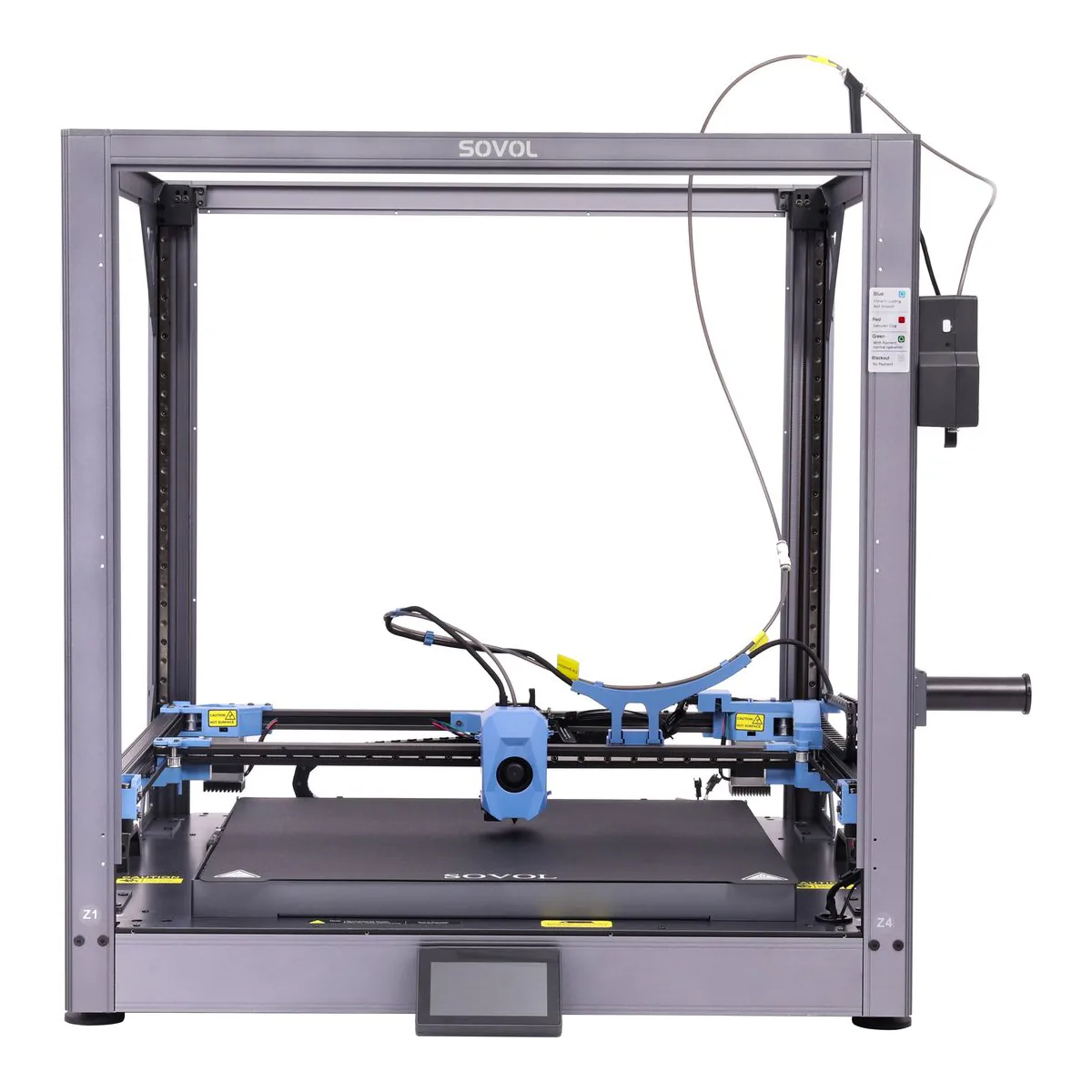
One of the largest consumer 3D printers made, and a genuine workhorse for owners who tune it, but the auxiliary feeder, a fussy Z offset and its sheer size make it the wrong first printer.
- Build volume 500 x 500 x 500 mm, or 500 x 500 x 450 mm with the enclosure kit fitted
- CoreXY kinematics with linear rails on X, Y and Z, on an aluminum alloy frame
- Up to 700 mm/s print speed, 40,000 mm/s² acceleration and a 50 mm³/s max flow rate
- Hotend up to 300°C, ships with two 0.4 mm nozzles; 0.4, 0.6 and 0.8 mm nozzles sold separately
- Heated bed up to 100°C: an 8 mm thick aluminum bed on 1300W
- Eddy current scanning for contactless bed leveling, plus pressure-sensing touch points for the first layer
- Auxiliary feeder with filament runout, tangle and clog detection; power loss resume
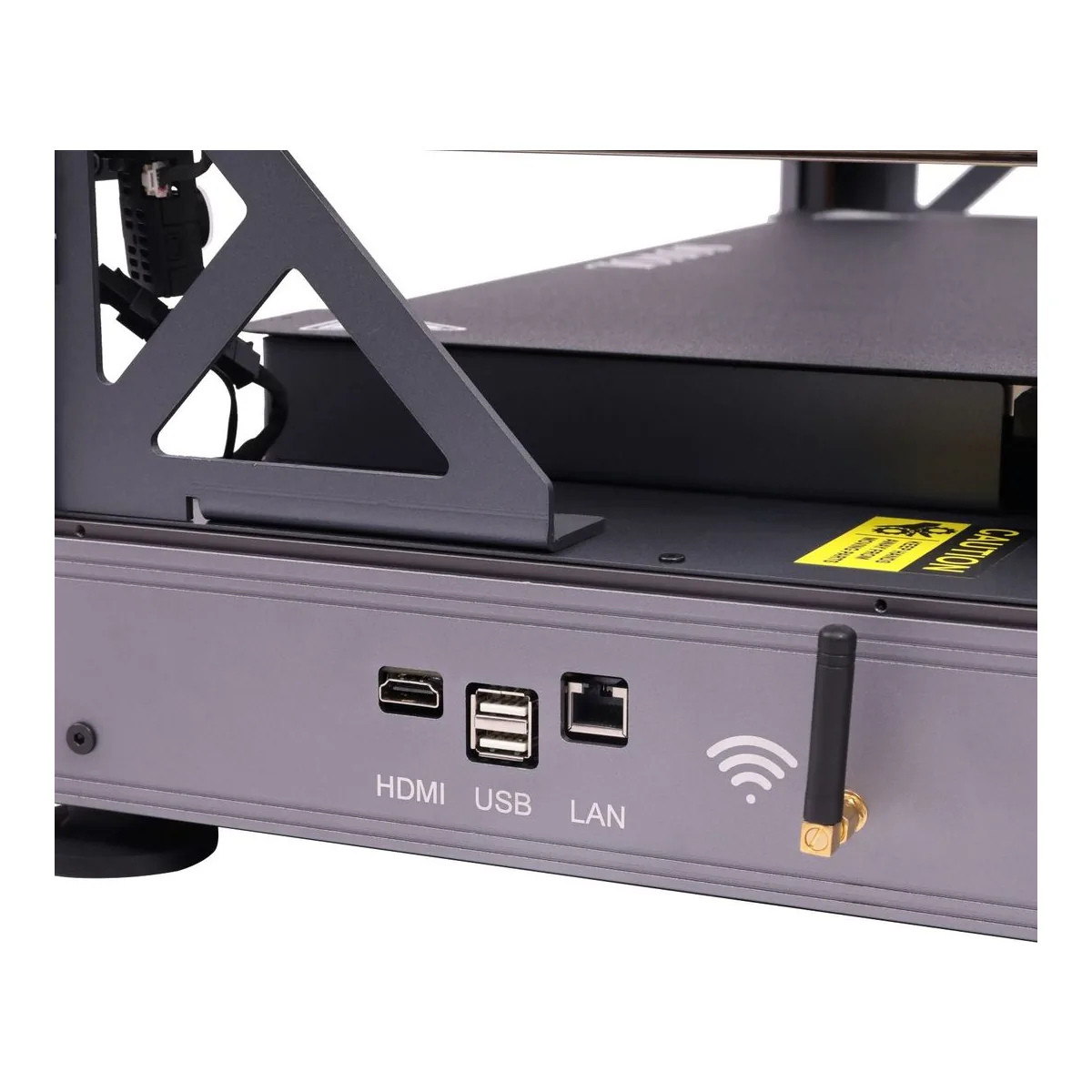
- Klipper firmware, OrcaSlicer, 1GB RAM and 8GB EMMC; USB, Wi-Fi (2.4G/5G), HDMI and Ethernet
- Built-in 1280x720 HD camera for remote monitoring and time-lapse
- Reserved interface for an optional heated chamber module, sold separately
- Printer size 700 x 710 x 750 mm excluding the spool holder
We earn a commission on qualifying purchases through the links here, at no cost to you. It never decides what makes the list.
Measure the doorway before anything else. The Sovol SV08 Max is 700 x 710 x 750 mm without its spool holder, and Tom's Hardware, who built one in a living room, found it almost 28 inches wide against a standard 32-inch door frame. It would not leave that room without being taken apart. It did not fit on their table either, so it printed on the floor.
This Sovol SV08 Max review comes down to a 500 mm cube of print space on a CoreXY frame running stock Klipper, for somebody who needs one-piece props, housings or furniture parts and is willing to tune a printer to get them. It is the first printer we have covered on the FDM 3D printer shelf, and the case for a large format 3D printer this size is entirely the parts you no longer have to cut and glue.
We read Sovol's own spec page, the live listing, Tom's Hardware's hands-on review, and 325 comments on the nine YouTube videos whose titles name the machine. Sixteen of those commenters say they own or run one, and what they report is sharper than the spec sheet. It is the large format pick on our 3D printer shortlist.
Build volume, and the 50 mm the enclosure takes back
Sovol rates it at 500 x 500 x 500 mm. Fit the enclosure kit and that becomes 500 x 500 x 450 mm, and here is the gotcha Tom's Hardware flags: nothing tells you to change the build height to 450 mm in the printer configuration. Leave it at 500 and the printer will happily drive itself into the roof. Even set correctly, the toolhead's Bowden tube scraped the top of the enclosure on their tallest print.
On the SV08 Max vs SV08 question, the smaller SV08 is 350 x 350 x 345 mm on the same 700 mm/s CoreXY idea. If your parts fit that, buy the SV08 and keep the floor space. Tom's Hardware names only Elegoo's OrangeStorm Giga as larger among consumer machines.
Motion system: CoreXY, and belts all the way up
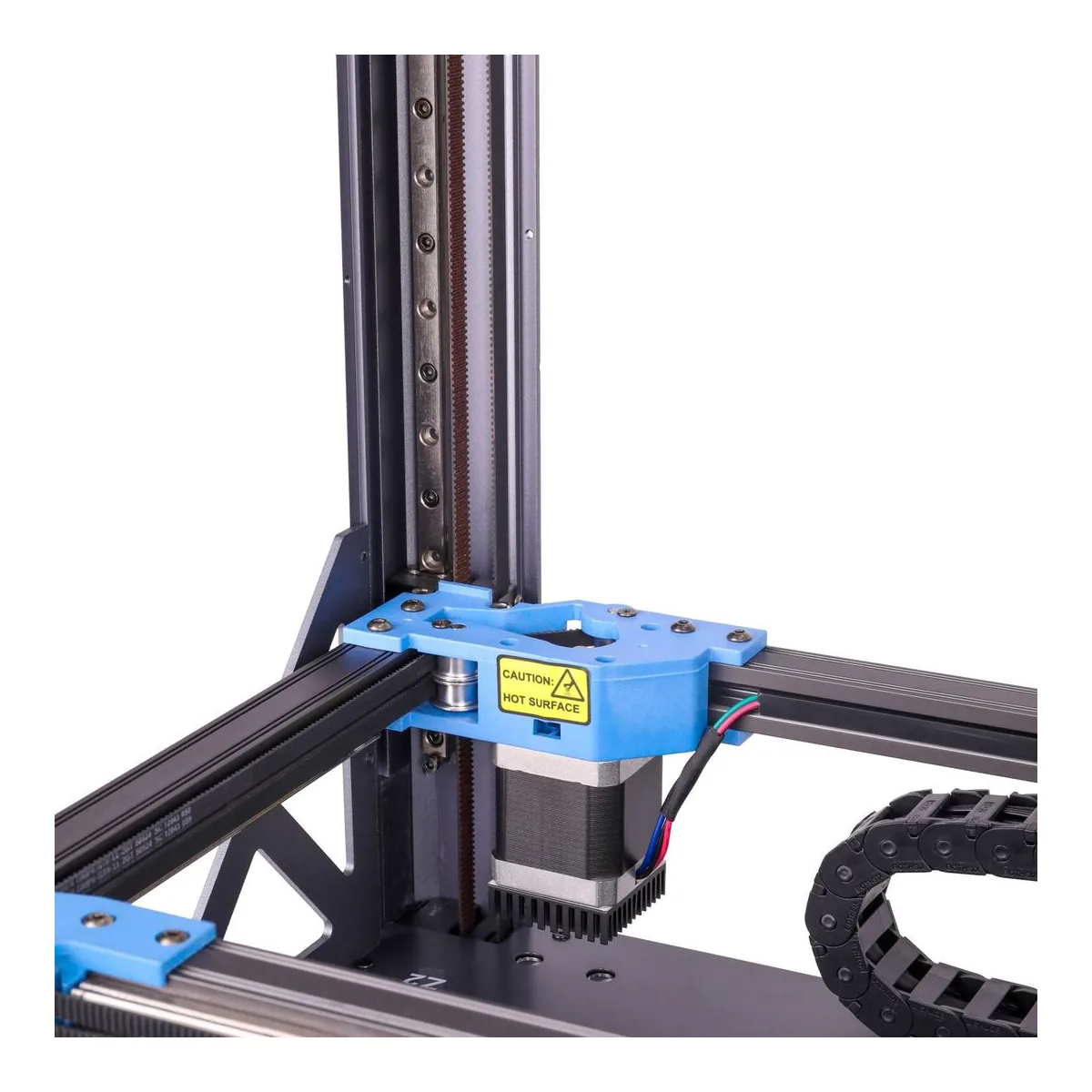
Linear rails on X, Y and Z, an aluminum frame, and a flying gantry over a fixed bed. The Z gantry climbs on four stepper motors running belts, not screws. Sovol quotes 700 mm/s and 40,000 mm/s² of acceleration. Treat those as ceilings. The big parts Tom's Hardware showed off ran at 100 mm/s, and a 450 mm tall end table averaged 140 mm/s over 2 days and 13 hours. At this size the speed that matters is the one the filament and the cooling can keep up with.
First layer: fast scanning, fussy Z offset
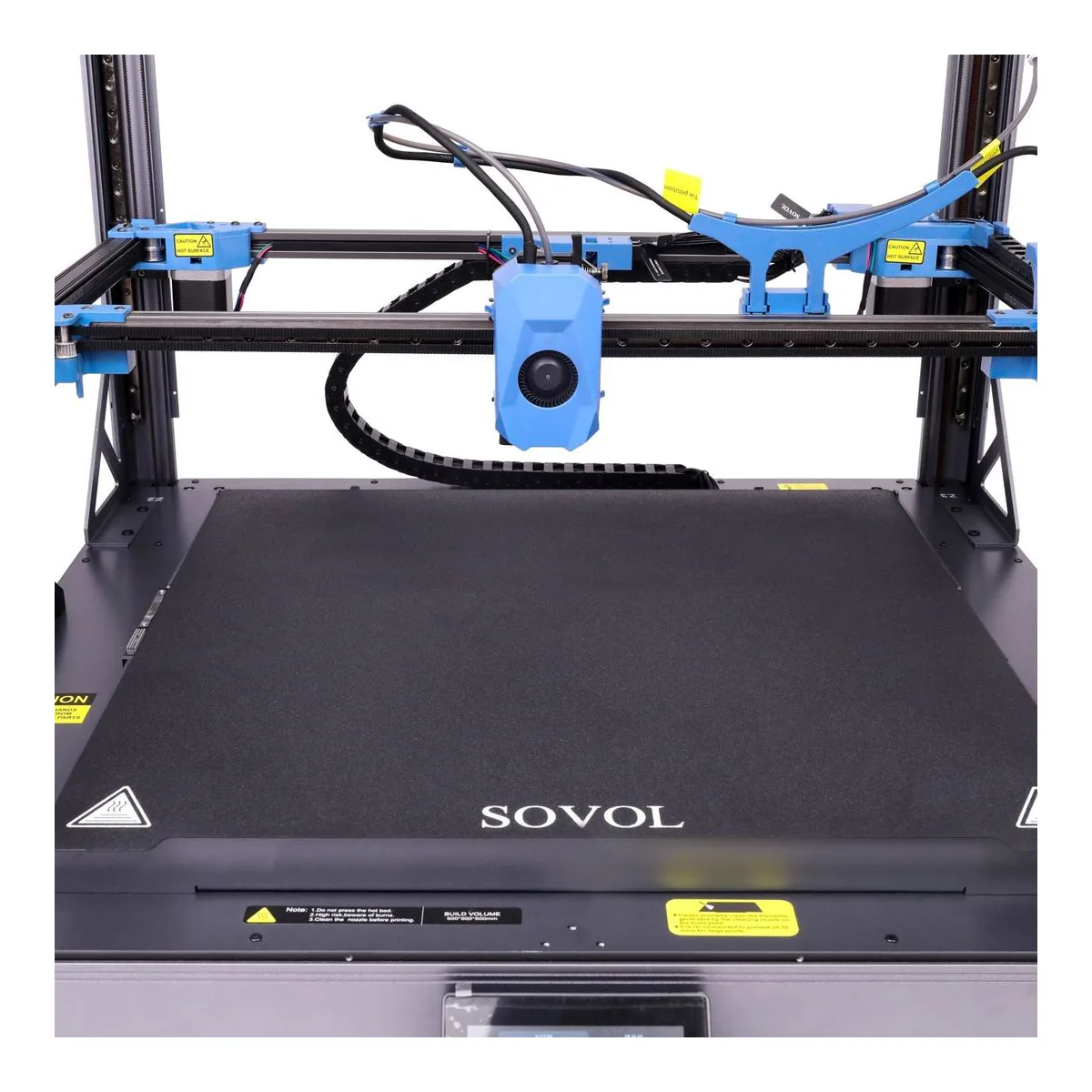
The eddy current sensor maps only the area a print will cover and does it in seconds, without touching the plate. The mesh was never the problem in testing.
The Z offset was.
Tom's Hardware lost five attempts and half a spool on one bed-filling print before a 0.2 mm bump and a 20 minute heat soak fixed it, and called it the kind of problem that will terrorise someone newer to printing.
Owners say the same thing in different words. Six of the sixteen say it needs tinkering, its own filament profiles or a full calibration pass before it prints the way it should. One Kickstarter backer calls theirs "one of my workhorses" and would recommend it to somebody who can tune a printer and needs "this large build volume but don't have the time to build a full Voron." That describes the buyer.
The auxiliary feeder is the part owners name
The spool sits on the side of the frame and filament travels nearly five feet of Bowden tube to the toolhead, so Sovol adds an auxiliary feeder with a spring buffer to push it along. It works. Tom's Hardware got 95A TPU through that whole path, which is not a given.
It is also the part owners complain about by name. Five of the sixteen raise the feeder, and three call it their biggest or only mechanical problem. Between them: the loudest part of the printer, a unit that grinds filament and throws false jam alarms unless you clean it regularly, a slow crawl on a filament swap, and one report that color by layer makes it panic. Runout recovery is manual too. The sensor sits in the feeder, the printer is slow to stop, and you fish the old strand out yourself. One Tom's Hardware job restarted with no plastic flowing, and an overnight runout on the end table left a crack at the layer where it cooled.
Heated bed and what it draws
The bed is 8 mm thick aluminum on 1300W, rated to 100°C, and Sovol says the reinforced structure minimizes warping. That much heater is also a lot of power to carry. One owner, replying to a video about a melting socket, advises that "you should also reduce the build plate heater power to 80% even with the upgraded socket" after finding the wires to it overheating. It is a single report. The fix it names is the upgraded socket plus capping heater power at 80%.
Enclosed, or open frame
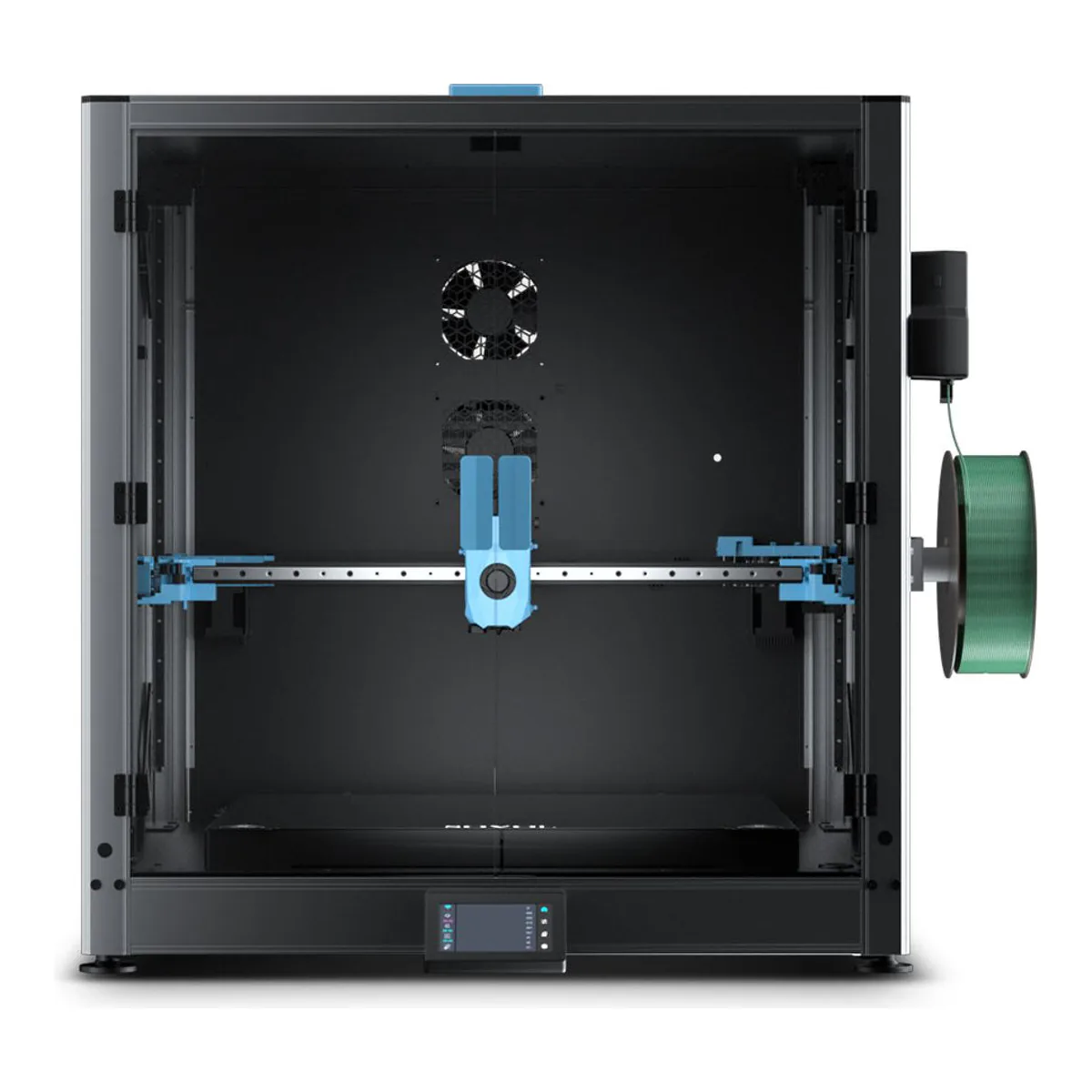
This listing is the open frame printer. The SV08 Max enclosure is a separate kit: metal panels, swing-out glass doors, a half glass top and two rear fans. It is what makes ABS and ASA practical at this size, and Tom's Hardware printed a well-fitting ABS container in it.
Sovol says the enclosure reduces operational noise. Tom's Hardware found the opposite: "The enclosure does nothing to dampen the racket." Their door catches were also too weak to hold the doors at speed, which rattled until a few button magnets closed the gap. For hotter materials there is a separate chamber heating module, and Sovol's own instructions say to close the glass door and top cover while it runs. One owner says to skip it for a third-party heater that does not pressurize the chamber and push fumes into the room. One report, so read it before you order the module.
Materials it runs
The hotend reaches 300°C and the bed 100°C, and Sovol lists PLA, TPU, PETG, ABS, ASA, PA, PC and the carbon fiber blends. The filament load routine heats to 250 degrees Celsius, which is fine for PLA, PETG and TPU and not hot enough to clear some high-temp filaments, so change it in the configuration before you switch.
Who should skip the Sovol SV08 Max
Skip it for a first printer, or if you want a machine that just prints. The sixteen owners split: six describe a workhorse, months without a failure or a machine they would buy again, four describe constant faults or a printer they still cannot get working, and the rest are mixed or do not say. Four have harsh words for Sovol's support or parts. Skip it if you want multi-color, because it feeds one filament, and Tom's Hardware points to the Kobra 3 Max with four colors at 420 x 420 x 500 mm. If the big parts you need are flat panels, a machine from the laser engraver and cutter picks cuts sheet stock instead of building it layer by layer. And skip it if your room, your table or your doorway has not been measured, because Tom's Hardware puts it at 65 pounds bare and close to 100 with the enclosure.
Care that keeps it printing
Clean the auxiliary feeder on a schedule, before it jams, and check the Bowden path and its fittings where filament can catch. Recheck the Z offset after a long heat soak on any bed-filling job. Set 450 mm in the configuration the day the enclosure goes on. Plan the network around Wi-Fi, because one owner on Sovol's own store says the LAN port is not active even though Sovol lists Ethernet. And weigh the filament before any overnight job, since a runout mid-job is a lost print on this machine.
A closer look at the Sovol SV08 Max
Made up your mind?