Canon EOS R6 Mark III vs Mark II: a video upgrade
Buy the Mark III if you grade footage or need internal 7K RAW, open gate or uncropped 4K 120p, because its video dynamic range in C-Log 3 measured far wider at RTINGS. Keep or buy the Mark II for stills and for shoots where battery life matters, since it tracked moving subjects more accurately in RTINGS testing, ran longer per battery in video and holds its dynamic range better as the ISO climbs.
What decides it: Whether video pays your bills, because the stills side barely moved.
We earn a commission on qualifying purchases through the links here, at no cost to you. It never decides what makes the list.
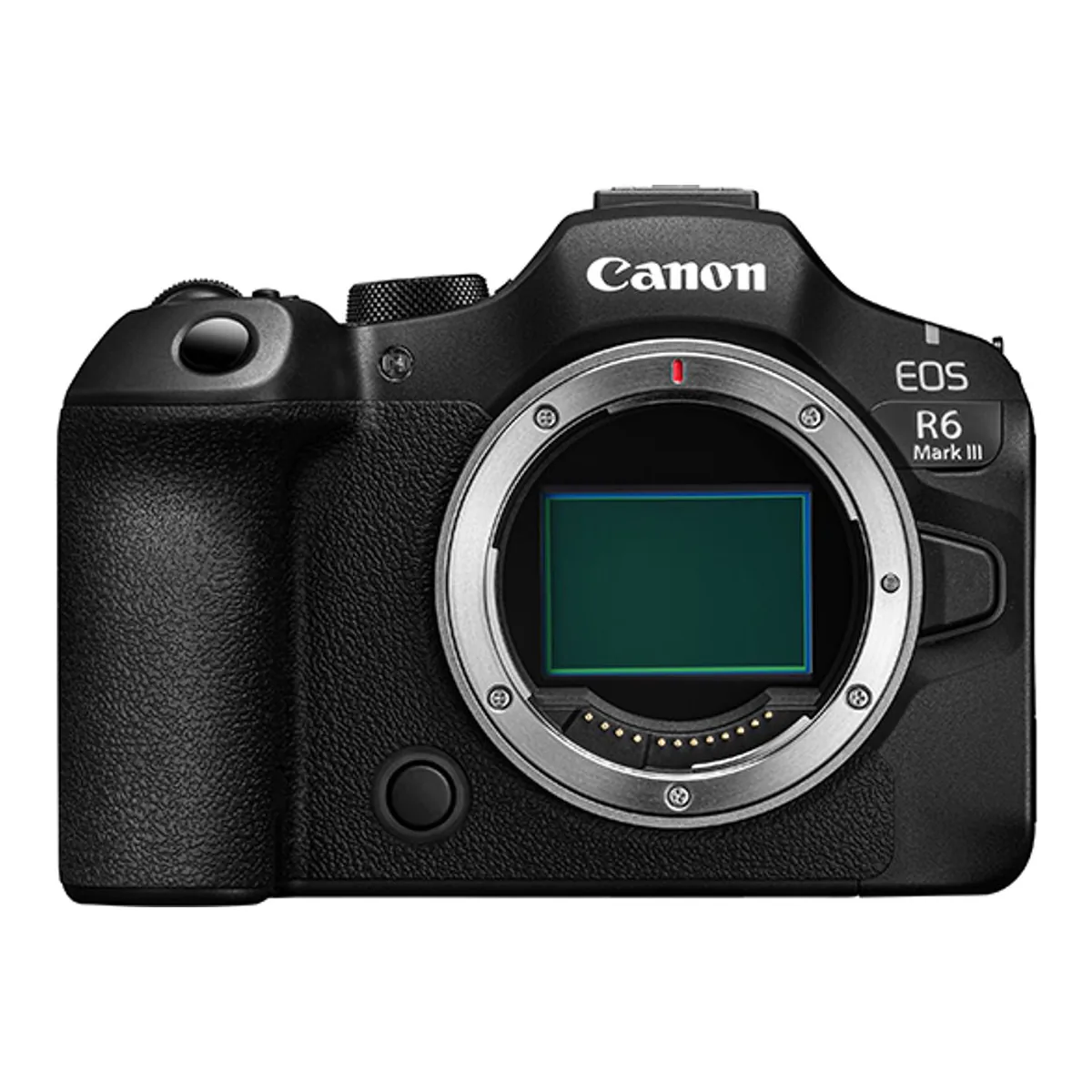
Canon EOS R6 Mark III
Pick this if paid video work that gets graded, where internal 7K RAW, open gate framing for vertical crops and a full-size HDMI port change what leaves the shoot.
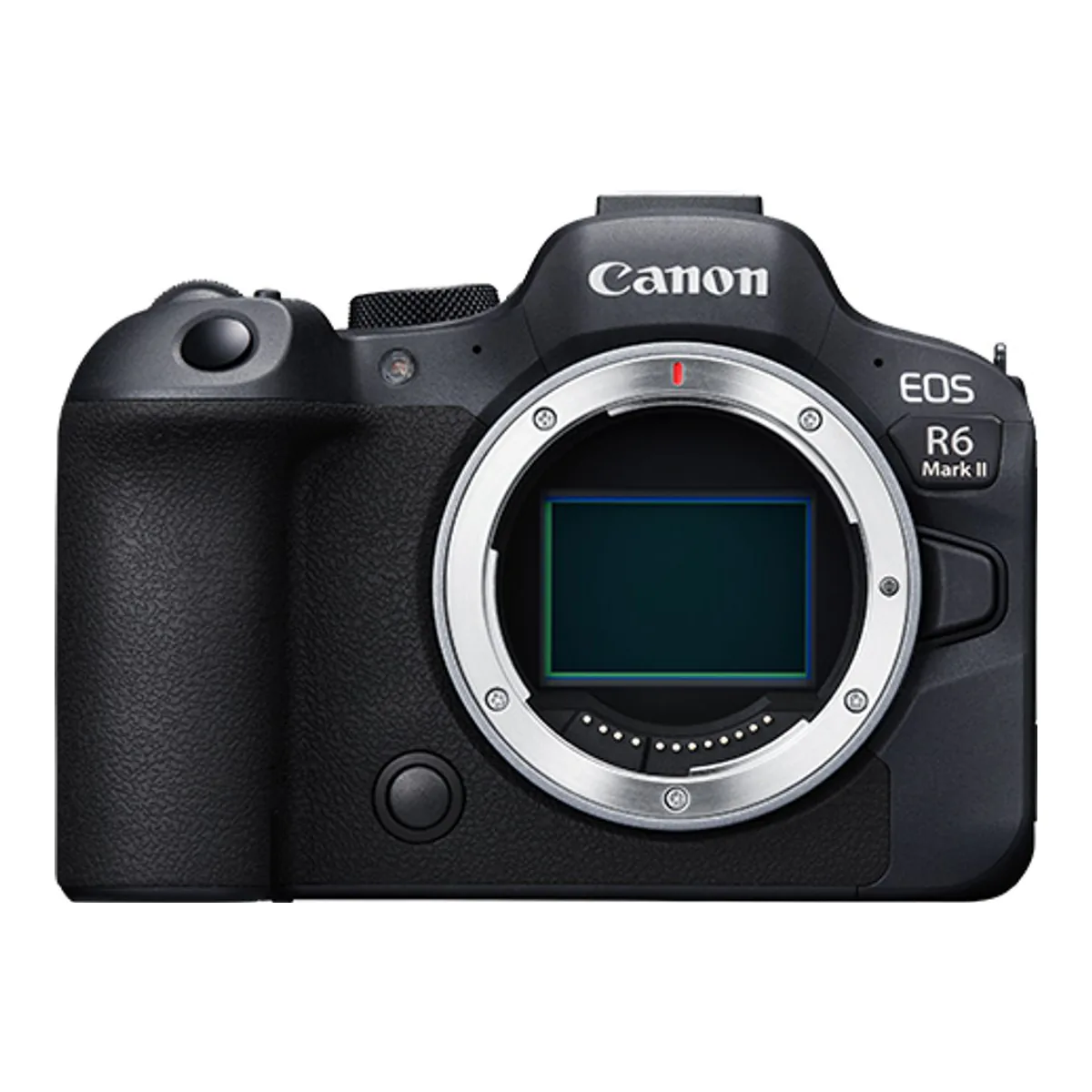
Canon EOS R6 Mark II
Pick this if stills first and events where battery life matters, since it ran longer per charge than its successor in RTINGS video testing and carries a higher CIPA rating, tracked more accurately in RTINGS testing, kept more dynamic range at high ISO, and one owner estimates their count at around 150,000 frames.
| Canon EOS R6 Mark III | Canon EOS R6 Mark II | |
|---|---|---|
| In-body stabilization | Sensor-shift, up to 8.5 stops center and 7.5 periphery, lens dependent | In-body IS, up to 8 stops, lens dependent |
| Autofocus points and coverage | Dual Pixel CMOS AF II, 1053 automatically selected AF areas | Dual Pixel CMOS AF, 1053 zones |
| Sensor | 32.5MP full-frame CMOS | 24.2MP full-frame CMOS |
| Processor | DIGIC X | DIGIC X |
| Video ceiling | 7K RAW to 59.94p (RAW Light), 7K Open Gate 3:2, 4K to 119.9p not oversampled | 6K-oversampled 4K up to 60p, 10-bit 4:2:2; no 30-minute limit |
| Continuous shooting | 12 fps mechanical, 40 fps electronic, 20-shot pre-continuous | Up to 40 fps electronic, 12 fps mechanical |
| Battery and rated shots | LP-E6P, about 620 shots LCD or 390 viewfinder, power saving mode | LP-E6NH, about 450 shots viewfinder or 760 LCD (CIPA) |
Photographers should not trade up. Put the Canon EOS R6 Mark III vs Mark II side by side on the same benches and the newer body wins the video argument by a wide margin, yet loses a handful of measurements to the camera it replaced, some of them in video.
Both share almost the same body, grip and control layout; RTINGS notes the new tally light on the front is the most visible outside change. Inside, the R6 Mark III vs R6 Mark II gap is a sensor, a card slot, a port and a long list of recording modes. Our read comes from Canon's specification tables, RTINGS and DPReview, and the owner comments counted in our R6 Mark III review and R6 Mark II review.
What the Mark III adds for video
Everything new records internally. 7K RAW runs to 59.94 fps in RAW Light, 7K Open Gate records the full 3:2 sensor so one clip can be cropped for vertical and horizontal delivery, and 4K reaches 119.9 fps without a crop. The Mark II tops out at 60 fps in 4K, oversampled from 6K, and sends its 6K RAW to an external recorder over a micro HDMI port. Canon swaps that for full-size HDMI and turns one of the two SD slots into a CFexpress Type B slot, which RAW video needs.
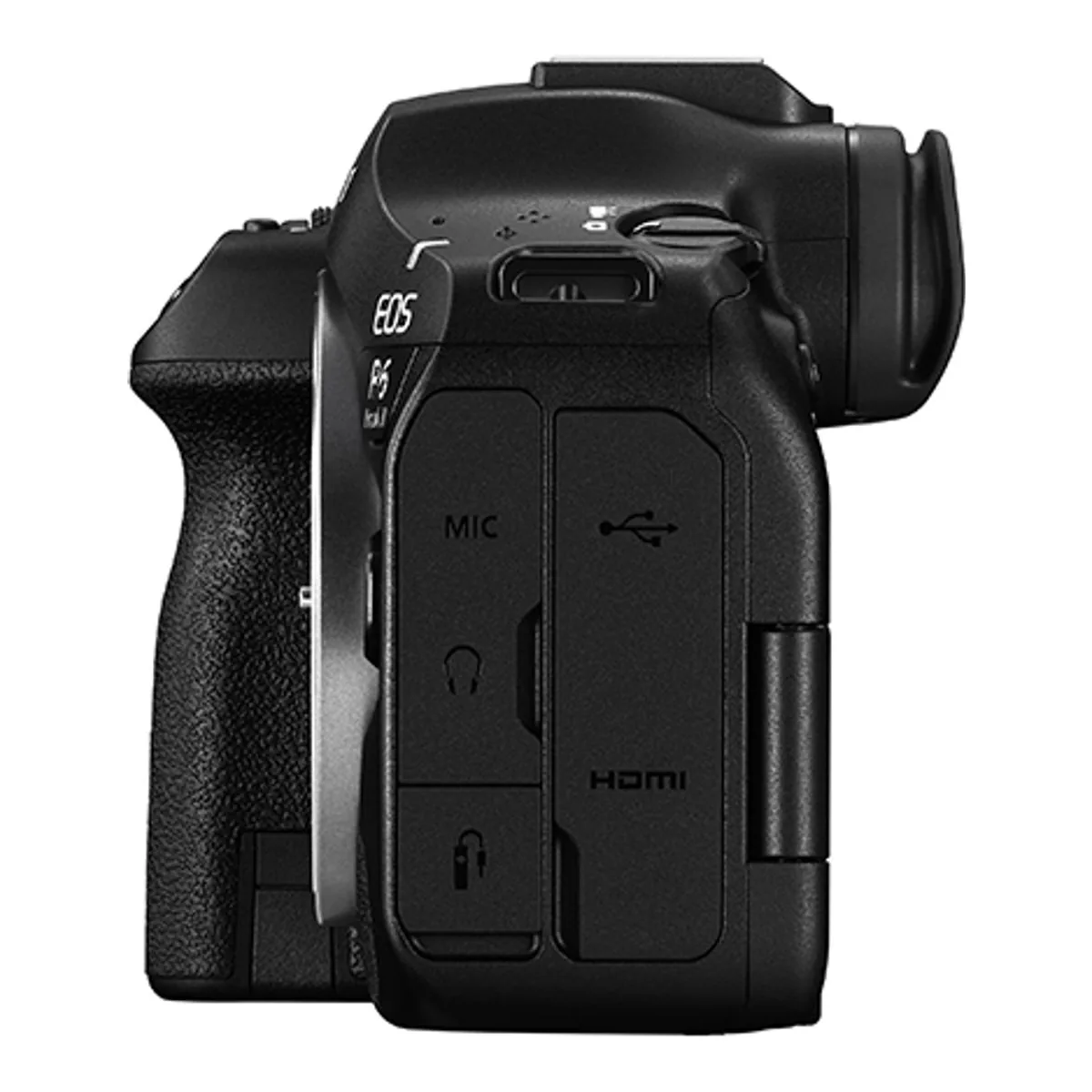
For anyone who grades, the number that matters most is not a resolution. In C-Log 3, RTINGS measured 10.45 stops of video dynamic range on the Mark III at its strictest noise threshold, against 7.04 stops on the Mark II, and called the Mark II's result just decent.
Two catches come with the new modes. 4K at 120p is subsampled, and DPReview found it noticeably softer than the oversampled 4K up to 60p. And the heat clock runs shorter. Both bodies carry Canon heat figures for oversampled 4K 60p at 23°C, as DPReview prints them: up to 40 minutes on the Mark II (50 in APS-C mode) against about 23 on the Mark III's DCI 4K 60p Fine. Neither has a documented limit in 4K at 30p and slower. The Mark III's new modes have their own figures: 7K RAW at 60p stops after about 23 minutes, DCI 4K 120p after 28 (35 with the high auto off setting) and 7K open gate at 30p in MP4 after 24 (36 on high).
In testing, neither overheated. DPReview TV ran the Mark II at 4K 60p for over an hour, and RTINGS logged zero overheat interruptions on it. DPReview shot several projects on the Mark III without a shutdown, and RTINGS recorded 4K on it for over an hour, though it does not say which 4K mode. DPReview had not tested it in hot, direct sun and expects it would struggle there.
Where the Mark II still beats its replacement
Five places: two in stills, two in video, and battery life, which straddles both.
Stills tracking first, and the gap is not small. On RTINGS's moving subject test the Mark II landed 79 percent of frames perfectly in focus and 97 percent usable, against 64 and 92 percent for the Mark III. If sports or wildlife is what you shoot, that 15 point drop in perfect focus is a reason to stay put. In video the labs split: RTINGS rated the Mark II's face tracking more reliable, while DPReview found the Mark III's video autofocus steadier than its predecessor's. Call video tracking a draw. Then battery. In continuous 4K, the Mark II lasted 92 minutes on RTINGS's bench and the Mark III 70. In power saving mode Canon rates the Mark II at 760 shots on the screen and 450 through the viewfinder, against 620 and 390 for the Mark III on its LP-E6P. Detail at 60p is the surprise: DPReview found that "even the EOS R6 II's 4K/60 footage has a slight edge in detail" over the newer body's.
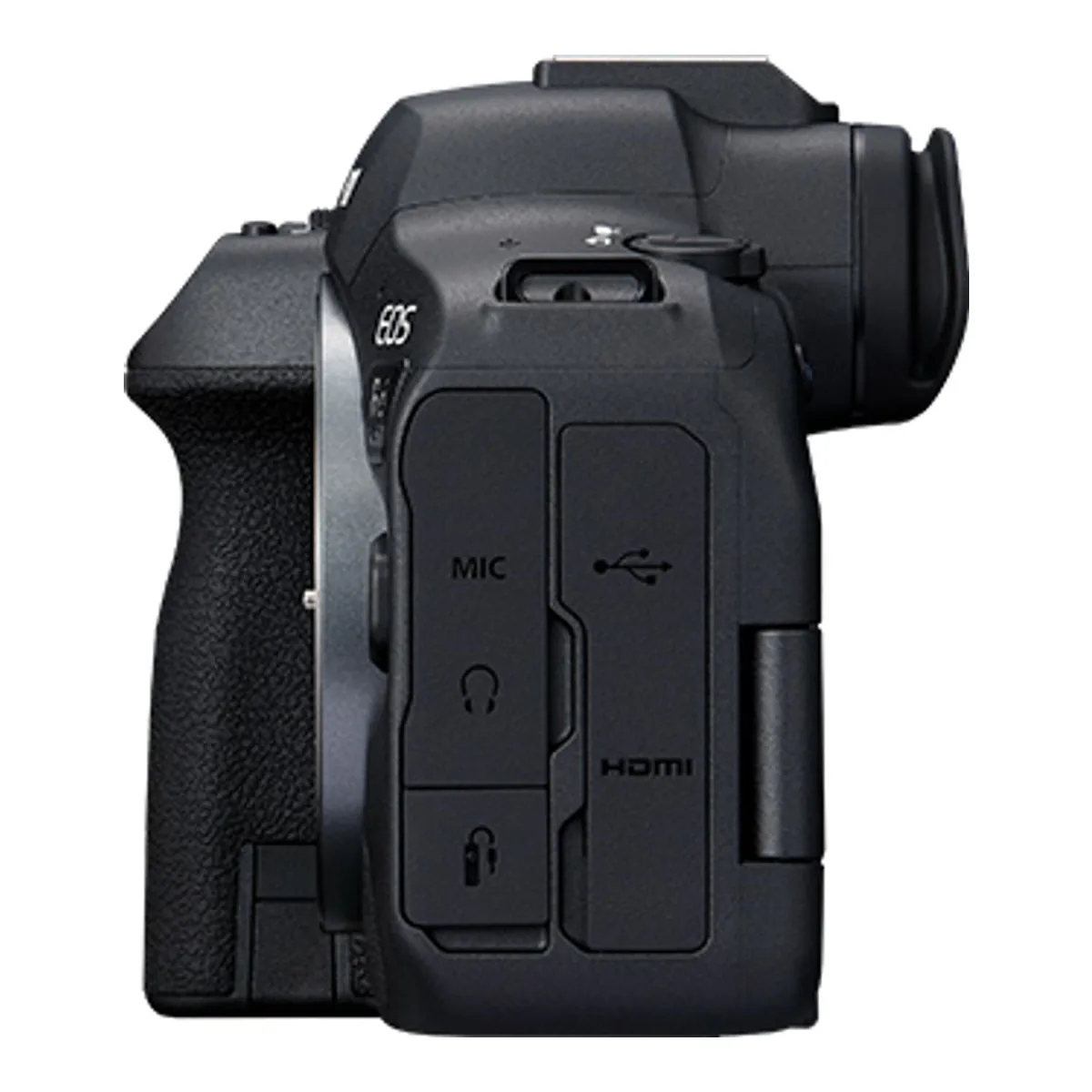
Rolling shutter is the fourth. Neither sensor is stacked, and RTINGS measured slightly more skew in 4K on the newer one, 5.7° against 5.0°. High ISO is the last: the Mark III holds a little more dynamic range at base ISO, then loses it faster as the ISO rises, so the Mark II keeps more detail in a dim, high-contrast room.
Stills: 32.5 against 24.2 megapixels
Resolution is the stills upgrade, and it is modest. The Mark III's 32.5 megapixels resolve more fine detail than the Mark II's 24.2, which shows when you crop hard. Both shoot 40 fps on the electronic shutter and 12 fps mechanically. The Mark III's buffer is much deeper: on the mechanical shutter with a CFexpress card, RTINGS shot for 40 seconds and over 400 frames without a slowdown, though DPReview found the 40 fps buffer lasts around three seconds. Its pre-continuous mode saves up to 20 frames from before the full press. Canon rates its stabilizer at up to 8.5 stops at the center, and RTINGS lists the Mark II at up to 8 stops, both lens dependent.
Canon EOS R6 Mark III vs Mark II, as owners tell it
Owners of the older body have the longer record. Of 59 commenters who used a first-person ownership phrase next to the camera's name, at least 42 clearly own one, and one estimates their count at around 150,000 frames after nearly two years, still happy with it. Nobody among them reports an overheat shutdown or a body failure.
Mark III owners are newer, like the camera. Across 415 comments under 13 videos, 15 people say they have one in hand, eight of them writing within days of delivery, and none reports a thermal shutdown. One of the 15 shoots both bodies. A corpus that young says nothing yet about wear.
When neither is right
If stills dynamic range and battery life matter more than Canon's grip, the Sony a7 V holds wider dynamic range in photos and lasts much longer per charge, though it crops for 4K 120p and records no internal RAW video. If fast action on the electronic shutter is the job, neither Canon suits it. DPReview advises against the Mark II's 40 fps mode for a golf swing, the Mark III's sensor is not stacked either, and a stacked sensor is the fix. The rest of the field, sorted by what you shoot, is on our mirrorless camera shortlist.
Cards and batteries before you switch
A Canon R6 Mark II vs Mark III upgrade is not only a body purchase. RAW video on the Mark III needs a CFexpress 2.0 Type B card rated at least 400 MB/s, per RTINGS, and none of your SD cards will do it. The LP-E6NH batteries from a Mark II fit, but Canon disables the Wi-Fi and Ethernet functions, pre-continuous shooting and HDMI RAW output on them, limits video resolution, quality and frame rate, and may slow the burst, so budget for LP-E6P packs too. Lenses carry straight over on the same RF mount.