ECOVACS A2000 vs A2500 RTK: what the antenna buys
Buy the A2000 for an open-sky lawn up to half an acre: its spec table states the same size battery as the A2500 RTK's own table, plus an actual trimmer module the RTK version's page never lists. Buy the A2500 RTK only where heavy tree cover or nearby structures make a LiDAR-only mapping pass unreliable enough to justify staking a reference station for it.
What decides it: Whether staking an RTK antenna buys real capability on an equal size battery, not a bigger one.
We earn a commission on qualifying purchases through the links here, at no cost to you. It never decides what makes the list.
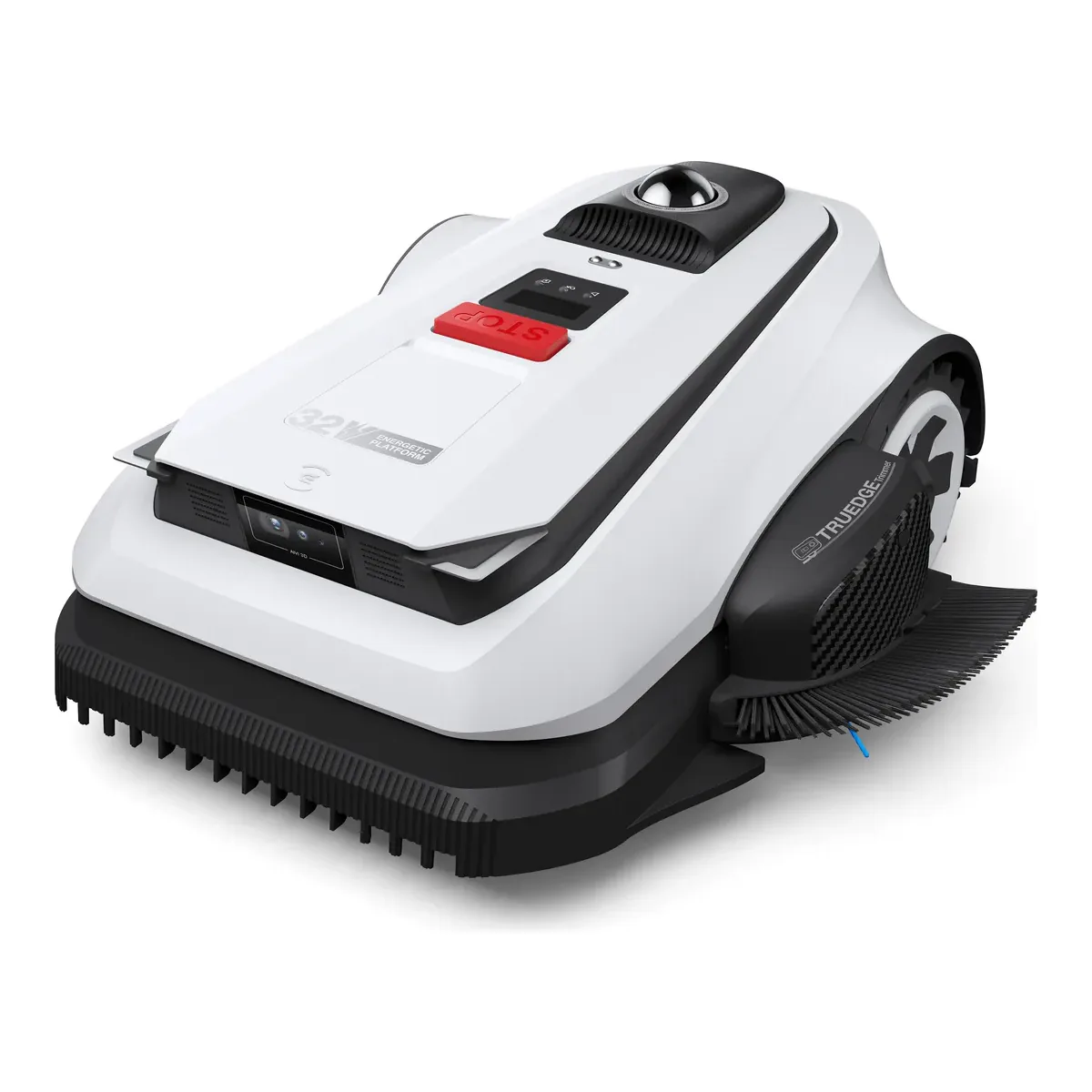
GOAT A2000 LiDAR PRO
Pick this if an open-sky yard up to half an acre, where LiDAR and cameras alone hold a map fine and a built-in trimmer module handles the edge.
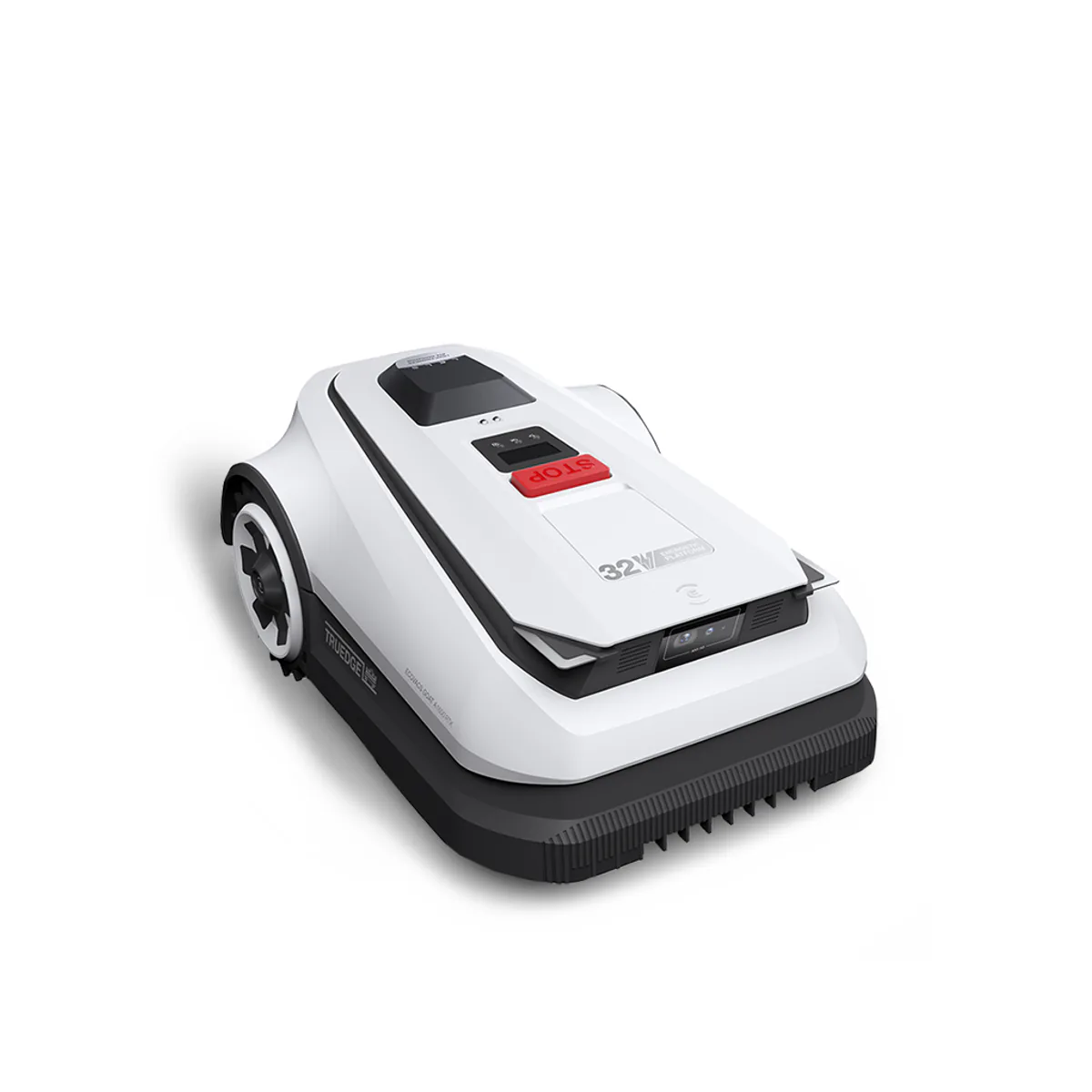
GOAT A2500 RTK
Pick this if a yard with heavy tree cover or structures that make a LiDAR-only map unreliable, where a staked antenna's steadier fix is worth planting the hardware for.
| GOAT A2000 LiDAR PRO | GOAT A2500 RTK | |
|---|---|---|
| Coverage | 0.5 acre | 27,000 sq ft (about 0.62 acre), 5,382 sq ft per charge |
| Boundary method | Wire-free, multiline LiDAR + AI camera + 3D ToF | LiDAR-enhanced RTK (LELS): staked reference station, antenna and pole required |
| Max slope | 50% (27°) work area, 20% at the virtual boundary | 50% (27°), crosses 1.75 in obstacles |
| Cut height | 1.18 to 3.54 in, electric | 1.2 to 3.6 in, electric |
| Obstacle avoidance | 200+ types, 3D ToF + AI camera + LiDAR, avoids from 1.97 in | 200+ types, AIVI 3D (AI camera + 3D ToF) |
| Multiple zones | Yes, add, merge and split areas, no-go zones, paths between zones | Supported, zone count not published |
| Runtime and charge | 50 min (manufacturer) | 64 min from full to 15% charge, 45 min charge time |
ECOVACS's own page for the A2500 RTK does not agree with itself on two of the numbers this comparison turns on: what battery it actually carries, and how much lawn it actually rates for. Sort out which figures are the structured spec table and which are marketing copy, and the ECOVACS A2000 vs A2500 RTK question still has a real answer underneath.
ECOVACS A2000 vs A2500 RTK: same battery, a different rated lawn
ECOVACS's own structured spec table lists an identical battery for both mowers: 3.0Ah on the A2000, restated as 3,000 mAh on the A2500 RTK's own table. The same A2500 RTK page contradicts that figure twice over in its own marketing copy, calling it "a 5Ah durable battery" in its charging section and again on the identical Amazon listing. We follow the structured table, because a datasheet row outranks body prose when the two disagree. The A3000 vs A2500 RTK comparison resolves the same page's identical contradiction the same way. On that reading, both mowers run the same size pack, and charging time favors the RTK model slightly, 45 minutes against 50.
Rated coverage is a bigger tangle. The A2000 rates for up to half an acre, a figure taken from its Amazon listing, since the manufacturer's own spec table prints no acreage row at all. The A2500 RTK's own page states three different coverage numbers for itself. Its title band labels the same machine a half acre mower, identical to the A2000's rating. Its body copy states mowing up to 27,000 square feet, about 0.62 acre. The identical Amazon listing calls it suitable for five eighths of an acre.
We use the 27,000 sq ft figure, the more specific of the three and the one the A3000 comparison also settles on for the same page's identical inconsistency. Read that way, the antenna model rates for more lawn than the A2000 on an equal size battery. Trust the title band's own half acre claim instead and the two mowers rate identically, and the comparison below depends on setting that second reading aside.
What the rated figure does not carry over is a per-charge answer. Per charge, ECOVACS states 5382 sq ft for the A2500 RTK, about 0.12 acre, a fraction of its own rated total. No equivalent figure exists for the A2000: its cached page's "mowing time per charge" and "charging time" rows both read 50 minutes, one number sitting in two labels. Those are not two separate measurements, so we do not repeat the figure as if it settled anything.
Basis: manufacturer specification tables and each model's own product page, for both mowers. The battery and coverage conflicts above are each product's own page disagreeing with itself. We are not overruling the manufacturer.
The trimmer that only one of them has
TruEdge branding sits on both product pages, and it does not mean the same part. Both machines' bare blade discs reach identically close to the true edge on their own. The A2500 RTK's own product page states a 1.97 inch blade-to-edge distance in its marketing copy, and the A2000's own structured spec table states the identical 1.97 inch for its own blade edge mowing. What happens after that 1.97 inch is where the two products stop matching. The A2000's spec table lists an actual trimmer module among its inbox parts, plus a "Trimmer Mowing" row that closes that same gap to about zero inches. Search the A2500 RTK's entire cached product page for the word "trimmer" and it returns nothing at all: no module in the box, no trimmer row in its spec table, and no way to close that final 1.97 inches the way the A2000 does.
Same starting distance, two different endings.
Basis: the A2000's spec table for its own edge-cutting row and inbox parts list; the A2500 RTK's product page, since its own spec table carries no edge-cutting row at all.
What staking the antenna buys, and what it costs
Slope barely moves between them: both climb the same 50 percent, 27 degree grade. A second, lower slope figure appears only on the A2000's own page, just for the virtual boundary itself, 20 percent; nothing on the A2500 RTK's page restates a separate boundary figure, only the single work area number. Cutting height is close but not identical: the A2000 adjusts from 1.18 to 3.54 inches, the A2500 RTK from 1.2 to 3.6, a rounding-level gap.
Real cost sits in the box, not on the spec sheet. Nothing needs planting in the yard for the A2000, while the A2500 RTK's own parts list adds a reference station, two mounting poles, a tripod peg and eight garden pegs on top of the mower and its charging dock, real hardware to place before the lawn is ever mapped. ECOVACS's own page states what that hardware is for: stable navigation "even in shaded areas," with a stated stability boost of up to 130 percent in the shade under the brand's own lab testing. That figure is ECOVACS's own lab claim, and we repeat it as the brand's number with no independent test behind it here. Where the yard has that kind of tree cover or a nearby structure, the extra setup step pays for itself. Where it does not, staking a reference station buys nothing that an equal size battery in the A2000 was not already carrying, on top of a trimmer module it already has and the RTK model does not.
Basis: manufacturer specification tables and each model's own product page.
When neither GOAT is the right question
A buyer whose real question is battery size on the identical LiDAR-only design wants the A2000 vs A3000 comparison instead. Anyone deciding whether a staked antenna is worth it at all against GOAT's biggest battery should read the A3000 vs A2500 RTK page. If you have not settled on ECOVACS yet, check how the wider shelf stacks up. There, WORX's own antenna-free RTK Cloud mowers and Segway's Network RTK line answer the same staked-antenna question with a third and fourth navigation architecture entirely.
Do not trust either spec sheet's rated acreage on its own before the lawn itself has been measured. Work out the real footprint first, and the choice between an antenna staked in the ground and none at all comes down to what is actually overhead, not to whichever printed acre figure sounds bigger.