Epson LS800 vs Hisense L9Q: rainbows or color
Buy the L9Q for a bright room unless you see DLP rainbows: in accurate modes ProjectorCentral measured more than twice the LS800's light from it, plus far wider color, Dolby Vision, 3D and a Devialet system with eARC. Buy the LS800 if rainbows bother you, since its three LCD chips cannot produce them, or if a 60Hz console is the main source, where one lab, across two reviews, put its game port slightly ahead at 1080p.
What decides it: Whether your eyes catch DLP rainbows.
We earn a commission on qualifying purchases through the links here, at no cost to you. It never decides what makes the list.
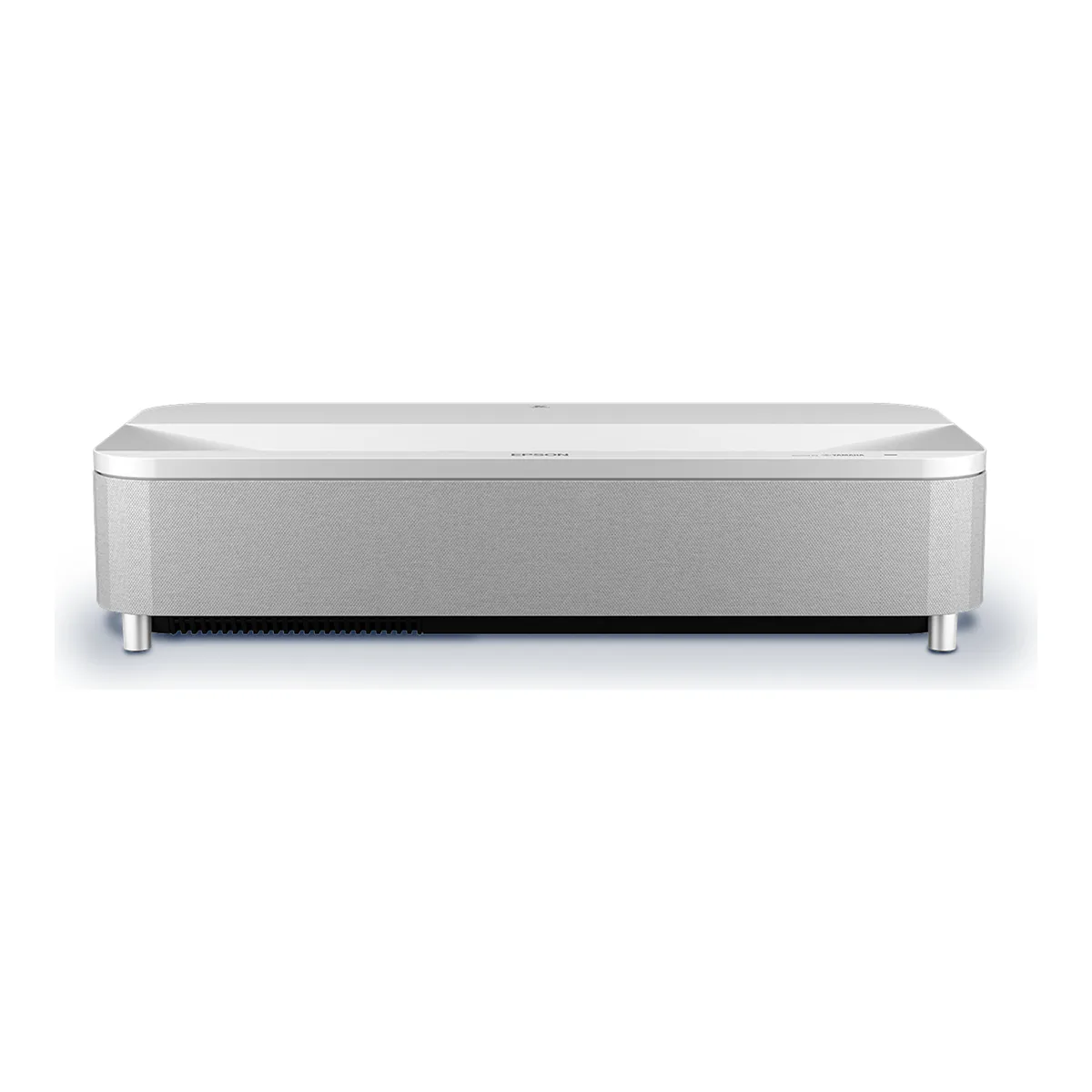
Epson EpiqVision Ultra LS800
Pick this if a viewer who sees rainbow flashes on single chip projectors, a console player who plugs into the dedicated game port, and a room where a soundbar or receiver already handles audio.
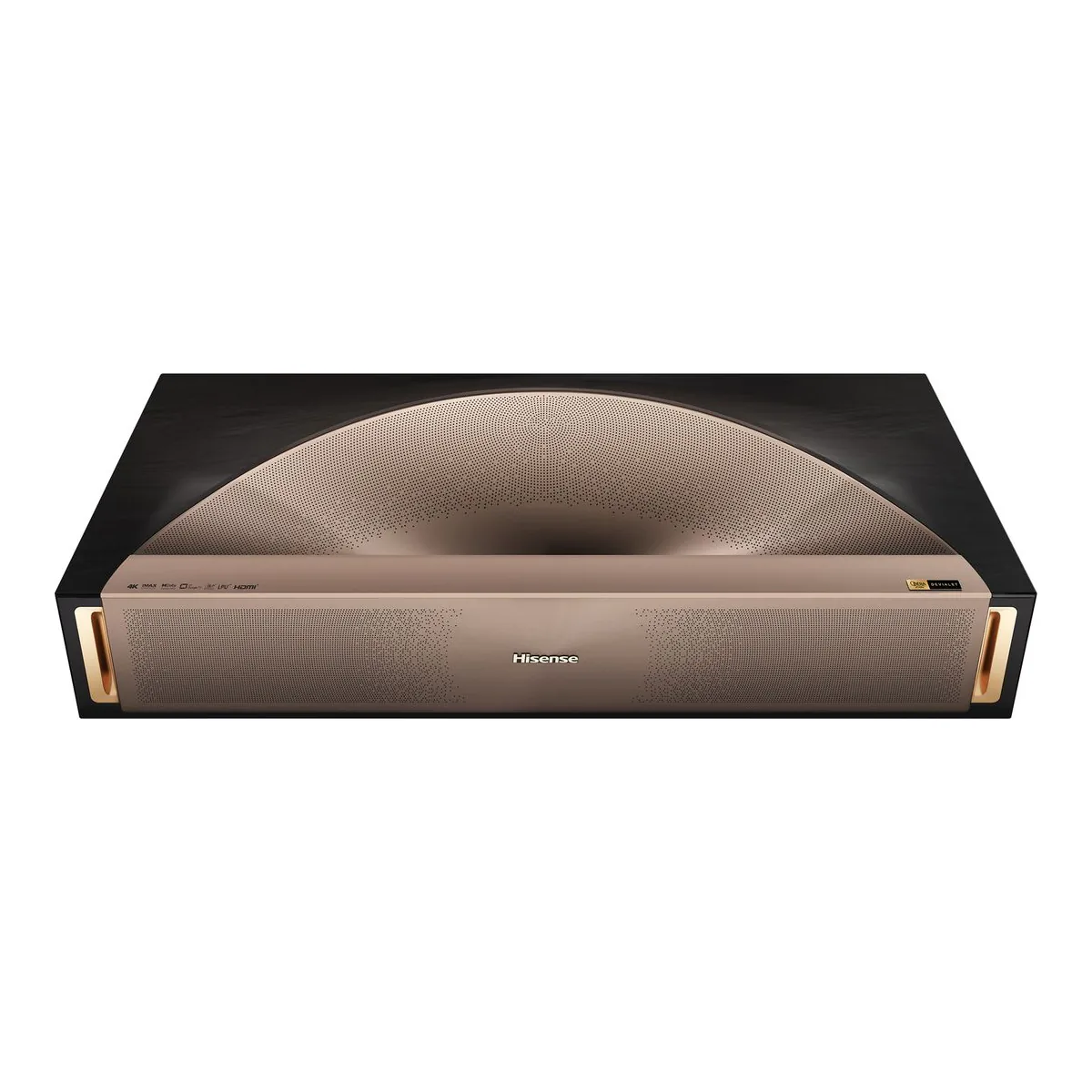
Hisense L9Q
Pick this if a film watcher in a living room with the lights on, who wants the brighter accurate picture, Dolby Vision, 3D and wide color, and has no separate speakers for 116W of Devialet sound to replace.
| Epson EpiqVision Ultra LS800 | Hisense L9Q | |
|---|---|---|
| Throw ratio | 0.16 to 0.40 | 0.18:1 |
| Distance for 100 in | 3.9 in, projector back to wall | 5.4 in, projector back to wall, including 30 mm of screen depth |
| Brightness (ANSI or ISO) | 4,000 lumens, color and white | 5,000 ANSI lumens |
| Light source | Laser diode, up to 20,000 hours | Triple laser, red, green and blue |
| Native resolution | 3840 x 2160 maximum | DLP 0.47 in DMD, 4K by pixel shift |
| Screen it needs | Epson SilverFlex ALR, sold separately | Hisense ALR screen, sold separately |
| Audio out | Yamaha 2.1, 20 W total | Devialet 6.2.2, 116W, eARC on HDMI 3 |
If a white subtitle on a single chip projector has ever left a red and green smear in your eye, the Epson LS800 vs Hisense L9Q question is settled before any spec sheet comes out. The Epson's three LCD chips cannot show that artifact. The Hisense runs one DLP chip, and PCMag's L9Q review found it "displays frequent rainbow artifacts".
Everyone else should lean Hisense. Both are ultra short throw laser projectors pitched as television replacements for a lit room, both sit a few inches from the wall, and they weigh 27.6 lb and 28.4 lb. Below is what ProjectorCentral measured on each, plus PCMag, TechRadar, Secrets of Home Theater and both makers' spec sheets.
Epson LS800 vs Hisense L9Q on brightness
Peak figures flatter the Epson.
Epson rates the LS800 at 4,000 lumens of color and white, and Hisense rates the L9Q at 5,000 ANSI lumens. In their brightest modes ProjectorCentral measured 4,084 from the Epson and 5,185 from the Hisense, in two separate reviews. Its 4,084 came from Dynamic mode, which ProjectorCentral says had "a very green cast" to make the brightness spec. Switch to a mode you would watch, still at full laser power, and the gap opens: 2,030 lumens in the LS800's Cinema mode against 4,652 in the L9Q's Filmmaker Mode. The Epson ships at Medium laser power by default, where Cinema measured 1,311. Out of the box the L9Q holds its lead: ProjectorReviews read 3201 in Filmmaker at the factory laser level.
At watchable settings, then, the L9Q is the much brighter projector. PCMag, lining up rated brightness beside Epson's QS100, put the L9Q brightest of the three and the LS800 dimmest, and in its opinion the settings you would pick will likely show even less difference. TechRadar thinks the LS800 "can get close to its brightness". ProjectorCentral's mode tables say otherwise.
Both want an ALR screen in daylight.
One laser against three, and what each costs you
Color goes the same way. The L9Q's red, green and blue lasers measured 95.6% (xy) of the BT.2020 color space at ProjectorCentral, and after calibration Secrets of Home Theater found DCI-P3 fully covered with only slight undersaturation at 90% red. Epson's single laser measured 92.6% of DCI-P3, which ProjectorCentral calls on par with the better single laser USTs, with reds not as richly saturated as on the triple laser models it has tested. Those are different measures, and DCI-P3 is the smaller color space, so the gap is wider than two percentages side by side make it look. HDR formats follow the same line: Dolby Vision, HDR10+, HDR10 and HLG on the L9Q, HDR10 and HLG only on the LS800.
Rainbows are the price. ProjectorCentral called them very mild on the L9Q. PCMag saw them often enough to be bothersome on a white screen, but fewer when using an ALR screen, and says neither Epson model can show any. Whether the Hisense's color is worth having depends on whether your eyes pick the artifact up, and only a demo or a generous return window tells you that.
Sound and ports, where the Epson shows its age
As a television, the L9Q is more complete. Its Devialet system runs ten speakers in a 6.2.2 layout at 116W with Dolby Atmos and DTS:X, where Epson fits a Yamaha 2.1 system of two 5 W speakers and a 10 W subwoofer, 20 W in total.
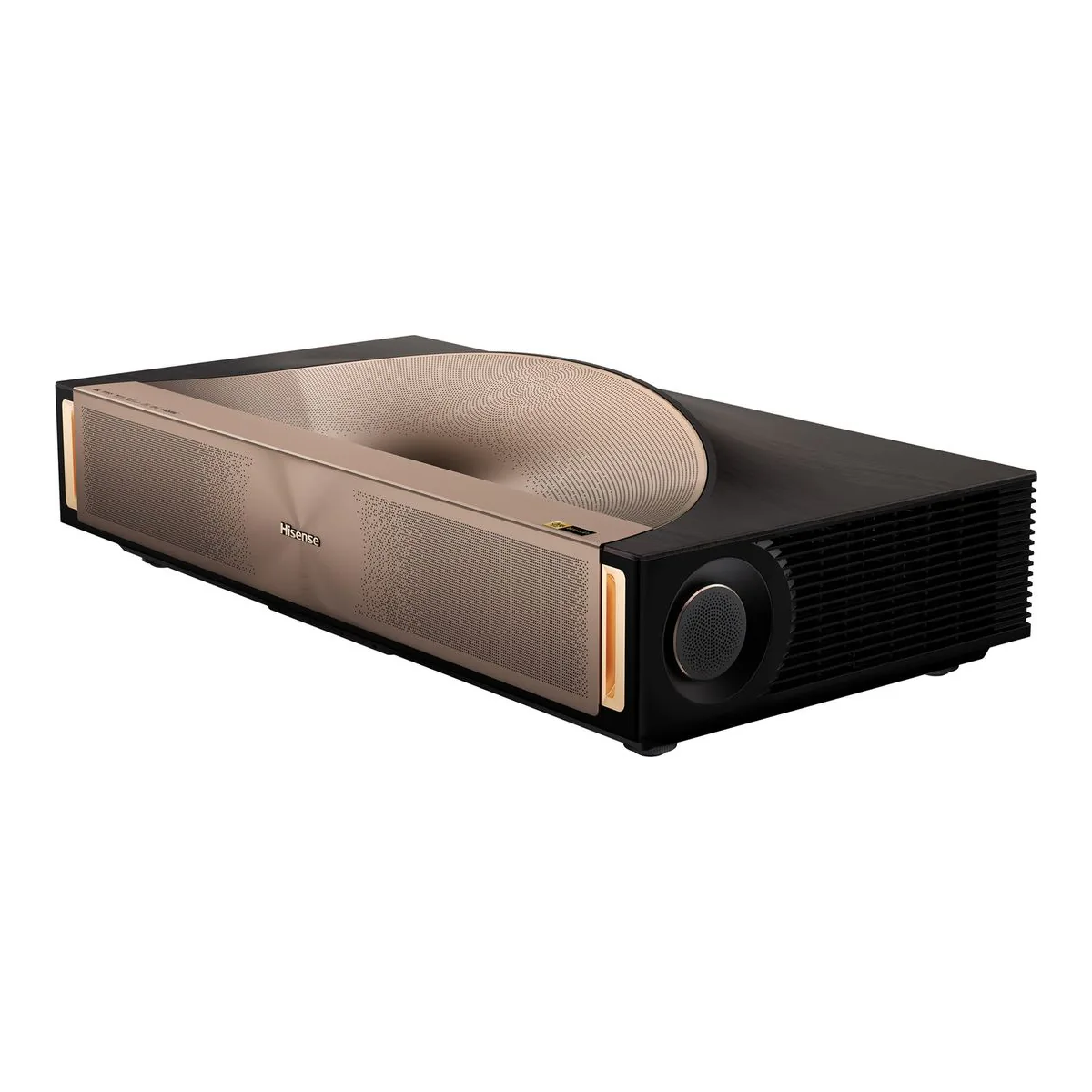
Ports widen the gap. Hisense gives you two HDMI 2.1 and two HDMI 2.0 inputs, with eARC on HDMI 3. Epson gives you three HDMI 2.0 ports, and its one audio return port is ARC, which cannot pass lossless Dolby Atmos to a soundbar. On top of that the L9Q adds 3D with active glasses, an RF tuner, Control4 support and Google TV with an authorized Netflix app. On the LS800, 3D is gone, there is no tuner, and Android TV lacks a certified Netflix app.
Calibrators get a clear answer too. PCMag notes the LS800 lacks a color management system, and ProjectorCentral found no white balance gain or bias controls either. Secrets used the L9Q's two point white balance for SDR and HDR10 and reports perfect color and gamma from it.
Gaming at 60Hz, on ProjectorCentral's bench
One lab measured both, across two reviews. On the LS800's dedicated game port, which bypasses Android TV, ProjectorCentral measured 22.1 ms at 1080p/60, 21.0 ms at 4K/60 and 12.3 ms at 1080p/120. Its L9Q review, with DLP Turbo Mode and High Refresh Rate Mode on, read 27ms at 1080p/60 and 35ms at 4K/60. Other labs read the L9Q faster: 17.6 ms at 4K/60 for PCMag, and 28 ms at 4K/60Hz for ProjectorReviews. So the Epson's 60Hz edge rests on one lab: 22.1 against 27 ms at 1080p/60 is small, and the 4K/60 gap of 21.0 against 35 ms came with High Refresh Rate Mode on, which a reader under that review says adds lag. Use any other Epson input and lag measured 101 to 113 ms.
Plug a 60Hz console into the Epson's game port, then. A 4K/120 console is no reason to pick the Hisense. Its HDMI 2.1 ports accept a 4K/120 signal, which ProjectorCentral read at 18ms of lag, but its editor says the L9Q will "output as 4k/60Hz", and Hisense's store lists 4K/60Hz. High refresh play happens at 1080p, where Hisense quotes 12ms at 2K/120Hz and ProjectorCentral read 8ms at 1080p/240, which TechRadar says needs the HDMI input set to Enhanced Pro. Turbo Mode switches off keystone and 3D while it runs.
Placement on a credenza
Both hug the wall, and the two figures use different bases. ProjectorCentral puts the LS800's back 3.9 inches from the wall for a 100 inch image, from a 0.16 throw ratio, with its front 17.3 inches out from the screen. Hisense's own chart puts the L9Q 5.4 inches out for 100 inches at a 0.18 throw, a figure that already counts 30 mm of screen depth. Image size tops out at 200 inches on the Hisense and 150 on the Epson, whose focus is a manual slider where the L9Q's is motorized.
When neither is right
A dark home theater is the case neither suits. The LS800's blacks came up "a bit gray" on challenging scenes in ProjectorCentral's test. The L9Q's contrast is good by ProjectorCentral's account, though it measured 3,900:1 against the 5,000:1 rating. Its problem is surplus. TechRadar reckons that much light is overkill for anyone who always watches in the dark, and sends that buyer to the PX3-Pro. Our L9Q against PX3-PRO comparison covers that older triple laser, and the ultra short throw projector picks cover the rest of the field.
Want an Epson for the dark? In a reply under his LS800 review, ProjectorCentral's Rob Sabin suggested one reader look at the LS11000 or LS12000, which will likely work from a tall rack or shelf at the middle or rear of the room. Neither is an ultra short throw. For every test reading, go to the LS800 review or the Hisense L9Q review.
Before ordering either, size the screen
Both listings are the projector alone. Epson sells its SilverFlex ambient light rejecting screen in 100 and 120 inch sizes, and Hisense bundles its ALR screen at 100, 110, 120, 139 and 150 inches. Pick the size first, then check the throw chart against the depth of the furniture it will sit on.