Navimow i210 vs i206: Does the Bigger Battery Mow More
Buy the i210 AWD once your lawn runs past about 0.18 acre, which is the best case ceiling Segway states for what the i206 can hold as a map, and it falls short of that on a complicated yard. Buy the i206 AWD for anything up to 0.15 acre, because Segway's own comparison table rates both machines at the identical 0.03 acre an hour, so the larger battery buys longer stretches between charges rather than a faster or a bigger mow.
What decides it: Whether the i210's double size battery buys more lawn per day or only fewer charging breaks, given that Segway rates both machines to cut at exactly the same 0.03 acre an hour.
We earn a commission on qualifying purchases through the links here, at no cost to you. It never decides what makes the list.
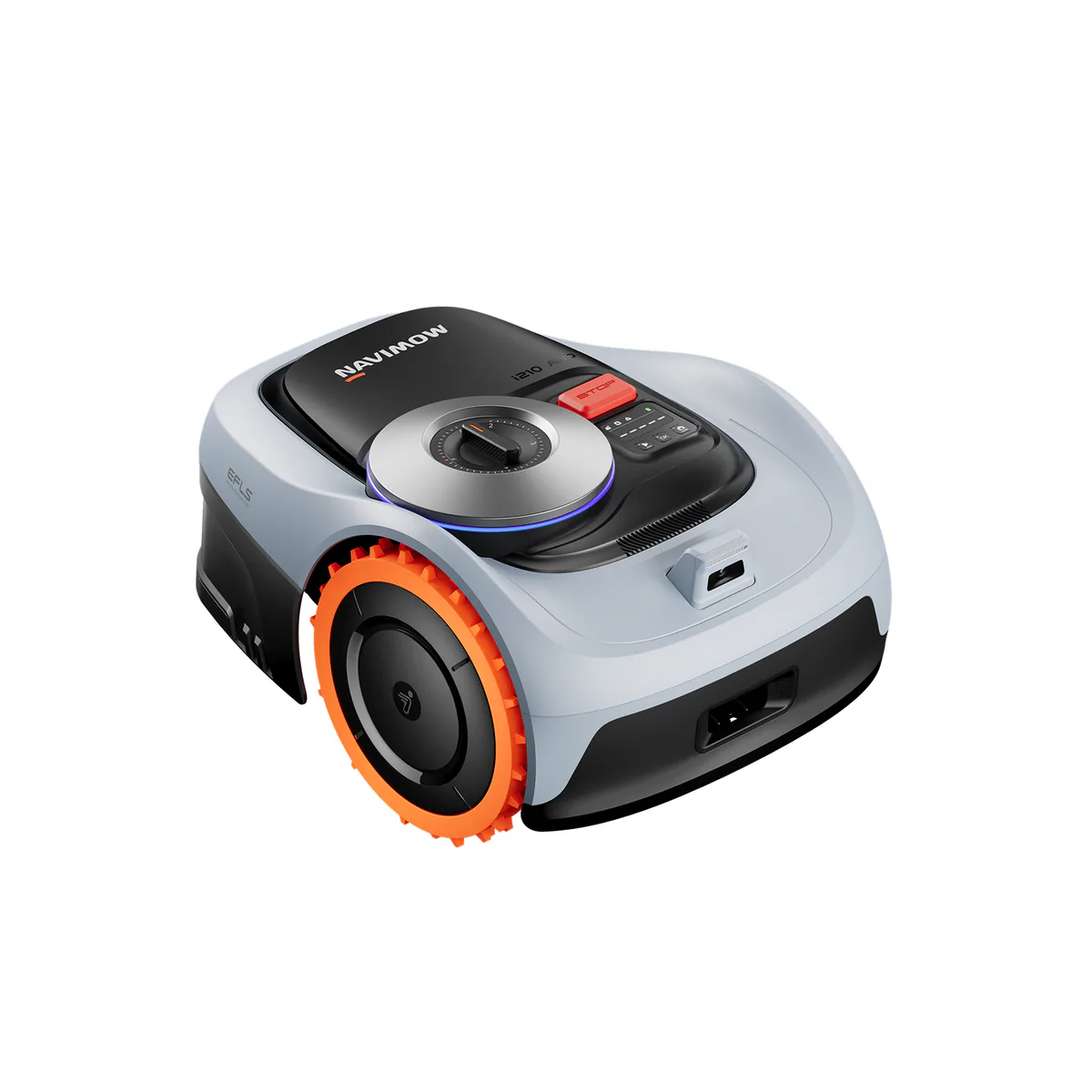
Navimow i210 AWD
Pick this if a lawn past about 0.18 acre, where the i206 can no longer hold the map, and anyone who would rather the mower crossed the same grass in half as many charge cycles.
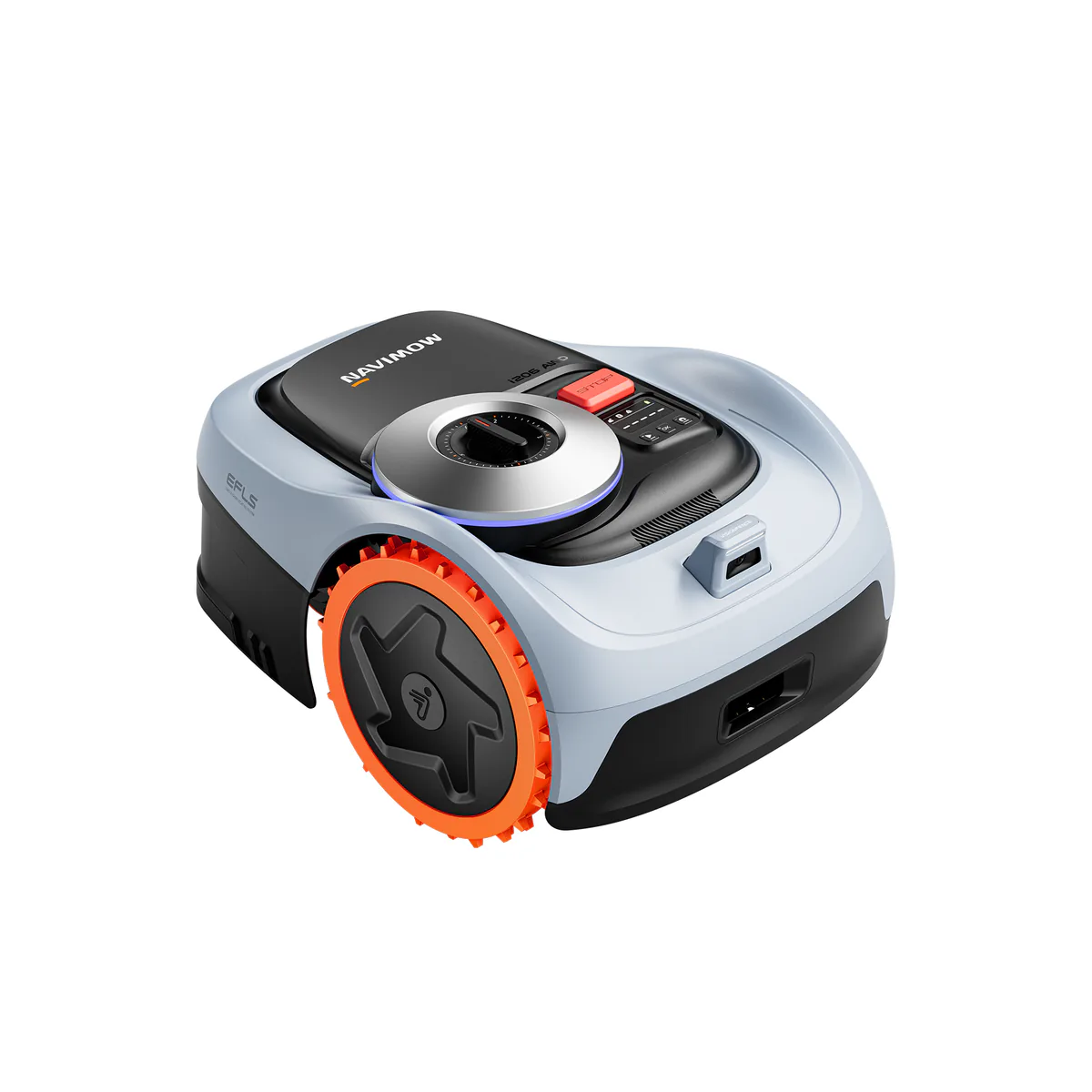
Navimow i206 AWD
Pick this if a lawn up to 0.15 acre, where the smaller pack costs nothing in daily coverage and the machine finishes the same grass on the same schedule.
| Navimow i210 AWD | Navimow i206 AWD | |
|---|---|---|
| Coverage | 0.25 acre rated, about 0.30 acre mappable (our arithmetic on the stated 1.2x map rule); up to 0.37 acre mowed per 24 hours | 0.15 acre rated, up to 0.18 acre mappable; up to 0.37 acre mowed per 24 hours |
| Boundary method | Wire-free, Network RTK + vision (EFLS NRTK); box includes a GNSS antenna and installation kit as a fallback where Network RTK coverage is weak | Wire-free, Network RTK + vision (EFLS NRTK); box includes a GNSS antenna and installation kit as a fallback where Network RTK coverage is weak |
| Max slope | 45% (24°) inside the working area and at the boundary | 45% (24°) inside the working area and at the boundary |
| Cut height | 2 to 3.6 in | 2 to 3.6 in |
| Obstacle avoidance | 150+ types detected (VisionFence) | 150+ types detected (VisionFence) |
| Multiple zones | Up to 20 zones, all drawing on one shared map budget | Up to 20 zones, all drawing on one shared map budget |
| Runtime and charge | 5.1 Ah / 110 Wh battery, 120 min mowing per full charge covering 0.06 acre, 120 min to recharge | 2.55 Ah / 55 Wh battery, 60 min mowing per full charge covering 0.03 acre, 60 min to recharge |
0.03 acre an hour. That row in the Navimow i2 AWD manual's spec table runs across both columns without splitting, because Segway rates the i206 AWD and the i210 AWD to cut grass at the same speed. The figure settles Navimow i210 vs i206 long before the battery spec comes up.
Segway sells the two as variants of one product, the i2 AWD series, and the manual is unusually candid about how little separates them. Its specification table runs about thirty rows and five of them split into two columns: battery capacity, the mowing time and the charging time that follow from it, the recommended lawn size, and net weight. Five. Everything else a buyer normally compares, cutting width, cutting height, slope rating, noise, footprint, is one number spanning both machines.
Navimow i210 vs i206, and what the bigger battery actually buys
Fewer interruptions, and not one square foot more grass in a day.
The i210 carries a 5.1 Ah, 110 Wh pack against the i206's 2.55 Ah, 55 Wh, so it is double. Full charge mowing time goes from 60 minutes to 120. Charging time goes from 60 minutes to 120 as well. Nobody reads that second number, and it cancels the first. Because the recharge scales with the pack, the proportion of any given day each machine spends cutting, as against sitting on its station, never moves off half.
Segway prints the consequence in its own comparison table, so you do not have to work it out. Mowing area per charge reads 0.03 acre for the i206 and 0.06 for the i210, the doubling the battery predicts. Mowing area per hour reads 0.03 acre in both columns, and the doubling never touches it. Its FAQ then says it a third way, giving both models the same daily mowing area of up to 0.37 acre per 24 hours.
Basis: Segway's own specification comparison for these two models, and the i2 AWD series user manual. Segway conditions the per charge figures on a test at 25 degrees C over a flat rectangular lawn of Manila grass cut from 60 mm to 55 mm. A real lawn, longer or wet or awkwardly shaped, gets less out of a charge than either column promises.
How long each one takes to finish the lawn it is sold for
9.6 hours on the i206 and 16 on the i210, both published by Segway, and neither of them a single sitting.
No listing repeats that row, and nothing else on the table is as useful. Divide each figure by its own recommended mowing area and both land on 64 hours an acre, because the mowing rate is shared and the charging overhead scales with the pack. The i210 is slower to finish only because it is pointed at more grass.
What the bigger battery changes is the shape of the work. The i206 takes five stints to cover its 0.15 acre, and the i210 a little over four to cover its 0.25, so the larger machine crosses more ground per trip out of the dock and returns to it less often.
None of that makes a rated lawn a per charge lawn. Read the 0.15 and the 0.25 as what each machine will finish across a day, never as what it clears on a charge. Segway gives the per charge figures further down the same table, at 0.03 and 0.06 acre.
The ceiling on what either one will map, which is the real split
0.18 acre on the i206, and the footnote behind that number puts the i210 at about 0.30.
Segway states the i206 is designed for lawns up to 0.15 acres and "may support a maximum mowing area of up to 0.18 acres depending on your yard's layout, shape, and complexity". A footnote on the same page gives the rule underneath it: map storage runs to 1.2 times the recommended mowing area. The i210's figure is our arithmetic, not Segway's: the same multiplier on its 0.25 acre lands near 0.30 acre.
This ceiling behaves differently from a coverage rating, and the buying decision turns on the difference. Coverage is a rate, so a lawn slightly over it just takes longer. The map limit is a wall. Segway even closes the obvious workaround in the same answer. A yard can be divided into zones, it says, but every one of them draws on a single shared map budget, so splitting a lawn to fit it under the ceiling buys nothing at all. Its spec table caps the zones at 20 on either machine anyway. A 0.2 acre lawn is not an i206 run twice a day. It is an i206 that will not hold the lawn. Work out which side of that line your yard falls on before anything else, because no other number here can be negotiated with.
What the two machines share, which is nearly everything
Both are 21.4 by 15.1 by 11.2 inches, with a cutting width of 7.1 in on a single disc of five blades. Both adjust from 2 to 3.6 inches of cutting height, and on both the adjustment is manual; Segway saves the automatic kind for its larger X4 machines. Both are rated for a 45 percent maximum incline inside the working area and at its boundary, measured on dry grass at a 1.97 inch height with nothing in the way. Both measure 59 dB(A) sound power and 51 dB(A) sound pressure, carry IP66 on the mower body and the charging station with IP67 on the power adapter, and run on a 21.6 V DC battery. Both ship the same 23 ft mains lead for the charging station.
Even the weight barely moves, 26.56 lbs for the i206 against 27.12 lbs for the i210, so doubling the cells costs about half a pound.
Both boxes also ship a GNSS antenna and an installation kit, as the fallback for addresses where Segway's Network RTK does not reach. That hardware is the subject of a different comparison entirely, and the antenna question against the LiDAR model is where it gets settled.
Where the i206 is the wrong buy, and acreage is not the reason
The owner evidence gathered for this comparison turned up nothing that recurred across two or more people, so there is no fault pattern here to report. One comment in it does name this series and it says nothing about the drivetrain. An owner running an i2 AWD on a small lot wrote that the AWD was great but GPS and RTK were terrible, and added that any yard of 0.1 acre or less should be assumed to be a city or close in suburban lot with neighbors close by and narrow passageways. Those lots are the i206's whole market.
One person, so no pattern, and a single report carries a single report's weight. It also lands squarely on the i206's buyer, because the i206 is the rung sold for those lots. Segway's marketing goes the other way and promises stable signals in tight, cluttered or obstructed areas, while its own manual names large areas of very poor GPS signal as the reason a map's accuracy cannot be improved. The manual goes further about the local antenna these boxes ship as a fallback, telling you to make sure the sky directly above it is not obstructed by trees or roofs. Trees, roofs and fences crowd closest on a small lot, and a small lot is also where you are most likely to need that antenna. How much to trust any wire free boundary claim is a question of its own, and on this pair it matters more than the battery.
Check the coverage map before you check either spec sheet
Both machines navigate on the same Network RTK service, so the address decides more than the model does. Segway publishes a coverage checker and it costs nothing to run it first.
After that the sizing falls out quickly. Up to 0.15 acre the i206 finishes the same grass on the same schedule as its bigger sibling and the extra battery is paying for nothing. Past about 0.18 acre, sooner on a yard with corners and islands in it, only the i210 of the two will hold the map. Past roughly 0.30 acre neither belongs on the shortlist, and the wider robot mower shelf is the place to start over.