Hisense Ultra Short Throw Projectors Compared (PL2, PT1, PX3-PRO, PX4-PRO, L9Q, L9Q Pro)
Stop at the PT1 if the room goes dark for movies and the screen stays at 150 inches or under: it is the entry triple laser model, it keeps Google TV, and RTINGS measured lower input lag on it than on the PX3-PRO. A room that keeps some daylight, or a screen past 150 inches, goes up to the L9Q at 5,000 ANSI lumens. The PX4-PRO between them adds an iris and a fourth HDMI input, and swaps Google TV for Hisense's VIDAA.
We earn a commission on qualifying purchases through the links here, at no cost to you. It never decides what makes the list.
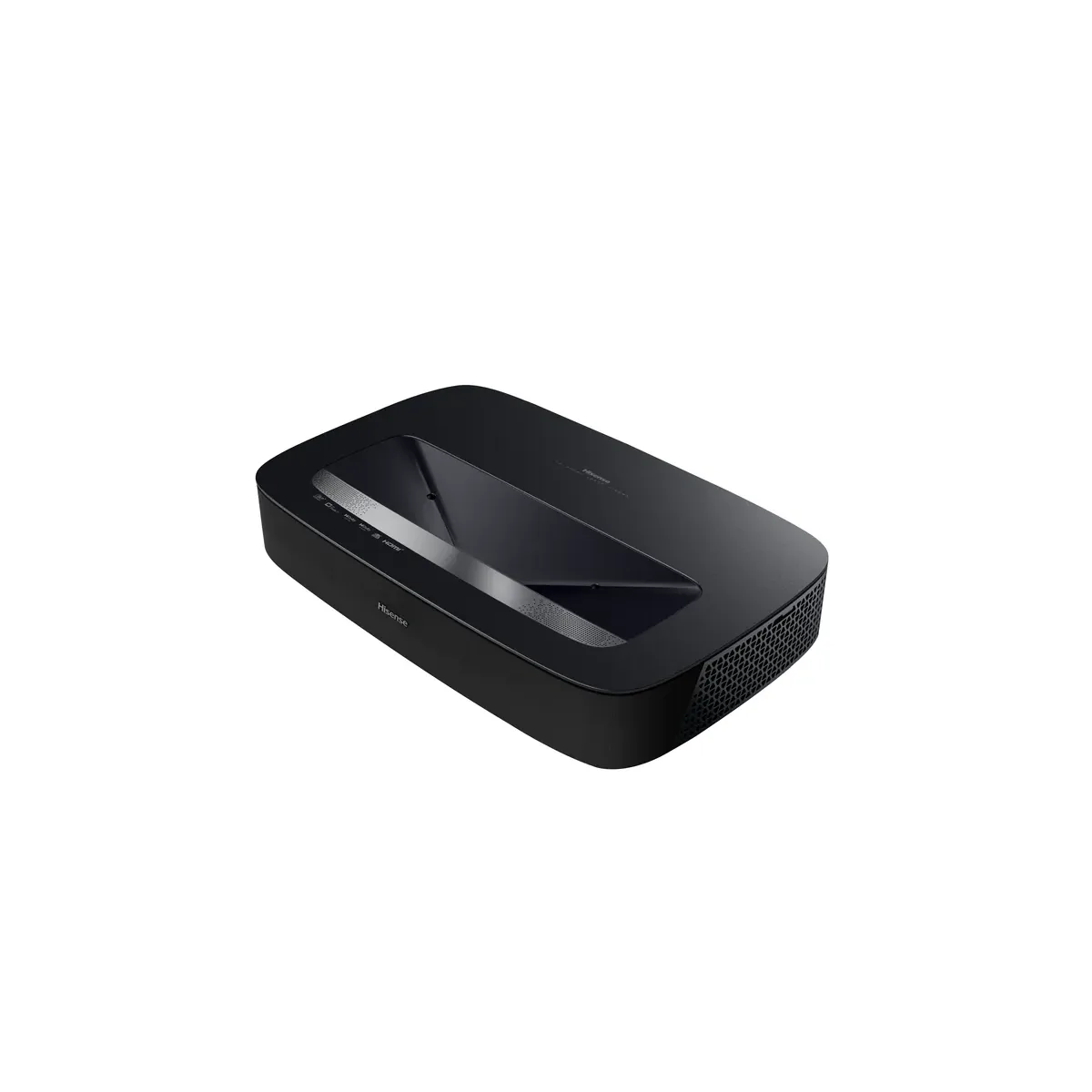
Hisense PL2
Stop here if you want a Hisense on Google TV for a dark room and can give up color range for it. ProjectorCentral calls its engine more restricted in color than the triple lasers, and What Hi-Fi says to budget for separate speakers.
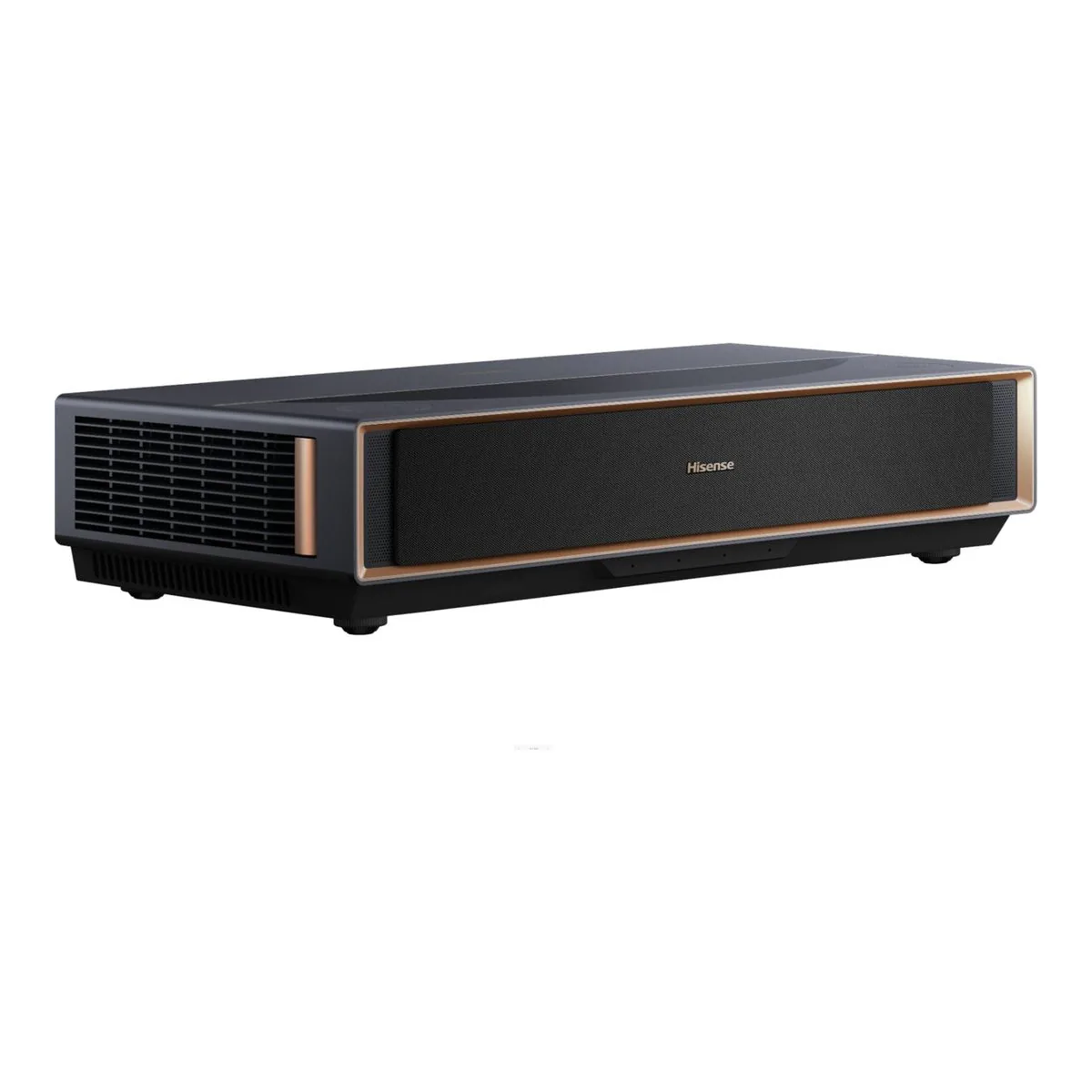
Hisense PT1
Stop here if the room goes dark for movies and the screen is 150 inches or smaller. RTINGS measured lower input lag than on the PX3-PRO and found it too dim for ambient light or very large screens.
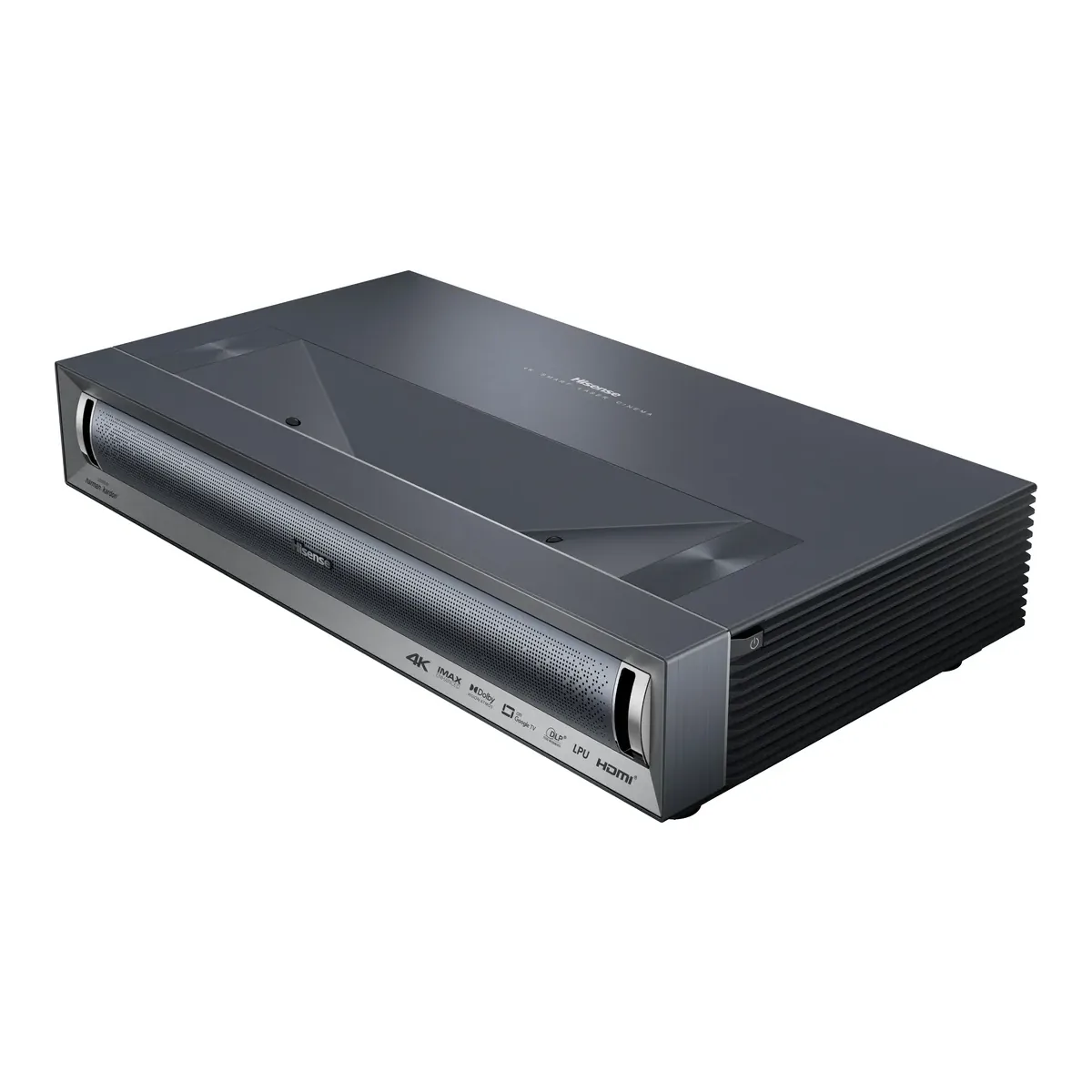
Hisense PX3-PRO
Stop here if you want Google TV with more light than the PT1. RTINGS rates it brighter and a bit more accurate out of the box than the PT1.
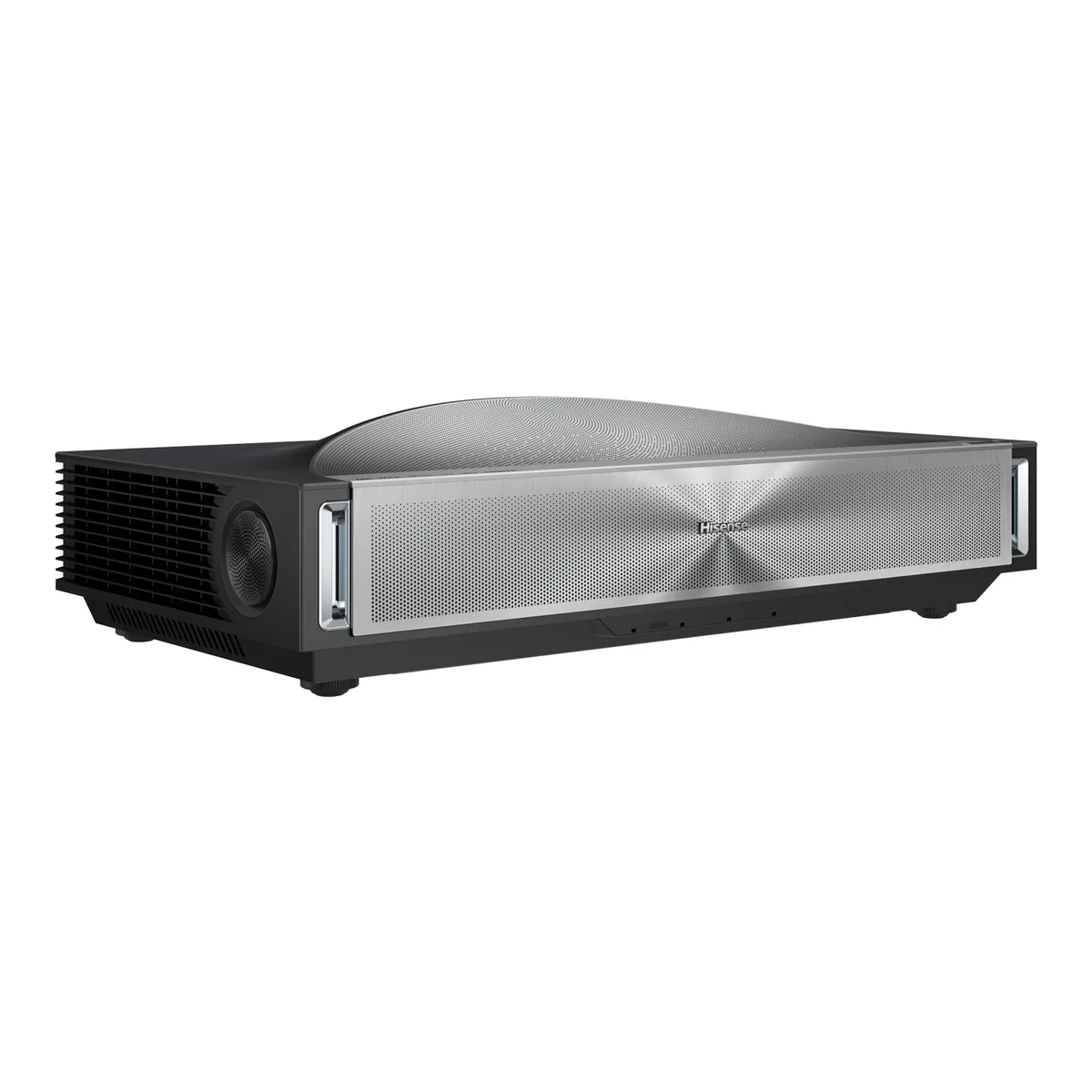
Hisense PX4-PRO
Stop here if you game on a PC with VRR at 1080p, or want a screen past 150 inches in a smaller box than the L9Q, and VIDAA carries your apps. ProjectorCentral found no separate Hulu app on it.
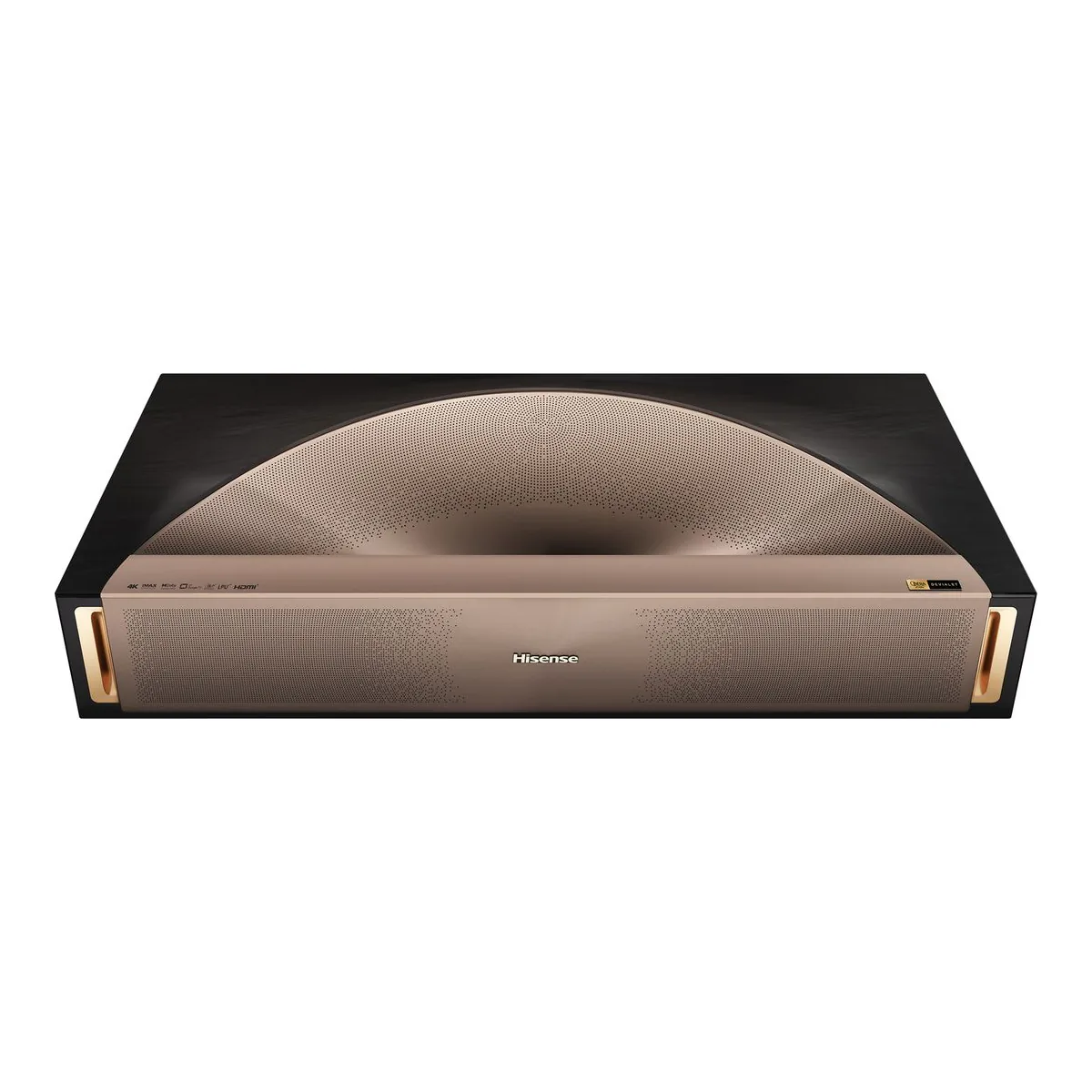
Hisense L9Q
Stop here if the room keeps some daylight or the screen runs past 150 inches, and you want Google TV. Two of the four owners we counted sent theirs back.
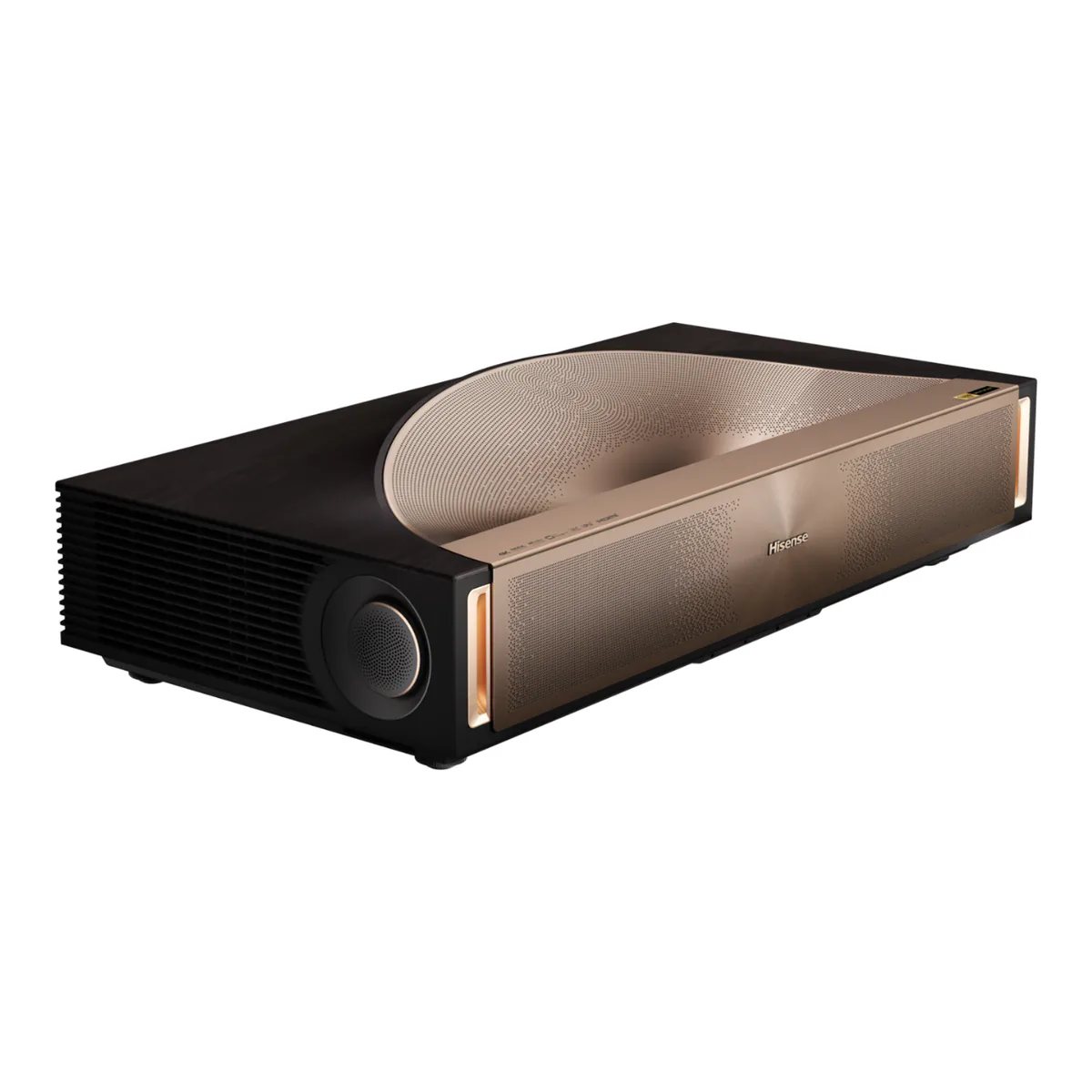
Hisense L9Q Pro
Stop here if you were going to buy the L9Q, want optical lens shift to set the picture height without moving the projector, and can wait for the Amazon listing to go live. Every figure on it so far is Hisense's own.
| Light source | Rated brightness | Image size | Contrast | Smart TV | HDMI inputs | |
|---|---|---|---|---|---|---|
| Hisense PL2 | Single laser plus phosphor | 2,700 ANSI lumens | 80 to 150 in | 3,000:1 | Google TV | 3, eARC on HDMI 3 |
| Hisense PT1 | Triple laser, RGB | 2,500 ANSI lumens | 80 to 150 in | 3,000:1 | Google TV | 3, one with eARC |
| Hisense PX3-PRO | Triple laser, RGB | 3,000 ANSI lumens | 80 to 150 in | 3,000:1 | Google TV | 3, eARC on HDMI 3 |
| Hisense PX4-PRO | Triple laser, RGB | 3,500 ANSI lumens | 80 to 200 in | 6,500:1 with iris | VIDAA OS | 4, eARC on HDMI 3 |
| Hisense L9Q | Triple laser, RGB | 5,000 ANSI lumens | 80 to 200 in | 5,000:1 | Google TV | 4, eARC on HDMI 3 |
| Hisense L9Q Pro | Triple laser, RGB | 5,500 ANSI lumens | 80 to 200 in | 6,000:1 with iris | Google TV | 4, eARC on HDMI 3 |
The entry triple laser in the line is rated dimmer than the single laser model beneath it. Hisense rates the PT1 at 2,500 ANSI lumens and the PL2 at 2,700. Color runs the other way, with the PT1's red, green and blue lasers covering 110% of BT.2020 against the PL2's 85% of the smaller DCI-P3, so lumens alone will not sort the Hisense ultra short throw projectors. Two other things split the ladder first: which software a model runs, and how big a screen it is rated to fill.
Six models sit on the ladder today. PL2, PT1 and PX3-PRO throw 80 to 150 inches; the PX4-PRO, L9Q and L9Q Pro go to 200. On US units five run Google TV and the PX4-PRO runs Hisense's own VIDAA. On Amazon the L9Q Pro is listed but not yet available. If Epson, AWOL Vision or XGIMI are still in the running, our ultra short throw projector picks cover the whole category.
Behind the ladder: Hisense's spec tables for all six, ProjectorCentral's instrumented reviews of the PX3-PRO, PX4-PRO and L9Q, ProjectorReviews' measurements of the PX4-PRO and L9Q, RTINGS on the PT1 and PX3-PRO, What Hi-Fi on the PL2 and PX4-PRO, and the owners we counted: 16 for the PX3-PRO, four for the L9Q, and the first PX4-PRO owner and store buyers.
Hisense ultra short throw projectors split at 150 inches
Three stop at a 150 inch image and the other three reach 200. That line follows the light: the 150 inch models are rated from 2,500 to 3,000 ANSI lumens and the 200 inch models from 3,500 to 5,500, since a bigger picture spreads the same output thinner.
Throw ratio sorts them another way: 0.22 on the PL2 and PX3-PRO, 0.2 on the PT1 and PX4-PRO, and 0.18 on both L9Q models. On Hisense's chart the back of an L9Q sits 5.4 in from the wall for a 100 inch picture, 30 mm of screen depth included. A tighter ratio buys a shallower cabinet and costs tolerance: Secrets of Home Theater and High Fidelity found the L9Q's placement more critical than the older L9H's because it sits closer. Our page on how far a UST projector sits from the wall runs the arithmetic for your screen.
Google TV or VIDAA
The PX4-PRO is the only rung on VIDAA, Hisense's in-house platform, and the switch is the change most likely to surprise a PX3-PRO owner upgrading. ProjectorCentral's reviewer found the major apps on it (Netflix, Prime Video, Disney+, Apple TV and YouTube) plus an Xbox app for cloud gaming, but no separate Hulu app; Hulu sits inside the Disney+ app, and the reviewer streamed it by AirPlay. Its solar charged remote also has no keypad backlight, a small thing in a dark room.
None of it matters if a streaming box does the work. ProjectorReviews makes the point that many enthusiasts feed these projectors from an Apple TV, a Roku, an NVIDIA Shield or a console anyway, and on any of those the built in platform is a menu you see once.
Three HDMI inputs or four
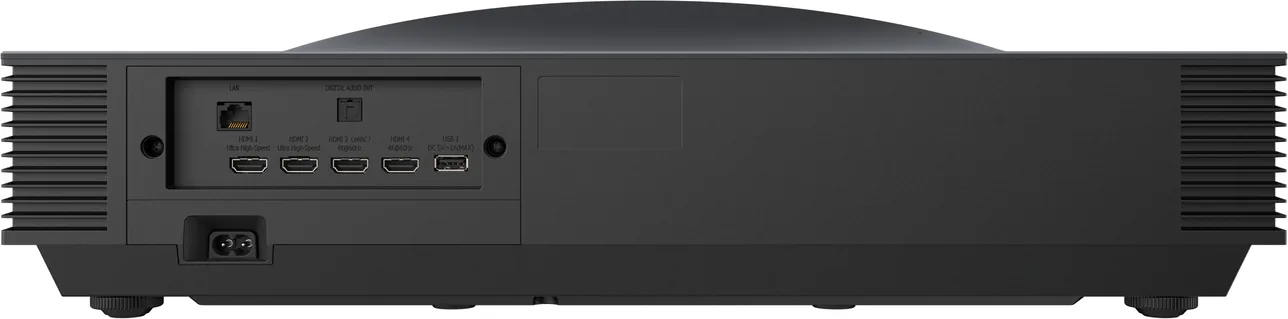
Each of the PL2, PT1 and PX3-PRO carries three: two HDMI 2.1 and one HDMI 2.0. The PX4-PRO, L9Q and L9Q Pro carry four, two of each. On every rung whose port map Hisense publishes, eARC sits on HDMI 3. On the PX3-PRO, PX4-PRO and L9Q that is an HDMI 2.0 port, so a receiver or soundbar on eARC leaves both 2.1 ports free for consoles.
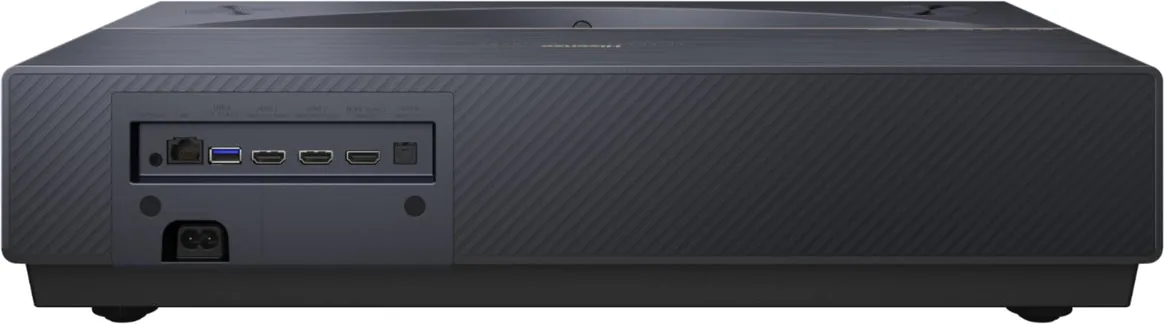
What changes is the third source. On a three input model, a receiver plus two consoles fills the back panel, and a streaming box or a disc player has to share a port through the receiver. A four input model leaves HDMI 4 open. Hisense Canada's PT1 page lists four HDMI ports, while Hisense USA's spec table and the rear render above both show three; trust the US table for a US unit.
Rated lumens against measured
Hisense quotes peak figures, and on the PX4-PRO the two labs disagree on how much of the peak is usable. ProjectorCentral read 3,304 ANSI lumens in its brightest preset, Enhanced (ACR). ProjectorReviews got near the rating only with Brightness Enhancement on, 3,386 lumens in Vivid, a feature that reviewer advises against because the image turned greenish and fan noise rose.
Below the peak the two labs split wide. ProjectorCentral measured 3021 in Filmmaker mode; ProjectorReviews measured 1470 in Filmmaker and 1930 in Vivid. The L9Q shows a smaller spread, 4652 in Filmmaker at laser level 10 from ProjectorCentral against 3201 at the factory laser level from ProjectorReviews, and ProjectorCentral's PX3-PRO gave 2,669 ANSI lumens in HDR Vivid. Plan a lit room around the lower lab's figures, which is why the short answer sends daylight to the L9Q. RTINGS' verdict on the PT1 is that it is not bright enough for ambient light or very large screens.
PX4-PRO against the PX3-PRO it replaces
The iris carries the upgrade. ProjectorReviews describes the PX3-PRO's lens as fixed and wide open, so it deepened blacks by modulating the laser, with visible brightness pumping. On the PX4-PRO, the seven-step iris reached 5,425:1 in ProjectorCentral's Dynamic setting, which is also the mode where that reviewer saw mild pumping. Gaming moved further: ProjectorCentral measured 9.3ms at 2160p/60 on the PX4-PRO against 21ms on the PX3-PRO with its DLP Turbo Mode on, and RTINGS notes the PX4-PRO supports VRR, which the PX3-PRO does not. Hisense lists that VRR at 1080p, 48 to 240Hz, and ProjectorCentral frames FreeSync Premium as a PC gaming feature. Max fan noise read 36.0 dBA on the newer model against 39.1 dB on the older, in rooms with different noise floors. Then the trade: VIDAA in place of Google TV.
Of the 16 PX3-PRO owners we counted, nine are plainly happy and no complaint repeats. It is too soon for a PX4-PRO count like that. One owner on a 150 inch Fresnel screen reports a brighter hotspot at the bottom center. A buyer on Hisense's store, moving from a ViewSonic UST, found the lens angle too high to fit a 150 inch screen under a basement ceiling of about 93 inches, and the keystone too limited to correct it.
L9Q or L9Q Pro
Hisense lists the two at the same 24.6" x 12.5" x 6.5" and 28.4 lbs, both on a 0.18 throw, both with Devialet 6.2.2 sound and four HDMI inputs. The Pro adds 500 rated lumens, an iris for its 6,000:1 rating against the L9Q's 5,000:1, and plus or minus 5% vertical optical lens shift.
One of the four L9Q owners we counted says auto alignment never worked and they corrected the picture by hand, and a buyer on Hisense's store writes that they always end up adjusting the auto keystone manually. Two of the four sent theirs back: color fringing for one, and for the other a coil whine or fan sound in quiet scenes; our L9Q review has the full count. Hisense pitches the Pro's shift as placement flexibility, with automatic screen alignment still doing the rest of the setup. If the L9Q against the Google TV model below it is the real question, the L9Q and PX3-PRO comparison takes that pairing alone.
What we would read next is the first instrumented test of an L9Q Pro: whether the iris lifts its measured contrast clear of the L9Q's, and how much of the extra 500 lumens survives in Filmmaker mode.