SawStop PCS175 review: the flesh-detecting cabinet saw (PCS175-TGP236)
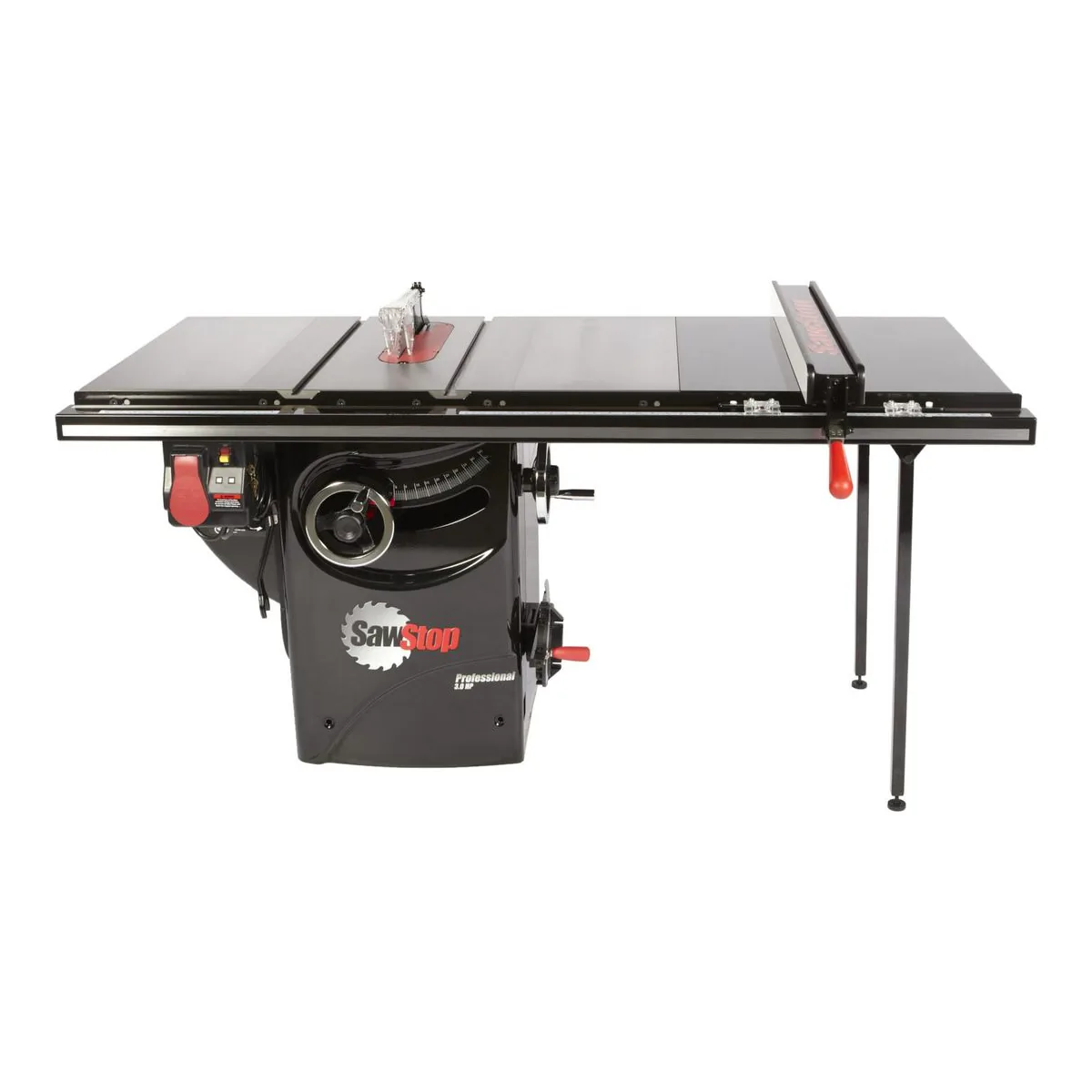
The SawStop PCS175 is the cabinet saw to buy when the flesh-detecting brake is the point, a well built saw on a circuit you can convert, held back only by a 1.75 HP motor that a bigger saw out-cuts for anyone who never needs the brake.
- 1.75 HP motor, wired for 120 volt and convertible to 220 volt
- Flesh-detecting safety system stops the blade on skin contact
- 10 inch blade on a 5/8 inch arbor, 40 tooth blade included
- 36 inch rip capacity with the T-Glide fence
- 4 inch dust port
We earn a commission on qualifying purchases through the links here, at no cost to you. It never decides what makes the list.
If a table saw is going to hurt you, it does it at the blade, and no amount of care takes the odds all the way to zero. The SawStop PCS175 is a cabinet saw built around that one fact. It is the flagship pick on our table saw shortlist for a reason that has nothing to do with how straight it cuts.
This SawStop cabinet saw is the PCS175, the 1.75 HP Professional Cabinet Saw with the T-Glide fence. What follows comes from the owner's manual and the live listing, with no shop test behind it, so it leads with what the saw is and says where the numbers stop. If you are cross-shopping, the rest of the table saw picks sit beside it.
The flesh-detecting brake
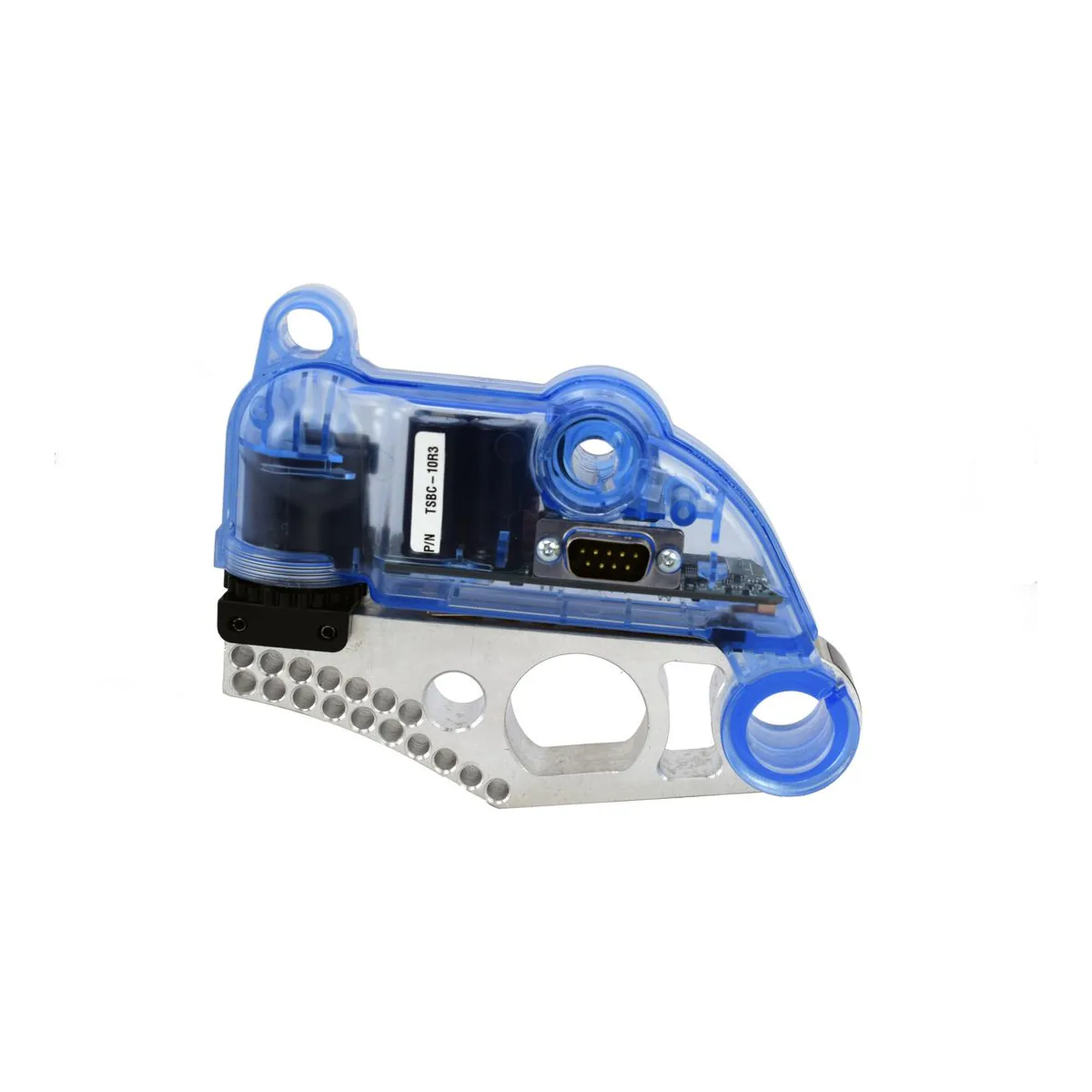
You pay SawStop money for the brake. A small electrical signal runs on the spinning blade, skin contact drops that signal, and a spring drives an aluminum block up into the teeth. It stops and drops below the table in 5 milliseconds or less. That speed can turn what would be an amputation into a shallow cut, though SawStop is clear the system blunts the injury and does not remove every risk.
The brake is also a consumable, the part buyers underrate. Any activation, a real one or a false trigger, sacrifices the brake cartridge and usually the blade jammed against it. Both are then scrap. Wet pressure-treated lumber and other conductive material can fire it, which is what bypass mode is for: it disables detection for one deliberate cut, then arms itself again. Plan to keep a spare cartridge on the shelf, and run only standard steel blades, because a coated or non-conductive blade can slow the brake's detection or defeat it, and then a near miss that should have been a nick becomes a real injury.
Rip capacity and the fence
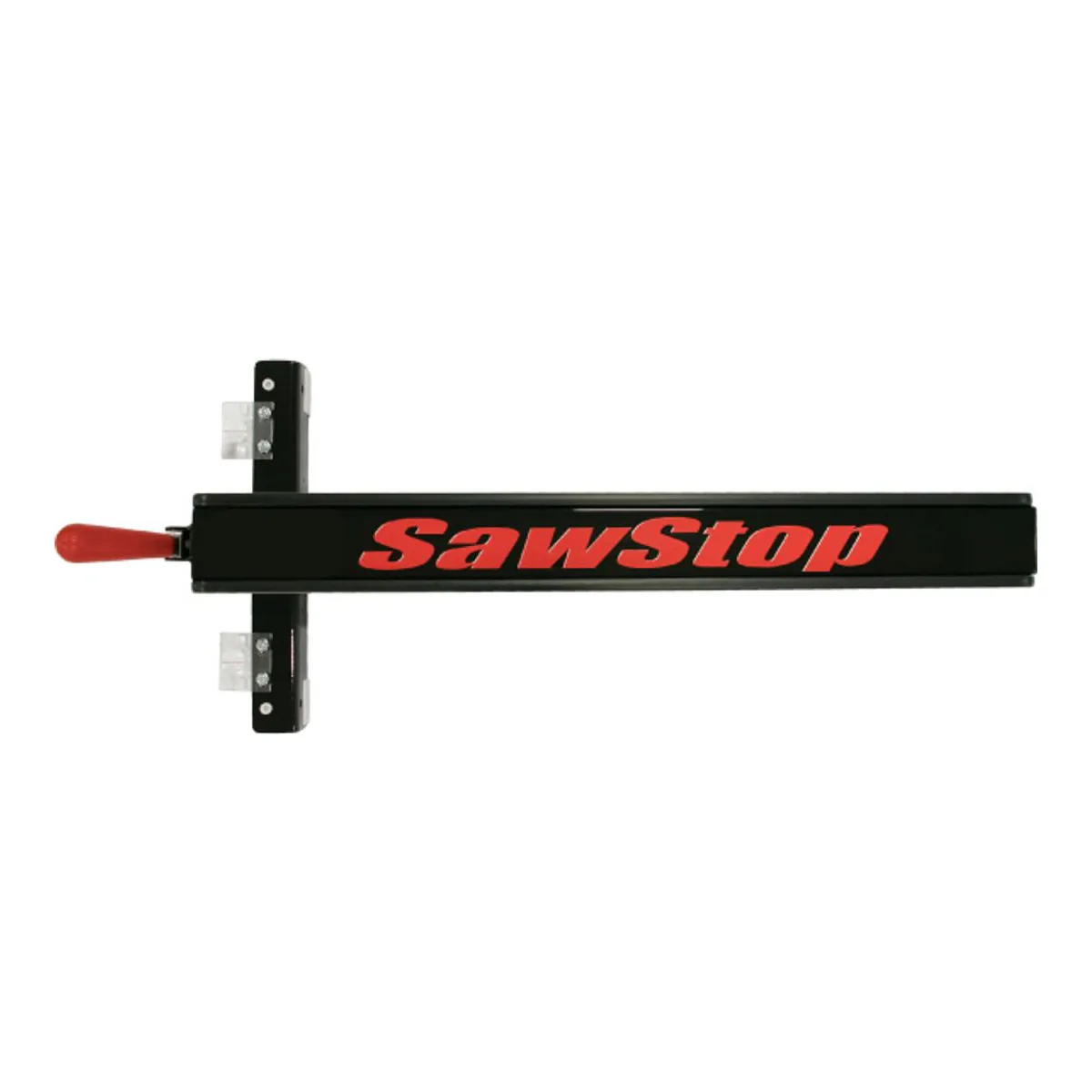
You get 36 inches of rip to the right of the blade on the T-Glide fence, the fence that carries SawStop's name in most reviews. That rip splits a full sheet with room to spare, and the T-Glide locks square without a fresh tap-and-measure every time you slide it. It stays put. Sold as the PCS175-TGP236, this is the 36 inch rail version of the same saw.
Basis: manufacturer documentation, with the fence travel read from the TGP236 designation.
The motor and the circuit
The motor is rated at 1.75 HP and ships wired for 120 volt. At that voltage it draws 14 amps, most of what a standard 120 volt circuit will give you, so it wants a dedicated outlet. Keep the shop vac on another one. Rewire it to 220 volt with a contactor kit and the draw falls to 7 amps. The horsepower does not move. 1.75 HP is 1.75 HP on either supply, so converting buys you a friendlier circuit and an easier start. The saw itself gets no bigger. That ceiling is why the last section exists.
Basis: manufacturer documentation.
The blade, the dado and the depth of cut
It runs a standard 10 inch blade and cuts 3-1/8 inches deep with the blade vertical, enough for thick hardwood in one pass. The catch is the dado. The standard brake cartridge will not run a dado stack at all, so grooving means buying the separate 8 inch dado brake cartridge and swapping it in, and no molding head is supported on either cartridge. One more consumable to own, and the sort of line a spec sheet buries and a buyer meets later.
Basis: manufacturer documentation.
Dust collection
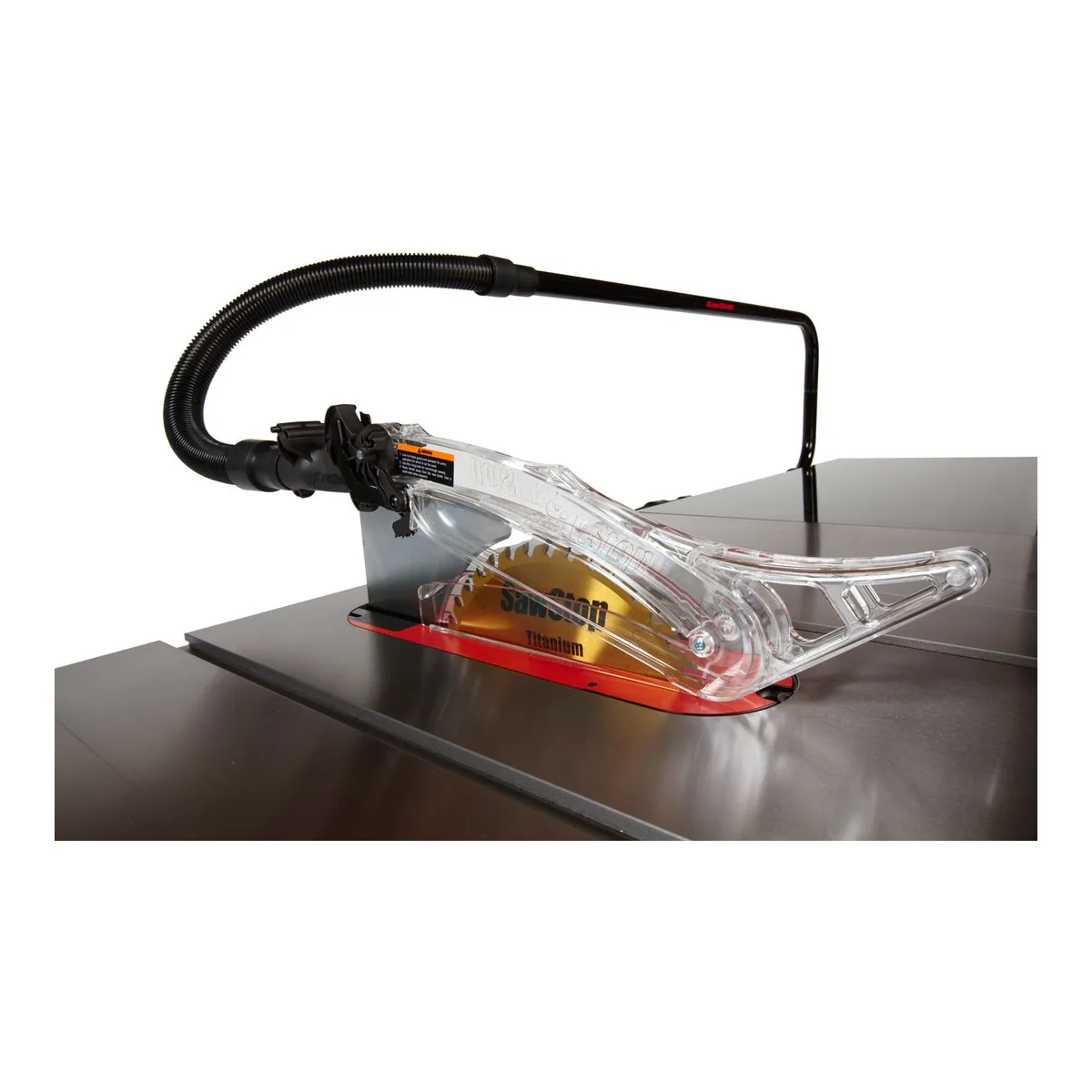
A single 4 inch port sits at the back of the cabinet, and a cabinet saw is one of the easier machines to collect from, since the blade throws its waste down into an enclosed box and not out into the room. Some reviewers still note dust escaping around the housing onto the floor, a sealing issue. The port is not at fault. Run the 4 inch port to a real collector and size that collector by its duct rather than its motor. Free-air numbers describe a collector with no hose attached, and yours will have one. If you are still choosing one, the cyclone picks are here.
What owners say about the SawStop PCS175
Owner reports tied to this exact model are thin, so treat what follows as color and nothing firmer. Across SawStop cabinet-saw threads the sentiment runs one way: owners call the brake worth the money, and the ones who say it loudest tend to be the ones who already lost a finger to an older saw. The recurring worry is conductive material. One woodworker planning a run of pressure-treated projects asked whether the saw would keep firing on damp wood. It can, and bypass mode is built for that case. Nobody in that small set reported the saw failing, but the set is small, so the review stays on the documentation rung.
What we would buy instead
If you can wire 230 volt and you are certain you never want the brake, a 3 HP cabinet saw gives you more rip and real power. It is the workhorse pick for a dedicated shop. If the budget is the wall but you still want the brake, SawStop's own contractor saw drops to an open stand and a 120 volt cord. And if most of your cutting is sheet goods, with little solid hardwood to mill, a track saw does that one job better than any table saw. Buy the PCS175 for the brake and the cabinet-saw accuracy on a circuit you can grow into, not for horsepower it was never built to have.
A closer look at the SawStop PCS175
Made up your mind?